
Solid shampoo and conditioner can be a total game-changer-less clutter in the shower, easier travel, and (when they’re formulated correctly) gorgeous hair. But I’ve also seen the other side: people switch to bars and suddenly their hair feels coated, dull, tangly, or strangely “squeaky,” and they assume that’s just the price you pay for going solid. It isn’t.
After 20 years doing hair, here’s my honest take: the “best solid shampoo and conditioner” isn’t a popularity contest. It comes down to formulation chemistry, water quality, and technique. If you understand how a bar cleanses, how it deposits conditioner, and how it rinses, you can pick a bar system that performs like high-end salon care-without the trial-and-error frustration.
First, the big misconception: a solid shampoo bar is not the same thing as a soap bar
A lot of solid hair disasters happen because someone buys a bar that behaves like traditional soap. Soap-style bars are often more alkaline, and hair generally performs best when products stay in a hair-friendly pH window-roughly 3.5 to 6.5. When pH runs too high, the cuticle can lift, friction goes up, hair tangles more easily, and color can fade faster.
NOT SURE WHICH PRODUCT IS RIGHT FOR YOU?
TAKE THE QUIZTakes 30 seconds · 134,000+ customers matched
Hard water makes this worse. True soap can react with minerals like calcium and magnesium and leave behind a stubborn film. People describe it as waxy buildup, dullness, or a rough, coated texture-even after rinsing.
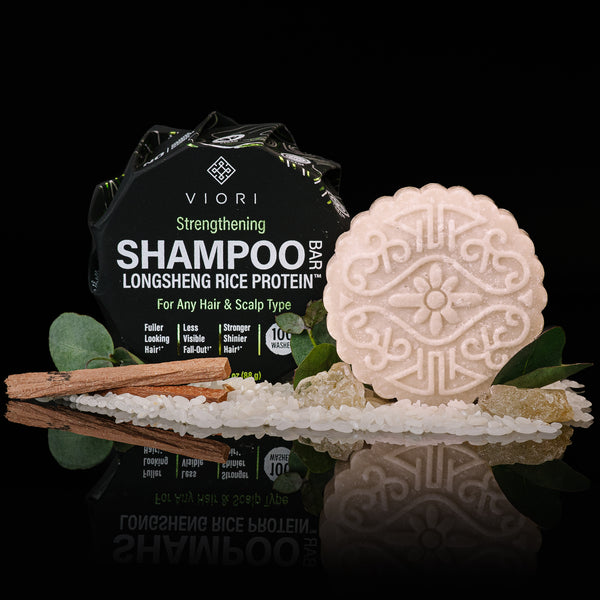
Viori approaches bars in a way that’s much closer to modern haircare than old-school soap: the shampoo bars use Sodium Cocoyl Isethionate (SCI), a mild cleanser commonly used in hair formulations and known for creating a rich lather without the harsh “stripped” feel many people associate with stronger surfactants.
The rare detail most articles skip: bars have a “deposition choreography”
Here’s the piece that almost never gets explained online: with solid haircare, application changes the way product behaves. A liquid shampoo spreads instantly; a bar is more concentrated and typically involves more contact and more mechanical work. That means your results depend on a choreography between your hair, your scalp oils, your water, and how you apply the bar.
When the choreography is right, hair feels clean, light, and smooth. When it’s off, you can end up with drag at the roots, heavy ends, or that “there’s something stuck on my hair” sensation.
Why conditioner bars are harder to get right than shampoo bars
Shampoo’s job is straightforward: remove oil, product residue, and environmental grime without damaging the cuticle. Conditioner has a more delicate balancing act, especially in bar form. A good conditioner bar must reduce friction (so you break less hair), improve detangling, and still rinse clean enough that hair doesn’t collapse and go limp.
One reason conditioner works at all is electrical charge. Hair-especially damaged hair-tends to carry more negative charge, which attracts positively charged conditioning agents. That’s a good thing for softness and slip, but it’s also why some hair types feel buildup faster than others.
Viori’s conditioner bars use Behentrimonium Methosulfate (BTMS), a well-known conditioning ingredient in haircare. Despite the word “methosulfate,” BTMS is not the same thing as harsh cleansing sulfates like SLS/SLES. BTMS is used specifically for conditioning: it helps increase slip, reduce static, and support a smoother cuticle feel-aka fewer tangles and less breakage from brushing.
Friction is part of the formula-so technique matters more than people think
If you’ve ever rubbed a bar directly down your lengths and wondered why your hair felt rough afterward, friction is a big part of the answer. With bars, it’s easy to accidentally overwork the cuticle, especially if your hair is color-treated, porous, or already dry.
If you want the best results (and especially if you’re trying to preserve color), this technique matters: Viori recommends building lather in your hands and applying with your fingers rather than scrubbing the bar directly on the hair.
My pro technique for shampoo bars
- Thoroughly soak your hair first-fully saturated hair lathers faster and reduces friction.
- Lather the shampoo bar in your palms.
- Apply the lather to your scalp and massage with your fingertips.
- Let the suds rinse through the lengths-don’t aggressively scrub the ends.
My pro technique for conditioner bars
- Apply conditioner from mid-length to ends first (not the scalp, unless your scalp is very dry and you know it tolerates it well).
- Add water and work it between your hands-conditioner bars won’t foam like shampoo, and that’s normal.
- Detangle gently with fingers or a wide-tooth comb while the hair is wet and lubricated.
- Let it sit for a couple minutes when you need extra smoothing, then rinse thoroughly.
What separates an “okay” bar from the best bar: ingredient architecture
The best solid shampoo and conditioner systems aren’t just a random mix of oils and butters. They’re built like a well-structured formula, with each ingredient group doing a specific job-cleanse, condition, soften, strengthen, and rinse clean.
- Mild cleanser (shampoo): Viori uses SCI for a gentle, effective cleanse.
- Conditioning slip (conditioner): BTMS helps improve detangling and smoothness.
- Emollients and butters: ingredients like cocoa butter and shea butter support softness and manageability.
- Strength and shine support: hydrolyzed rice protein is commonly used to support strength and improved feel.
- Scalp comfort and moisture feel: ingredients like aloe vera and bamboo extract are often used to support a calmer scalp and smoother texture.
The fermented rice water nuance (and why pH balance is a big deal)
Rice water has a long history in hair rituals, but using high concentrations too often can be a problem for some people-especially if pH isn’t well controlled. Viori uses a lower concentration of Longsheng rice water in a pH-balanced bar so you can get rice-water-like benefits in a format that’s designed for regular use.
Fermentation matters because it can increase levels of compounds that are widely used and studied in haircare-like inositol (vitamin B8) and panthenol (vitamin B5)-which are associated with improved conditioning performance and hair feel.
The silent saboteur: hard water
If you live in hard water and you’ve struggled with bars before, don’t assume it’s your hair “detoxing.” Hard water can change how products rinse, and it can magnify residue problems-especially with soap-like formulas.
A bar system designed around a modern cleanser and a controlled conditioning deposit tends to behave more predictably across different water types. In other words: fewer surprise bad-hair days.
Yes, even the scent choice can slightly affect how your hair behaves
Most of the time, scent is just scent. But in some bar systems, scent components can subtly shift how the bar performs for different scalp needs. With Viori, the base formula is consistent, yet collections are often recommended by scalp type.
WHAT CUSTOMERS ARE SAYING
Real reviews for Rice Water Shampoo Bar – All Hair Types | VIORI
- Citrus Yao: often recommended for normal-to-oily scalps and a fresher, cleaner feel.
- Terrace Garden: often recommended for normal-to-dry scalps and frizz-prone hair; a fresh, green, floral profile.
- Hidden Waterfall: a balanced option for many hair types; a sweet vanilla/musk scent.
- Native Essence: unscented, ideal for fragrance sensitivity; very subtle earthy notes up close.
How to choose the best Viori bar for your hair (a simple, stylist-approved approach)
Instead of guessing, I like to start with two things: your scalp oil pattern and your hair porosity. This gets you to the right match much faster.
Step 1: Identify your scalp type by your “oil timeline”
- Oily scalp: feels oily 1-2 days after washing
- Normal scalp: feels oily around day 3
- Dry scalp: can go 4+ days without feeling oily
General Viori pairing guidance:
- Oily/greasy: Citrus Yao
- Dry scalp or dry scalp flaking: Terrace Garden, Hidden Waterfall, or Native Essence
- Sensitive scalp / fragrance sensitivity: Native Essence
Step 2: Check porosity (quick strand-in-water test)
- Low porosity (strand floats): more buildup-prone; tends to like lighter application and thorough rinsing
- Medium porosity (strand stays mid-glass): usually the easiest to balance
- High porosity (strand sinks): absorbs quickly but loses moisture easily; typically benefits from longer conditioning time and gentler handling
What results should you expect-and when?
Some people notice a difference immediately (especially in softness and shine). Others need time, particularly if they’re correcting dryness, irritation, breakage, or scalp imbalance. Viori recommends giving it 2-3 months before you decide it’s not for you, and from a professional standpoint, that’s a fair timeline for hair and scalp to settle into a new routine.
The bottom line
The best solid shampoo and conditioner isn’t the one with the loudest hype-it’s the one that stays pH-balanced, cleanses with a modern gentle system, conditions with controlled deposit (slip without heaviness), behaves well in your water, and matches your scalp type.
If you’re looking for a solid system that’s designed with those performance details in mind, Viori checks the boxes that matter most in real-world hair: a gentle cleanser (SCI), effective conditioning technology (BTMS), pH-balanced formulation, and options that align with oily, dry, normal, and sensitive scalps.


