
If you’ve ever typed “best Target shampoo” into a search bar, you’re not really hunting for a shampoo-you’re hunting for a result. Softer ends. Less grease at the roots. A calmer scalp. Fewer flakes. Better shine. Longer-lasting color. And if you’ve tried a handful of options that seemed promising but didn’t deliver after a few washes, you’re in good company.
After 20 years behind the chair, I can tell you the uncomfortable truth that rarely makes it into product roundups: there is no single best shampoo. There’s only the best match-for your scalp chemistry, your hair’s porosity, and (this is the part most people never hear about) your tolerance for what a shampoo leaves behind.
Why “Best” Isn’t a Product-It’s a Fit
Most shoppers judge a shampoo in the first two minutes: the lather, the slip, the scent, the “clean” feeling as they rinse. But the real test happens later-when your hair dries, when you sleep on it, when your roots start doing what they always do, and when your ends either behave… or don’t.
NOT SURE WHICH PRODUCT IS RIGHT FOR YOU?
TAKE THE QUIZTakes 30 seconds · 134,000+ customers matched
In technical terms, a shampoo isn’t just removing oil and styling residue. It’s also changing how your cuticle behaves, how much friction your strands experience, and how balanced your hair and scalp feel over time.
What Shampoo Is Actually Doing to Your Hair
Hair is a keratin fiber wrapped in tiny overlapping layers called the cuticle-think of them like shingles on a roof. When you cleanse, a few things happen at once:
- Surfactants loosen and lift oil, sweat, dirt, and product buildup so it can rinse away.
- Water and cleansing increase friction, especially on dry or damaged lengths.
- The formula’s pH influences whether the cuticle lays flatter (smoother, shinier) or stays more lifted (tanglier, frizzier, duller).
This is why pH balance isn’t a boring chemistry detail-it’s one of the biggest reasons hair either feels consistently good… or starts feeling rough and unpredictable wash after wash. Viori bars are specifically made to be pH balanced, which helps keep the cuticle in a healthier comfort zone with regular use.
The Rare Detail Most “Best Shampoo” Lists Ignore: What Gets Left Behind
Here’s the angle that almost never gets discussed online: many shampoos win people over in the shower because they deposit a film of conditioning ingredients that feels silky immediately. For some hair types, that’s a dream. For others, it’s the beginning of the “why does my hair feel heavy two days later?” cycle.
I call this a shampoo’s residue profile. In more technical terms, it’s about deposition behavior-how much conditioning material clings to the hair after rinsing.
Two common cleansing “personalities”
- Higher-deposit cleansing: hair feels cushioned and soft right away; great for dry, frizzy, high-porosity hair, but it can flatten fine hair or feel like buildup over time.
- Cleaner-rinsing cleansing: hair feels lighter and airier; great for oily scalps and hair that gets weighed down, but it can feel too “squeaky” on damaged lengths unless conditioning is on point.
This is why one person swears something is the holy grail while someone else says it “ruined” their hair. They’re not imagining it-they’re reacting to different deposition needs.
Start Here: Scalp Type Sets the Baseline
If you’re trying to figure out what your hair actually needs, I like to begin with a simple question: How soon do your roots feel oily after washing?
- Oily scalp: usually feels oily again in 1-2 days
- Normal scalp: usually around day 3
- Dry scalp: often 4+ days
That timing tells you a lot about how aggressively you should cleanse-and how quickly your scalp rebounds.
Then Add the Missing Piece: Porosity (This Changes Everything)
Porosity is your hair’s ability to absorb and hold onto moisture. It’s also a strong predictor of whether you’ll love a routine or feel like nothing “works” consistently.
Viori shares a quick at-home porosity check that’s surprisingly helpful:
- Brush your hair so you’re working with a clean strand.
- Take a single shed strand and place it into a glass of water.
- Watch what it does after a moment.
- If it floats: low porosity (often buildup-prone; can feel weighed down easily)
- If it stays mid-glass: medium porosity (usually the easiest to balance)
- If it sinks: high porosity (absorbs quickly but struggles to retain moisture; often feels dry or frizzy)
Why Oily Hair Often Doesn’t Need “Stronger” Shampoo
When roots get greasy fast, it’s tempting to keep stepping up to more aggressive cleansing. But that can backfire. Over-cleansing can push the scalp into a rebound loop: strip too hard, feel dry or tight, then produce oil faster to compensate.
The goal is a clean reset without stripping. Viori shampoo bars use Sodium Cocoyl Isethionate (SCI) as the cleanser-a mild cleansing agent often praised for being gentle while still effective. And for oilier scalps, Viori’s Citrus Yao is commonly recommended because it’s known for better oil control, helping many people stretch time between washes without feeling dried out.
Color-Treated Hair: The Real Issue Is Often Friction, Not Just Ingredients
Most color-care conversations get stuck on one talking point. In the salon, I see something else sabotage color just as often: mechanical friction. The more you rough up the cuticle, the more easily color can slip out and the more the hair can feel coarse.
Because Viori is a bar format, application technique matters-especially for color-treated hair. Viori recommends building lather in your hands and applying with your fingers rather than rubbing the bar directly on your head. That simple tweak reduces abrasion and can help preserve color better over time.
Rice Water: Why “More” Isn’t Always Better
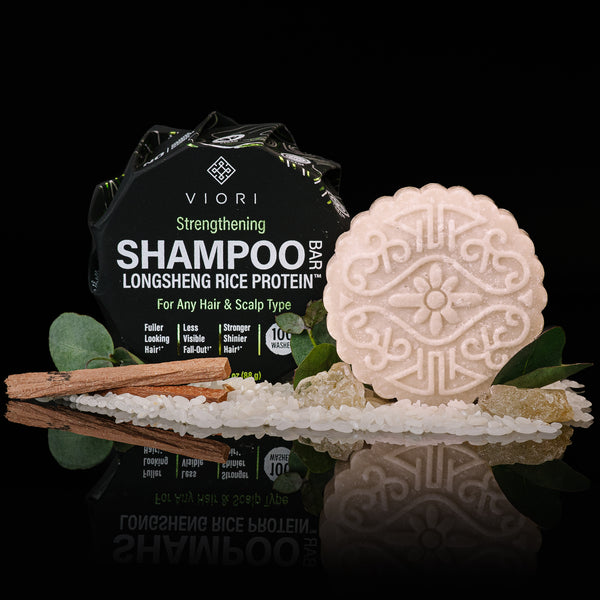
DIY rice-water rinses are everywhere, but high concentrations used too often can disrupt comfort-especially if the hair and scalp get thrown off balance. Viori takes a more measured approach by using a lower concentration of fermented Longsheng rice water in a pH-balanced formula alongside other nutrient-rich ingredients, aiming for benefits without tipping the system too far in any one direction.
WHAT CUSTOMERS ARE SAYING
Real reviews for Rice Water Shampoo Bar – All Hair Types | VIORI
Viori also notes they use a low concentration of rice protein, which matters because too much protein can leave certain hair types feeling stiff or brittle. Balance is the point.
A Simple Way to Choose: Match the Viori Bar to Your Reality
If you want a straightforward starting point, here’s how I’d guide you:
- Roots get oily fast, hair gets limp easily: try Viori Citrus Yao.
- Hair feels dry, frizzy, rough, or tangles after washing: try Viori Terrace Garden or Viori Native Essence.
- Sensitive scalp or fragrance sensitivity: try Viori Native Essence (unscented).
- Oily scalp + dry ends: cleanse the scalp with Viori Citrus Yao, then use a more moisturizing Viori conditioner on the mid-lengths and ends (many people rotate between Hidden Waterfall, Terrace Garden, or Native Essence based on how their ends feel).
How to Know You’ve Found “The Best” (Judge It at Hour 24)
The most misleading moment in haircare is right after a blow-dry. Almost anything can look decent when it’s freshly washed and styled. If you want a real verdict, check in later:
- At 24 hours: Is your scalp calm? Are roots already greasy? Any itchiness?
- At 72 hours: Do your mids feel coated or light? Are ends tangling or behaving?
- After a few weeks: Is frizz improving? Is shine more consistent? Is wash day easier?
Viori notes that some people see results quickly, while others need consistent use over a longer window (often 2-3 months) to fairly judge. That timeline makes sense-hair and scalp patterns don’t always shift overnight.
The Takeaway
Searching for “best Target shampoo” makes sense-you want something dependable. But “best” is rarely about hype. It’s about fit: your scalp’s oil rhythm, your porosity, your friction habits, and how your hair responds to what a cleanser leaves behind.
If you want to get really dialed in, start with two quick notes: how many days it takes for your scalp to feel oily again, and what your porosity test shows. From there, choosing between Viori’s options becomes a lot less like guessing-and a lot more like tailoring.


