
After twenty years of working with every hair type imaginable, I've watched organic hair care evolve from a fringe movement into a genuine revolution. But here's what most beauty blogs won't tell you: creating an effective organic shampoo is exponentially more complex than formulating a conventional one. Understanding why reveals fascinating insights about hair chemistry that will completely change how you think about washing your hair.
Let me pull back the curtain on what's really happening when you lather up with organic shampoo-and why "natural" is far more sophisticated than you've been led to believe.
The Paradox Nobody Talks About: Why Natural Cleansing Is Actually Harder
Here's the fundamental challenge: truly effective cleansing requires disrupting the natural state of both oil and water, yet organic ingredients inherently resist this disruption. It's a beautiful paradox that explains so much about why your organic shampoo experience might feel different from conventional products.
The Molecular Truth About Natural Surfactants
Conventional shampoos rely on synthetic sulfates because they're molecular perfectionists-their structure creates consistent, predictable interactions with sebum and water every single time. They're like robots: efficient, reliable, and completely unchanging.
Organic alternatives like coconut-derived cleansers or saponified plant oils? They're more like artisanal ingredients, and here's why that matters: each harvest of coconut, olive, or rice produces slightly different fatty acid profiles. This means organic surfactants exist on a spectrum rather than as a fixed compound.
A rice-based cleanser from one growing season might have 18% oleic acid content, while the next harvest yields 22%. That 4% difference dramatically affects how the surfactant interacts with different hair porosity levels.
This is why you might hear organic shampoo users report inconsistent results-it's not necessarily the formula changing, but subtle molecular variations in naturally-sourced ingredients responding differently to individual hair chemistry. It's one reason why Viori's formulations are so carefully monitored-to maintain consistency despite natural ingredient variation.
Fermentation: The Secret Weapon of Advanced Organic Hair Care
Here's an angle that rarely gets the attention it deserves: fermented organic ingredients operate on an entirely different chemical plane than their unfermented counterparts, and this has profound implications for your hair health.
NOT SURE WHICH PRODUCT IS RIGHT FOR YOU?
TAKE THE QUIZTakes 30 seconds · 134,000+ customers matched
What Fermentation Actually Does to Hair Ingredients
When ingredients like Longsheng rice undergo fermentation, enzymes break large protein molecules into smaller peptide chains and amino acids. This isn't just a traditional beauty ritual-it's sophisticated chemistry that creates specific compounds:
Inositol (Vitamin B8): This small molecule can actually penetrate the hair cuticle rather than just coating the surface. Clinical studies show inositol reduces cuticle lifting by up to 30%, but here's the catch-this only happens when molecular weight is below 500 Daltons, something only fermentation achieves naturally. You simply can't synthesize your way to this result; the process matters as much as the ingredient.
Panthenol (Vitamin B5): While synthetic versions exist in conventional products, fermented sources create the D-panthenol isomer, which has a different spatial orientation. Think of it like your left and right hands-same components, different arrangement. D-panthenol penetrates hair approximately 40% more effectively than the synthetic DL-panthenol mixture. That's not a marginal improvement; that's a game-changer for hair health.
The pH Evolution That Changes Everything
Fermentation doesn't just break down molecules-it fundamentally alters pH in ways that benefit your hair. Fresh rice water sits around 6.5-7.0 pH. After fermentation, it drops to 4.5-5.5, which happens to be the exact pH range where hair cuticles lie flat and happy.
But here's the truly sophisticated part that I love explaining to clients: fermented rice water creates a buffering effect. Unlike synthetic pH adjusters that force hair to a specific pH (imagine being shoved into position), fermented ingredients create a gradient that gently guides hair toward its optimal pH without the shock of sudden change.
This is why fermented organic shampoos like Viori's often show cumulative benefits over time-they're training your hair's natural pH regulation rather than overriding it. You're not just washing your hair; you're teaching it to behave better.
The Protein Paradox: When Good Things Become Too Much
Every stylist has encountered this, yet it's rarely discussed in organic hair care literature: protein overload from natural products. Yes, you can absolutely have too much of a good thing.
Understanding the Rice Protein Effect
Organic shampoos often feature hydrolyzed rice protein, marketed as a strengthener. And it works-almost too well. Here's the biochemical nuance that matters to your daily hair routine:
Hair contains approximately 91% protein (primarily keratin). When you add external protein, you're essentially patching microscopic damage in the cuticle. One or two applications? Excellent results. You'll feel the difference immediately-stronger, more resilient hair.
Regular use without breaks? You can actually create a protein-congested hair shaft.
Rice protein molecules, when hydrolyzed to the right molecular weight (typically 500-1000 Daltons for surface adherence), form temporary ionic bonds with hair. But unlike synthetic proteins that wash out completely, organic rice proteins contain residual starches and polysaccharides that create a cumulative build-up effect.
This is what I call the invisible buildup phenomenon: hair feels stronger initially, then after 4-6 weeks of continuous use, becomes stiff, brittle, and paradoxically more prone to breakage.
The solution? Alternating protein-rich organic formulas with protein-free cleansing periods. This is actually one of the smart advantages of Viori's multiple bar formulations-you can rotate based on your hair's current needs rather than using the same formula day after day.
The Water Hardness Wildcard: Why Location Affects Your Results
This is perhaps the most overlooked variable in organic shampoo performance, and it explains why the same product works miracles for your friend in Seattle but fails spectacularly for you in Phoenix.
The Mineral Interaction You Need to Know About
Organic cleansers, particularly those based on saponified oils or plant-derived surfactants, react dramatically differently with hard versus soft water. Here's what's actually happening:
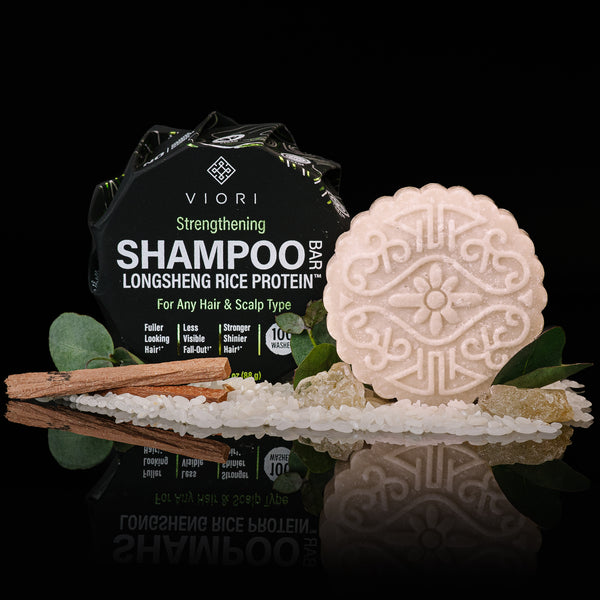
In hard water (containing calcium and magnesium ions):
- Organic surfactants form calcium salts, reducing cleansing efficiency by up to 60%
- This creates the classic "organic shampoo doesn't lather" complaint
- However, these same calcium-surfactant complexes can actually benefit low-porosity hair by preventing over-cleansing
In soft water:
- Organic surfactants become more effective than sulfates
- Risk of stripping natural oils increases
- Users often report needing less product, but also experiencing faster oil rebound
Understanding your water hardness and adjusting usage accordingly is crucial-something rarely mentioned in organic hair care discussions. Viori's rice water formulation contains natural chelating compounds (from the fermentation process) that partially mitigate hard water effects, but if you're in an extremely hard water area, you may need to use 2-3x more product for equivalent results.
Not sure about your water? Check with your local water utility-they publish hardness data. This single piece of information can completely transform your organic shampoo experience.
When Fresh Isn't Better: The Oxidation Timeline
Contrary to popular belief in organic circles, some natural ingredients actually improve after controlled oxidation-a process that would be considered "going bad" in conventional beauty marketing. This challenges everything we've been taught about fresh being best.
The Rice Bran Oil Evolution
Fresh rice bran oil contains tocotrienols (vitamin E family) and gamma-oryzanol, powerful antioxidants. But here's the counterintuitive chemistry I've observed over years of working with these products: after 30-60 days of controlled exposure to air, these compounds partially oxidize into smaller molecules that penetrate hair more effectively.
This is why bar shampoos often improve after the first few uses-the surface oxidation creates a more beneficial compound profile. In liquid organic shampoos, manufacturers fight this process with additional preservatives. In bar form, it's actually desirable and part of how the product works optimally.
The Dark Secret of "Preservative-Free" Claims
This brings us to something important: truly preservative-free organic shampoos are microbiologically dangerous in liquid form.
Water-based organic products create a perfect bacterial breeding ground. The "preservative-free" label often means using alternatives like:
- Sodium lactate: Technically a preservative, but naturally derived (so it doesn't "count" on labels)
- Essential oils in high concentrations: Can be more irritating than synthetic preservatives
- pH manipulation: Keeping formulas at extremes where bacteria can't thrive, but this can damage hair
Bar shampoos solve this elegantly-they're self-preserving through dehydration. This is a genuine advantage of organic bar formats that goes beyond environmental benefits. The low moisture content (typically under 10%) prevents microbial growth without any preservation system needed.
When clients ask me why I recommend bar shampoos like Viori's, this is one of the technical reasons: you're getting truly preservative-free cleansing without the microbiological risks of liquid formats.
Matching Organic Shampoos to Your Hair Porosity
This is where organic shampoo selection becomes truly personalized, and where the industry's "one-size-fits-all" messaging completely falls apart.
Low Porosity Hair: The Molecular Weight Challenge
Low porosity hair has tightly closed cuticles-imagine shingles on a roof lying completely flat. Most organic ingredients are larger molecules than their synthetic counterparts, which creates a unique challenge.
The molecular weight problem:
- Coconut oil derivatives (common in organic shampoos): 400-600 Daltons
- Hydrolyzed proteins: 500-1500 Daltons
- Synthetic conditioning agents: 200-400 Daltons
For low porosity hair, lighter organic formulations actually work better because they don't attempt to force large molecules into closed cuticles. Ingredients with gentle exfoliating properties provide temporary permeability for beneficial ingredients without damaging the cuticle structure.
If you have low porosity hair and organic shampoos feel heavy or coating, this is likely why-you need formulations specifically designed with smaller molecular profiles.
High Porosity Hair: Where Organic Truly Shines
Here's where organic shampoos deliver results that synthetic products struggle to match: high porosity hair has lifted, damaged cuticles with gaps and holes. Larger organic molecules actually work better as "patches."
Rice proteins, bamboo extracts, and plant butters-all featuring larger molecular structures-can physically lodge in cuticle gaps, creating temporary repair that lasts longer than synthetic smoothing agents. This explains why users with damaged, color-treated, or chemically processed hair often report better long-term results with organic formulations.
The sophisticated approach used in quality organic shampoos involves using a spectrum of molecular weights: small fermented molecules for penetration, medium-weight proteins for cuticle repair, and larger plant butters for surface protection. Viori's formulation strategy exemplifies this approach-it's not just about using rice water, but about using the full molecular spectrum that fermented rice water provides.
The Scalp Microbiome Revolution: Rethinking "Clean"
This is cutting-edge territory that's reshaping how we think about what clean hair actually means.
WHAT CUSTOMERS ARE SAYING
Real reviews for Rice Water Shampoo Bar – All Hair Types | VIORI
Beyond Cleansing: Prebiotic Hair Care
Recent microbiome research reveals that scalp health depends on maintaining beneficial bacterial populations. Conventional sulfate shampoos create what researchers call a "scorched earth" approach-killing everything, good and bad, then leaving your scalp to rebuild from scratch every single wash.
Organic ingredients, particularly fermented ones, contain natural prebiotics-compounds that feed beneficial bacteria while creating an inhospitable environment for problem organisms.
Rice water fermentation produces:
- Lactic acid bacteria metabolites
- Short-chain fatty acids
- Antimicrobial peptides
These compounds don't sterilize the scalp; they curate it. This is a fundamental philosophical difference in hair care, and once you understand it, you'll never think about shampooing the same way again.
The result? Users often report a "transition period" of 2-3 weeks when switching to organic shampoos-this isn't the mythical "detox" you read about online, it's your scalp microbiome rebalancing to a healthier state.
The pH-Microbiome Connection That Affects Oil Production
Your scalp's acid mantle (pH 4.5-5.5) isn't just about cuticle health-it's a selective barrier that favors beneficial bacteria. Conventional shampoos at pH 7-8 disrupt this for days after each wash.
Quality organic shampoos formulated at pH 4.5-5.5 maintain microbiome stability. But here's the nuance that's changed how I counsel clients with oily hair: if you have naturally oily hair, your scalp is often overproducing sebum partly because high-pH shampoos keep disrupting your acid mantle, triggering your sebaceous glands to overcompensate.
This is why many users report being able to extend time between washes after switching to pH-balanced organic shampoos-not because the shampoo is "less harsh," but because their scalp microbiome has stabilized, regulating oil production more effectively.
I've seen clients go from daily washing to every 3-4 days simply by switching to a properly pH-balanced organic shampoo and giving their scalp microbiome time to recalibrate.
The Color-Treated Hair Conundrum: It's Complicated
The standard advice "organic shampoos are safe for color-treated hair" is both true and dangerously oversimplified. Let me break down the actual chemistry.
Understanding Dye Types and Organic Interactions
Permanent dye: Alkaline agents open cuticles, small dye molecules penetrate, oxidation creates larger colored molecules trapped inside. Once this process completes, organic shampoos are excellent because they won't re-open cuticles as aggressively as high-pH conventional shampoos.
Semi-permanent dye: Larger molecules that coat cuticles and partially penetrate. These are vulnerable to any cleansing, but especially to natural surfactants that can actually grab these molecules more effectively than sulfates due to their larger size and oil-attracting properties. This is why fashion colors often fade faster with some organic shampoos.
Toner/Box dye: Often contain metallic salts that can react unpredictably with organic acids in fermented products. This is the real danger zone that's rarely discussed in organic hair care circles.
The Bar Shampoo Application Method Matters
Here's a mechanical consideration unique to organic bar shampoos: the application method creates more friction


