
As a hair stylist with two decades of experience, I've watched countless beauty trends come and go. But the rise of sustainable shampoo bars represents something different-a genuine shift in how we think about hair care. Yet after years of working with these products and diving deep into the formulation science behind them, I've discovered that the story we're being told is only half complete.
Today, I'm pulling back the curtain on the fascinating chemistry of bar shampoo formulations, revealing insights that will change how you think about sustainable hair care.
The Formulation Paradox Nobody Talks About
Here's something that kept me up at night when I first started recommending shampoo bars to my clients: there's an inherent chemical contradiction between creating a solid bar and delivering the conditioning benefits we expect from modern hair care.
Let me explain why this matters for your hair.
Traditional liquid shampoos can suspend incompatible ingredients through emulsification systems-think of it like keeping oil and water mixed together through chemical peacekeeping. When you compress everything into a solid bar, you're working with entirely different rules.
The Binding Agent Dilemma
To create a bar that holds together in your shower without dissolving into mush, formulators need structural ingredients like cetyl alcohol and stearic acid. But here's the catch: these same ingredients that give the bar its shape can also create problems:
- Create buildup on your hair strands over time
- Reduce how well active ingredients can penetrate your hair
- Limit the concentration of water-soluble nutrients
It's like trying to build a house that's also a doorway-the structural requirements conflict with the functional goals.
The pH Tightrope
This is where formulation becomes truly complex. Solid bars require different pH management than liquids. Many sustainable bars incorporate fermented rice water (which I'll discuss more shortly), which is naturally acidic. But when you bind that in a solid matrix with cleansing surfactants like Sodium Cocoyl Isethionate, the pH your hair actually experiences might be very different from what's measured in the lab.
NOT SURE WHICH PRODUCT IS RIGHT FOR YOU?
TAKE THE QUIZTakes 30 seconds · 134,000+ customers matched
Think of it as the difference between a recipe's ingredient list and how the finished dish actually tastes.
The Breakthrough That Changed Everything
So how do quality shampoo bars work at all? The answer lies in what I call dual-phase cleansing systems in solid form.
Traditional soap bars are single-phase-one type of molecule doing one job. The breakthrough in premium bar shampoos is incorporating two distinct phases:
- Primary cleansing phase: Gentle surfactants (often SCI-based, derived from coconut) that create foam and remove dirt
- Secondary conditioning phase: Ingredients like BTMS (Behentrimonium Methosulfate) that are typically only found in separate conditioner products
Here's what makes this technically impressive: these two phases naturally want to separate, like oil and water. Creating a stable bar where cleansing and conditioning agents coexist without migrating or separating during storage requires sophisticated syndet technology (synthetic detergent formulation).
This is why not all shampoo bars are created equal-the chemistry is genuinely difficult to get right.
The Fermented Rice Water Reality Check
As someone who's studied traditional hair care practices from around the world, I'm genuinely fascinated by ingredients like Longsheng fermented rice water. The Red Yao women of China have famously long, healthy hair well into old age, and they credit their fermented rice water rinses.
But here's what the marketing often doesn't tell you:
Concentration Matters-A Lot
In a solid bar format, you can typically only incorporate 5-15% fermented rice water before the bar's structural integrity breaks down. The Red Yao women? They used 100% fermented rice water rinses. The comparison is inspiring, but it's not apples-to-apples chemistry.
The Heat Problem
The beneficial compounds produced during rice fermentation-inositol, B-vitamins, and various amino acids-are temperature-sensitive. Most bars are heated to 160-180°F during the pressing process that forms them. Many of these delicate compounds don't survive that heat.
What Actually Works
The real benefit in quality formulations likely comes from hydrolyzed rice protein-a more stable form where the protein is broken down into smaller molecules that can actually penetrate your hair cuticle and strengthen from within.
At Viori, the traditional Longsheng rice water is incorporated thoughtfully, with formulations designed to preserve the beneficial compounds while maintaining bar integrity. This requires careful temperature control and processing methods that respect both the science and the tradition.
Decoding "Sulfate-Free" Claims
This is where I need to put on my technical hat and clear up massive consumer confusion.
You've probably seen BTMS listed in ingredients and wondered about that "methosulfate" part. Here's the crucial distinction: Behentrimonium Methosulfate contains the word "sulfate" but is NOT a cleansing sulfate.
The harsh sulfates people want to avoid are:
- Sodium Lauryl Sulfate (SLS)
- Sodium Laureth Sulfate (SLES)
These are cleansing agents that can be stripping and irritating.
BTMS is completely different-it's a conditioning quaternary ammonium compound. The "methosulfate" is simply the salt form that makes it water-soluble, not a cleansing sulfate.
The Double-Edged Sword
Here's the clever chemistry: by using BTMS in shampoo bars, brands create a conditioning effect even during the cleansing phase. This sounds perfect, but it means:
- Your hair may feel "conditioned" but might not be deeply cleaned
- Buildup occurs faster than with traditional separate shampoo and conditioner
- If you have an oily scalp, you may need to wash more frequently
This isn't a flaw-it's a trade-off. Understanding it helps you choose whether a shampoo bar suits your hair type.
The Friction Factor: A Rarely Discussed Issue
In twenty years of styling hair, I've noticed something that almost no one in the industry talks about: the physical act of rubbing a solid bar on wet hair creates different stress on your hair structure than liquid shampoos.
When you apply liquid shampoo, you're creating primarily chemical interactions. With a bar, you're adding mechanical friction:
- Cuticle scales (the overlapping protective layer of your hair shaft) lift more aggressively under friction from solid bars
- This can be beneficial-allowing deeper penetration of nutrients
- Or harmful-creating weak points that lead to breakage
- The damage pattern is different: bar users often show more mid-shaft weathering versus root or tip damage
The Solution Most Brands Won't Mention
Lather the bar in your hands first, then apply the foam to your hair. This simple technique reduces direct bar-to-hair contact by about 80% and dramatically reduces cuticle stress.
I teach every client who switches to bars this technique, and it transforms their experience.
The Sustainability Paradox
Here's where we need to have an honest conversation about "sustainable" formulations.
Most shampoo bars, even eco-conscious ones, contain:
- Cetyl alcohol (commonly palm-derived)
- Stearic acid (commonly palm-derived)
- Sodium Cocoyl Isethionate (can be palm-derived)
Even with RSPO (Roundtable on Sustainable Palm Oil) certification, there are limitations:
- Mass balance systems mean sustainability credits can be traded like carbon offsets-your specific bar may not contain physically sustainable palm oil
- Historical impact: Certified plantations may be managed sustainably now, but they often displaced forests years ago
- The alternative problem: Non-palm sources like rapeseed-derived cetyl alcohol require significantly more agricultural land per ton produced
The honest paradox: The solid bar format saves enormous amounts of plastic waste and shipping emissions (water is heavy!), but the base ingredient sourcing can be as complex as conventional liquid shampoos.
This is why true sustainability requires looking at the complete picture, not just one angle.
The Preservation Mystery
Here's something that surprises most people: solid bars don't need traditional preservatives like parabens because their low water content prevents microbial growth. But there's more to the story.
Contamination happens during use:
- Bars sit in humid, warm shower environments between uses
- Hands that touch your hair, then the bar, transfer scalp microbiota
- Unlike liquid bottles that isolate product, bars develop surface biofilms
Many quality formulations include sodium lactate, which most people think is just a hardening agent. But it's also a chelating agent that binds metal ions bacteria need to reproduce-preservation through nutrient deprivation rather than antimicrobial chemicals.
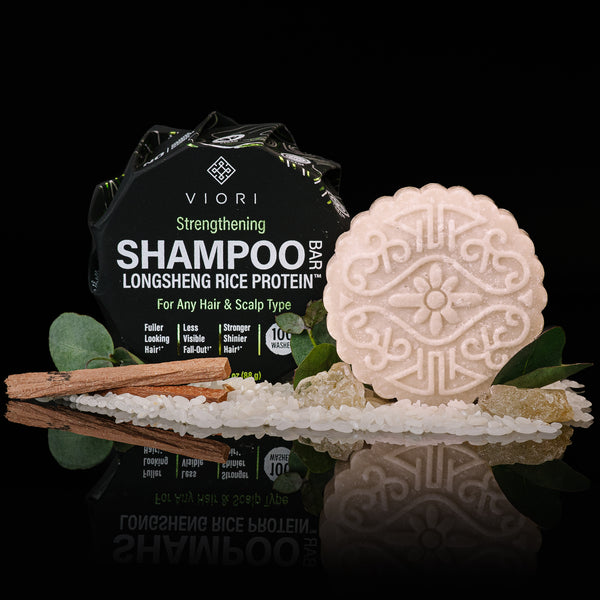
Here's a detail I love: those decorative embossed patterns on some bars (like Viori's mooncake-inspired designs) aren't just aesthetic. The increased surface area allows faster drying between uses, reducing microbial colonization. Form meets function in the most elegant way.
When Bar Shampoos Make Sense (And When They Don't)
After this technical deep-dive, let me give you the practical guidance I share with clients:
Bar Shampoos Excel For:
- Normal to dry scalps: The conditioning agents are beneficial, and buildup is less visible
- Medium to coarse hair textures: Can handle the friction and benefit from the protein
- Travelers and minimalists: Durability, TSA-friendly, space-saving
- Anyone prioritizing plastic reduction: Even with trade-offs, the environmental benefit is substantial
Bar Shampoos Are Challenging For:
- Very oily scalps: Conditioning agents in the shampoo phase can exacerbate oiliness
- Color-treated hair with semi-permanent dye: The friction plus pH can strip color faster
- Very fine hair: Buildup shows quickly and can weigh hair down
- Those expecting identical performance to liquid routines: It's different, not better or worse-just different
The Formulation Transparency We Deserve
If I could wave a magic wand over the sustainable hair care industry, I'd require brands to:
- Publish actual concentrations of featured ingredients, not just list them
- Specify sourcing for palm-derived ingredients with transparent supply chains
- Acknowledge the friction factor and provide application technique guidance
- Share microbial challenge test results
- Be honest about concentration limitations compared to liquid formulations
Viori has moved toward this transparency by sharing the story behind their formulations-the real women of the Red Yao tribe, the traditional fermentation processes, and the careful balance between honoring tradition and creating stable, effective modern products.
The Future of Sustainable Hair Care
Based on formulation chemistry trends I'm tracking, here's where we're heading:
WHAT CUSTOMERS ARE SAYING
Real reviews for Rice Water Shampoo Bar – All Hair Types | VIORI
Powder-to-Foam Systems
Spray-dried surfactant powders that activate with water, requiring no binders and allowing higher active ingredient concentrations while eliminating the friction problem entirely.
Waterless Concentrate Systems
Ultra-concentrated pastes you dilute at home, eliminating shipped water weight (bars' main advantage) while maintaining liquid-form benefits.
Fermentation-Direct Products
Instead of adding fermented ingredients to a bar, creating the entire product through microbial fermentation, using bacterial cellulose as the structural matrix-truly alive products that continue beneficial enzymatic activity during storage.
The innovation happening in this space is genuinely exciting.
My Honest Professional Assessment
Here's what two decades of working with hair has taught me: sustainable choices often involve accepting "good enough" performance in exchange for environmental benefits-and there's nothing wrong with that trade-off.
The problem arises when marketing suggests you can have identical performance to conventional products while being radically more sustainable. Chemistry and physics don't allow that yet.
Bar shampoos represent a conscious compromise-one that's:
- Chemically fascinating
- Environmentally beneficial
- Functionally adequate (and often excellent) for many users
- Not optimal from a pure performance standpoint for everyone
The real innovation isn't in ancient ingredients or the absence of harsh chemicals (liquid shampoos can achieve both). The innovation is creating a structurally stable solid form that delivers adequate cleansing and conditioning while being consumer-friendly enough for mass adoption.
What This Means For Your Hair
When clients ask me about switching to shampoo bars, I tell them this:
Understand what you're getting-and what you're trading. You're choosing a product that requires different application techniques, may need formulation experimentation to find your match, and works differently than what you're used to.
But you're also choosing a product that eliminates plastic bottles, reduces shipping emissions, often supports more ethical ingredient sourcing, and can deliver genuinely good results when matched to your hair type and used correctly.
That's a trade-off worth considering.
The chemistry tells us that perfect solutions don't exist yet-but thoughtful, informed choices do. And sometimes, understanding the complex science behind our products helps us make better decisions for both our hair and our planet.
Have you made the switch to shampoo bars? What's been your experience? I'd love to hear about your journey in the comments below.


