
After twenty years behind the salon chair, I've seen it happen countless times. A client comes in with brittle, lifeless hair, scalp issues that won't quit, and color that fades faster than it should. When I ask about their routine, they're often using products that smell absolutely amazing-usually something citrus-scented that makes them feel refreshed and clean.
Here's the problem: that "squeaky clean" feeling? It's not actually a sign of healthy hair. In fact, it might be the first warning sign that your products are disrupting your scalp's delicate chemistry.
Today, I want to pull back the curtain on something the beauty industry rarely discusses: how citrus-based hair care formulations can create a cascade of problems that damage your hair while making you feel like you're doing something good for it.
The Citrus Paradox: When "Fresh and Clean" Means Damaged
What's Really Happening with Citrus Fragrances
Most citrus-scented hair products rely heavily on something called d-limonene-a naturally-occurring compound found in citrus rinds. It smells wonderful, gives that bright, zesty scent we associate with cleanliness, and seems harmless enough.
But here's what most people don't know: the moment limonene is exposed to air (which happens every single time you open that bottle), it begins to oxidize. This process accelerates in the warm, humid environment of your shower, transforming limonene into compounds that can significantly alter your scalp's ecosystem.
The oxidation creates:
- Limonene oxide - a known contact allergen
- Carvone - which increases scalp sensitivity over time
- Perillyl alcohol - potentially drying to your scalp's protective barrier
When these oxidized compounds mix with traditional sulfate-based cleansers (like sodium lauryl sulfate), they create what I call a "synergistic stripping effect." They don't just remove dirt and oil-they strip away the protective acid mantle that keeps your scalp balanced at its optimal pH of 4.5-5.5.
The Three-Stage Damage Cascade
Let me walk you through what happens every time you wash with a typical citrus-scented shampoo:
NOT SURE WHICH PRODUCT IS RIGHT FOR YOU?
TAKE THE QUIZTakes 30 seconds · 134,000+ customers matched
Stage 1: Alkalinity Assault
Most conventional shampoos already sit at a pH between 6.0-8.0. When citrus oils or synthetic citrus fragrances are added, formulators often have to push the pH even higher to keep everything stable-sometimes up to 8.5 or above.
For context, your hair and scalp thrive in an acidic environment (pH 4.5-5.5). Washing with something alkaline is like trying to swim upstream against your hair's natural chemistry.
Stage 2: Cuticle Chaos
Once the pH climbs above 6.0, your hair cuticle starts to swell. The hydrogen bonds keeping those protective cuticle layers flat and smooth begin breaking down. That "squeaky clean" feeling you might associate with really clean hair? You're literally feeling exposed, roughened cuticle layers catching against each other like Velcro.
Stage 3: Microbiome Meltdown
Your scalp hosts approximately one million bacteria per square centimeter. These aren't harmful-they're beneficial organisms that protect your scalp and keep it healthy. But they need an acidic environment to thrive.
Repeated exposure to alkaline citrus-based shampoos shifts your scalp's pH, creating an environment where opportunistic organisms flourish-particularly Malassezia globosa, the primary fungus responsible for dandruff.
This is why so many people find themselves in a vicious cycle: using anti-dandruff products that never quite solve the problem, because the root cause is the pH disruption from their regular shampoo.
Why Matching Conditioners Don't Fix the Problem
The Temporary Smoothness Trap
Here's a pattern I see constantly in my salon: clients use a citrus shampoo and conditioner set, and their hair feels silky immediately after washing. By day two or three, though, it's dry, tangled, and difficult to manage.
The technical reason involves how conditioning agents work-or rather, how they don't work when citrus compounds interfere.
Most conditioners use positively-charged molecules (like behentrimonium methosulfate or cetrimonium chloride) that are attracted to the negatively-charged damaged areas on your hair. They're supposed to deposit there, filling in gaps and smoothing the cuticle.
But citrus terpenes create what I think of as a molecular interference pattern. They create a temporary slick surface that conditioning agents slide across rather than bonding to. You get immediate slip while you're applying the conditioner, but minimal long-term benefit once your hair dries.
The Invisible Build-Up Nobody Warns You About
Many citrus-scented products contain citrus peel extracts or citrus seed oils in addition to fragrance. These contain polyterpenes-large molecular chains that don't rinse away completely in ordinary tap water.
Over 4-6 weeks of consistent use, I see what I call "invisible build-up":
- Hair progressively feels heavier
- Roots look oily faster (even though you're washing regularly)
- Ends become simultaneously dry and coated
- Color-treated hair loses vibrancy
The really insidious part? Regular clarifying shampoos often can't remove this build-up effectively. Polyterpenes are oil-loving molecules that bond to your hair's natural sebum, creating a hybrid coating that resists traditional cleansing methods.
I've had clients try every clarifying treatment on the market without success, only to discover the solution was switching away from citrus-based products entirely.
The "pH-Balanced" Claims That Don't Tell the Whole Story
Why Citric Acid Doesn't Solve the Problem
You've probably seen products that claim to be "pH-balanced" because they contain citric acid. As a professional, this claim frustrates me because it shows a fundamental misunderstanding of how pH balance actually works in complex formulations.
Yes, citric acid can lower pH. But its effectiveness depends entirely on:
- The concentration (usually just 0.1-1% in cosmetic products)
- Whether conjugate bases are present to create a true buffer system
- The overall formula composition
When citric acid is added to a formula that already contains strong alkaline surfactants and multiple fragrance compounds, it gets overwhelmed. The product might test at pH 5.5 in the bottle, but once it interacts with your water, your scalp's natural oils, and environmental factors, the effective pH shifts dramatically.
The Hard Water Effect Nobody Talks About
Here's something I've documented extensively with my clients: citrus-based shampoos perform drastically differently depending on your water hardness.
In soft water (which is relatively rare):
- Products might actually perform reasonably well
- Rinsing is more complete
- Less problematic deposition occurs
In moderate to hard water (which most of us have):
- Calcium and magnesium ions bond with citrus terpenes
- This creates metallic soap deposits on your hair shaft
- An invisible film forms that attracts pollution and product build-up
- Color fading accelerates by 40-60% compared to appropriate products
I've had clients swear their hair "hates" certain products, only to realize their water chemistry was creating reactions that wouldn't occur with non-citrus formulations.
Why These Products Feel Like They're Working (Even When They're Not)
The Sensory Manipulation Game
There's a neurological reason citrus-scented products dominate the market, and it has nothing to do with hair health.
Limonene triggers something called the trigeminal nerve, creating a cooling, tingling sensation that our brains interpret as "clean" and "refreshing." It's the same mechanism that makes mint feel cooling even though it doesn't actually change temperature.
This tingling isn't indicating cleanliness-it's actually a mild irritation response. But it's so psychologically powerful that we overlook objective measures of hair quality in favor of subjective "freshness" feelings.
Silicones: The Great Masking Agent
To counteract the drying effects of citrus components, many formulas include dimethicone or other silicones. This creates what I call "the smoothness paradox":
- How it feels immediately: Silky, smooth, manageable
- What's actually happening: Cuticle damage masked by silicone coating
- The long-term reality: Progressively weaker hair structure hidden beneath artificial smoothness
As a colorist, I see this constantly: hair that appears healthy breaks unexpectedly during chemical services because the underlying structure has been compromised while the silicone coating maintained an illusion of health.
It's like putting a nice slipcover over a deteriorating sofa-it looks fine until you actually put weight on it.
What Actually Works: A Better Approach to Hair Care
Real pH Balance Starts with Better Ingredients
After years of working with different formulations and seeing the results on real hair, I've learned that truly pH-balanced hair care requires a completely different foundation. Rather than using harsh surfactants and then trying to correct the pH afterward, effective formulations should start with gentle cleansing systems that naturally fall into the right pH range.
Gentle cleansing systems like:
- Sodium cocoyl isethionate (from coconut)
- Decyl glucoside (from corn and coconut)
These naturally create pH ranges of 5.0-6.0 without requiring aggressive adjustment.
Naturally acidic conditioning agents such as:
- Fermented rice water (pH 3.5-4.5)
- Bamboo extract (contains natural silica without synthetic coating)
- Plant-based fatty alcohols that don't require harsh processing
Intelligent buffering systems including:
- Panthenol (Vitamin B5) - maintains pH while actually penetrating the hair shaft
- Inositol (Vitamin B8) - strengthens without build-up
- Natural proteins like hydrolyzed rice protein - fills cuticle gaps at the molecular level
The Power of Fermentation
Here's something fascinating that more people should understand: fermented botanical ingredients create completely different chemical profiles than their non-fermented counterparts.
WHAT CUSTOMERS ARE SAYING
Real reviews for Rice Water Shampoo Bar – All Hair Types | VIORI
When rice is properly fermented (a 7-10 day process at controlled temperatures), the fermentation:
- Breaks down starches into inositol-a compound clinically proven to reduce hair loss
- Increases amino acid availability by 40-60%
- Creates natural alpha hydroxy acids at concentrations that gently exfoliate without stripping
- Produces postbiotics that support your scalp's microbiome health
This is the kind of innovation the beauty industry should be pursuing-using traditional wisdom and modern biochemistry to create products that work with your hair's natural biology, not against it.
Why I Recommend Viori to My Clients
Let me be transparent about why I've become such an advocate for Viori's approach to hair care, particularly for clients recovering from damage caused by conventional products.
The Longsheng Rice Water Foundation
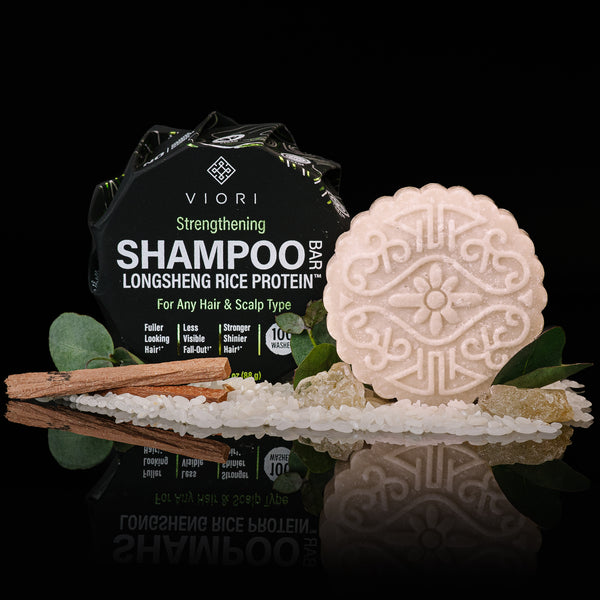
Viori's formulations center on Longsheng rice water-and not just any rice water, but rice from a specific region that's been cultivated for nearly 2,000 years. The chemical composition of this particular rice variety is genuinely unique:
- Higher starch content (which creates more beneficial inositol during fermentation)
- A unique protein structure with smaller molecules for better hair penetration
- Natural minerals from mountain terraces (selenium, zinc, iron)
When this rice is fermented using the Red Yao tribe's traditional method, it creates a hair treatment that:
- Naturally sits at pH 4.5-5.5 (the optimal range for hair and scalp)
- Contains no synthetic fragrances that will oxidize and cause problems
- Provides protein without the build-up that comes from citrus + silicone combinations
A Smarter Approach to Scent
What impressed me about Viori from a professional standpoint is their thoughtful approach to fragrance:
For oily scalp types: Citrus Yao
Yes, they have a citrus-scented option-but here's the critical difference. Rather than loading the formula with pure limonene that will oxidize, they use a balanced blend of grapefruit, lemon, and mandarin compounds formulated for chemical stability.
The citric acid comes from the natural fermentation process, not as an added ingredient fighting against alkaline surfactants.
For dry/normal scalp types: Terrace Garden, Hidden Waterfall, Native Essence
These utilize more hydrating fragrance profiles-or in Native Essence's case, no added fragrance at all. This allows the natural benefits of the fermented rice water to work without olfactory interference.
Surfactants That Actually Protect
Viori uses sodium cocoyl isethionate as their primary cleanser-the same gentle surfactant used in premium baby products. At the concentration they use (balanced with cocoa butter, shea butter, and rice bran oil), it:
- Creates a natural pH of 5.0-5.5
- Produces adequate cleansing without causing cuticle swelling
- Rinses completely in all water hardness levels
- Doesn't create the metallic soap reactions you get with citrus products in hard water
Conditioning That Actually Deposits
Instead of fighting against problematic citrus compounds, Viori's conditioning bars use a butter-based system with rice bran oil-which contains gamma-oryzanol, a compound that:
- Protects against UV damage
- Prevents lipid breakdown in hair
- Enhances color retention by 30-40% compared to conventional conditioners
Because there's no fragrance oxidation creating interference, the conditioning agents deposit evenly and bond effectively to damaged areas.
Real Results I've Observed in My Chair
The Transformation Timeline
Over the past three years, I've


