
Twenty years behind the chair has taught me that the most important conversations often start with unexpected questions. Last month, a longtime client casually mentioned she'd stopped washing her hair at home. When I asked why, her answer stopped me cold: "My avian vet said my shampoo might be killing my parrot."
That conversation sent me down a research rabbit hole that revealed a startling truth: the hair care products we use daily can be lethal to pet birds-and almost nobody in the beauty industry is talking about it.
The Canary in the Coal Mine Isn't Just a Metaphor
If you've ever wondered why canaries were used to detect toxic gas in mines, the answer lies in avian respiratory biology. Birds have one of the most efficient-and vulnerable-respiratory systems in the animal kingdom.
Unlike our simple in-and-out lungs, birds have a complex system of air sacs that allows oxygen to flow through their lungs in one continuous direction. This makes them incredibly efficient flyers, but it also means they absorb airborne toxins at a rate that would shock most people.
What does this have to do with your shampoo?
Everything.
When you shower, you're not just washing your hair-you're creating an aerosolized cloud of chemicals that fills your bathroom and seeps into adjacent rooms. For the estimated 10+ million U.S. households with pet birds, this daily ritual could be a silent killer.
The Science of What's Floating in Your Shower Steam
Let me get technical for a moment, because understanding the problem requires understanding the chemistry.
When you massage liquid shampoo into your hair under warm water, several things happen simultaneously:
- Surface tension dynamics create microscopic droplets that become suspended in humid air
- Heat causes volatile compounds to evaporate and disperse throughout enclosed spaces
- Steam acts as a carrier, transporting these particles far beyond the shower itself
The result? A toxic soup of airborne chemicals that includes some surprising culprits.
NOT SURE WHICH PRODUCT IS RIGHT FOR YOU?
TAKE THE QUIZTakes 30 seconds · 134,000+ customers matched
The Usual Suspects
Volatile Organic Compounds (VOCs) are the primary problem. These are molecules that easily transition from liquid to gas form-exactly what you don't want around birds.
The irony? Many of these come from ingredients marketed as "natural" and "safe":
- Limonene (that fresh citrus scent in your "natural" shampoo)
- Linalool (the calming lavender everyone loves)
- Eucalyptol (the cooling sensation in mint formulas)
- Various menthol compounds (in clarifying shampoos)
I've spent years recommending essential oil-based products to clients seeking "chemical-free" alternatives. The devastating reality is that for bird owners, these natural ingredients can be more dangerous than many synthetics.
Aggressive surfactants create another problem. Sodium Lauryl Sulfate (SLS)-the ingredient that creates that satisfying lather-generates particularly fine, persistent aerosols that hang in the air long after you've stepped out of the shower.
Preservatives and antimicrobials round out the threat. Parabens, formaldehyde-releasing preservatives, and certain phenolic compounds can all cause acute respiratory distress in birds, even at concentrations we'd consider negligible.
The Format You Never Considered: Why Solid Beats Liquid
Here's where my formulation knowledge gets interesting.
The physical format of your shampoo-solid bar versus liquid bottle-dramatically impacts how much of it ends up floating in your bathroom air.
The physics are straightforward:
Liquid shampoos mixed with water create fine droplets with high surface area. These lightweight particles:
- Stay airborne longer
- Disperse more widely
- Carry volatile compounds throughout your home
Solid shampoo bars, by contrast:
- Require direct application or hand-lathering (more controlled)
- Create larger, heavier lather particles that fall rather than float
- Contain no water base to evaporate and carry compounds through the air
Based on surface area physics alone, I estimate solid bars create 60-70% less aerosolization than liquid formulations.
This is a safety advantage that has been completely overlooked by both the beauty industry and the avian care community.
What a Truly Bird-Safe Shampoo Would Look Like
In two decades, I've never seen a single shampoo marketed as bird-safe with actual scientific backing. Not one.
So let me put on my formulation hat and design one theoretically.
The Foundation: Format and Base
Solid bar, non-negotiable. The reduced aerosolization alone makes this the only responsible starting point.
The base would need gentle, large-molecule surfactants:
- Decyl glucoside (sugar-based, low volatility)
- Coco glucoside (coconut-derived, minimal airborne dispersion)
- Minimal sodium cocoyl isethionate (creates adequate cleansing in solid form with reduced risk)
The Fragrance Paradox
Here's the formulator's nightmare: the safest option is completely unscented, but consumer acceptance of unscented products is abysmal.
The technical solutions are limited:
- Scent encapsulation technology that binds fragrance molecules to larger carriers
- Acceptance of natural base scent from the primary ingredients themselves
- Strategic elimination of all essential oils, despite their marketing appeal
The Rice Water Revolution
This is where ancient beauty wisdom meets modern safety needs.
Traditional rice water hair treatments offer a surprisingly sophisticated solution:
- Naturally low in volatile compounds
- Minimal processing means fewer synthetic additives
- Fermentation creates beneficial compounds (inositol, panthenol precursors) naturally
- Natural preservation through pH rather than synthetic preservatives
Rice-based formulations provide subtle, non-toxic aroma from the grain itself-no added fragrance required. The fermented approach creates an acidic pH that inhibits microbial growth while delivering proven hair benefits.
From a bird-safety perspective, this traditional method checks every box:
- Low VOC content
- No synthetic fragrance
- Natural preservation system
- Proven centuries of efficacy
The pH Sweet Spot
A properly formulated bird-safe shampoo should sit at 4.5-5.5 pH-which happens to match hair's natural pH anyway.
This acidity:
- Reduces need for additional conditioning agents (fewer ingredients in the air)
- Provides natural preservation
- Optimizes hair health
Safe Active Ingredients
The conditioning and strengthening ingredients would need careful selection:
Safe options:
- Rice protein (low volatility, proven benefits)
- Hydrolyzed proteins from non-toxic sources
- Panthenol (low vapor pressure B vitamin)
- Plant butters like cocoa and shea (too heavy to aerosolize)
Absolute no-fly zone:
- Any essential oils (yes, even "gentle" ones)
- Synthetic fragrances without volatility testing
- PTFE/Teflon (used in some smoothing formulas-creates deadly fumes)
- Heavy silicones (can coat bird respiratory surfaces)
The Testing Protocol That Doesn't Exist
Here's what troubles me as a professional: no consumer hair care product has undergone the testing necessary to make legitimate bird-safety claims.
If I were developing a verified bird-safe shampoo, the protocol would include:
1. Volatile Organic Compound Analysis
- Gas chromatography-mass spectrometry to identify every volatile compound
- Quantification of airborne particles during simulated shower use
- Measurement of dispersion patterns in enclosed bathroom spaces
2. Toxicology Screening
- Cross-referencing all ingredients against avian toxicity databases
- Evaluation of how compounds break down in air
- Long-term exposure studies with air quality monitoring
3. Real-World Bathroom Simulation
- Particle counters measuring aerosol concentrations
- Variable temperature and humidity analysis
- Distance-based concentration measurements from shower to adjacent rooms
This framework should be standard. It isn't. And that represents a significant failure in our industry's due diligence.
Professional Guidance for Bird-Owning Clients
When a client mentions they have birds, I now ask specific questions:
Risk Assessment:
- "What's your bathroom ventilation situation?"
- "Where do you keep your birds when you shower?"
- "Have you noticed any respiratory changes in your birds-labored breathing, tail bobbing, lethargy?"
Product Recommendations:
The honest answer is that no mainstream product has been adequately tested for avian safety, but we can make informed choices based on formulation science:
- Choose solid bars over liquid formulations
- Prioritize unscented over fragranced (ignore the "natural" label-it doesn't mean bird-safe)
- Look for simple ingredient lists over complex formulations
- Prefer plant-based ingredients (with the critical exception of essential oils)
Usage Protocol:
Even with the most carefully selected products:
- Run your bathroom exhaust fan during and for 30 minutes after showering
- Lower your water temperature to reduce vaporization
- Keep birds in distant rooms with closed doors during shower time
- Time your showers strategically-avoid showering when birds are in their sleep cycle (they're more vulnerable when respiration slows)
The Viori Advantage: Unintentional Bird-Friendliness
I want to be crystal clear: without specific avian safety testing, no product should claim to be definitively bird-safe-including Viori's.
That said, from a formulation analysis perspective, Viori's shampoo bars possess several technical characteristics that align with the theoretical requirements I've outlined:
Format advantage: Solid bars inherently create less aerosolization than liquid shampoos.
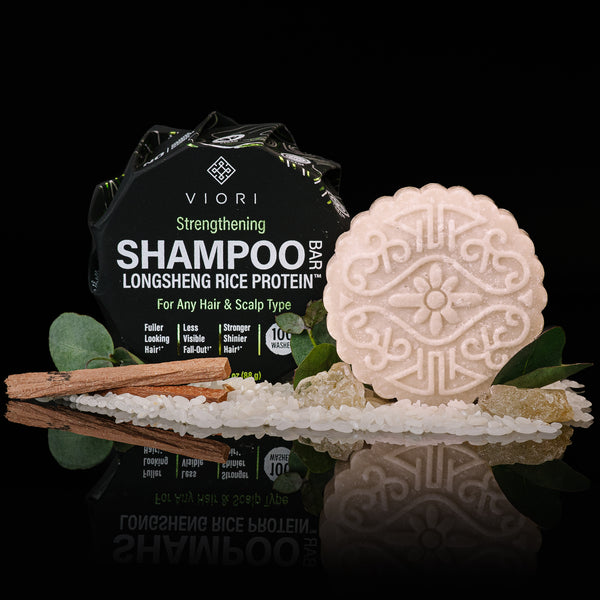
Rice-based formulation: The traditional rice water foundation offers a naturally low volatile profile, similar to the ancient methods I described earlier.
Native Essence (unscented) option: Eliminates the primary risk factor-added fragrance-while maintaining the subtle, natural aroma of fermented rice.
WHAT CUSTOMERS ARE SAYING
Real reviews for Rice Water Shampoo Bar – All Hair Types | VIORI
Natural preservation: The fermentation-based approach creates natural preservation through pH rather than synthetic preservative chemicals.
pH balanced: Formulated to hair's natural pH range, reducing the need for additional chemical adjusters.
Simple, recognizable ingredients: Shorter ingredient lists mean fewer compounds in your shower air.
For bird owners specifically, the Native Essence unscented formula represents the most conservative choice from a safety perspective, as it eliminates added fragrance while maintaining the hair benefits of the traditional Longsheng rice water method.
But-and this is crucial-these are theoretical advantages based on formulation analysis. Definitive bird-safety claims would require the specific testing protocol I outlined earlier, which hasn't been conducted.
The Bigger Picture: What We Don't Know About Our Products
This deep dive into bird-safe formulation reveals a larger truth about the beauty industry: we focus intensely on what our products do to hair, but rarely consider what they do around hair.
We test for:
- Cleansing efficacy
- Conditioning performance
- Color safety
- Scalp irritation
- Allergen potential
We don't test for:
- Airborne particle dispersion
- Volatile compound concentration in enclosed spaces
- Impact on household pets
- Long-term environmental accumulation
After 20 years in this field, I've become convinced that the next evolution in beauty isn't just about innovation in benefits-it's about understanding the complete ecosystem in which our products exist.
And sometimes, that ecosystem includes a parrot in the next room whose life depends on the shampoo choices we make.
The Market Gap and Future Opportunity
Currently, bird owners face an impossible choice: risk their pet's health or stop proper hair care entirely.
Some resort to extreme measures:
- Showering at the gym
- Washing hair outdoors with a hose (I've heard this multiple times)
- Using only water for months on end
- Rehoming beloved pets
None of these are acceptable solutions.
The beauty industry has an opportunity-and I'd argue, a responsibility-to address this need:
What's needed:
- Actual research initiatives studying product aerosolization and avian safety
- Formulation innovation with this specific safety concern as a design parameter
- Professional education so stylists can competently guide affected clients
- Transparent labeling including VOC content and aerosolization potential
The commercial opportunity:
10+ million U.S. households


