
“Wildroot shampoo” is one of those search terms that sounds specific, but it usually isn’t. Most people aren’t truly looking for one exact formula-they’re looking for a root-and-botanical approach to scalp health: cleaner ingredients, less grease, fewer flakes, and hair that feels light and alive again.
After 20 years behind the chair, I can tell you the reason wildroot-style shampoos get such mixed reviews has very little to do with whether a root extract is “good.” The outcome is decided by the unglamorous stuff: what’s actually cleansing your hair, how the formula manages pH, and whether the ingredients quietly create film and friction over time.
Let’s decode the trend with real hair science-plus the details most articles skip.
What people usually mean by “wildroot shampoo”
When clients ask me about wildroot-style haircare, the goals tend to be consistent. They want hair that feels clean longer, a calmer scalp, and a routine that doesn’t feel harsh or overly synthetic.
NOT SURE WHICH PRODUCT IS RIGHT FOR YOU?
TAKE THE QUIZTakes 30 seconds · 134,000+ customers matched
- Oil control without that stripped, squeaky feeling
- Relief from itch or flakes (whether oily scalp dandruff or dry scalp shedding)
- Softer hair with less frizz and better slip
- Fewer irritants, especially for sensitive scalps
The tricky part is that two products can both sound “root-forward” and behave completely differently on hair. That’s where we need to look under the hood.
The three technical variables that make or break root-forward shampoos
1) What’s doing the cleansing: the surfactant system
Roots can contribute to a formula in meaningful ways, but most of the time they are not the primary reason your hair feels clean. The real work is done by surfactants-the cleansing molecules that lift oil and grime so they rinse away.
If a shampoo leaves you feeling fresh but comfortable, it’s usually because the surfactant system is well-chosen and well-balanced. If it leaves you tight, dull, or greasy again too quickly, it’s often because the cleanser is either too aggressive or not rinsing as cleanly as you need.
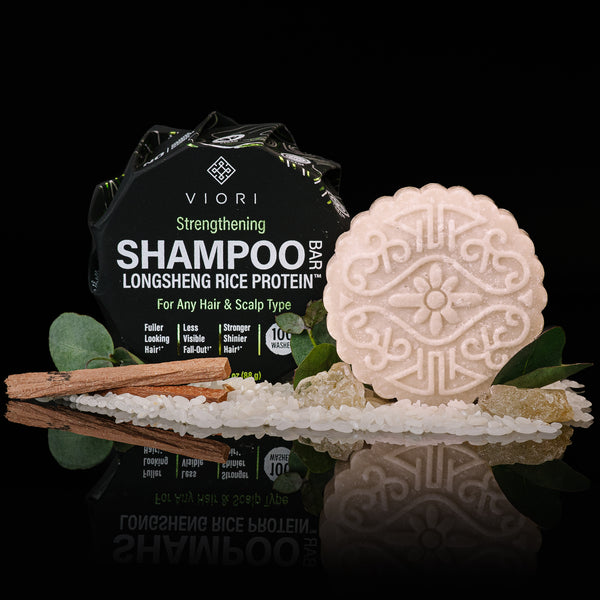
In Viori shampoo bars, the cleanser is Sodium Cocoyl Isethionate (SCI), a mild, effective cleansing ingredient derived from coconut. (Important note: derived from coconut doesn’t mean coconut oil-those are two different things.) In salon terms, SCI tends to cleanse thoroughly without that harsh “over-stripped” aftermath many people associate with stronger detergents.
2) pH: the quiet factor behind shine, frizz, and breakage
If there’s one topic that deserves more attention in the “natural shampoo” world, it’s pH. pH influences how your cuticle behaves, and your cuticle controls what you see and feel-shine, smoothness, tangling, frizz, and even how delicate your ends become over time.
When hair is repeatedly exposed to formulas that skew too alkaline, the cuticle can swell and lift more than it should. That can translate into:
- More tangles and roughness
- Less shine (light doesn’t reflect as evenly)
- More frizz and “puff” through the mid-lengths
- Faster wear-and-tear on the ends
Viori specifically formulates their bars to be pH balanced, which is a big reason people often describe the hair feel as cleaner, softer, and less coated-without that “straw” phase some experience when switching routines.
3) Are the roots functional-or mostly marketing?
Root extracts can absolutely be useful, especially when the scalp is irritated or when you’re trying to support a healthier environment at the skin level. But in a rinse-off product, results depend on details most labels don’t explain:
- How the extract is made (water, glycerin, alcohol, or oil extractions behave differently)
- Whether it’s standardized (consistent active levels or not)
- How much is used (many botanicals are included at “label appeal” levels)
- Your scalp barrier (a reactive scalp can respond to almost anything, including botanicals)
This is why one person swears by a root-heavy shampoo and another person says it made their scalp angry in a week.
The rarely discussed issue: “phantom buildup” from botanicals
Most buildup conversations online revolve around silicones or heavy oils. That’s not wrong-but it’s incomplete. Here’s a problem I see often with botanical-forward routines: hair starts out great, then gradually feels dull, grabby, or “never quite fresh,” especially at the crown.
One reason is that many roots and herbs contain polyphenols and tannins. In hard water, those compounds can interact with minerals like calcium and magnesium and create a film that changes how hair behaves. Not always visible, but you feel it.
Clients usually describe it like this:
- “My hair feels clean, but also kind of coated.”
- “It tangles faster even though I’m conditioning.”
- “My roots look flatter sooner, but my ends feel drier.”
When you hear those phrases, it’s worth thinking less about “I need a stronger shampoo” and more about mineral interactions, residue behavior, and pH.
Conditioner chemistry matters more than most people realize
A big part of the wildroot appeal is the promise of healthier-looking hair-not just a clean scalp. That’s where conditioner comes in.
Here’s the quick technical explanation: shampoo removes some protective oil from the hair fiber. Conditioner helps protect the strand by clinging to it-often using positive charge to bind to the typically negatively charged areas of the hair, especially where it’s more weathered or porous.
Viori conditioner bars use Behentrimonium Methosulfate (often shortened to BTMS), a conditioning ingredient prized for slip and detangling. Despite the name, it’s not a harsh cleansing sulfate; it’s a conditioning agent used to help hair feel smoother and more manageable.
The mechanical detail most posts forget: bar friction
Whether you’re using a botanical liquid shampoo or a shampoo bar, technique affects results. With bars specifically, one common mistake is rubbing the bar directly on the hair over and over-especially on the same top section near the crown.
That repeated rubbing can create unnecessary friction, and friction can disturb the cuticle-particularly on color-treated, high-porosity, or easily frizzy hair.
A better approach (and one Viori recommends) is simple:
- Create lather in your hands first.
- Apply the lather with your fingertips, focusing on the scalp.
- Let the runoff cleanse the lengths as you rinse.
You still get a thorough cleanse, but with less mechanical stress on the hair fiber.
WHAT CUSTOMERS ARE SAYING
Real reviews for Rice Water Shampoo Bar – All Hair Types | VIORI
Choosing a Viori routine that matches the “wildroot” goal
If you’re drawn to wildroot-style haircare, you’re usually trying to solve a scalp pattern. In that case, selecting the right Viori bar is less about the prettiest scent and more about what your scalp actually does between washes.
If your scalp gets oily quickly
Citrus Yao is commonly the best match for normal-to-oily scalp types. Viori notes that the citrus components include citric acid, which helps break down oil effectively and can help some people stretch time between washes.
If your scalp feels dry, tight, or easily irritated
Terrace Garden, Hidden Waterfall, or Native Essence are often better suited for normal-to-dry scalp types. If you’re sensitive to fragrance, Native Essence is the unscented option and is typically the gentlest choice.
If you have oily roots but dry ends
This is extremely common. Many people do best with a “split routine”: cleanse the scalp with Citrus Yao, then use a more moisturizing conditioner option on the mid-lengths and ends, such as Terrace Garden, Hidden Waterfall, or Native Essence.
How long does it take to see a difference?
You can feel a change in slip and cleanliness after one wash-especially if you’re switching away from harsher cleansing or heavy residue. But scalp balance is slower. Viori generally recommends giving a new routine 2-3 months before deciding it’s not for you, because hair and scalp can take time to settle into a new pattern.
The bottom line
The most surprising truth about “wildroot shampoo” is that the roots themselves are rarely the deciding factor. What makes a routine successful is whether it respects the fundamentals: a mild cleanser that rinses clean, pH balance, smart conditioning chemistry, and low-friction technique.
If you want, I can help you dial this in precisely-tell me how soon your scalp feels oily after washing (1-2 days, 3 days, or 4+ days), whether your hair is color-treated, and what your ends are like (dry, frizzy, or fine). I’ll map out a Viori routine and a technique plan that matches the results you’re chasing.


