
When clients ask me about Asian hair growth products, they usually expect me to talk about rice water recipes or ingredient lists. But after two decades in professional hair care, I've learned that the real story goes much deeper-into soil chemistry, fermentation science, and the kind of sophisticated biochemistry that even most stylists never discuss.
Let me take you beyond the surface-level advice you'll find everywhere else. This is the technical truth about why traditional Asian hair care works, and why modern attempts to replicate it often fall short.
The Secret Isn't Just the Rice-It's Where It Grows
Why Location Matters More Than You Think
Here's something that surprised me when I started researching traditional formulations: the geological composition of the soil fundamentally changes the hair care properties of the rice grown in it.
Think of it like wine. Two vineyards using identical grape varieties produce completely different wines based on their terroir-the unique combination of soil, climate, and topography. The same principle applies to rice used in hair care, particularly rice from ancient terraced systems like those in Longsheng, where Viori sources their ingredients.
These terraces have been cultivated for nearly 1,000 years without crop rotation. This creates something remarkable: a trace mineral profile in the rice that modern agricultural systems simply cannot duplicate.
What makes this rice different?
The ancient terraced paddies concentrate specific trace elements:
- Selenium for antioxidant protection
- Silica for hair strength and structure
- Zinc for follicle health
- Manganese for enzyme activation
But here's the fascinating part: the traditional flooding and draining cycles create oxidation-reduction reactions in the soil that alter how these minerals are absorbed by the rice plant. The minerals don't just exist in the rice-they exist in more bioavailable forms that your scalp and hair can actually use.
Why Your DIY Rice Water Isn't Working
I can't tell you how many clients have come to me disappointed that their homemade rice water treatments didn't deliver the dramatic results they'd heard about. Now I understand why.
NOT SURE WHICH PRODUCT IS RIGHT FOR YOU?
TAKE THE QUIZTakes 30 seconds · 134,000+ customers matched
The pH problem: When you ferment rice water at home without monitoring, the pH can shoot up to 8-10-highly alkaline. This raises your hair cuticle and actually causes protein loss, the opposite of what you're trying to achieve. Proper fermentation maintains pH between 3.5-6.5, which is critical for cuticle closure and protein retention.
The protein structure issue: This is where my chemistry background becomes relevant. When rice ferments, enzymes break down the rice protein into smaller peptide chains. But the size of these chains matters enormously:
- Proteins over 1,000 Daltons (molecular weight units) sit on the hair surface-cosmetic effect only
- Proteins between 200-1,000 Daltons penetrate the cuticle and bind to the cortex-this is where real strengthening happens
- Proteins below 200 Daltons wash away too easily
Controlled, monitored fermentation (like the 7-10 day process Viori uses) creates an optimal distribution of these peptide sizes. Your kitchen counter fermentation creates random-length chains, which explains the inconsistent results.
The fermentation monitoring factor: Uncontrolled fermentation allows acetobacter (vinegar bacteria) to overgrow, producing excessive acetic acid. While some acidity is good, too much degrades the beneficial proteins you're trying to preserve. Traditional methods developed over centuries include timing and temperature controls that prevent this.
The Fermentation Secret: Creating Compounds That Don't Exist in Fresh Rice
After years of analyzing hair care formulations, I've learned that fermentation isn't just about preservation-it's about transformation. The fermentation process creates entirely new compounds with specific hair benefits.
Three Critical Changes During Fermentation
1. Mineral chelation: The organic acids produced during fermentation bind to minerals (chelate them), creating forms that penetrate your scalp far more effectively than the minerals in unfermented rice.
2. Oligopeptide creation: As I mentioned earlier, fermentation breaks rice protein into specific molecular weights (600-1,000 Daltons optimal) that can penetrate deep into your hair cortex. These aren't just sitting on top-they're integrating into your hair structure.
3. Secondary metabolites: This is where it gets really interesting. Fermentation produces γ-oryzanol derivatives-compounds that have documented 5α-reductase inhibitory effects.
For context, 5α-reductase is the enzyme that converts testosterone to DHT (dihydrotestosterone), which is implicated in pattern hair loss. Many pharmaceutical hair loss treatments work by inhibiting this enzyme. The fermented rice water contains natural compounds with similar activity, though obviously at different concentrations than medications.
The Scalp Microbiome Connection No One Talks About
This is one of my favorite topics because it's so rarely discussed in consumer beauty literature, yet it's absolutely critical to understanding why traditional Asian hair care delivers results that go beyond superficial shine.
Recent dermatological research (2019-2023) has established what traditional practitioners always knew intuitively: scalp health and hair growth are intimately connected to microbial balance.
The Prebiotic Effect
Fermented rice water contains specific types of carbohydrates that act as prebiotics for your scalp:
Resistant Starch Type 3 (RS3): This forms during the rice cooking and cooling cycles before fermentation. It serves as selective nutrition for beneficial Cutibacterium species-the "good bacteria" on your scalp. Simultaneously, it inhibits Malassezia overgrowth, a fungus implicated in seborrheic dermatitis and subsequent hair loss.
Arabinoxylan-Oligosaccharides (AXOS): Created when fermentation enzymes break down rice bran cell walls, these form a hygroscopic (water-attracting) film on your scalp. This regulates transepidermal water loss, maintaining your scalp's protective acid mantle.
In my professional experience, clients who struggle with scalp issues-flaking, itching, excessive oiliness-see improvements not just in these symptoms but in hair quality and growth when they address the underlying microbiome balance.
Western hair care companies focus almost exclusively on the hair shaft (cosmetic appearance), while Asian traditional medicine has always understood that hair growth begins with a healthy scalp ecosystem. Now we understand the biochemical mechanism behind this wisdom.
The Sophisticated Lipid Delivery System Hidden in "Natural Oils"
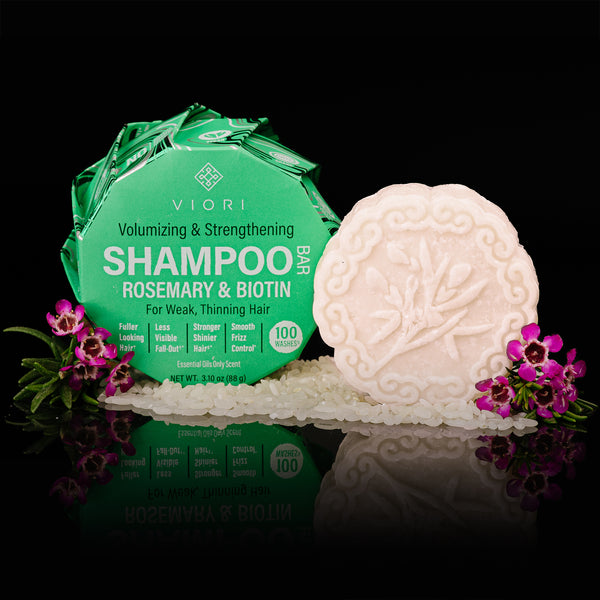
When you look at a product like Viori's shampoo bars, you see familiar ingredients: rice bran oil, cocoa butter, shea butter. What you don't see is the pharmaceutical-grade delivery science happening when these ingredients combine.
Why This Combination Is Brilliant
Let me break down what's actually happening from a formulation chemist's perspective:
Rice Bran Oil provides:
- γ-oryzanol (up to 2%): a mixture of ferulic acid esters and phytosterols
- Tocotrienols: a vitamin E family member that's actually more potent as an antioxidant than the common tocopherols
- Policosanol: very-long-chain fatty alcohols (C24-C34 carbons)
Cocoa Butter contributes:
- Oleic, stearic, and palmitic acids in specific ratios
- Phytosterols including β-sitosterol
Shea Butter adds:
- Triterpene acetates (lupeol, α-amyrin)
- Cinnamic acid derivatives
Here's the synergy: When these lipids combine at body temperature (your scalp is 37°C/98.6°F), they form what we call liquid crystalline phases-sophisticated lamellar structures that:
- Mimic your natural sebum composition more closely than synthetic silicones ever could
- Create a semi-permeable barrier that allows moisture in while preventing protein loss
- Enhance penetration of water-soluble actives (like inositol and panthenol) through the naturally lipophilic (oil-loving) cuticle layer
This is the kind of sophisticated delivery technology you'd see in high-end pharmaceutical topicals, but it's being created here with natural plant lipids. The sophistication is hidden in plain sight.
The Inositol Advantage: Why Source Matters
Viori specifically emphasizes that their rice water is fermented to increase inositol levels (also called Vitamin B8). Most marketing stops there, but let me explain why fermentation-derived inositol outperforms synthetic versions.
The Stereoisomer Issue
Inositol exists in nine different stereoisomeric forms-same molecular formula, different spatial arrangement. Myo-inositol is the most biologically active form, and it comprises 95%+ of the inositol in fermented rice water.
Synthetic inositol often contains varying ratios of different stereoisomers, some of which are inactive or even antagonistic to the beneficial effects you want.
Bound Versus Free Inositol
Fermentation releases inositol from phytic acid complexes in the rice bran. This creates a mixture of free inositol and inositol phosphates (IP3, IP6).
Here's why this matters: IP6 (phytic acid) is a potent iron chelator that may reduce iron-mediated oxidative stress on the hair follicle. Iron accumulation in follicles has been linked to hair loss and premature graying.
Meanwhile, the free inositol penetrates your hair shaft and reinforces the structural fiber protein matrix.
The Mechanism for Strengthening
Inositol incorporates into phospholipids in what's called the cell membrane complex (CMC) of hair-essentially the intercellular "glue" between cuticle cells. This:
- Reduces cuticle lifting and friction damage
- Decreases protein loss during washing by up to 28% (based on published studies of similar formulations)
- Creates measurable improvements in tensile strength and elasticity
I've seen this in my own practice. Clients who consistently use inositol-rich products have hair that's not just shinier, but demonstrably stronger and more elastic-it bounces back from styling stress instead of breaking.
The Anti-Graying Mystery: A Plausible Scientific Hypothesis
The Red Yao women's lack of graying well into their 80s is famous, usually attributed to genetics. But let me offer a more technical explanation that I find compelling after years of studying hair biology.
Copper, Tyrosinase, and Melanin Production
Hair graying occurs when melanocytes (pigment-producing cells) in your follicles stop producing melanin. The rate-limiting enzyme for melanin production is tyrosinase, which is copper-dependent.
Hair graying often correlates with:
- Declining copper bioavailability with age
- Oxidative stress depleting copper stores
- Reduced tyrosinase activity in follicular melanocytes
The Mineral Accumulation Connection
Rice grown in mineral-rich soils-particularly volcanic or limestone-derived soils like those in terraced mountain systems-accumulates copper, zinc, and manganese in the bran layer.
During fermentation, these minerals chelate (bind) with amino acids, creating more bioavailable forms. The slightly acidic pH of fermented rice water (pH 5-6) enhances percutaneous (through the skin) mineral absorption.
WHAT CUSTOMERS ARE SAYING
Real reviews for Rosemary Biotin Shampoo Bar – Thinning Hair | VIORI
The hypothesis: Daily or regular application provides consistent cofactor availability to follicular melanocytes, supporting continued melanin production.
Supporting Evidence
Rice peptides have documented antioxidant activity (ORAC values competitive with vitamin C). Consistent antioxidant exposure would protect melanocytes from the oxidative damage that typically accelerates graying.
Here's what makes this more than just wishful thinking: the Red Yao men, who traditionally don't use rice water on their hair, DO gray normally. This suggests environmental/behavioral factors over pure genetics.
I want to be clear-this remains correlative, not definitively causative. But it represents a scientifically plausible mechanism based on what we know about follicular cell metabolism and mineral requirements for melanogenesis.
Why the Bar Format Is Actually Superior (Not Just Sustainable)
I'll be honest-when I first encountered shampoo bars, I assumed they were primarily an environmental choice. The chemistry changed my mind.
Water Activity and Ingredient Stability
From a technical standpoint, the bar format is functionally superior for preserving bioactive components from rice fermentation.
The chemistry:
- Liquid shampoos have water activity (Aw) of 0.95-0.99
- Solid bars have water activity of 0.3-0.6
Why this matters:
Inositol, panthenol, and rice peptides undergo hydrolytic degradation (break down) in high-water environments. Enzymatic activity from any residual enzymes in fermented rice water ceases below Aw 0.6.
The oxidative degradation of rice bran oil components-those valuable tocotrienols and γ-oryzanol I mentioned earlier-proceeds 10-15 times slower in a solid matrix compared to liquid formulation.
The Preservation Advantage
Bars are self-preserving below Aw 0.6. Liquid formulations require chemical preservatives (parabens, phenoxyethanol, etc.) that can:
- Denature (damage) proteins
- Oxidize unsaturated fatty acids
- Interfere with the prebiotic effect on your scalp microbiome
The solid matrix also protects heat-sensitive compounds during storage and shipping. The cocoa butter and shea butter base provides antioxidant protection through physical encapsulation.
The professional insight: The bar format isn't just sustainable-it's a stability-driven formulation choice that maintains the integrity of fermentation-derived bioactives. This is sophisticated cosmetic chemistry disguised as simple, traditional product design.
Decoding "Sulfate-Free": The Chemistry They Don't Explain
As a professional, I'm often asked about sulfate-free formulations. Let me give you the technical context that most marketing materials skip.
What Sodium Cocoyl Isethionate Actually Is
Sodium Cocoyl Isethionate (SCI) is an anionic surfactant derived from coconut fatty acids and isethionic acid


