
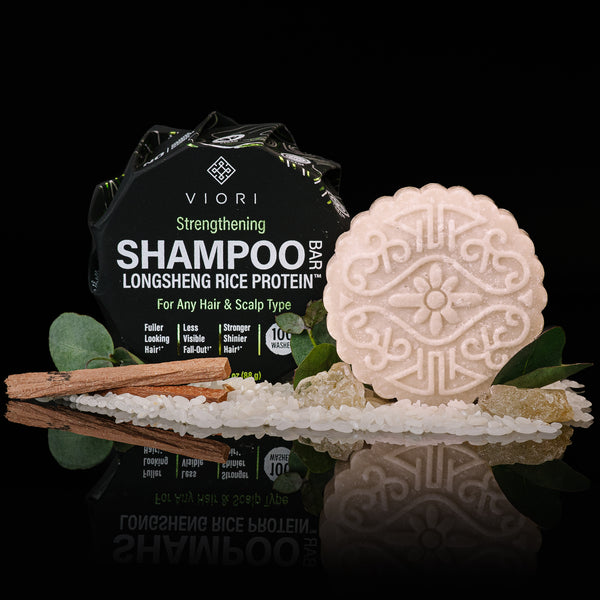
After twenty years behind the chair, I've witnessed countless beauty trends come and go. But when decorative, embossed shampoo bars started appearing in the market-many with intricate patterns resembling cookies or mooncakes-I'll admit my first reaction was pure skepticism. "Another gimmick," I thought. "Just cute marketing to stand out on Instagram."
I was wrong.
What I discovered after diving into the formulation science completely changed how I think about solid haircare products. Those decorative patterns? They're not just aesthetic choices. They represent sophisticated engineering decisions that fundamentally alter how these bars perform at the molecular level.
Let me share what two decades of professional experience and a deep dive into cosmetic chemistry have taught me about why the shape of your shampoo bar matters far more than anyone's discussing.
The Surface Area Revolution: It's Actually About Physics
Here's something most people don't realize: liquid shampoos and solid shampoo bars face completely different scientific challenges.
When you use liquid shampoo, the cleansing agents (surfactants) are already dissolved in water. They're ready to work the instant they touch your hair. Easy.
Solid bars face a much more complex task. Those surfactant molecules are compressed into solid form. They need to encounter water, dissolve from their tightly-packed state, and reorganize into cleansing structures-all in those first crucial seconds of application.
This is where embossed patterns become genuinely brilliant from a chemistry standpoint.
The Math That Matters
A shampoo bar with deep decorative embossing-like the intricate patterns you might see resembling mooncakes or cookies-can have 15-30% more surface area than a smooth, cylindrical bar of the same weight.
Why does this matter for your hair?
Faster lather generation. More surface area means more points where water can contact and activate those compressed surfactant molecules. In practical terms: you get usable lather in those critical first 3-5 seconds, rather than spending half your shower trying to work up enough foam.
NOT SURE WHICH PRODUCT IS RIGHT FOR YOU?
TAKE THE QUIZTakes 30 seconds · 134,000+ customers matched
More uniform distribution. Instead of concentrated product in one spot, the increased topology allows more even surfactant release across your entire scalp and hair length.
Less pressure needed. This is huge for anyone with chemically-treated, fragile, or thinning hair. You don't need to press as hard to activate the bar, meaning less mechanical stress on delicate hair shafts.
The Micro-Reservoir Effect
Here's where it gets even more interesting from a technical perspective.
Those recessed areas in decorative patterns aren't just increasing surface area-they're creating microscale water reservoirs. During application, water pools temporarily in these tiny valleys, creating high-concentration surfactant solutions before they distribute across your hair.
Think of it as controlled-release technology built right into the bar's architecture:
- The raised surfaces release surfactants quickly for immediate cleansing action
- The recessed areas provide sustained release, maintaining lather throughout your wash
This dual-phase activation is particularly valuable if you have thick, long, or very dense hair that requires sustained cleansing power. The pattern literally extends how long your lather remains effective.
The Grip Factor: Ergonomics You Never Considered
I spend my days watching people interact with hair products. And I can tell you: how comfortably you can hold and control a product directly impacts how well it works.
Traditional round or oval shampoo bars present a challenge: when wet and soapy, they're slippery. You end up gripping tighter, which creates uneven pressure points and inconsistent product application.
Embossed patterns solve this through textured grip enhancement.
Those decorative ridges and valleys provide:
Tactile feedback. You can feel the pattern even with wet hands, giving you better control over application pressure.
Natural rotation guidance. Users unconsciously follow the pattern contours, which promotes even bar wear and prevents those weird divots that form when you always hold a smooth bar the same way.
Sensory awareness. The texture tells you when you've deposited adequate product-you can literally feel when the bar has made sufficient contact with your scalp.
In professional color work or when applying treatments to sensitive scalps, this level of application control isn't just convenient-it's essential for consistent results.
The Compression Paradox: A Formulator's Challenge
Here's a technical aspect that fascinates me as someone who understands product formulation:
Creating those beautiful embossed patterns actually makes the bar harder to manufacture.
Shampoo bars are made through compression molding-ingredients pressed together under enormous pressure (typically 2,000-4,000 PSI). This compression creates the solid structure without heat, which preserves delicate botanical ingredients and essential nutrients.
When you introduce deep embossing, you create areas of differential compression:
- Raised pattern areas experience maximum pressure, becoming harder and slower-dissolving
- Recessed areas receive less direct compression, resulting in slightly more porous, faster-dissolving zones
This creates what I call a "dissolution gradient"-different parts of the same bar dissolve at different rates.
Why This Actually Improves Performance
Skilled formulators can use this gradient strategically:
Delicate, water-soluble vitamins and proteins can be concentrated in the faster-dissolving recessed areas for immediate scalp delivery.
Conditioning agents and nourishing oils can dominate the raised, slower-dissolving areas for sustained release throughout your wash.
This level of spatial ingredient distribution is impossible in liquid shampoos and represents genuinely sophisticated formulation thinking.
At Viori, we've leveraged this understanding in our own shampoo bar designs, using traditional pressing techniques that create intentional patterns while optimizing ingredient distribution.
The Hard Water Advantage Nobody Mentions
Professional stylists know something most consumers don't: water quality dramatically impacts how shampoo performs.
If you've ever traveled and noticed your hair felt different when you washed it, you've experienced this firsthand. Hard water-water with high mineral content-contains calcium and magnesium that bind to cleansing agents, reducing their effectiveness.
Here's where embossed patterns offer an unexpected benefit:
The increased surface area and micro-reservoir design means greater initial surfactant liberation-essentially overwhelming the minerals' binding capacity faster than a smooth bar can.
The continuous fresh surfactant release from those protected recessed zones helps maintain lather even in challenging water conditions.
In practical terms: An embossed bar might maintain 60-70% of its cleansing efficiency in hard water, compared to only 40-50% for a smooth bar with identical ingredients.
This is why the same shampoo bar might feel totally different if you're washing your hair at home versus at a hotel, or why your bar performs differently after you move to a new city.
The Formulation Dance: It's More Complex Than You Think
Creating a successful embossed shampoo bar isn't just about changing the mold shape. The entire formulation must be adjusted:
Pattern retention requirements mean higher ratios of structuring agents to maintain those crisp edges after manufacturing.
Dissolution kinetics need rebalancing-because embossed bars have that dissolution gradient, formulators must adjust surfactant-to-conditioning ratios to compensate.
Moisture management becomes more critical because pattern recesses can potentially trap water if the formulation isn't properly designed.
Consumer expectations require management too. That increased surface area means faster dissolution-not because the bar is lower quality, but because it's physics. This requires consumer education about proper storage (elevated drainage, never leaving the bar sitting in water).
When Pattern Design Really Matters: Professional Guidelines
In my practice, I've developed specific recommendations for when embossed bars offer genuine advantages versus when simpler designs might be preferable:
Embossed Bars Excel For:
- Limited hand mobility. The textured grip provides significantly better control than smooth surfaces.
- Hard water environments. That enhanced surface area helps overcome challenging water chemistry.
- Quick morning routines. When you need fast lather activation and don't have time for extensive working-up.
- Precision applications. When you're applying treatment bars to specific areas or need controlled dosing.
- Travel. The distinctive shape prevents confusion with soap bars, and patterns improve wet-hand grip in unfamiliar showers.
Smooth Bars May Be Better For:
- Maximum longevity. Smooth bars dissolve more slowly due to reduced surface area.
- Very soft water. The lather advantage of patterns becomes less significant.
- Extremely sensitive scalps. Sometimes the faster surfactant release from patterns can feel too aggressive initially.
The Sustainability Question: It's Complicated
The solid shampoo bar market positions itself as environmentally superior to liquid shampoos-and in many ways, it absolutely is. No plastic bottles, concentrated formulas, reduced shipping weight.
But embossed patterns introduce nuanced considerations:
More complex molds mean higher initial manufacturing impact.
Faster dissolution rates from increased surface area could mean shorter product life, requiring more frequent purchases.
However, there's a compelling counterargument:
Better user experience drives adoption. If embossed patterns genuinely improve how people experience solid shampoo (through enhanced ergonomics and performance), they may increase conversion from liquid to solid formats-delivering a net environmental gain.
Improved experience reduces waste. People are less likely to abandon a product that works well and feels good to use.
WHAT CUSTOMERS ARE SAYING
Real reviews for Rice Water Shampoo Bar – All Hair Types | VIORI
This deserves rigorous lifecycle analysis, but the environmental story of pattern complexity isn't as straightforward as it might first appear.
The Future: Precision-Engineered Haircare
The frontier that excites me most is the potential application of computational design to shampoo bar architecture.
Imagine software that models:
- Water flow patterns across different embossed surfaces
- Surfactant liberation rates from various pattern geometries
- Optimal pattern depth for specific formulations
- Predicted wear patterns under different usage scenarios
This would enable precision-engineered designs where the front surface optimizes initial lather, side surfaces control sustained release, and base patterns manage efficiency when the bar is nearly depleted.
We're seeing this level of engineering in pharmaceutical design (controlled-release medications with specific surface geometries), but the beauty industry is just beginning to embrace this scientific rigor.
What This Means for You
Understanding the science behind shampoo bar design empowers you to make more informed choices:
Look beyond ingredients. Two bars with identical ingredient lists can perform very differently based on their physical architecture.
Consider your water. If you live in a hard water area, embossed bars offer genuine performance advantages.
Match design to lifestyle. Quick morning routines benefit from fast-lathering embossed designs; if longevity is your priority, smoother profiles make sense.
Storage matters more. Those performance-enhancing patterns require proper drainage between uses-they're engineered for enhanced water interaction, which means they need to dry completely.
Appreciate the engineering. Those decorative patterns represent sophisticated decisions about compression dynamics, surfactant distribution, ergonomic optimization, and water chemistry management.
The Professional Perspective
After two decades in this industry, I've learned that the most significant innovations often hide in plain sight, disguised as simple aesthetic choices.
The next time you use a shampoo bar with decorative embossing, take a moment to appreciate what you're actually experiencing: the result of complex formulation decisions compressed into a small, seemingly simple bar.
At Viori, we understand that every element of a shampoo bar-from the ancient Longsheng rice tradition we honor, to the specific patterns pressed into each bar-serves both functional and cultural purposes. Those beautiful designs you see aren't just decorative; they're part of a holistic approach to haircare that considers chemistry, ergonomics, tradition, and user experience.
The shape isn't just decoration. In the hands of informed formulators, it's functional technology that bridges ancient wisdom with modern cosmetic science.
That's the kind of sophisticated thinking that elevates haircare from routine to ritual, from product to experience.
Professional tip: When selecting a shampoo bar, run your fingers across the surface. Feel those patterns. Consider the engineering behind them. And remember: you're not just choosing based on ingredients-you're selecting a piece of three-dimensional chemistry designed to interact with water, your hair, and your hands in specific, intentional ways.
The best products are those where every detail serves a purpose. Even the ones that look like cookies.


