
Shampoo bars are having a major moment, and I get why: they’re convenient, travel-friendly, and they can simplify your routine. But if you’ve ever tried one and thought, “Why does my hair feel incredible?” or “Why does it feel weirdly coated and tangled?” you’re not imagining things.
The missing piece in most shampoo-bar conversations is this: a shampoo bar isn’t just “shampoo without the bottle.” It’s a different delivery system. And that delivery system changes how cleanser hits the scalp, how it spreads through your lengths, how much conditioning deposit you get, and how your hair behaves in the rinse.
In this post, I’m going to break down the technical side in a way that still feels practical-so you can predict how a bar will behave on your hair. I’ll use Viori as a reference point where it helps, because their FAQs are unusually transparent about ingredients, pH, technique, and why certain options work better for certain scalp types.
“Shampoo bar” can mean two totally different technologies
This is the first reason results vary so wildly online: the words shampoo bar are used for products that behave nothing alike once water hits them.
1) Soap-based bars (true soap)
These are made through saponification (a fat reacts with an alkali to create soap). They often run more alkaline than hair prefers, which can make the cuticle lift and increase friction-especially on dry, curly, color-treated, or high-porosity hair.
NOT SURE WHICH PRODUCT IS RIGHT FOR YOU?
TAKE THE QUIZTakes 30 seconds · 134,000+ customers matched
If you’ve ever felt that “waxy drag” or dull coating after using a bar, hard water can make that worse because soap can interact with minerals and leave deposits behind.
2) Syndet bars (surfactant-based bars)
Syndet bars are built with modern surfactants (cleansers) rather than true soap. They can be formulated to be pH balanced for hair, which is a big deal for slip, shine, and long-term manageability.
For example, Viori uses sodium cocoyl isethionate as a cleanser-often called “baby foam” in formulating circles because it can be effective while still feeling gentle on many scalps.
The rarely discussed factor: bars “dose” cleanser differently than liquids
Liquid shampoo is pre-diluted for you. With a bar, your wash mixture is created in real time as water and friction shear off a thin layer of product. That means your technique controls the concentration your hair experiences-sometimes more than the formula does.
With bars, the real-world “dose” changes based on:
- How long you wet your hair before you start
- Water temperature
- How much friction you use
- How long the product sits before rinsing
- Your hair density, length, and porosity
- How hard or soft the bar is (structure and binders matter)
The biggest mistake I see is rubbing the bar directly onto the hair for too long. That can create a high, localized concentration of cleanser plus a lot of mechanical friction-two things that can leave the cuticle feeling roughed up.
Viori actually recommends (especially for color-treated hair) building lather in your palms and applying with your hands rather than rubbing the bar on your head. It’s a small change that often makes a noticeable difference in how hair feels during the rinse.
pH isn’t a buzzword-it's the cuticle “hinge”
Your cuticle is like shingles on a roof. When the environment is too alkaline, those shingles lift more easily. When conditions are closer to hair’s ideal range, the cuticle tends to lie flatter, which usually translates to better shine and less tangling.
Viori emphasizes keeping their products pH balanced because hair products generally perform best between about pH 3.5-6.5. When a cleanser sits too high (alkaline), you’re more likely to see the classic complaints: dryness, roughness, and color fading that feels faster than it should.
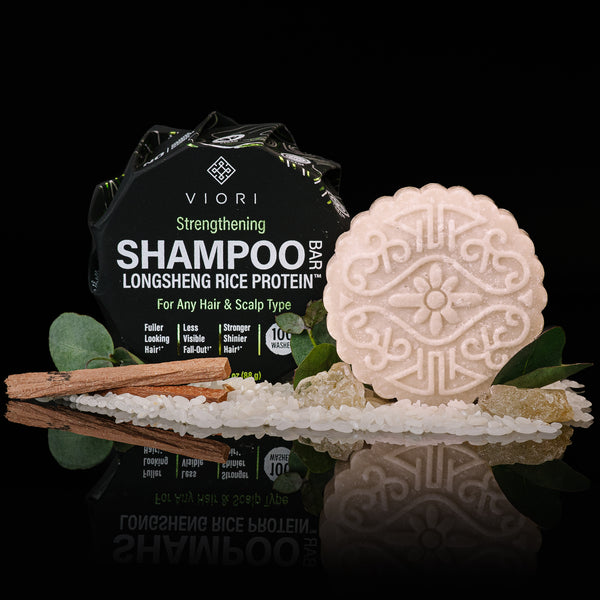
The tricky part with bars is that pH performance has to remain stable in the “use phase”-meaning the micro-solution created on the bar’s surface during every wash. A well-engineered bar is designed to keep that experience consistent over time, not just on wash #1.
The “built-in conditioner” paradox: slip vs. heaviness
Many modern bars include conditioning ingredients to reduce friction-smart, because friction is one of the biggest reasons hair feels tangly with some bars.
Viori uses behentrimonium methosulfate (BTMS), which is a conditioning agent that improves slip and helps hair feel smoother. A common misconception is to see the word “sulfate” and assume it’s the same as harsh cleansing sulfates. It isn’t. BTMS is widely used as a conditioning ingredient and behaves differently in hair formulas.
Here’s the nuance: a little conditioning deposit can be amazing, but too much (or the wrong placement) can make some hair types feel off.
- Fine or low-porosity hair may feel coated more quickly
- Oily scalps can feel heavy if conditioning deposit builds up near the root
- High-porosity or frizz-prone hair often loves the extra smoothing effect
My practical rule: focus cleansing on the scalp, and keep heavier conditioning contact from mid-lengths to ends unless your scalp is very dry.
Yes, scent can change performance-even when the “formula is the same”
Most people assume fragrance is purely sensory. In bar formats, small changes in the fragrance system (and what comes along with it) can shift how a bar dissolves, how it rinses, and how your scalp feels afterward.
Viori addresses this in a way I wish more companies did: they note that Citrus Yao includes citric acid, which can help break down oil more effectively. That’s one reason it’s often recommended for normal-to-oily scalps, while other options are commonly favored for normal-to-dry hair.
In other words, you’re not just choosing a scent-you’re often choosing a slightly different performance profile.
Rice water, protein, and fermentation: the benefit is in the dose
One of the most distinctive elements in Viori’s approach is the inclusion of fermented Longsheng rice water, along with ingredients like hydrolyzed rice protein, inositol (Vitamin B8), and panthenol (Vitamin B5).
Here’s the part that matters: Viori states they use a lower concentration of rice water because high concentrations used too often can disrupt hair and scalp pH. From a stylist’s perspective, that’s the kind of formulation decision that separates “nice concept” from “actually wearable for real life.”
Protein can be fantastic-especially for hair that’s damaged or high-porosity-but it’s also easy to overdo. Bars make over-application simple because you can keep rubbing without realizing how much product you’re loading onto the hair.
Hard water is the stealth factor behind “my hair feels coated”
If you live in a hard-water area, minerals can change how cleansing and conditioning agents behave. With bars, this can show up as dullness, drag, or a coated feel that seems to appear out of nowhere.
Before you blame the bar, adjust the method. In many cases, these tweaks help immediately:
WHAT CUSTOMERS ARE SAYING
Real reviews for Rice Water Shampoo Bar – All Hair Types | VIORI
- Lather in hands first (less friction)
- Use more water to spread the lather (not more rubbing)
- Rinse longer than you think you need to
- Keep cleansing focused on the scalp
The salon-level way to use bars: treat scalp and lengths like two different materials
This is where bars can be truly excellent. They naturally encourage you to be intentional-and your results get better when you stop treating your whole head like it needs the same thing.
Your scalp is skin. It deals with oil, sweat, and buildup. Your lengths are fiber. They deal with porosity, friction, and damage. Those are different problems, so they need different handling.
Viori’s recommendations line up with what I see behind the chair:
- Oily scalp: Citrus Yao is often the best starting point
- Dry scalp: Terrace Garden, Hidden Waterfall, or Native Essence are often preferred
- Sensitive scalp or fragrance sensitivity: Native Essence (unscented) is usually the safest choice
- Oily scalp + dry ends: cleanse the scalp with an oil-balancing option and keep conditioning focused on the ends
Bars are “self-preserving,” but storage is part of the formula
Because bars dry out between uses, they don’t require preservation the same way water-based liquids do. Viori notes that when stored properly, bars can have a long shelf life.
But storage also affects performance. If a bar sits in water or constant spray, it can get mushy, dissolve too quickly, and become inconsistent to use. A holder that allows airflow helps the bar dry fully between washes, which protects both the bar’s lifespan and your wash results.
My pro routine for better shampoo bar results
If you want the “clean, soft, bouncy” finish people rave about, this is the method I’d start you on.
- Wet hair thoroughly for 30-60 seconds before applying anything.
- Lather the bar in your hands to create a creamy, even lather.
- Apply lather primarily to the scalp; massage with fingertips (not nails).
- Pull the suds through the lengths briefly-let the rinse do the rest.
- Rinse thoroughly, then follow with conditioner (especially mid-lengths to ends).
- Store the bar where it can dry completely between uses.
The takeaway: judge a shampoo bar by its “architecture,” not the trend
The best shampoo bars are engineered-not just scented and pressed into a cute shape. When a bar works beautifully, it’s usually because the brand got the fundamentals right: a thoughtful cleanser system, true pH balance, controlled conditioning deposit, consistent dissolving, and clear technique guidance.
If you’ve struggled with bars before, don’t write them off. In many cases, switching to a well-formulated option (and changing how you apply it) is all it takes to turn a frustrating wash into a genuinely great one.


