
When someone searches a specific “_____ shampoo,” they’re almost never looking for a history lesson. They’re chasing a result: hair that feels clean but not stripped, looks glossy without being greasy, and behaves on day two the same way it behaved right after the blowout.
So instead of talking about any non‑Viori brand, let’s unpack what that search is really about-using the hair-and-scalp mechanics most articles skip. I’ll also show where Viori’s pH‑balanced shampoo bars (made with fermented Longsheng Rice Water™) fit into the bigger picture, because performance is about more than a trendy ingredient list.
The blind spot in most shampoo advice: “cleansing” isn’t the whole job
Most online advice gets stuck on one debate (usually a single ingredient category) and ignores what stylists see every day: a shampoo’s real-world success depends on what it removes and what it leaves behind. That “left behind” part is what I call deposition architecture-and it’s the difference between hair that feels airy and touchable versus hair that starts acting coated, heavy, or weirdly frizzy.
In other words, the best shampoo doesn’t just cleanse. It manages the hair’s surface so it moves well, reflects light well, and doesn’t get oily again five minutes after you dry it.
NOT SURE WHICH PRODUCT IS RIGHT FOR YOU?
TAKE THE QUIZTakes 30 seconds · 134,000+ customers matched
Deposition architecture: why your hair can feel “soft” but still look off
Hair isn’t a smooth tube. It’s a layered fiber with cuticle “shingles” that can lie flat or lift. After you rinse, your hair’s surface is influenced by any conditioning agents that cling to it-sometimes in a beautiful, smoothing way, and sometimes in a way that creates buildup and dullness.
This is where people get confused. They’ll say, “My hair feels silky in the shower… but once it dries, it’s flat at the roots and frizzy at the ends.” That’s often a sign of uneven deposit: too much film in some areas, not enough cuticle control in others.
- Too much deposit can show up as limp roots, dullness, or hair that gets oily faster.
- Too little support can show up as flyaways, tangles, and rough texture-especially on porous or color-treated hair.
Charge chemistry: the “magnet” effect that explains a lot of bad wash days
Here’s a technical truth that makes shampoo behavior much easier to predict: hair is generally negatively charged, especially when it’s damaged, porous, or color-treated. That’s why many conditioning ingredients are positively charged-they’re designed to stick.
That’s not automatically good or bad. It just means you need the right balance for your hair type. If your wash step deposits too much, fine hair and low-porosity hair can feel weighed down. If it deposits too little, high-porosity hair can feel squeaky, tangled, and frizzy.
pH: not a buzzword-more like your cuticle’s “settings menu”
If you want hair that looks shinier and feels smoother, pH matters. A well-chosen pH helps the cuticle lie flatter, which reduces friction and improves light reflection (that’s the visual “shine” people want).
Viori emphasizes that its bars are pH balanced. That matters because hair products generally perform best in a mildly acidic range (roughly 3.5-6.5). When products run too alkaline, the cuticle can lift more, which can contribute to:
- more tangling and roughness
- increased frizz (especially in humidity)
- faster-looking color fade for some people
- dullness that gets mistaken for “damage”
Fermented rice water: the nuance most trend posts leave out
Rice water gets talked about like it’s a magic spell. The reality is more interesting-and more useful. Fermentation can increase levels of hair-supportive nutrients like inositol (vitamin B8) and panthenol (vitamin B5), which are well-known in haircare for improving feel and manageability over time.
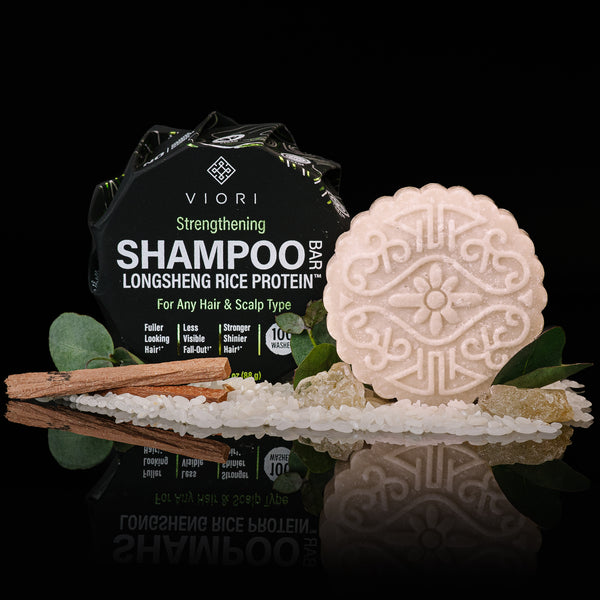
But concentration and frequency matter. Viori notes it uses a lower concentration of Longsheng rice water because very high concentrations used too often can throw off hair and scalp balance. That’s the kind of formulation decision that tends to create results you can stick with, not just a one-week honeymoon period.
Viori also includes hydrolyzed rice protein. “Hydrolyzed” is important: it means the protein is broken down into smaller pieces that are generally more compatible with how hair fibers interact with conditioning and strengthening ingredients.
The oil-rebound loop: why “gentle” can still lead to greasy roots
One of the most common frustrations I hear is, “I switched to something gentler, and now my hair gets oily faster.” That can happen for two opposite reasons:
- If cleansing is too aggressive, the scalp can feel tight and overcompensate by producing more oil.
- If cleansing is too mild for your sebum level, oil and residue remain, and hair looks greasy sooner anyway.
The goal isn’t “as gentle as possible.” The goal is right-sized cleansing for your scalp, with the right amount of deposit for your hair.
Why Viori’s scent options can perform differently (even with a shared foundation)
Viori notes something many people don’t expect: even if the base formula is consistent, the scent profile can still influence performance. For example, Citrus Yao contains citric acid, which helps break down oil more effectively-so it’s often a smart direction for normal-to-oily scalps.
For dry-to-normal scalps, Viori points customers toward more moisturizing directions like Terrace Garden, Hidden Waterfall, or Native Essence (unscented). And if you’re fragrance-sensitive, Native Essence is the option that avoids added fragrance altogether.
If you’re using bars, technique is everything (and it’s especially important for color)
Bar shampoo can be an amazing format, but application technique matters more than most people realize. Viori recommends creating lather in your hands and applying with your fingers instead of rubbing the bar directly on your head-especially for color-treated hair.
That advice is practical and technical at the same time: less direct rubbing means less friction, which can mean less cuticle disturbance. And a calmer cuticle is generally a happier cuticle-smoother feel, better shine, and (for many) a better chance at preserving the look of their color.
The pro test that predicts whether you’ll love a shampoo: “day-two hair”
Wash day can be misleading. Almost anything can feel decent in the shower. What matters is what your hair does 24-48 hours later. That’s when buildup patterns, scalp oil behavior, and cuticle condition show their hand.
Pay attention to these signs:
WHAT CUSTOMERS ARE SAYING
Real reviews for Rice Water Shampoo Bar – All Hair Types | VIORI
- Do your roots collapse by midday?
- Do your ends feel dry while the scalp turns oily?
- Is your hair tanglier on day two than it used to be?
- Does shine turn into a film or dull cast?
Viori recommends giving a routine 2-3 months before quitting. That’s realistic: your scalp and lengths often need time to adjust, especially when you change formats, change cleansing strength, or reduce product buildup.
How to choose the right shampoo approach (without chasing a name)
If your goal is that clean, polished, touchable feel, match your shampoo system to your scalp and hair behavior-not a headline promise.
Step 1: Identify your scalp type by oil timing
- Oily scalp: feels oily again 1-2 days after washing
- Normal scalp: feels oily around day 3
- Dry scalp: feels oily 4+ days later (or not much at all)
Step 2: Check hair porosity (buildup-prone vs moisture-hungry)
Viori shares a simple strand-in-water test:
- Floats: low porosity (often buildup-prone; usually prefers lighter cleansing)
- Stays mid-glass: medium porosity
- Sinks: high porosity (absorbs easily but struggles to retain moisture; often needs more support)
Step 3: Use conditioner on purpose, not as an afterthought
Viori strongly recommends using conditioner after washing. Technically, that makes sense: cleansing removes some protective sebum, and conditioner-being positively charged-helps replace that protective slip while the scalp naturally rebalances.
Where Viori fits, based on common goals
- Oily scalp or oily scalp flakes: many people do best starting with Citrus Yao.
- Dry scalp, tightness, or dry flakes: consider more moisturizing options like Terrace Garden, Hidden Waterfall, or Native Essence.
- Oily scalp but dry ends: a common strategy is Citrus Yao shampoo at the scalp, then a more moisturizing conditioner focused on the mid-lengths and ends.
- Sensitive scalp or fragrance sensitivity: Native Essence is Viori’s unscented option (no added fragrance).
Bottom line
That brand-name shampoo search is really a shorthand request: “Help my hair behave.” The fastest path to that is understanding the mechanics-deposition, charge chemistry, pH, and scalp oil timing-then choosing a routine that matches your reality.
If you want, share how quickly your scalp gets oily after washing, whether your hair is fine/medium/coarse, and whether it’s color-treated. I can help you narrow down a Viori routine direction that makes sense technically (not just cosmetically).


