
I need to be honest with you about something the beauty industry doesn't want you to hear: there's no miracle ingredient that's going to transform your hair growth overnight. After two decades of working with clients who've tried every promising product on the market, I've learned that the shampoo creating the healthiest scalp environment will always outperform the one with the most impressive ingredient list.
This isn't the exciting answer you're looking for. There's no exotic extract I can point to and declare "this is it!" But what I can share is far more valuable-the overlooked science of how your daily cleansing routine either supports or sabotages the complex biological environment your follicles desperately need to thrive.
If you're struggling with hair growth despite trying product after product, what I'm about to share might completely change your approach.
Your Scalp Microbiome: The Growth Foundation Nobody Talks About
Here's something that sounds like science fiction but is absolutely real: your scalp hosts roughly one million microorganisms per square centimeter. This invisible ecosystem of bacteria, fungi, and yeasts isn't just hanging out doing nothing-it's actively determining whether your follicles can complete healthy growth cycles.
Recent dermatological research has drawn clear connections between scalp microbial imbalance and various forms of hair loss. When beneficial microbes on your scalp are thriving, they're working overtime for you:
- Creating an environment that's hostile to harmful bacteria
- Producing compounds that reduce inflammation around follicles
- Maintaining the protective acid mantle of your scalp
- Supporting healthy sebum composition
Here's where things go wrong: most conventional shampoos absolutely destroy this beneficial ecosystem. Harsh sulfate-based cleansers don't discriminate-they strip away natural oils along with the beneficial microorganisms your scalp depends on. What grows back in their place? Often it's the opportunistic organisms you definitely don't want, creating chronic low-grade inflammation that follicles simply cannot tolerate long-term.
I've watched this scenario play out hundreds of times. A client sits in my chair concerned about thinning hair. They're using an aggressive "clarifying" shampoo every single day, convinced that a squeaky-clean scalp will solve their problem. But their scalp is actually in a state of microbial chaos-the very foundation of healthy growth has been compromised.
NOT SURE WHICH PRODUCT IS RIGHT FOR YOU?
TAKE THE QUIZTakes 30 seconds · 134,000+ customers matched
The pH Factor: Why This Actually Matters (I Promise)
I can see your eyes starting to glaze over at the mention of pH balance. It sounds like marketing fluff. But this is absolutely critical to understanding why your current routine might be failing you.
Your scalp's optimal pH sits between 4.5 and 5.5-slightly acidic. This specific acidity isn't random. It serves crucial purposes:
- Maintains your protective acid mantle against pathogenic invasion
- Keeps hair cuticles flat and sealed (preventing the breakage that looks like hair loss)
- Supports beneficial microbes while inhibiting problematic ones
- Optimizes enzymatic activity in the follicle environment that drives healthy growth cycles
Many commercial shampoos have pH levels between 6 and 9-alkaline enough to disrupt this delicate balance with every single wash. Over weeks and months, this creates a scalp environment where follicles struggle to maintain the 2-7 year growth phase they need.
This is exactly why I'm so particular about the products I recommend. Viori's formulations maintain pH balance specifically because follicle health depends on this acidic environment. This isn't about cosmetic shine-it's about creating conditions where follicles can actually function the way they're designed to.
The Over-Cleansing Trap: When More Becomes Dramatically Less
Here's an uncomfortable truth I share with almost every client concerned about hair growth: you're probably washing your hair too often, with products that are way too harsh. This creates a self-perpetuating cycle that actively inhibits growth:
- Aggressive surfactants completely strip your scalp's natural sebum
- Your scalp panics and overproduces oil (dermatologists call this rebound seborrhea)
- You feel that oiliness and wash even more frequently
- Chronic inflammation develops from repeated barrier disruption
- Your follicles gradually miniaturize in response to inflammatory signals
The technical term for what's happening is transepidermal water loss-when your scalp barrier is compromised, moisture escapes, triggering both dehydration and compensatory oil production. Your scalp becomes simultaneously too dry and too oily, creating an environment that's hostile to the extended growth phase healthy follicles require.
I see this constantly: someone absolutely convinced they have an "oily scalp problem" who's actually created that problem through over-cleansing. When we dial back washing frequency and switch to gentler formulations, their scalp often normalizes within 4-6 weeks. The transformation is remarkable.
The Bar Format Advantage: Technical Benefits That Surprised Even Me
Here's where formulation format becomes surprisingly relevant to hair growth-something I didn't fully appreciate until several years into my career. Solid bar shampoos have inherent technical advantages over liquid formulations, especially for anyone concerned about growth.
This seems completely counterintuitive at first. Bars feel old-fashioned, almost primitive compared to sleek bottles of liquid shampoo. But the chemistry tells a completely different story.
Surfactant Control at the Point of Use
Bar shampoos typically contain 50-60% surfactants compared to 10-15% in liquid shampoos. Before you panic about that higher concentration, understand the application mechanics: with bars, you control dilution as you use the product. You create lather in your hands or on your scalp with water, naturally moderating surfactant exposure based on your specific needs.
Liquid shampoos deliver pre-diluted surfactants that most people dramatically over-apply. That satisfying handful of creamy shampoo? You're likely using three times more than you actually need, exposing your scalp to unnecessary surfactant contact.
The Preservative Problem
Water-based formulations require preservative systems to prevent bacterial and fungal contamination in that bottle sitting in your humid shower. These preservatives-whether synthetic parabens or "natural" alternatives-can be significant scalp irritants, especially for sensitive scalps or those dealing with inflammation-related hair loss.
Quality bar shampoos are self-preserving because they dry out between uses. No standing water means no microbial growth, which means no need for preservation systems that might irritate your scalp. It's an elegant solution that removes an entire category of potential irritants from your routine.
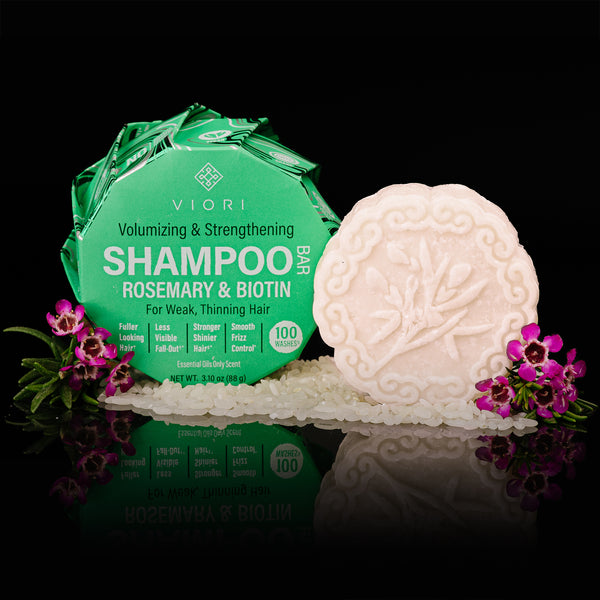
Surfactant Architecture Actually Matters
Not all cleansing agents are created equal. Quality bar formulations can use extremely gentle surfactants like Sodium Cocoyl Isethionate (SCI)-a coconut-derived cleanser with a molecular structure that doesn't penetrate the scalp barrier as aggressively as traditional sulfates.
Think of it this way: SCI cleanses surface debris and excess oil without disrupting the deeper lipid matrix that protects follicles and maintains that critical moisture barrier. You get genuinely clean without getting stripped-exactly what growth-focused scalp care requires.
Rice Water: Separating Ancient Wisdom from Modern Science
Rice water for hair has absolutely exploded in popularity, but let's talk about what's actually happening at a molecular level-because the traditional use by the Red Yao women of China isn't just folklore, it's legitimate biochemistry.
The Active Compounds That Actually Matter
Inositol (a vitamin B8 derivative): Research published in the Journal of Cosmetic Science shows that inositol penetrates the hair shaft and remains there even after rinsing. This matters enormously for growth goals because breakage functionally cancels out growth. If your hair breaks at three inches, you'll never see twelve-inch length regardless of how fast your follicles are producing new hair.
Inositol strengthens hair's internal structure, creating flexibility and resilience that translates directly to length retention.
Panthenol (provitamin B5): This proven humectant penetrates both hair shaft and scalp tissue. Here's the interesting part-it increases hair diameter through hydration-induced swelling. For anyone dealing with miniaturizing follicles (the hallmark of pattern hair loss), anything that increases visible diameter is functionally valuable. Your hair may not technically be growing thicker, but it appears and behaves as if it is.
Hydrolyzed Rice Protein: Molecular weight is everything here. Proteins must be broken down (hydrolyzed) into smaller peptides to actually penetrate the hair cuticle. Rice protein has an optimal molecular weight distribution-small enough to get inside, large enough to provide meaningful structural reinforcement once there.
Think of it as internal scaffolding that reduces mechanical stress on growing hairs. Every time you brush, style, or even sleep on your hair, you're creating micro-damage. Rice protein helps hair withstand these daily stresses without breaking.
Why Fermentation Changes Everything
Here's what most trendy rice water tutorials miss entirely: fermentation doesn't just "activate" rice water-it fundamentally changes its chemical composition.
The traditional Red Yao process involves fermenting rice water for 7-10 days. This isn't superstitious ritual-it's biochemical optimization. During fermentation:
- Starches break down into simpler sugars that scalp tissue can readily use
- B vitamin content increases substantially
- pH drops into that beneficial acidic range
- Antioxidant compounds like ferulic acid become more bioavailable
- Beneficial compounds like pitera form (shown to accelerate cellular turnover)
The fermentation period allows Saccharomyces and Lactobacillus species to predigest nutrients into forms more readily absorbed by scalp tissue. You're not just applying rice water-you're applying a nutrient-rich, pH-optimized, bioactive treatment that your scalp can actually utilize.
This is exactly the approach Viori takes with their shampoo bars-using traditionally fermented rice water rather than just adding rice extract to a conventional formula. The difference in results speaks for itself.
The Synergy Problem: Why "Hero Ingredients" Consistently Fail
Most "hair growth shampoos" follow a deeply flawed philosophy that drives me absolutely crazy: take a conventional shampoo base (often with harsh sulfates), add a trendy ingredient (caffeine, biotin, keratin), slap "growth formula" on the label, and watch it fly off shelves.
This completely ignores ingredient synergy and delivery systems. A growth-supporting ingredient simply cannot work if the base formula is simultaneously damaging the scalp environment. It's like planting seeds in contaminated soil and expecting a harvest.
Let me walk you through what properly formulated hair growth support actually looks like, using Viori's approach as a case study in thoughtful formulation:
The Butter-Based Emollient System
Using cocoa butter and shea butter in a shampoo seems wrong at first-won't that make hair greasy and weighed down? Not when properly formulated. These butters serve multiple crucial functions:
Scalp barrier repair: The fatty acid profile-particularly stearic and oleic acids-closely mimics your scalp's natural sebum composition. This supports barrier regeneration between washes rather than repeatedly damaging and stripping that barrier.
Anti-inflammatory action: Shea butter contains triterpenes that reduce specific inflammatory markers (TNF-α and IL-6) associated with follicle miniaturization. This isn't cosmetic-it's addressing one of the root causes of progressive hair loss.
WHAT CUSTOMERS ARE SAYING
Real reviews for Rosemary Biotin Shampoo Bar – Thinning Hair | VIORI
Occlusive moisture retention: By preventing transepidermal water loss, these butters maintain the optimal scalp environment for the metabolically demanding process of hair growth. Follicles producing hair are working incredibly hard-they need a supportive environment.
Understanding Behentrimonium Methosulfate
This ingredient confuses everyone who's been told to "avoid sulfates." Let me clear this up: BTMS is actually a quaternary ammonium compound-it's technically a conditioning agent, not a cleansing surfactant. The "methosulfate" portion refers to the salt used in its synthesis, not its function in the formula.
What makes BTMS valuable in growth-focused formulations? It's cationic (positively charged), meaning it binds to the negatively charged surface of damaged hair and scalp tissue. This accomplishes two critical things:
- It neutralizes the negative charge left by cleansing agents, reducing static and cuticle roughness
- It deposits conditioning agents precisely where damage exists (damaged areas carry more negative charge)
For growth-concerned users, this matters because reduced friction means reduced mechanical breakage during detangling. Breakage during detangling is one of the most overlooked causes of inability to achieve length. Your hair is growing just fine, but you're breaking it off as fast as it grows.
The Bamboo-Aloe Combination
Here's a technical angle most people completely miss: bamboo extract provides bioavailable silica, an element essential for collagen synthesis. Yes, hair is approximately 95% keratin, but the follicle structure producing that hair requires robust collagen networks. Silica strengthens these networks-it's supporting the infrastructure that produces hair.
Aloe vera contributes long-chain polysaccharides (acemannan being the most studied) that have demonstrated ability to:
- Increase follicular dermal papilla cell proliferation (the cells that signal growth)
- Extend the anagen (growth) phase duration in laboratory studies
- Reduce oxidative stress markers in scalp tissue
The synergy? Silica provides structural support while aloe's polysaccharides support cellular metabolism. Infrastructure plus fuel equals optimal follicle function.
Why Conditioner Is Absolutely Non-Negotiable for Growth Goals
Many clients trying to grow hair skip conditioner entirely, reasoning that "my scalp doesn't need conditioning" or "conditioner will weigh down my hair." This reflects a fundamental misunderstanding of the growth-retention relationship.
Hair growth isn't just about follicle activity-it's about length retention. If hair breaks at the mid-lengths or ends as fast as it grows from the root, you'll never achieve your length goals. Your growth rate might be absolutely excellent, but you'll never see the results.
The Cuticle Layer: Your Hair's Protective Shingle System
The cuticle layer consists of overlapping protective scales on your hair's exterior-imagine roof shingles. When these cuticles lie flat and smooth, hair experiences:
- Minimal friction during styling and manipulation
- Optimal moisture retention in the cortex (inner structure)
- Protection of internal protein structure from environmental damage
- Enhanced light reflection (that's what "shine" actually is)
When cuticles are raised-from alkaline pH exposure, heat damage, or mechanical stress-all of these benefits reverse. Hair becomes porous, fragile, and prone to breakage.
Conditioner's primary role is cuticle management. The slightly acidic pH and cationic conditioning agents physically flatten


