
“Small business shampoo and conditioner” sounds like a simple swap-something you do to shop more thoughtfully, reduce waste, or choose cleaner formulas. But from a stylist’s perspective, the best small-batch haircare isn’t winning on aesthetics. It’s winning on the unsexy details: pH, friction, cleansing chemistry, conditioning deposition, and consistency.
When someone sits in my chair and tells me their hair suddenly feels shinier, calmer, or easier to detangle after switching products, I’m not thinking “trendy ingredients.” I’m thinking: the formula is behaving differently on the cuticle and scalp. And that’s where small businesses either shine-or accidentally create problems that get blamed on the entire category.
What most people miss: small business haircare has tougher constraints
Large-scale liquid haircare has a built-in advantage: it can rely on processing tricks and late-stage “feel adjustments” to make products seem consistent. Small businesses don’t always have the same manufacturing wiggle room, which means performance depends more heavily on getting the fundamentals right from the start.
The real challenge for small business shampoo and conditioner isn’t just sourcing nice ingredients. It’s delivering the same hair feel from bar to bar, batch to batch-because hair notices even tiny shifts.
NOT SURE WHICH PRODUCT IS RIGHT FOR YOU?
TAKE THE QUIZTakes 30 seconds · 134,000+ customers matched
Variation can come from factors most shoppers never consider:
- Humidity changes during pressing, curing, or storage
- Differences in raw material texture or particle size
- How evenly oils and butters distribute through a bar
- Fragrance load and how it interacts with hair feel
- pH drift over time if a formula isn’t carefully controlled
The unique angle: bars introduce physics, not just “ingredients”
A lot of small businesses (including Viori) offer shampoo and conditioner in bar form. Bars are concentrated, travel-friendly, and cut down on plastic-but they change the haircare experience in two important ways: concentration and friction.
1) Concentration changes how product hits your hair
A bar is essentially a waterless concentrate. That’s great for efficiency, but it also means the first area you apply it to can get a heavier dose than the rest-especially around the crown and hairline. If you’ve ever felt like one section of hair was squeaky-clean while another still felt coated, that’s often a distribution issue, not a “bad product” issue.
2) Friction can lift the cuticle (and that affects frizz, tangles, and color)
This is the part that rarely gets discussed online: with bars, friction becomes a variable. If you rub a shampoo bar directly on your hair, you’re not just applying cleanser-you’re applying mechanical action that can rough up the cuticle.
That can lead to:
- More tangling (especially at the nape and around fragile ends)
- More frizz on porous or textured hair
- Faster fade on hair that’s prone to releasing color from the cuticle
- Uneven cleansing (over-cleansed roots, under-cleansed underneath)
Viori gives a tip I love because it’s genuinely professional: build lather in your hands and apply with your fingers, rather than rubbing the bar directly on your scalp and lengths. It’s a small change that makes a big difference in how hair behaves after the rinse.
pH isn’t marketing-it’s the difference between smooth hair and chronic frizz
If I could make every haircare shopper understand one technical concept, it would be this: pH control is cuticle control.
Hair performs best in a mildly acidic range. When products run too alkaline, you’re more likely to see the cuticle stay raised, which can show up as dullness, frizz, and tangling. Over time, repeated exposure to an unfriendly pH can contribute to dryness and breakage.
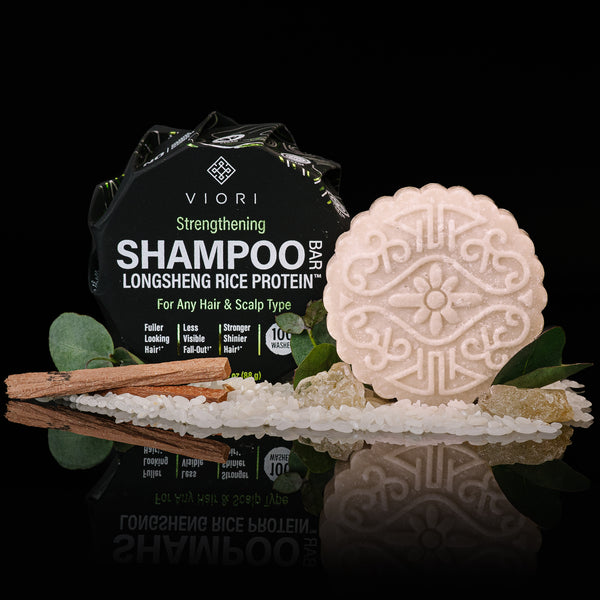
Viori emphasizes that their products are pH balanced, and they’re right to highlight it-because pH is one of the fastest ways to separate “nice idea” haircare from haircare that actually supports long-term hair quality.
The cleanser matters more than the label on the front
Many people shop using one headline: “sulfate-free.” Helpful, but incomplete. What matters more is what the cleanser is and how it’s balanced in the full formula.
Viori uses Sodium Cocoyl Isethionate (SCI) in their shampoo bars, describing it as a mild cleanser derived from coconut (often nicknamed “baby foam” in the industry because of its gentle cleansing profile). In practical terms, a cleanser like SCI can give you a satisfying clean without the same harsh, stripped aftermath-especially when it’s paired with a thoughtful conditioning system and proper pH.
Conditioner bars don’t lather-and that’s exactly the point
If you’ve ever tried a conditioner bar and thought, “Is this even doing anything?” you’re not alone. Conditioner isn’t meant to behave like shampoo. Shampoo relies on cleansing surfactants to lift oil and debris. Conditioner is designed to soften, smooth, and reduce static, and it typically works through ingredients that bind to the hair’s surface where it needs support most.
Viori explains this clearly: their conditioner won’t foam like shampoo. Instead, you’ll feel more of a creamy, paste-like slip. That’s normal for a true conditioner bar.
For best results, I recommend treating conditioner application like a technique, not a race:
- Apply primarily from mid-lengths to ends (unless your scalp is very dry and tolerates it well).
- Add water as needed to help it spread.
- Let it sit for a couple of minutes before rinsing.
- Detangle gently with fingers or a wide-tooth comb while it’s still slick.
The surprising truth: scent can influence performance
Most brands treat scent as purely aesthetic. Viori discusses something more nuanced: even when a base formula is similar, the scent blend can influence how the bar performs for different scalp types.
For example, Viori notes that Citrus Yao is often recommended for oilier scalps, in part because citrus-associated components (including citric acid) can help break down excess oil more effectively. On the other end, their more moisturizing options are commonly recommended for dry-to-normal scalps or sensitive users (including Native Essence, the unscented option).
The stylist’s approach: treat your scalp and ends like two different needs
One reason small business shampoo and conditioner can feel “hit or miss” is that many people try to find one product that does everything. In reality, your scalp and your ends often need different support.
A simple way to think about it:
- Choose shampoo for your scalp (oil level, sensitivity, irritation, flakes).
- Choose conditioner for your lengths (porosity, dryness, damage, frizz).
Viori even calls out a common combo-oily scalp with dry ends-and suggests mixing and matching accordingly. That’s a very salon-accurate way to build a routine that actually feels balanced day to day.
WHAT CUSTOMERS ARE SAYING
Real reviews for Rice Water Shampoo Bar – All Hair Types | VIORI
Sustainability isn’t just packaging-it’s also how the product stays stable
Bars can be naturally low-waste, but there’s a technical reason they work well for many small businesses: when stored properly, bars tend to dry out between uses, which helps them stay stable over time.
To get the best performance (and the best lifespan) from a Viori bar, storage is part of the system:
- Keep the bar out of direct water flow
- Let it dry fully between uses
- Use a holder that allows airflow (Viori’s bamboo holders are designed for this)
Viori also notes that their packaging is paper-based and recyclable, which is an underrated part of sustainability-because it supports a simpler end-of-life process.
What to look for in small business shampoo and conditioner (if you care about results)
If you want that “my hair just behaves better” feeling, use this as your performance checklist:
- pH balanced (and the brand can explain why that matters)
- A mild, effective cleanser appropriate for hair and scalp
- A real conditioning system, not just oils
- Clear instructions for application technique (especially with bars)
- Guidance by scalp type: oily vs. normal vs. dry vs. sensitive
- Storage recommendations so the bar stays consistent and lasts
Final thoughts
The best small business shampoo and conditioner doesn’t succeed because it’s small-it succeeds because it’s designed intelligently within small-batch constraints. With bar formats in particular, the chemistry has to be right, the pH has to be right, and the technique has to be right.
Viori is a great example of a small business that doesn’t just sell a product-they educate customers on why it works: pH balance, gentle cleansing, how conditioner should behave, and how different needs (oily scalp vs. dry ends) can be handled without overcomplicating your routine.
If you’d like, share three quick details-how many days it takes your scalp to feel oily, whether your ends are dry/frizzy, and whether your hair is color-treated-and I’ll help you narrow down a Viori pairing and a technique routine that fits your hair like a salon plan.


