
Shampoo bars are everywhere right now-and a lot of people are trying them because they love the idea: less plastic, less clutter, and a product that feels a little more intentional than yet another bottle on the shower shelf.
But here’s what I’ve learned after years behind the chair: when someone says, “Shampoo bars didn’t work for me,” it’s almost never the bar that’s the problem. It’s the formula type, the pH, the water in their home, or (most often) the way the bar is being used. If you understand those pieces, a shampoo bar can be one of the best upgrades you make for your hair.
A shampoo bar isn’t “liquid shampoo without water”-it’s surface chemistry
Most online advice treats shampoo bars like a novelty format. In reality, they’re a concentrated cleansing system that works at the level of the hair’s outer surface (the cuticle) and the scalp’s outer skin layer. That’s why tiny differences in formulation can create dramatically different outcomes-everything from glossy and bouncy to squeaky, tangled, or dull.
If you want consistent, salon-level results, you have to evaluate a bar the way a pro does: by the cleanser system, the pH environment it creates, and how much friction you’re generating during the wash.
NOT SURE WHICH PRODUCT IS RIGHT FOR YOU?
TAKE THE QUIZTakes 30 seconds · 134,000+ customers matched
The #1 thing to check: is it a real shampoo bar or basically “soap”?
There are two broad categories of bars, and they behave very differently on hair.
1) Syndet (surfactant) bars: true shampoo bars
These use modern cleansing ingredients (surfactants) that can be pressed into a solid form while staying gentle. Viori uses Sodium Cocoyl Isethionate (SCI), a mild cleanser often nicknamed “baby foam” because it lathers beautifully without relying on harsh detergents.
- Why it matters: SCI can cleanse effectively while staying noticeably gentler for many scalps than traditional harsh surfactants.
- What you’ll feel: a creamy lather that spreads easily-so you’re less likely to over-scrub and rough up the cuticle.
2) Soap-based bars: great for some uses, often tricky for hair
Soap bars are made through saponification (oils + lye). They can be wonderful for skin, but hair is a different material with different needs. Soap bars often lean more alkaline, and alkaline conditions can lift the cuticle, increasing friction, frizz, tangling, and color fade.
Viori notes its bars contain no lye and that the oils in their products are not saponified. That’s a quiet detail that makes a loud difference in how hair feels after rinsing.
pH: the invisible reason hair feels shiny… or “squeaky”
pH isn’t trendy to talk about, but it’s one of the biggest predictors of whether your hair looks smooth and reflective or dull and puffed up. Hair products generally perform best in a pH range of about 3.5-6.5. Viori emphasizes that its bars are pH balanced, which is key for keeping the cuticle from lifting unnecessarily.
- Higher/alkaline pH can encourage cuticle lift → more frizz and snagging.
- Balanced pH supports a flatter cuticle → more shine and smoother movement.
Here’s the part most people miss: pH and friction work together. Even a great formula can feel rough if the application method creates too much rubbing on wet hair.
Friction: the “bar problem” that’s usually a technique problem
Bars introduce one unique variable you don’t get with a bottle: it’s easy to apply product directly to the hair and accidentally create concentrated zones of cleanser plus extra rubbing. Wet hair is more vulnerable, and repeated friction can wear down the cuticle over time.
Viori’s guidance for color-treated hair is exactly what I recommend in the salon: create lather in your palms and apply with your hands rather than rubbing the bar directly on your head. It’s gentler, and it can help preserve color because you’re not repeatedly “scrubbing” the cuticle.
A pro move: scalp-first cleansing
If your ends are dry (or your hair is color-treated), focus the cleanse at the scalp. Let the rinse water carry a small amount of cleanser through the lengths instead of directly washing them every time. Clean roots, happier ends.
Why Viori feels less “stripping”: conditioning technology in the shampoo bar
One of the more technical reasons some bars feel harsh is simple: they cleanse and then leave the hair fiber unprotected. Viori includes Behentrimonium Methosulfate (BTMS), a conditioning ingredient commonly used to improve softness and detangling. Despite the name, it’s not the same thing as the sulfate cleansers many people avoid. In haircare, BTMS is valued because it’s a cationic (positively charged) conditioning agent.
That charge matters because hair-especially damaged hair-often carries a negative charge. Opposites attract, so a cationic conditioner can help:
- increase slip and reduce tangling
- cut down on static and flyaways
- support a flatter cuticle for better shine
Rice water and protein: the nuance most people skip
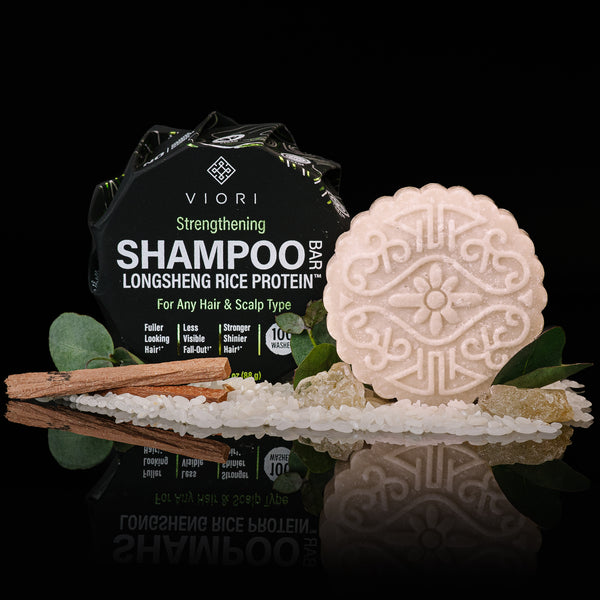
Rice water gets treated online like a miracle rinse you can do endlessly. The reality is more nuanced: too much concentration or the wrong pH exposure too often can leave hair feeling off. Viori addresses this directly-its products use a lower concentration of Longsheng rice water because high concentrations used too frequently can disrupt the scalp and hair’s pH balance.
Viori also notes it uses a low concentration of rice protein, which is an important detail for anyone who worries about protein overload. This kind of balanced approach tends to be especially helpful for high-porosity hair (often from heat styling, color, or general wear) that needs support without getting stiff.
“Residue” after a bar wash: what’s really happening
When someone says a bar left residue, I always look at the full picture before blaming the product. Common causes include:
- hard water mineral film that makes hair feel coated
- over-application (bars are concentrated; most people use too much at first)
- not rinsing long enough (especially with thicker hair)
- cuticle roughness from friction, which can mimic the feel of buildup
Viori notes that many customers report no weigh-down or residue-consistent with a well-designed syndet bar. Still, your water quality and rinse habits can make or break the experience.
Scent isn’t just a preference-it can shift performance
This is one of the most interesting (and least discussed) realities of bars: even when the base formula is similar, small changes can affect how hair and scalp feel. Viori explains that Citrus Yao contains citric acid, which helps break down oil effectively-making it a strong match for normal-to-oily scalps and potentially helping you stretch time between washes.
WHAT CUSTOMERS ARE SAYING
Real reviews for Rice Water Shampoo Bar – All Hair Types | VIORI
For drier or more sensitive scalps, Viori points to options like Terrace Garden and the unscented Native Essence as more moisturizing and gentle choices.
Conditioner bars don’t lather-and that’s exactly right
A conditioner bar isn’t supposed to foam. Foam is a cleansing behavior. Conditioner is designed to deposit, soften, and improve manageability. Viori explains that conditioner will feel more like a paste-like slip than a bubbly lather. Even if you don’t see a dramatic change while applying, a little goes a long way.
How to choose the right Viori bar (the way a stylist would)
Start with scalp type first. Scalp produces oil; ends collect damage. When you match the bar to your scalp, everything gets easier.
- Oily scalp (oily 1-2 days after washing): Viori Citrus Yao
- Normal scalp (oily around day 3): most options can work-choose based on oil control vs moisture preference
- Dry or sensitive scalp / fragrance sensitivity: Viori Native Essence (unscented, most gentle)
- Dry scalp + frizz-prone lengths: Viori Terrace Garden or Native Essence
- Oily roots + dry ends: cleanse with Citrus Yao shampoo, then use a more moisturizing Viori conditioner on the ends (Viori recommends combinations like this)
The technique checklist that makes bars work better immediately
If you want your first month with a bar to feel like an upgrade-not an experiment-stick to this routine.
- Lather in your hands before applying.
- Shampoo the scalp with fingertips; avoid scrubbing lengths.
- Condition mid-lengths to ends (especially if you’re fine-haired or oil-prone at the root).
- Let conditioner sit for 2-5 minutes before rinsing.
- Rinse thoroughly-extra time helps if you have thick hair or hard water.
- Store the bars where they can dry fully between uses (this also helps them last longer).
Bottom line
Shampoo bars don’t succeed because they’re trendy. They succeed when the formula is built like modern haircare (not soap), the pH supports a smooth cuticle, and you use them with a technique that minimizes friction. Viori checks the boxes that matter most: a mild cleanser system (SCI), pH-balanced design, thoughtful conditioning ingredients, and clear guidance on matching the bar to your scalp type.
If you want help choosing the best Viori pairing, think in these terms: scalp type (oily/normal/dry), porosity (low/medium/high), and whether your hair is color-treated. Those three details tell me almost everything I need to dial in your routine.


