
People ask for “moisture and shine” like it’s one thing. In the chair, I hear it constantly: “I want my hair to feel hydrated and look glossy.” Totally fair request-except those two results are created by different mechanisms, and when a shampoo chases one the wrong way, it can sabotage the other.
Here’s the salon truth: moisture is largely about how the hair fiber manages water and flexibility, while shine is about how smoothly the hair surface reflects light. A great “moisture and shine shampoo” isn’t an oil dump or a heavy coating. It’s a balanced system: thoughtful cleansing, smart conditioning support, and (the most overlooked factor) proper pH.
Shine is physics: the smoother the surface, the glossier the hair
Hair looks shiny when it reflects light in a clean, consistent way-think of a satin ribbon catching the light. Technically, this is specular reflection. The shinier the hair looks, the more uniform and smooth that outer cuticle layer is behaving.
NOT SURE WHICH PRODUCT IS RIGHT FOR YOU?
TAKE THE QUIZTakes 30 seconds · 134,000+ customers matched
Where most people get thrown off is assuming shine equals oil. Oil can add slip, sure, but shine lives and dies on surface smoothness. You can have an oily scalp and still have dull-looking lengths if the cuticle is rough, coated unevenly, or scuffed up from friction.
The under-discussed cause of dull hair: micro-roughness
Micro-roughness is exactly what it sounds like-tiny surface irregularities that scatter light instead of reflecting it. It can come from heat styling, aggressive brushing, mineral deposits, and yes, even the way you shampoo.
Moisture isn’t “more oil”-it’s flexibility, water retention, and less friction
Hair isn’t skin, so we have to be precise with the word “moisture.” What clients usually mean when they say “my hair needs moisture” is: “My hair feels stiff, tangles easily, frizzes, and snaps.” That’s typically a sign the hair needs better flexibility and a lower-friction surface-not necessarily heavier oils.
When cleansing is too strong, it strips away too much protective lubrication and leaves the hair in a higher-friction state. That’s when you get the classic combo: squeaky-clean roots but rough, static-y, unhappy ends.
The hidden lever that affects both moisture and shine: pH
If there’s one technical detail I wish more people understood, it’s this: pH influences cuticle behavior. Hair products generally perform best in a hair-friendly pH window (roughly 3.5-6.5).
When products run too alkaline, hair tends to swell more, cuticles lift, and the surface becomes less reflective and more prone to tangling. That can show up as:
- Dullness (light scatters instead of reflecting cleanly)
- Frizz and a rougher feel
- More tangles and breakage from friction
- Faster color fade because an open cuticle lets pigment escape more easily
Viori puts real emphasis on being pH balanced, and that’s not a throwaway claim. From a stylist’s standpoint, pH is one of the biggest long-game factors for keeping hair consistently soft and reflective.
“Moisture + shine” is a strategy: cleanse well, then deposit the right kind of slip
A well-designed shampoo isn’t just trying to remove oil. It’s trying to remove what doesn’t belong-while leaving the hair in a state that behaves beautifully after you rinse.
That’s why the best moisture-and-shine cleansers rely on controlled conditioning support, not heavy residue. The goal is improved slip, reduced snagging, and a cuticle that lies flatter-because flatter cuticles mean better shine and less moisture loss through roughness and friction.
Why Viori’s bar format is worth understanding (especially if you’ve struggled with dullness)
Viori uses Sodium Cocoyl Isethionate as its cleanser, which is commonly described as a mild, effective cleansing agent. That matters because “clean” is only helpful if the hair doesn’t feel punished afterward.
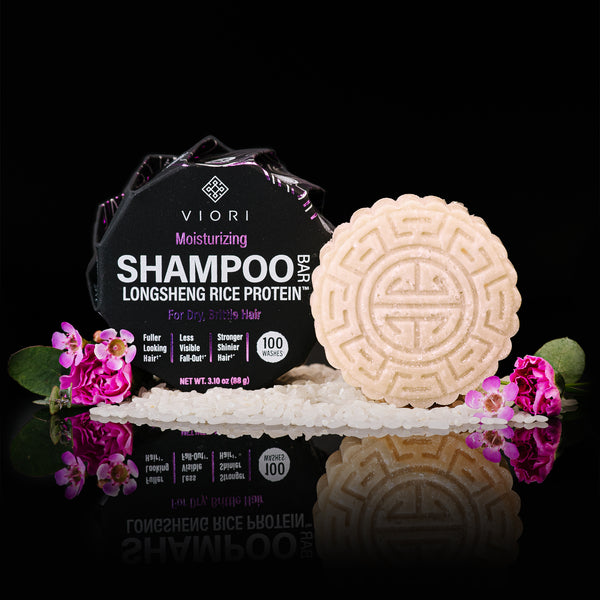
Viori’s formulas also include ingredients chosen to support softness, manageability, and surface smoothness-plus their signature Longsheng Rice Water™ approach, used in a lower, pH-conscious concentration (because too much rice water too often can disrupt hair and scalp pH).
Rice water isn’t one thing: fermentation changes the conversation
Online, rice water gets oversimplified as “protein for hair.” In reality, it’s more nuanced. Fermentation can increase levels of nutrients that are widely used in haircare for feel and resilience-like Vitamin B8 (inositol) and Vitamin B5 (panthenol)-and Viori pairs its rice water base with additional supportive ingredients such as hydrolyzed rice protein.
Here’s the angle that doesn’t get enough attention: shine improves when the hair surface becomes more uniform. When hair is less prone to snagging and breakage, the cuticle stays smoother. When the fiber is more consistent from roots to ends, light reflects more evenly. In other words, the gloss you see is often a side effect of better hair behavior-not just “added shine.”
Bar shampoo adds one variable most people ignore: friction
Solid shampoo can be fantastic, but it comes with a practical detail that matters a lot for shine: how you apply it. Dragging a bar directly along your hair can increase friction, and friction is one of the quickest ways to rough up the cuticle over time-especially if your hair is color-treated, fragile, or high-porosity.
Viori’s own guidance is exactly what I recommend in the salon: build lather in your hands first, then apply the lather through your hair. It’s a small change that can make a noticeable difference in smoothness and shine within a few weeks.
WHAT CUSTOMERS ARE SAYING
Real reviews for Moisturizing Rice Water Shampoo Bar – Dry Scalp | VIORI
Picking the “right” moisture-and-shine shampoo starts with scalp type and porosity
One reason people feel like shampoo “stops working” is that they shop for hair length problems with scalp products (or vice versa). Your scalp type controls cleansing needs. Your porosity and damage level control how much softness and reinforcement your lengths need.
Viori makes this fairly straightforward with scent families that tend to perform best for different scalp types:
- Citrus Yao: commonly recommended for normal-to-oily scalps (it includes citric-acid-related oil control benefits)
- Terrace Garden: often favored for normal-to-dry scalps and moisture support
- Hidden Waterfall: a flexible option many people enjoy for multiple hair types, especially normal leaning
- Native Essence: unscented and a go-to for anyone sensitive to fragrance or wanting the gentlest route
The most common mismatch I see: oily scalp, dry ends
This is incredibly common-and it’s where “moisture and shine” gets tricky. If you over-moisturize the scalp, hair goes flat. If you over-cleanse the ends, they go dull and frizzy. The fix is zoning: cleanse where the oil lives, and condition where the dryness lives.
How to get maximum moisture and shine from Viori (without buildup)
If you want your hair to feel soft but still look glossy and light, technique matters as much as the product. Here’s a routine that holds up in the real world:
- Soak your hair thoroughly before you start. Fully saturated hair reduces friction and helps lather spread evenly.
- Lather the Viori shampoo bar in your hands and apply the foam to your scalp first.
- Let the rinse cleanse your lengths. Most people don’t need to “scrub” the ends.
- Follow with the Viori conditioner bar, focusing mid-lengths through ends (unless your scalp is very dry and benefits from a little conditioning at the roots).
- Let the conditioner sit a few minutes, then rinse well.
- Finish with a cooler rinse if your hair tolerates it-it often helps the cuticle lie flatter for a smoother look.
Final takeaway: the best shine is usually a side effect of healthy surface chemistry
Long-lasting shine doesn’t come from heavier and heavier coating-it comes from a surface that stays smooth, consistent, and low-friction wash after wash. When cleansing is balanced, pH stays in the right zone, and the cuticle isn’t being roughed up by technique, hair tends to look glossier naturally.
If you want that “soft but reflective” finish, think of moisture and shine as a partnership: clean intelligently, condition strategically, and protect the cuticle from friction. That’s the real secret-and it’s exactly where Viori’s pH-balanced bar system can shine when it’s matched to your scalp type and used with the right method.


