
After twenty years in this industry, I've developed a bit of a reputation among my colleagues. They call me "the skeptic." While everyone else is rushing to embrace the latest miracle ingredient, I'm the one in the corner asking uncomfortable questions about molecular weight and pH stability. It's not that I'm against innovation-far from it. But I've watched too many trends come and go, seen too many clients damaged by products that promised the moon but delivered disappointment.
Rice-based hair care has absolutely exploded in the past few years. Your neighbor's using it. Your Instagram feed is full of it. Every other post promises you'll unlock "ancient Asian beauty secrets" that will transform your hair overnight. And look, there's real science here-I'm not dismissing that. But there's also a massive gap between what's happening in traditional fermentation practices and what actually ends up in the bottle on your bathroom shelf.
Today, I'm pulling back the curtain on something that usually stays locked in formulation labs and professional trade journals. This is the conversation we have at industry conferences after a few drinks, when the marketing people have gone to bed and it's just us science nerds left talking shop.
The Fermentation Factor: What's Really Happening When Rice Water Sits
Let me walk you through what actually happens during fermentation, because understanding this process is absolutely key to understanding what you're putting on your hair-and whether it can actually deliver on its promises.
The First Three Days: Breaking Down the Basics
When rice is soaked and left to sit, something fascinating starts happening at the molecular level. Those large, complex starch molecules? They start fragmenting into simpler sugars. The proteins begin their journey of breaking down into amino acid chains. The pH starts shifting from neutral toward acidic. Think of this as the warm-up phase-not much visible change, but everything's getting ready for the main event.
Days Four Through Seven: The Transformation
This is where things get interesting. Wild yeasts and bacteria-primarily Saccharomyces and Lactobacillus species-move in and set up shop. These microscopic workers start metabolizing those sugars, and in the process, they create some seriously beneficial compounds.
Inositol, which is basically Vitamin B8, increases by three to four hundred percent during this window. This is the compound that research has linked to hair growth and strength. The bacteria enhance panthenol precursors-that's Vitamin B5, which you've probably seen listed on hair product labels. Organic acids like lactic and acetic acid drop the pH to that sweet spot between 4.5 and 5.5. And you end up with this complex cocktail of vitamins, amino acids, and organic acids that work together synergistically.
Days Eight Through Ten: Maturation and That Smell
The proteins continue breaking down into smaller peptides-small enough to actually penetrate your hair cuticle instead of just sitting on the surface. Antioxidant capacity shoots up. And yes, that characteristic fermented smell develops. You know the one. It's earthy, sour, distinctly funky. Not exactly what you want your hair to smell like before a date night.
NOT SURE WHICH PRODUCT IS RIGHT FOR YOU?
TAKE THE QUIZTakes 30 seconds · 134,000+ customers matched
The Problem Nobody Talks About: Can You Actually Bottle This?
Here's where it gets really interesting from a formulation standpoint, and where I start getting skeptical about some of the marketing claims out there.
Truly fermented rice water is a living ecosystem. It's dynamic, it's active, it's constantly changing. But the moment you try to bottle it for store shelves? You run into what I call the Preservation Paradox.
Heat treatment kills those beneficial microorganisms. Preservatives alter the biochemical profile you worked so hard to create. pH standardization potentially neutralizes the acidic benefits you wanted in the first place. You can't just pour living fermented rice water into a bottle, slap a label on it, and ship it across the country. It would continue fermenting, building up gas, potentially exploding, and definitely going rancid long before it reached your shower.
So what does this mean? Products containing "fermented rice water" aren't actually giving you the living ferment. They're giving you the byproducts of fermentation. The metabolites and compounds remain, but the active cultures are gone.
Think of it like the difference between fresh, live-culture yogurt straight from a local dairy and yogurt that's been pasteurized, stabilized, and shipped across the country. Both have nutritional value. Both can be beneficial. But they work differently in your body. Same principle applies here with fermented rice water for hair.
The Protein Problem That's Ruining Hair (And Nobody's Warning You About It)
When Good Ingredients Go Bad Through Overuse
In my salon, I've seen this play out dozens-no, hundreds-of times. A client comes in with hair that feels like straw. Brittle, breaking, absolutely miserable to touch. They're near tears because they've been doing "everything right"-using natural products, following their favorite influencer's routine, being so careful with their hair. And they have no idea what went wrong.
Nine times out of ten? Protein overload. And they had no idea that was even possible.
Rice-based products present a unique challenge here because rice protein-specifically hydrolyzed rice protein-is incredibly small on a molecular level. We're talking 1,000 to 3,000 Daltons. For context, that's small enough to penetrate deep into your hair's cortex, not just coat the surface like some other proteins.
That's amazing when used correctly. Rice protein literally fills in structural gaps in damaged hair like spackling a wall. It can increase hair diameter by up to twelve percent. For someone with damaged hair who uses it appropriately, it provides real, measurable strength.
But here's what happens when you use protein-rich products too frequently.
The Three Ways Protein Overload Destroys Your Hair
First, you trigger something called hygral fatigue. Your hair becomes brittle from excessive swelling and water absorption. Think of it like a sponge that's been soaked and wrung out too many times-eventually, it starts falling apart.
Second, you get protein buildup. That stiff, straw-like texture that feels like doll hair? That's not "damaged" hair necessarily-that's over-proteinized hair. The hair shaft has become so rigid with protein deposits that it's lost its natural flexibility.
Third, you create a moisture-protein imbalance. Hair needs a careful ratio of both. Too much protein actually blocks moisture from getting in, which creates a vicious cycle-your hair feels dry, so you add more product, but if that product is also protein-rich, you're making the problem worse.
I've watched this cycle play out so many times. A client discovers rice water, uses it religiously every single wash because "natural" means "can't hurt, right?" Three weeks later, their hair feels terrible. They think their hair "hates" the product, when really, they're just using it way too often.
How Viori Addresses This Challenge
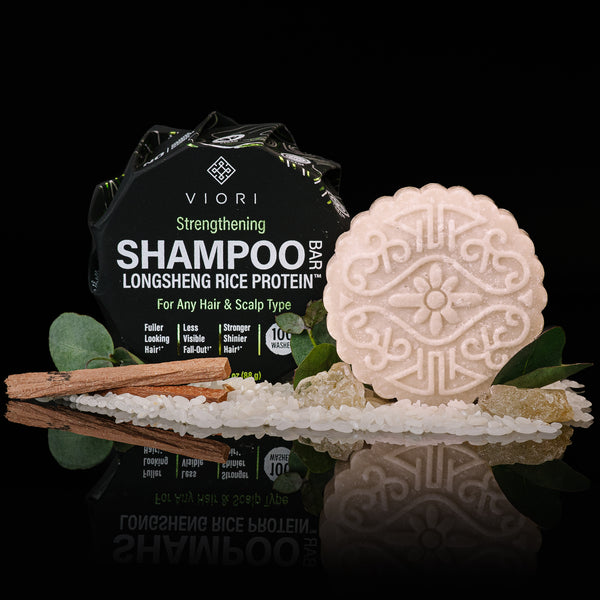
Looking at Viori's formulation philosophy, they've taken a smart approach by using lower concentrations of Longsheng rice water. Their own educational materials explain that rice water at high concentrations can disrupt your hair and scalp's pH if used too often. This is scientifically sound thinking, and it shows they understand the protein overload issue.
However, it raises an important professional question that I always consider when evaluating products: if the concentration is lowered for safety and pH balance, are the beneficial compounds still present in therapeutic amounts? Are we diluting the problem away, or are we diluting the benefits away too?
The answer, based on what I've observed with clients who use Viori? For most people, yes-the beneficial compounds are still there in effective amounts. But it means you need consistency over time rather than expecting dramatic overnight results. This is a marathon product, not a sprint product.
The Scent Science Nobody Explains (And Why It Matters More Than You Think)
The Aroma Challenge That Every Formulator Faces
Let's address something that never makes it into the pretty marketing materials. Authentic fermented rice water smells pretty bad. I'm not being delicate here-it's earthy, sour, distinctly funky. If you've ever made sourdough starter or kombucha, you know the smell I'm talking about. It's the smell of active fermentation, and while it signals that beneficial processes are happening, it's not exactly what you want lingering in your hair before a job interview.
This presents formulators with a genuine challenge. How do you make a product people will actually enjoy using? Because here's the truth from two decades behind the chair: the best product in the world is worthless if people hate using it and it sits unused under their sink.
Viori uses what they call "clean scents"-a mixture of essential oils and natural equivalent fragrances. Let me explain what "natural equivalent" actually means, because this is where the chemistry gets fascinating and where a lot of misconceptions live.
Nature-Identical Compounds: The Chemistry Is Identical, Just the Source Is Different
When we talk about nature-identical compounds, we're discussing molecules synthesized in a lab that are molecularly identical to those found in nature. And I mean truly identical-not "similar," not "close enough," but the exact same molecular structure.
Take linalool, which gives that lovely lavender scent. The linalool molecule has the same structure-C₁₀H₁₈O-whether it's extracted from actual lavender flowers or created in a lab. Your nose cannot tell the difference because there is no difference at the molecular level. Limonene, which gives that fresh citrus scent? Chemically indistinguishable whether it came from an orange peel or a synthesis lab.
Now, here's why this matters beyond just the smell, and why I always pay attention to fragrance in professional products.
These molecules are tiny-typically under 300 Daltons. That means they're small enough to penetrate not just your hair, but your scalp skin. They're not just sitting on the surface making things smell nice. They're getting into your tissue.
For most people, this is completely fine. But even "clean" fragrances can cause reactions in one to three percent of users. I've seen it happen. Someone uses a product for weeks with no issues, then suddenly develops scalp irritation because they've reached their personal threshold for a particular compound. This is why I always, always recommend patch testing, even with natural or clean products.
Some fragrance compounds also affect pH, which can impact that carefully balanced formula that the chemists worked so hard to create. A formula might start at pH 5.5 in the lab, but six months later, after the fragrance compounds have had time to interact with everything else in the formula, it's sitting at pH 6.2. Small change, but it matters for results.
When Fragrance Pulls Double Duty: The Citrus Yao Advantage
Viori's Citrus Yao line shows particularly intelligent formulation, and it's one of the reasons I recommend it for certain hair types. The citrus scent isn't just about smelling fresh-though that's certainly a perk. It contains citric acid, which serves multiple functions in the formula.
First, it's a pH adjuster. It helps maintain that acidic environment needed for cuticle closure. Second, it acts as a chelating agent-it grabs onto mineral deposits from hard water, which is huge for people in areas with challenging water chemistry. Third, the acidic environment actually helps control scalp oil production, so it's working as a sebum regulator. And fourth, lower pH naturally inhibits microbial growth, so it's helping with preservation.
As a professional, I love when aesthetic choices support functional outcomes. When the thing that makes the product pleasant to use also makes it work better? That's elegant formulation.
The Bar Format: Why Physical Form Changes Everything
Solid Bars Require Completely Different Chemistry Than Liquids
The bar format isn't just about being eco-friendly or reducing plastic waste-though those are certainly benefits. It actually requires fundamentally different chemistry, and understanding this helps explain why bar shampoos feel different from liquid shampoos even when they're supposedly doing the same thing.
Viori uses Sodium Cocoyl Isethionate as their primary surfactant. In the industry, we call this a "syndetic detergent" or "syndet." It's not soap, despite the fact that it comes in a bar like soap. This distinction is crucial.
Traditional soap has a pH of nine to ten, which is absolutely disastrous for hair. It causes cuticles to swell, creates tangles, and leaves a filmy residue especially in hard water. Anyone who's ever washed their hair with bar soap knows exactly what I'm talking about-that squeaky, tangled, impossible-to-comb mess.
WHAT CUSTOMERS ARE SAYING
Real reviews for Rice Water Shampoo Bar – All Hair Types | VIORI
SCI maintains a pH of 5.5 to 6.5, right in that hair-friendly range. It doesn't form soap scum with hard water minerals. And it's significantly milder than harsh sulfates like sodium lauryl sulfate, which can strip hair and irritate scalps.
To create the solid bar structure, Viori also includes Behentrimonium Methosulfate, which despite having the word "sulfate" in the name, is actually a conditioning agent, not a harsh cleansing sulfate. I know-the naming in chemistry is confusing and often scary-sounding even when the ingredient is perfectly gentle. They also use Cetyl Alcohol and Stearic Acid, which are fatty alcohols that provide structure to the bar. And no, these alcohols aren't drying like rubbing alcohol-again, chemistry naming is unfortunately not intuitive.
The Water Dilution Factor That Nobody Discusses
Here's something that dramatically affects your results but almost never gets mentioned in reviews or tutorials: concentration control.
With liquid shampoo, you squeeze out a measured amount from the bottle. That amount has a standardized concentration of active ingredients. With a bar, the amount of water you use to create lather dramatically changes how concentrated the product is on your hair.
More water means more diluted active ingredients. You might not be getting the full benefit of the formula because you're essentially watering it down as you use it. Less water means potentially too concentrated, which risks buildup on your hair and scalp.
This is why I tell clients there's a learning curve with bars. Your first few uses might feel completely different from your tenth use as you figure out the optimal water-to-product ratio for your specific hair type, length, and thickness. Don't judge a bar shampoo on your first use. Give yourself three to five washes to figure out your personal technique.
The pH Balance Act: Your Hair's Most Important Number
If I Could Make Every Client Understand Just One Thing
In twenty years of professional hair care, if I could snap my fingers and make every single client understand one thing, it would be pH. Not protein. Not moisture. Not porosity, even though that's important too. pH is the single most important factor in hair product efficacy, yet it's the most overlooked, least understood, and barely mentioned aspect of hair care.
Here's why it matters so much.
Your Hair Has an Isoelectric Point
Hair's isoelectric point is pH 3.67. This is the point where hair has no net electrical charge. It's electrically neutral. Around this point, very specific things happen to your hair structure.
Below pH 3.67, cuticles contract very tightly. This can actually cause brittleness if you go too acidic for too long. Above pH 3.67, cuticles lift and swell, which makes hair vulnerable to damage, tangling, and moisture loss.
The sweet spot for most hair care products is pH 4.5 to 5.5. This allows controlled cuticle closure while maintaining the flexibility that hair needs to move, bend, and withstand styling without snapping.
Viori correctly notes that hair products should be between pH 3.5 and 6.5. This is accurate general guidance. But here's the professional nuance they can't include on a product label because it would be too confusing: optimal pH actually varies by hair condition.
My Professional pH Recommendations by Hair Type
For virgin, healthy hair, pH 4.5


