
Most of us don’t go hunting for a new shampoo and conditioner just for fun. We do it because something is off-our scalp gets oily too fast, our ends feel dry and snappy, frizz has a mind of its own, or our hair looks dull no matter what we do.
And while the internet loves simple answers (“hydrate more!” “go sulfate-free!” “clarify weekly!”), those tips rarely explain what’s actually happening on your head. After 20 years doing hair, I can tell you this: the best results don’t come from chasing buzzwords. They come from understanding how hair behaves during the wash cycle.
The most overlooked truth is surprisingly nerdy but incredibly useful: great shampoo and conditioner routines are built around your hair’s charge map-and how a formula (and your technique) changes it over time.
What I mean by your hair’s “charge map”
Your hair isn’t just “dry” or “oily.” It’s a keratin fiber with a surface that can carry electrical charge. And that charge shifts depending on what your hair has been through-chemical services, heat, sun exposure, brushing habits, and plain old wear-and-tear.
Here’s the part most people never hear: the more damaged or porous your hair is, the more negatively charged it tends to become. Those negative sites act like tiny magnets for conditioning ingredients, which are usually positively charged.
So when a conditioner makes your hair feel instantly smoother, that’s not luck. That’s controlled deposition-the product is literally drawn to the areas that need the most help.
NOT SURE WHICH PRODUCT IS RIGHT FOR YOU?
TAKE THE QUIZTakes 30 seconds · 134,000+ customers matched
Shampoo isn’t only “cleaning”-it sets the cuticle stage
Yes, shampoo removes oil and grime. But technically, a good shampoo is doing several jobs at once: lifting sebum, loosening residue, managing friction, and influencing how the cuticle behaves while wet (which is when hair is most vulnerable).
When people say, “This shampoo makes my hair feel rough,” what they’re often reacting to is cuticle friction-how much the strands catch on each other during cleansing.
Why pH balance matters in real life
Hair tends to behave best in a mildly acidic environment. When a product runs too alkaline, the hair can swell more and the cuticle can lift, which often shows up as tangling, frizz, or that “dry-but-not-clean” feeling.
Viori bars are described as pH balanced, and that’s not just a nice-to-have. In practical terms, pH influences how smoothly the cuticle lies down, how shiny hair looks, and how manageable it feels after rinsing.
The “soft shampoo” effect: when cleansing starts conditioning
One of the more modern shifts in haircare is that some shampoos are designed to feel less squeaky and more slip-friendly, even before you condition. That can be a game changer for hair that tangles easily.
Viori shampoo bars use Sodium Cocoyl Isethionate (SCI) as the primary cleanser-often considered a gentler cleansing option that still foams well. Their formulas also include Behentrimonium Methosulfate (BTMS), which is commonly used for conditioning slip.
The benefit is obvious when you feel it: hair can feel cleaner without feeling punished. The nuance is important, though-if your hair is low porosity or buildup-prone, that extra softness can sometimes translate to “my hair feels coated” if you overapply or don’t rinse thoroughly.
Conditioner isn’t “moisture”-it’s smart film placement
Conditioner is often described as “adding moisture,” but that’s not really the mechanism. Conditioner works by placing a thin, flexible film over the cuticle and improving strand-to-strand glide. That’s why you get detangling, softness, and less frizz.
In Viori conditioner bars, BTMS is a key player. Quick clarification: despite the word “methosulfate,” BTMS isn’t the same thing as cleansing sulfates people worry about. It’s a conditioning ingredient used specifically for smoothness and manageability.
Viori also uses fatty alcohols like cetyl alcohol and stearic acid. These are not drying alcohols; they help create that creamy slip and support the structure of the bar while improving the feel of the hair.
Why conditioner bars don’t lather (and why that’s normal)
People sometimes panic the first time they use a conditioner bar because it doesn’t foam like shampoo. That’s expected. Shampoo contains cleansing surfactants to lift oil and dirt; conditioner is built to deposit and smooth. With Viori, the conditioner is meant to feel more like a paste-like slip than a fluffy lather.
The protein paradox: strength can feel like stiffness
Protein is one of the most misused tools in haircare. In the right amount, hydrolyzed protein can help hair feel stronger and more resilient. Too much, too often-especially on the wrong hair type-and it can make hair feel stiff or rough.
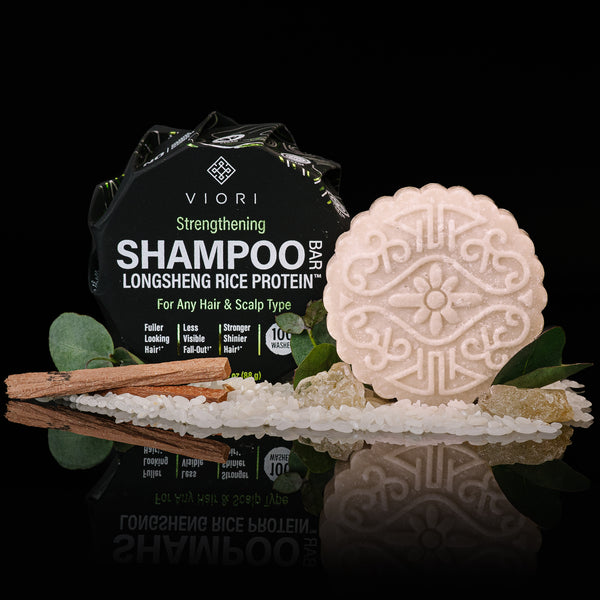
Viori notes they use a low concentration of rice protein, which matters because it’s designed to be supportive without pushing many hair types into that brittle, “over-proteined” zone.
Fermented rice water: the interesting part is what fermentation changes
Rice water gets talked about constantly online, but most of the discussion is shallow-either it’s a miracle, or it’s “just a trend.” The more useful conversation is about fermentation and concentration.
Viori uses fermented Longsheng rice water and specifically avoids an overly high concentration, since very strong rice-water use can throw off the hair and scalp’s pH if it’s overdone. Fermentation is also associated with increased levels of compounds like inositol (Vitamin B8) and panthenol (Vitamin B5), both of which are widely used in haircare for conditioning performance and strand feel.
A detail most people miss: scent can affect real-world performance
We usually treat scent like it’s only about preference, but Viori points out something worth paying attention to: even with a consistent base formula, scent profiles can behave differently on different scalp types.
Citrus Yao contains citric acid, which Viori notes helps break down oil, making it a solid option for normal-to-oily scalps.
Terrace Garden and Native Essence are often favored for normal-to-dry scalps, with Native Essence being unscented for those who are fragrance-sensitive.
In other words, “best for you” isn’t just hair texture-it’s scalp chemistry and how quickly oil comes back.
Bar haircare has one extra variable: friction
This is where bar formats deserve a little extra respect. With liquid shampoo, distribution is pretty automatic. With bars, your technique becomes part of the formula-because friction can lift the cuticle and increase tangling, especially on porous or color-treated hair.
Viori recommends a smart approach for color-treated hair: lather in your hands and apply with your palms rather than rubbing the bar directly onto the hair. That reduces localized friction and helps protect the cuticle-exactly what you want if you’re trying to preserve tone and shine.
How to pick the right Viori routine (without guessing)
If you want to choose shampoo and conditioner like a pro, stop starting with “my hair looks dry.” Start with these three anchors: how your scalp re-oils, your porosity, and what your ends are doing.
1) Track how fast your scalp gets oily again
Oily scalp: feels oily again 1-2 days after washing
Normal scalp: around day 3
Dry scalp: 4+ days
2) Check porosity (quick water test)
Drop a clean strand into a glass of water.
Floats: low porosity (often buildup-prone; tends to prefer lighter approaches)
Stays mid-glass: medium porosity
Sinks: high porosity (absorbs fast, loses moisture fast; often needs richer support)
3) Treat your scalp and ends like separate clients
A lot of people have an oily scalp and dry ends. That’s not “confusing hair”-it’s just two different needs living on one head.
WHAT CUSTOMERS ARE SAYING
Real reviews for Rice Water Shampoo Bar – All Hair Types | VIORI
Oily scalp: Viori often recommends Citrus Yao shampoo and conditioner.
Oily scalp + dry ends: use Citrus Yao shampoo at the scalp, then a more moisturizing Viori conditioner focused on mids and ends.
Dry or sensitive scalp: Native Essence (unscented) is typically the gentlest-feeling choice.
Dry hair/frizz: Terrace Garden or Native Essence are commonly used for a more moisturizing feel.
The pro move: give your routine enough time to tell the truth
Hair doesn’t always respond honestly after one wash, especially if you’re coming off buildup, heavy styling products, or inconsistent conditioning. Your best read is after enough washes to see patterns in softness, tangling, scalp comfort, and shine.
Viori recommends giving their bars 2-3 months before calling it quits, and that timeline makes sense-because you’re not just looking for a one-day cosmetic effect. You’re watching how the cuticle behaves and how the scalp settles over repeated wash cycles.
Bottom line
If there’s one idea to keep, it’s this: shampoo and conditioner aren’t just “clean” and “soft.” They’re chemistry, pH, cuticle behavior, charge, and friction management-working together (or fighting each other) every time you wash.
When those pieces line up, your hair starts to feel easier: easier to detangle, easier to style, easier to grow longer with less breakage. And with a thoughtfully designed bar system like Viori, the results get even better when you match the right bar to your scalp type and apply it with a cuticle-friendly technique.
If you want a personalized match, start simple: track how many days it takes your scalp to feel oily again, do the porosity water test, and note whether your ends feel dry. From there, choosing a Viori routine becomes much less guesswork-and a lot more predictable.


