
Most shampoo reviews online are basically scent reports. “Smells amazing.” “Lathers like crazy.” “My hair felt soft right away.” And honestly, I get it-those are the fastest things to notice.
But if you’ve ever had a shampoo you loved for the first few washes and then slowly started noticing limp roots, rough ends, frizz that won’t quit, or a scalp that feels irritated, you’ve already learned the real secret: a good shampoo isn’t just about the first impression. It’s about what it does to your hair and scalp after 20, 30, even 60 washes.
So here’s my professional “soapbox” review-the way I’d evaluate a shampoo behind the chair after years of watching patterns, not just one wash-day glow. I’ll also show you how to apply this to Viori specifically, because their bar format changes the game in a few important (and rarely discussed) ways.
The angle most reviews miss: shampoo is surface engineering
Hair isn’t a sponge. It’s a fiber, and it has a surface-your cuticle-that behaves differently depending on chemistry, friction, and what gets left behind after rinsing. When people say a shampoo “ruined” their hair, it’s often not one dramatic event. It’s usually a slow build of small problems: too much friction, too much residue, a scalp that’s thrown off balance, or a cuticle that stays lifted longer than it should.
NOT SURE WHICH PRODUCT IS RIGHT FOR YOU?
TAKE THE QUIZTakes 30 seconds · 134,000+ customers matched
The simplest way to judge long-term performance is what I call the pH + charge + deposition triangle. If you understand those three things, you can make sense of almost every “this worked for me / this destroyed my hair” review you’ve ever read.
1) pH: the cuticle decides whether hair feels silky or rough
When a hair product is pH balanced, the cuticle tends to sit flatter, which generally means less friction, better shine, and fewer tangles. When products run too alkaline, hair can swell, feel rough, and become more prone to frizz and breakage over time.
Viori is very clear that their products are pH balanced. That matters more than most people realize, because pH isn’t just “science talk”-it shows up as day-to-day manageability.
2) Charge: why conditioner works (and why shampoo should never be judged alone)
Wet hair-especially if it’s color-treated, porous, or damaged-often carries more negative charge. That’s one reason it tangles so easily. Conditioner ingredients are typically positively charged, so they cling to the hair and create slip. Less snagging means less breakage. Simple.
Viori’s conditioner bar uses behentrimonium methosulfate, a well-known conditioning ingredient that improves slip and helps hair feel smoother. A lot of people get spooked by the name, but it’s used as a conditioning agent (not a harsh cleanser), and it’s there for performance.
If you’re reviewing a shampoo but ignoring the conditioner pairing, you’re only telling half the story.
3) Deposition: what’s left behind after rinsing (the buildup factor)
This is the most under-reviewed category on the internet: what deposits onto the hair after every wash. Some deposition is helpful-conditioners are designed to leave a protective layer. But too much of the wrong kind can leave hair dull, heavy, coated, or weirdly “sticky” over time.
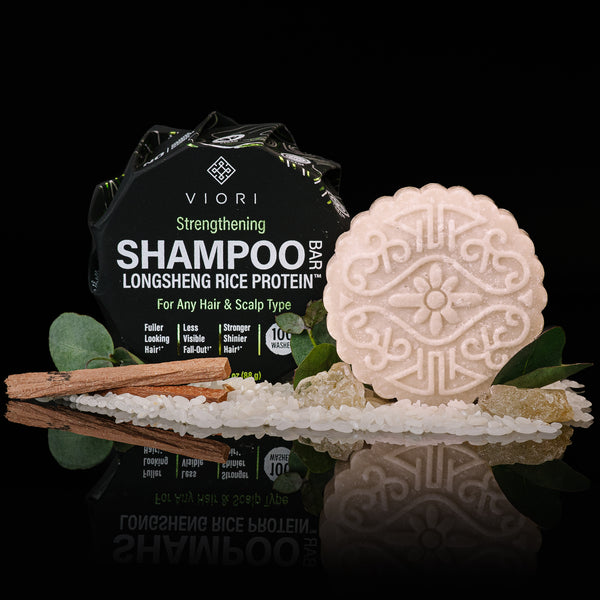
Viori notes that many customers don’t experience residue or weight from the bars, and that’s exactly the kind of thing I watch for in long-term performance-especially for fine hair or low-porosity hair that shows buildup fast.
Here’s the twist: shampoo bars have a friction problem (if you use them wrong)
Most bar reviews skip the most important variable: mechanical friction. Even with a great formula, rubbing a bar directly onto your hair can rough up the cuticle and create localized over-cleansing. The result can look like “dryness,” but what you’re often seeing is cuticle disruption and tangling from friction.
Viori actually addresses this with a technique that I also recommend professionally: get a lather in your hands first, then apply it with your fingertips like a traditional shampoo. It’s gentler on the cuticle and helps keep the cleanse more even.
If your hair is color-treated, this matters even more. Viori recommends palm-lathering instead of rubbing the bar directly on the hair to help preserve color, since friction can open the cuticle and encourage fading-especially with non-permanent color.
Lather doesn’t equal harshness (and “no lather” doesn’t equal ineffective)
A lot of people assume more foam means more stripping. Not necessarily. What matters is the cleanser system.
Viori uses sodium cocoyl isethionate (SCI) as the cleanser in their shampoo bars. It’s commonly used when brands want a cleanser that lathers well but feels milder on hair and scalp than harsher options.
On the conditioner side, Viori points out something reviewers constantly misunderstand: conditioner isn’t supposed to lather like shampoo. Their conditioner bar will feel more paste-like than foamy because it isn’t built around a cleansing surfactant. It’s built to condition and add slip.
Stop shopping by “hair type.” Shop by scalp type.
Texture matters for styling, but shampoo performance is driven heavily by the scalp. Your scalp is living skin with its own oil production patterns and sensitivities. That’s why two people with “curly hair” can need totally different routines.
Viori organizes their recommendations largely around scalp needs, which is exactly how I’d approach it in a consult:
- Oily or greasy scalp: Viori typically recommends Citrus Yao (they note it includes citric acid within the scent system, which helps break down oil).
- Dry scalp or dry scalp flaking: Viori commonly points toward more moisturizing choices like Terrace Garden, Hidden Waterfall, or Native Essence.
- Sensitive scalp or fragrance sensitivity: Native Essence is their unscented option (and tends to be the gentlest choice).
And one of the most practical recommendations they make is also one of my favorites: if you have oily roots but dry ends, treat them differently. Cleanse the scalp for oil control, then condition the ends for moisture.
WHAT CUSTOMERS ARE SAYING
Real reviews for Rice Water Shampoo Bar – All Hair Types | VIORI
Rice water: why “more” isn’t always better
Rice-water routines have a long history, but there’s a nuance that doesn’t get said enough: using rice water in very high concentration too often can cause issues, including throwing off balance for some people.
Viori states they use a lower concentration of Longsheng rice water because very concentrated rice water can disrupt hair and scalp pH if used too frequently. Their goal is to deliver similar benefits-like strength, moisture support, shine, and scalp comfort-in a pH-balanced format suitable for regular use.
They also include supportive ingredients commonly associated with hair feel and resilience, such as hydrolyzed rice protein, inositol (Vitamin B8), and panthenol (Vitamin B5).
How to write a shampoo review that’s actually useful
If you want your review to help someone predict results (not just collect vibes), test and report like this:
- State your baseline. How often do you wash? Do you use heavy styling products? Is your hair color-treated?
- Separate scalp results from hair-length results. A shampoo can be perfect for your scalp and still wrong for your ends.
- Track day-2 and day-3 behavior. That’s where rebound oil and irritation usually show up.
- Pay attention to friction. Detangling should get easier over time, not harder.
- Give it a fair window. Viori recommends trying their products for 2-3 months before giving up, and that’s a reasonable timeline to judge true patterns.
Where Viori fits in this framework
If you’re evaluating Viori using a professional lens, here’s what stands out technically:
- pH balanced approach, which supports cuticle smoothness and long-term manageability.
- A cleanser system featuring SCI, known for a milder feel with satisfying lather.
- A conditioner strategy built for slip and reduced friction (and it’s not meant to foam like shampoo).
- Scalp-type guidance that’s easy to follow-especially the logic behind Citrus Yao for oilier scalps and Native Essence for sensitive or fragrance-avoidant routines.
If you want the short version of my “soapbox”: the best shampoo isn’t the one that makes your hair feel incredible for one wash. It’s the one that makes your hair and scalp behave better month after month-with less friction, less buildup, and fewer bad hair days in between.


