
When a client asks me about apple cider vinegar shampoo bars, I know we're about to have an interesting conversation-one that goes far deeper than most people expect.
After two decades working with hair of every type, texture, and condition, I've learned that the most popular trends often hide the most fascinating chemistry. And apple cider vinegar shampoo bars? They represent one of the beauty industry's most intriguing technical challenges-one that rarely gets the honest discussion it deserves.
Let me share what's really happening when you lather up with these bars, and why understanding the science might completely change your hair care routine.
The Chemistry Problem Nobody Talks About
Here's something that keeps cosmetic chemists up at night: apple cider vinegar shampoo bars are asking us to combine two fundamentally opposing chemical principles into a single, stable solid format.
Think about it. Traditional shampoo bars work beautifully at a pH between 5.0 and 6.5-slightly acidic, perfect for hair health. At this pH level, your hair's cuticle layer stays sealed and smooth, your scalp maintains its protective acid mantle, and the cleansing agents perform exactly as they should.
Apple cider vinegar, however, clocks in at a much more acidic pH of 2.5 to 3.5.
The challenge? These two pH levels want completely different things from your hair. One wants to gently lift the cuticle just enough to clean effectively. The other wants to slam those cuticles shut for maximum shine. Trying to do both at once is like trying to open and close a door simultaneously-one action inevitably compromises the other.
The Stability Issue You've Never Heard About
Let me pull back the curtain on something most brands won't discuss: the formulation nightmare that happens when you try to incorporate meaningful amounts of apple cider vinegar into a solid bar.
Most quality shampoo bars use gentle, coconut-derived cleansers that create that satisfying lather we all love. These surfactants perform optimally in a specific pH range-typically between 5 and 7.
But when you push the pH down toward vinegar's natural acidity, things start breaking down. Literally.
NOT SURE WHICH PRODUCT IS RIGHT FOR YOU?
TAKE THE QUIZTakes 30 seconds · 134,000+ customers matched
The molecular bonds in these gentle cleansers become unstable. Your bar's shelf life can drop from years to months. The lather changes-you might get bubbles, but they don't actually clean effectively. I call this "dead foam," and it's more common than you'd think.
Even the natural binders that hold the bar together can become unstable at very acidic pH levels. Gums, cellulose derivatives, and other plant-based ingredients that work beautifully in traditional bars start to struggle.
The Neutralization Secret
Here's the part that might surprise you: if a brand adds enough stabilizing ingredients to make the bar safe for regular use and give it a reasonable shelf life, they're essentially neutralizing much of the vinegar's acidity.
This creates what I call the "apple cider vinegar in name only" problem.
Many commercial ACV shampoo bars contain apple cider vinegar for marketing purposes, plus sufficient alkaline buffers to keep the pH around 5 to 6 for stability and safety. The result? You're getting apple essence and minimal vinegar benefits.
It's a bit like decaffeinated coffee-technically it contains coffee, but you're not getting what you think you're getting.
What Actually Happens to Vinegar in a Solid Bar
Acetic acid-the active component that gives ACV its beneficial properties-is volatile. This creates some unique challenges in solid bar format.
The exterior of the bar loses acetic acid faster than the interior, creating an inconsistent product over time. In humid shower environments, ACV bars face a lose-lose situation: they either dry out (losing the vinegar component) or absorb moisture (beginning premature decomposition).
And that characteristic vinegar smell? It's literally the active ingredient evaporating. When you stop smelling vinegar, you've probably lost much of what made the bar special in the first place.
The Three Types of ACV Bars You'll Actually Find
Through years of analyzing products and formulations, I've identified three main categories of apple cider vinegar shampoo bars on the market. Understanding these helps you know what you're really buying.
Type One: Trace Amounts
These contain 0.5% to 2% ACV or apple extract-primarily for label appeal. The actual pH sits at 5.5 to 6.5, which is standard shampoo range. The benefit? Mostly placebo effect, with perhaps a slight apple scent.
Type Two: Dehydrated or Powdered ACV
These use apple cider vinegar powder, which loses the volatile acetic acid during processing. They're more shelf-stable but lack the "mother" enzymes that raw ACV enthusiasts seek. These function more as fruit extracts than actual vinegar.
Type Three: Rehydration Required Format
These actually require extensive wetting and "activation" time, essentially creating a liquid ACV solution on your hair using the bar as a concentrate. This approach can work, but it defeats the convenience purpose of bars-and your bar will dissolve three to four times faster than standard formulations.
What Science Actually Recommends
Professional formulators know that the most effective use of apple cider vinegar in hair care requires separation of cleansing and acidifying steps-which is fundamentally incompatible with the all-in-one convenience of a shampoo bar.
The scientifically superior approach involves three distinct phases:
First, cleanse with a properly pH-balanced bar that maintains the ideal range of 5.0 to 6.5. At this pH, your surfactants work at full efficacy, removing dirt and oil without compromising your hair's structure.
Second, if you want the specific benefits of apple cider vinegar, follow with an acidic rinse-diluted apple cider vinegar at about 1 part vinegar to 4 parts water, bringing the pH to around 3.5. This gives you complete cuticle-sealing benefits without any formulation compromises.
Third, condition as needed based on your hair type.
This isn't marketing talking-it's chemistry. By separating these functions, you get the full benefit of each step without asking any single product to perform contradictory tasks.
The Alternative That Actually Works
Here's where things get interesting. The benefits people seek from apple cider vinegar-cuticle smoothing, shine enhancement, pH optimization, clarification-can actually be achieved through other, more stable ingredients.
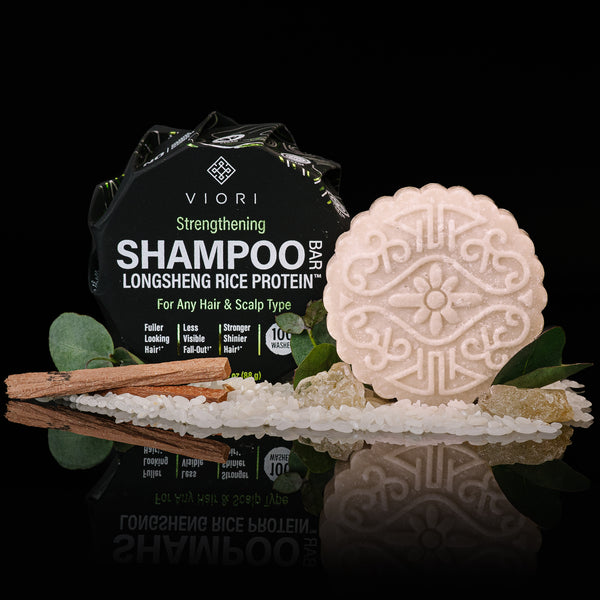
Viori's formulations incorporate fermented Longsheng rice water, which has a naturally mild acidic pH of around 5.5. This rice water contains naturally occurring organic acids similar to those found in ACV:
- Phytic acid chelates minerals and smooths the cuticle
- Amino acids strengthen hair structure from within
- Inositol improves hair elasticity and reduces breakage
The fermented rice water provides many of the same benefits people seek from apple cider vinegar, but in a chemically stable, properly buffered system that actually works in solid bar format. No formulation compromises. No stability issues. No volatility problems.
The Wisdom of Two Thousand Years
The Red Yao women-whose hair care traditions inspired Viori-have been using fermented Longsheng rice water for nearly 2,000 years. Here's what fascinates me: they never used vinegar on their hair, despite having access to it for centuries.
This isn't superstition or coincidence. It's empirical observation over millennia-what I call "convergent effectiveness," when traditional practice aligns perfectly with modern chemistry.
Fermented rice water provides natural pH optimization at 5.0 to 5.5 without extreme acidity. It delivers protein-rich conditioning from amino acids. The inositol content penetrates the hair shaft and strengthens from within. And crucially, it contains stable, non-volatile compounds that don't evaporate or degrade rapidly.
The Red Yao women discovered through generations of real-world testing what modern chemistry has confirmed: you don't need extreme acidity to achieve beautiful, healthy hair. You need the right pH range, delivered consistently, with complementary strengthening and smoothing ingredients.
What You're Really Seeking
When clients tell me they want apple cider vinegar shampoo bars, they're typically after one or more of these results:
- Shine enhancement through cuticle smoothing
- Residue removal to get rid of product buildup
- Scalp pH balance for comfort and health
- Natural ingredients to avoid harsh chemicals
Here's my professional insight: you don't need ACV specifically to achieve any of these results.
For shine, any properly pH-balanced shampoo followed by a slightly acidic conditioning step works beautifully. Products with rice protein and bamboo extract seal cuticles effectively.
For residue removal, look for citric acid (more stable than acetic acid), chelating agents like phytic acid, or clarifying clays. Regular rotation between moisturizing and clarifying formulas also helps.
For pH balance, simply use products formulated at pH 5 to 6. Your hair doesn't need pH 3 cleaning-that's actually too acidic for optimal results.
For natural ingredients, focus on minimal ingredient lists, recognizable plant-based components, and sustainable sourcing practices.
The Molecular Reality
Let me explain the fundamental reason why separate steps always outperform all-in-one ACV bars.
During cleansing at pH 5.5 to 7, your cuticle scales lift slightly-which is necessary for effective cleaning. The negatively charged surfactants attract dirt and oil, sebum emulsifies and rinses away, and your scalp maintains a comfortable pH.
During acidifying at pH 3 to 4, those cuticle scales compress and seal. Positive charges are neutralized. Hydrogen bonds strengthen between cuticle layers. Light reflection improves, creating shine.
These are opposite chemical states. One lifts the cuticle; the other seals it. One prioritizes cleaning; the other prioritizes smoothing. The pH either favors cleansing or acidifying-it cannot optimize both simultaneously.
The Environmental Angle Nobody Mentions
Most people assume any bar is automatically more sustainable than liquid shampoo. But with ACV bars specifically, the math changes.
Shortened shelf life means higher product waste from bars that expire unused, more frequent shipping with associated environmental impact, and larger packaging-to-use ratios over the product's lifetime.
Formulation compromises often require more synthetic stabilizers, less efficient use of active ingredients, and potentially higher concentrations to achieve results.
Production complexity demands more energy-intensive manufacturing, increased quality control testing, and higher rejection rates.
A well-formulated traditional bar lasting 60-plus washes over a 3-year shelf life actually has a smaller environmental footprint than an ACV bar that degrades in 6 to 8 months.
The Professional Protocol I Actually Recommend
If you're seeking what apple cider vinegar promises, here's my proven protocol using formulations that work with hair chemistry rather than against it.
For Oily or Normal Scalp Types
Start with a pH-balanced cleansing bar. Viori's Citrus Yao Shampoo Bar contains naturally present citric acid (similar to ACV's acetic acid) and removes excess sebum without stripping.
WHAT CUSTOMERS ARE SAYING
Real reviews for Rice Water Shampoo Bar – All Hair Types | VIORI
If desired, follow with a DIY apple cider vinegar rinse for extra clarification: one tablespoon ACV plus one cup cool water, poured through mid-lengths to ends only, left for 30 to 60 seconds, then rinsed thoroughly.
Finish with conditioner applied to ends only for moisture without heaviness. The naturally acidic pH helps seal the cuticle.
For Dry or Normal Scalp Types
Begin with a moisturizing cleansing bar. Viori's Terrace Garden or Native Essence formulations include rice water that provides gentle acidification while building up scalp health over time.
Follow with generous conditioning from mid-length to ends, left in for 3 to 5 minutes. This acts as a natural acidic treatment without vinegar harshness.
Consider a weekly rice water rinse-actually more effective than ACV for dry hair, providing both acidification and deep protein conditioning.
For All Hair Types Dealing with Hard Water
If you have hard water (above 120 mg/L calcium carbonate), mineral buildup is real. Use a clarifying bar with chelating agents 2 to 3 times per month, alternating with regular pH-balanced bars. The mildly acidic environment helps dissolve mineral deposits without requiring extreme pH levels.
The Sensory Experience Factor
Through years of client consultations, I've noticed that people attracted to ACV products often respond positively to certain sensory elements: the scent association (vinegar smells "clean" and "natural"), the tingle or sensation from mild acidity, the immediate smoothness from temporarily compressed cuticles, and the ritual of multi-step routines.
Here's what's interesting: well-formulated bars with natural ingredients already deliver most of these experiences without formulation compromises.
Natural scent profiles provide sensory satisfaction. Rice water proteins create immediate smoothness. Proper pH balance gives that "squeaky clean" feeling without over-stripping. And bar format makes the ritual feel intentional and mindful.
The only missing element is the vinegar scent itself-which, honestly, most people actually dislike after the novelty wears off.
The One Situation Where Acidic Bars Help
I want to be completely fair here. There is one scenario where mildly acidic bars (not necessarily pure ACV, but acids in general) provide genuine value: hard water households.
If mineral buildup is your primary concern, a bar formulated with chelating agents plus mild acids-maintaining pH between 4.5 and 5.5, not lower-can help dissolve deposits when used 2 to 3 times monthly.
But even here, you don't need pure apple cider vinegar. Any gentle acid works equally well: citric acid from citrus fruits, lactic acid from fermentation, or acids naturally derived from rice water. All provide the same mineral-dissolving benefits without the stability issues of trying to preserve volatile acetic acid in solid form.
What Two Decades Has Taught Me
After 20 years in this industry, I've learned that the best products aren't always the trendiest ones. They're the ones that work with your hair's natural chemistry rather than against it.
Apple cider vinegar has genuine benefits for hair-I'm not disputing that. But trying to capture those benefits in a solid shampoo bar creates so many formulation compromises that you're often better served by simpler, more stable alternatives.
The Red Yao women figured this out centuries ago. Fermented rice water at a naturally balanced pH, rich in proteins and gentle acids, delivers beautiful results without requiring extreme acidity or chemical gymnastics.
When choosing hair care products, look beyond the trending ingredient on the label. Consider the pH. Think about stability and shelf life. Ask whether the format makes sense for the active ingredients. Question whether you're getting genuine benefits or clever marketing.


