
When clients ask me about switching to bar shampoo, I notice they're usually asking the wrong questions. They want to know if it's "natural" or "better for the environment," but they rarely ask about the fundamental chemistry that determines whether a bar will actually work for their hair.
After twenty years of working with every hair type imaginable, I've learned that format matters just as much as ingredients. And when it comes to bars versus liquids, the science goes much deeper than most beauty blogs will tell you.
Let me share what I've discovered about how bar shampoos actually work-and why understanding the chemistry can save you from a lot of bad hair days.
Why Your Grandmother's Bar Soap Was Absolutely Terrible for Hair
First, let's talk about what most people think of when they hear "bar of soap for hair": traditional soap bars made from saponified fats.
These old-school soap bars aren't just problematic because of pH (though that's certainly an issue). The real problem lies in their molecular structure.
The crystalline structure challenge: When oils are turned into soap through saponification, the molecules form a crystalline lattice-think of it like a tightly organized grid. When water hits this structure, it doesn't break down evenly. Instead, it fragments into concentrated "shards" of surfactant.
What does this mean for your hair? These concentrated fragments create zones of extremely high pH (often 9-10) before they have a chance to dilute properly. Even brief exposure causes your hair cuticles to swell dramatically and irregularly. It's not the gentle, controlled opening you'd get from a properly formulated liquid shampoo at a hair-friendly pH of 5.5-6.5.
The hard water disaster: Everyone knows that soap and hard water create soap scum. But here's what's truly problematic: with bar soap, this reaction happens directly on your hair strands before adequate dilution occurs. You're essentially coating your hair with insoluble calcium salts in real-time. With liquid shampoo, dilution happens before you ever apply it to your head, giving you much better results in hard water areas.
This is why your grandmother may have followed her soap wash with an acidic vinegar rinse-she was trying to undo the chemical damage the soap had just caused.
NOT SURE WHICH PRODUCT IS RIGHT FOR YOU?
TAKE THE QUIZTakes 30 seconds · 134,000+ customers matched
The Game-Changing Difference: Modern Shampoo Bars Aren't Actually Soap
Here's where things get interesting and where a lot of confusion enters the conversation.
Modern shampoo bars-like those from Viori-aren't traditional soap at all. They're what chemists call syndets (synthetic detergents) that have been compressed into bar form. The chemistry is completely different.
Traditional soap is made through saponification: fats plus lye create soap plus glycerin. It's a simple, ancient process that always results in an alkaline product.
Syndets, on the other hand, are manufactured through entirely different processes using ingredients like Sodium Cocoyl Isethionate (SCI). Under a microscope, these bars look nothing like traditional soap. Instead of interlocking crystals, they have a more amorphous, compressed powder structure. When you wet them, they release surfactant much more evenly and predictably.
The pH advantage: Because syndets aren't bound by the chemical constraints of saponification, they can be formulated at hair-appropriate pH levels (typically 4.5-6.5). This is chemically impossible with true soap bars-trying to lower soap's pH destroys its ability to clean.
This distinction is crucial. When someone says "bar shampoo didn't work for me," I always ask: were you using actual soap, or a syndet bar? The experiences will be completely different.
The Friction Factor: Why How You Apply a Bar Matters More Than You Think
Let me share something I rarely see discussed in bar shampoo reviews: the mechanical friction problem.
When you use liquid shampoo, you're distributing surfactants through fingertip massage. Your finger pads have a relatively large surface area (about 2-3 cm² each), which distributes the mechanical force gently across your scalp and hair.
With a bar, even when you lather it in your hands first, most people end up making some direct bar-to-hair contact. The edge of a bar has a much smaller contact area-sometimes as little as 0.5-1 cm². This concentrates the mechanical force significantly.
Here's why this matters for your hair structure: Hair cuticles are arranged like roof shingles, pointing from root to tip. When you run a bar down your hair shaft (which is the natural, intuitive movement), you're actually going against the grain. This catches and lifts those cuticle scales far more than washing with your fingertips does.
For color-treated hair especially, this mechanical disruption can be more damaging than pH issues. Even a perfectly pH-balanced bar can physically lift cuticles that have already been compromised by color processing, allowing dye molecules to escape faster.
This is why quality bar shampoo manufacturers, including Viori, recommend creating a lather in your palms and working it through your hair with your hands rather than rubbing the bar directly on your head. This instruction isn't just a suggestion-it's chemically necessary to avoid the friction problem.
Of course, this technique does reduce some of the convenience that makes bars attractive in the first place. But if you want your bar shampoo to perform well, especially on fragile or treated hair, it's non-negotiable.
The Climate Factor No One Talks About
Here's something I've observed over years of working with clients in different regions: bar performance varies significantly with ambient humidity.
Compressed syndet bars are hygroscopic, meaning they absorb atmospheric moisture. In high humidity environments (above 60%), bars soften slightly and release surfactant more readily. In low humidity (below 30%), they stay harder and require more friction to generate lather.
What this means practically: The same bar will perform differently depending on where you live and what season it is. Your summer experience with a bar might be completely different from your winter experience.
I've had clients report that their bar shampoo worked beautifully for months, then suddenly seemed to stop performing well. Often, this coincides with seasonal changes in humidity. It's not that their hair changed-it's that the atmospheric water activity is affecting how the surfactants release from the bar.
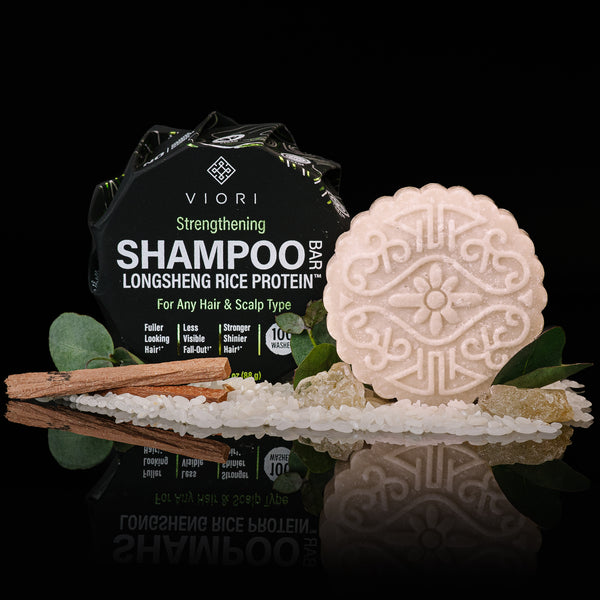
This is something liquid shampoos simply don't deal with. The surfactants are already in solution, so climate doesn't affect their availability.
The Dosing Problem That Creates "Residue" Complaints
Let's talk about why some people experience buildup with bars when they never had that issue with liquid shampoo.
With liquid shampoo, dosing is relatively consistent. Most of us have been conditioned to use "a quarter-sized amount," which typically translates to about 5-7ml of product. You can see how much you're using, and you can easily add more if needed.
With bar shampoo, there's no built-in dosing mechanism. How much surfactant you're applying depends on:
- How long you rub the bar
- How much pressure you apply
- How wet your hair is initially
- The current softness of the bar
- Your water temperature
This variability means users often unknowingly under-apply (leaving hair under-cleaned) or over-apply (leaving excess surfactant that's difficult to rinse completely).
The hard water complication: In hard water, you need more surfactant to overcome mineral interference. With liquid shampoo, you instinctively grab more product. With bars, you might rub the bar for your usual duration without realizing you need more product to get proper cleansing in your water conditions.
Many "residue" complaints I hear about bars actually stem from inconsistent dosing rather than formulation issues. Learning to use a bar effectively requires more attention and technique than most people expect.
Why Conditioner Bars Are Trickier Than Shampoo Bars
Viori's conditioner bars reveal something fascinating about the challenges of putting conditioning agents into solid form.
In liquid conditioners, ingredients like Behentrimonium Methosulfate (BTMS)-a cationic surfactant that binds to damaged sites on hair-work beautifully. They're suspended in water with emollients like butters and oils, creating a creamy product that spreads easily and provides clear tactile feedback.
In bar form, these same ingredients behave differently. BTMS doesn't foam like cleansing surfactants do. The butters and oils don't emulsify properly without sufficient water present. What you get is more of a paste-like texture rather than the rich, creamy coating we're conditioned to expect.
The sensory disconnect: Even though the conditioner is chemically working, it doesn't feel like it's working because we've trained ourselves to associate conditioning with specific textures. A bar that doesn't create visible lather or creamy slip seems like it's not doing anything, even when it actually is.
The bar format also means these conditioning agents are deposited in concentrated form, requiring significant water and mechanical distribution (combing, scrunching) to spread evenly through your hair. Miss a section, and you'll have uneven conditioning-something that rarely happens with liquid conditioners that naturally flow and self-distribute.
The Physics of Shrinking Bars: Why Small Bars Feel Different
Here's something I've observed but never seen written about: bar performance changes as the bar gets smaller.
It comes down to surface-area-to-volume ratios. A full bar has relatively low surface area compared to its volume. As it wears down through use, the surface area increases proportionally. This means:
- Smaller bars soften faster (more surface area exposed to water absorption)
- They release surfactant more readily
- They become more fragile and break apart more easily
- The last quarter of a bar often performs noticeably differently than the first three-quarters
If you've ever noticed that travel-size bars feel "nicer" or more luxurious than full-size bars, this is why. They're not just scaled-down versions-they're physically different in terms of how they interact with water and release product.
The Hygiene Consideration Worth Knowing About
Liquid shampoos require preservatives because their water content creates an environment where bacteria and fungi can grow. Bars are considered "self-preserving" because their low water activity prevents microbial growth.
But here's the catch: this only applies when the bar is completely dry.
The humid shower environment creates conditions that don't exist with liquid products. Wet bars sitting in dishes can accumulate Pseudomonas and other water-loving bacteria. These microorganisms form biofilms on the bar surface. The next time you use the bar, you're potentially introducing these bacteria to your scalp.
For most people with healthy scalps, this isn't a problem-your skin's natural microbiome handles it fine. But for anyone dealing with:
- Folliculitis
- Seborrheic dermatitis
- Compromised immune function
- Recent scalp treatments or procedures
Bar hygiene becomes a more significant consideration.
This is why quality bar manufacturers emphasize proper storage-keeping bars on well-draining holders and allowing them to dry completely between uses. It's not just about making the bar last longer; it's about maintaining hygiene standards that liquid pump bottles automatically provide through their closed-system design.
The Formulation Limitations No One Mentions
Let me be honest about a technical reality: the bar format severely restricts what formulators can do.
WHAT CUSTOMERS ARE SAYING
Real reviews for Rice Water Shampoo Bar – All Hair Types | VIORI
For a bar to maintain its structure and not turn into mush in your shower, it needs:
- Sufficient hardening agents (like stearic acid or cetyl alcohol)
- Specific binding ratios that keep it solid at room temperature
- Very limited water content (typically under 15%)
These requirements mean there are many water-soluble active ingredients that work beautifully in liquid shampoos but simply can't be incorporated into bars at meaningful concentrations:
- Hydrolyzed proteins (beyond trace amounts)
- Most vitamins (B5 and E work because they're oil-soluble)
- Many botanical extracts
- Advanced conditioning polymers
When you see ingredients like "rice protein" in a bar formulation, they're present at much lower concentrations than would be possible in a liquid product. Higher concentrations would prevent the bar from forming properly. In liquid formulations, you could potentially add five to ten times more of these beneficial ingredients.
This is the unspoken trade-off: The sustainability and convenience of bar format come at the cost of active ingredient loading capacity. Bars work well, but from a pure chemistry standpoint, they'll never match the performance potential of expertly formulated liquids.
However, what bars can do is use higher-quality base ingredients. Viori, for example, uses authentic Longsheng rice water rather than diluted extracts-something that's economically feasible in bars because of different cost structures.
The Economic Reality That Shapes Bar Formulation
Understanding the business side helps explain why bars are formulated the way they are.
Bar profit margins are significantly higher than liquid products because of:
- No water weight (dramatically reduced shipping costs)
- No bottle manufacturing expenses
- Longer shelf stability reducing waste and returns
- Premium pricing justified by sustainability positioning
A 90-gram shampoo bar at $12 represents much better margins than a 250ml liquid bottle at the same price, even when accounting for concentrated active ingredients.
This economic reality is actually good news for consumers in some ways. It means bar manufacturers can afford to use higher-quality base ingredients while maintaining profitability. But it also means there's less financial pressure to solve some of the genuine technical challenges bars present-like friction issues, uneven application, and humidity sensitivity-because the product is already profitable as-is.
When Bars Excel and When They Don't: My Professional Assessment
After twenty years of experience and deep-diving into the chemistry, here's my honest assessment of when bar shampoos are genuinely excellent choices and when they're likely to disappoint.
Bars work exceptionally well for:
Normal to oily scalps with minimal hair damage: If your hair is healthy and relatively virgin (not heavily processed), bars can work beautifully. The mechanical friction isn't problematic for strong, intact cuticles.
Hard water situations (with proper syndet formulation): A well-formulated syndet bar at the right pH actually handles hard water better than many liquid shampoos because of surfactant concentration.
Travel and minimalist lifestyles: The solid format eliminates liquid restrictions for flying, prevents spills, and takes up minimal space. For frequent travelers or those living out of backpacks, bars are genuinely superior.
Environmental consciousness: While the sustainability conversation is more nuanced than marketing suggests, bars do eliminate plastic bottles and reduce transportation emissions due to weight savings.
People who enjoy intentional self-care rituals: If you're someone who finds the extra technique and attention required for bar application meditative rather than annoying, bars can enhance your routine.
Bars struggle with:
Color-treated hair requiring mechanical gentleness: The friction factor is real. Even with perfect technique, the bar format is inherently more


