
“Berry shampoo” sounds like a shortcut to better hair: antioxidants, glossy shine, softer strands, and a healthier scalp. I get why it’s appealing-berries have a built-in halo in the beauty world. But after two decades of working with every hair type you can imagine, I’ve learned this: the results people love about “berry” shampoos usually come from hair chemistry and formula design, not from a fruit storyline on the label.
That doesn’t mean berries are meaningless. It means the real conversation is more interesting than most articles make it. If you’ve ever tried a botanical shampoo that smelled incredible but didn’t change your hair much, you’re not imagining it-rinse-off products have a few hard limits. Once you understand those limits, it’s much easier to choose something that performs consistently, like a pH-balanced shampoo bar from Viori.
What people are really asking for when they say “berry shampoo”
When someone tells me they want a berry shampoo, they’re usually describing a result, not an ingredient. The most common goals sound like this:
NOT SURE WHICH PRODUCT IS RIGHT FOR YOU?
TAKE THE QUIZTakes 30 seconds · 134,000+ customers matched
- More shine and less frizz
- Softer hair with less tangling
- A scalp that feels calmer and more comfortable
- Color that looks brighter (or gray hair that looks less dull)
- A clean feel without the stripped, squeaky finish
Berries can support some of those goals in theory. In practice, it depends on whether the overall formula is engineered to deliver the kind of surface smoothing and scalp balance that hair actually responds to.
The rarely discussed issue: “polyphenol washout”
Berries contain plant compounds like polyphenols (including anthocyanins and other flavonoids). You’ll often hear these described as antioxidants, which is true. The catch is that shampoo is a rinse-off product. Most people wash for 30-90 seconds, then rinse everything down the drain.
That brings us to a reality you almost never see explained clearly: polyphenol washout. Many of the “good stuff” in botanicals is water-soluble and simply doesn’t stay on the hair long enough to create a dramatic, lasting effect unless the formula helps it deposit or the routine is extremely consistent over time.
So what tends to matter more than the headline botanical?
- The cleanser system (how effectively it cleans without over-stripping)
- pH balance (a huge deal for cuticle behavior)
- Slip and conditioning support (which reduces friction damage during washing)
- Scalp compatibility (especially if you’re sensitive to fragrance)
This is one reason I like the way Viori approaches cleansing. Their bars are designed to be pH balanced, and they use a gentle cleansing agent called Sodium Cocoyl Isethionate (SCI), often nicknamed “baby foam” in the industry because it’s known for being mild compared to harsher options.
Shine isn’t “nourishment”-it’s physics
Let’s talk shine, because this is where marketing and reality drift apart. Hair looks shiny when it reflects light evenly. That’s mostly controlled by the condition of the cuticle-think of it like shingles on a roof. When the cuticle lies flatter, the surface looks smoother and shinier.
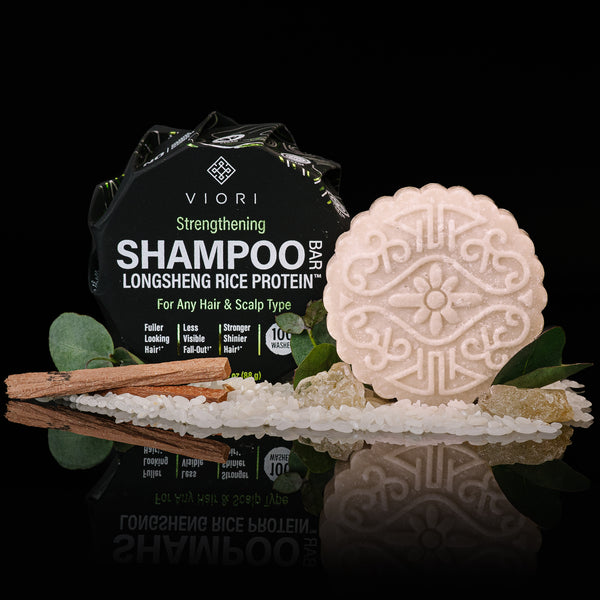
Hair typically looks its best when products stay in a mildly acidic range. Viori explains it plainly: hair products generally perform best around pH 3.5-6.5, and formulas that skew too alkaline can lift the cuticle and contribute to dryness, roughness, and long-term wear.
This is why “berry shampoo” often gets credit for shine: berries are associated with natural acids, and acidity can support a flatter, smoother cuticle environment. The important nuance is that controlled pH helps; chasing “more acid” doesn’t automatically equal better hair.
The hidden variable that changes everything: friction (especially with bars)
If you’ve ever switched products and noticed more frizz, faster fading, or a rougher feel, the culprit is often not the ingredient list-it’s mechanical friction. Wet hair is delicate. Add tangles and rubbing, and the cuticle takes the hit.
With shampoo bars, this matters even more. Used incorrectly, any bar can create extra friction. Viori gives a smart recommendation for color-treated hair: build lather in your hands and apply with your palms rather than rubbing the bar directly on your head. That small technique change helps reduce cuticle disruption and can support better color longevity.
A bar-washing technique I recommend for smoother, shinier hair
- Saturate hair completely before you cleanse (incomplete wetting increases friction and uneven washing).
- Lather in your hands and focus cleansing on the scalp.
- Let the runoff cleanse the lengths instead of scrubbing your ends.
- Use conditioner after shampooing (this is where slip and softness are built).
- Rinse thoroughly and be gentle while hair is wet (a wide-tooth comb is your friend).
Scalp comfort: berries can help, but they can also complicate things
Here’s where I get cautious. Many fruit-forward products include aromatic components or acidic elements that can be perfectly fine for one person and irritating for another-especially if the scalp barrier is already stressed.
If you’re prone to sensitivity, itchiness, or flare-ups, the most dependable strategy is often to reduce variables. That’s why an unscented option can be a game changer. Viori’s Native Essence collection is unscented and designed for those who prefer to avoid added fragrance.
Will berry shampoo “tone” hair? Let’s clear this up
Berry pigments (like anthocyanins) are famous for shifting color depending on pH, which is one reason people assume berry shampoo can tone brassiness. In real-world shampoo use, that effect is usually unreliable. Pigments are often too unstable, too diluted, and too quick to rinse out to behave like a true toner.
When people say their hair looks “brighter” after a botanical shampoo, what’s often happening is simpler and more believable:
- The cuticle is laying flatter, so light reflects more evenly.
- Hair feels cleaner without being stripped, so it doesn’t look dull.
- There’s less residue or buildup clouding the surface.
The more meaningful “superfood” story: fermented rice water and hair performance
If you want outcomes like softness, strength, and shine, hair tends to respond best to ingredients and formulation choices that support the fiber’s structure and reduce ongoing stress. Viori’s bars include fermented Longsheng rice water along with rice-derived ingredients like hydrolyzed rice protein, plus nutrients such as Vitamin B8 (inositol) and Vitamin B5 (panthenol).
WHAT CUSTOMERS ARE SAYING
Real reviews for Rice Water Shampoo Bar – All Hair Types | VIORI
Another detail I appreciate is that Viori uses a lower concentration of rice water, because high concentrations used too often can disrupt hair and scalp pH. Their approach is built to be routine-friendly-something you can use consistently without constantly playing catch-up with dryness or irritation.
How to pick the right Viori bar for the “berry shampoo effect” you want
Rather than choosing based on a fruit theme, choose based on scalp type and the finish you’re trying to achieve.
- Oily scalp or wanting to extend time between washes: Viori Citrus Yao is commonly recommended for normal-to-oily scalps. Its scent profile includes citric acid, which helps break down oil effectively.
- Dry-to-normal scalp or you want a more moisturizing feel: Viori Terrace Garden or Hidden Waterfall are often chosen for that softer, more conditioned finish.
- Sensitive scalp or fragrance avoidance: Viori Native Essence is unscented and typically the most straightforward choice for minimizing potential triggers.
When should you expect results?
Some changes are immediate-less tangling, a softer feel, better slip. But the bigger transformations (less breakage, more consistent shine, improved manageability) are cumulative. Viori notes that results vary: some people notice what they want after one wash, while others need closer to 2-3 months to judge fairly. That timeline tracks with what I see professionally because hair changes with repeated exposure to better (or worse) washing conditions.
Bottom line
“Berry shampoo” is a great concept, but performance comes from engineering: pH balance, gentle cleansing, reduced friction, and consistent conditioning. If you’re chasing the glossy, soft, healthy-hair results people associate with berry shampoos, focus on the fundamentals-and use a well-designed, pH-balanced bar like Viori with the right technique.
If you want help narrowing it down, choose your scalp type first (oily by day 1-2, day 3, or day 4+), then match a Viori bar to that. The right pairing-and the way you apply it-will do more for your hair than any trendy ingredient name ever will.


