
You've seen them everywhere-those bottles lined up at the drugstore promising "thick, full hair" thanks to biotin and collagen. The labels look legitimate. The promises sound convincing. And those before-and-after photos? They're stunning.
But here's what I've learned after two decades behind the salon chair: these shampoos face a fundamental scientific problem that no amount of clever marketing can overcome.
Let me pull back the curtain on hair biochemistry and explain why these popular ingredients might not be doing what you think-and what actually works instead.
The Problem Nobody's Talking About
Picture trying to push a basketball through a chain-link fence. That's essentially what's happening when collagen tries to penetrate your hair shaft.
Here's the reality: collagen molecules are simply too large to get inside your hair.
Your hair cuticle-that protective outer layer-has microscopic gaps between its scales. Collagen, being a large triple-helix protein with a molecular weight typically between 300,000 to 3,000,000 Daltons, cannot physically fit through these tiny openings. To put this in perspective, molecules larger than 500 Daltons struggle to penetrate skin, let alone the tightly-packed structure of hair.
What This Means for Your Bathroom Shelf
When you use a collagen shampoo, here's what's actually happening:
- The collagen sits on top of your hair, creating a temporary coating
- This coating makes your hair feel thicker for a moment
- But it washes away with your very next shampoo
- Your hair structure itself? Completely unchanged
It's like putting a slipcover on a worn-out couch. Sure, it looks better temporarily, but you haven't actually repaired the furniture.
The Biotin Misconception: Why Topical Doesn't Equal Effective
Now let's talk about biotin-that vitamin B7 everyone's been buzzing about. And yes, biotin is genuinely beneficial for hair health. But here's the catch the beauty industry doesn't want you to know:
NOT SURE WHICH PRODUCT IS RIGHT FOR YOU?
TAKE THE QUIZTakes 30 seconds · 134,000+ customers matched
Biotin works when you take it internally, not when you wash it over your hair.
In my two decades of working with hair, I can tell you exactly why topical biotin in shampoo is problematic:
- Biotin is water-soluble - It literally rinses down the drain before your hair can use it
- Your hair is dead tissue - Unlike the living cells in your scalp, your hair shaft can't absorb and metabolize nutrients
- Contact time is too short - Even if absorption were possible, shampoo sits on your hair for maybe two or three minutes. That's nowhere near enough time
Think about it: if topical biotin worked, why would doctors prescribe oral biotin supplements for hair growth? The science is clear-biotin needs to enter your bloodstream to benefit your hair follicles.
The Ancient Wisdom That Actually Works
Here's where the story gets interesting.
For centuries, the Red Yao women of China have been famous for their extraordinarily long, healthy hair-often growing past their waists well into their 80s. Their secret? Fermented rice water.
Not isolated biotin. Not extracted collagen. Just rice water, fermented using traditional methods.
Why does this work when biotin and collagen don't? It's all about molecular size and bioavailability.
When rice is fermented, the process breaks down complex starches into much smaller compounds:
- Inositol (a form of Vitamin B8): Just 180 Daltons-small enough to actually penetrate hair
- Amino acids from rice protein: Between 75-300 Daltons
- Panthenol (Pro-Vitamin B5): Naturally elevated through fermentation and proven to increase hair diameter by 3-6%
These molecules are hundreds of times smaller than collagen. They can actually get inside your hair shaft and create real, lasting improvements.
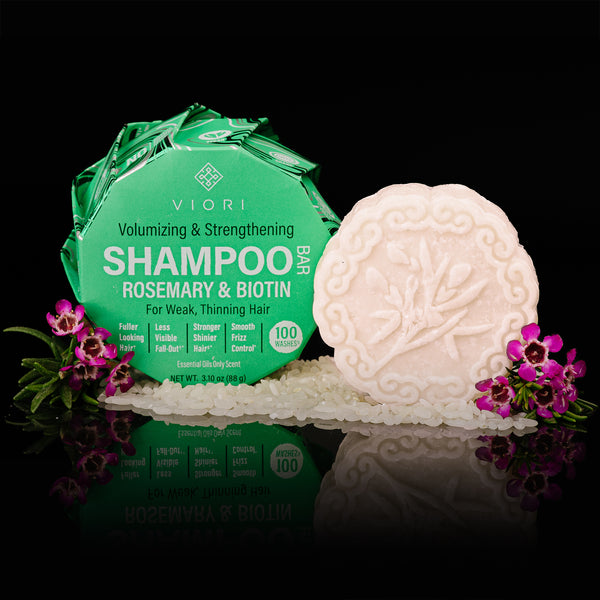
This is why Viori built their entire formulation philosophy around this ancient wisdom-because the science supports what the Red Yao women knew intuitively.
The pH Balance Problem That Ruins Everything
Here's a technical detail that reveals just how challenging these formulations really are:
Most hair needs a pH between 4.5-6.5 to be healthy (slightly acidic, like Viori's pH-balanced products). But here's the formulation nightmare:
- Collagen is most stable at pH 3-4 (very acidic)
- Biotin stability varies and can degrade at extreme pH levels
- Effective cleansing usually requires pH 6-7 (closer to neutral)
Manufacturers face an impossible choice: optimize for one ingredient and compromise the others. The common solution? Use such tiny amounts of biotin and collagen that they become marketing buzzwords rather than functional ingredients.
Meanwhile, fermented rice water naturally sits at pH 5-6-exactly where your hair wants to be. No chemical adjustments needed. No compromises required.
The Hidden Danger: Protein Overload
Here's something I see constantly in my salon that almost never gets discussed in product marketing: protein overload.
When you repeatedly use collagen-heavy products (or any high-protein formulation), especially on already-healthy hair, you can actually cause:
- Stiffness and brittleness - Too much protein makes hair less flexible
- Moisture-protein imbalance - Your hair needs both, in the right proportions
- Increased breakage - Overly strengthened hair loses its natural elasticity and snaps
This is especially problematic for:
- Fine hair (which has less natural protein structure)
- Low-porosity hair (which already resists absorption)
- Color-treated hair (which desperately needs moisture, not more protein)
The cruel irony? Products marketed specifically for thin, fragile hair often contain the very proteins that make thin hair more prone to breaking when overused.
What Actually Creates Thick, Full Hair: The Real Science
After working with everything from high-end salon products to natural formulations like Viori's rice-based bars, here's what genuinely creates thicker-looking hair:
1. Hydrolyzed Proteins (Not Whole Collagen)
"Hydrolyzed" means the protein has been broken down into much smaller pieces-small enough to actually penetrate hair (150-2,000 Daltons).
Viori uses hydrolyzed rice protein, which is far more bioavailable than whole collagen. It can slip past those cuticle gates and fill in gaps where your hair is damaged.
2. Panthenol (Pro-Vitamin B5)
This is the thickness champion. Panthenol:
- Actually penetrates the hair shaft (small molecular size)
- Attracts and holds moisture inside your hair
- Creates measurable increases in hair diameter (studies show 3-6%)
- Persists through multiple washes
Fermented rice water naturally elevates panthenol levels-which is why the Red Yao tradition works so beautifully.
3. pH Optimization
Simply keeping your hair at the right pH (4.5-5.5) closes cuticles, creating smoother, shinier, fuller-looking hair. This single factor often does more for perceived thickness than loading your hair with proteins.
4. Inositol from Fermented Sources
This lesser-known compound is a powerhouse. It:
- Strengthens hair from within (small enough to penetrate)
- Improves elasticity (so hair stretches instead of breaking)
- Enhances shine naturally
It's abundant in fermented rice water but absent from most biotin/collagen shampoos.
The Sustainability Question Nobody's Asking
Let's talk about where collagen actually comes from.
Collagen extraction-whether from cows, fish, or plant sources-requires intensive processing:
- Acid or enzymatic treatments
- Multiple purification steps
- Significant energy consumption
- Questions about sustainable sourcing (especially marine collagen)
Now compare that to fermented rice water:
- Produced through simple, natural fermentation
- Uses agricultural byproducts (rice)
- Creates bioactive compounds through natural microbial action
- Sustainable and supports indigenous communities
The fermentation process naturally breaks down complex starches into smaller, more effective molecules-solving the penetration problem while being environmentally responsible.
Viori's B-Corp certification reflects this commitment to both effectiveness and sustainability.
What the Research Actually Shows
Let me share what peer-reviewed studies-not marketing materials-demonstrate:
Collagen in shampoo:
- Temporary increase in hair diameter (2-4%) from surface coating
- Effect disappears after 1-2 washes
- No improvement in actual hair strength or growth rate
- May improve wet combing (that's just a conditioning effect)
Biotin in shampoo:
- Zero clinical studies showing topical biotin in rinse-off products improves hair
- Oral supplementation shows benefits (but only if you're actually deficient)
- The "biotin for hair growth" trend is based entirely on systemic, not topical, effects
Rice protein and fermented rice water:
- Documented improvements in hair elasticity and strength
- Measurable increases in shine
- Reduced surface friction (easier combing, less breakage)
- Effects that last through multiple washes
The science is clear: traditional wisdom backed by modern research beats marketing hype every time.
The Concentration Reality Check
Here's an insider secret from my years evaluating professional products:
In most "biotin and collagen" shampoos, you'll find:
WHAT CUSTOMERS ARE SAYING
Real reviews for Rosemary Biotin Shampoo Bar – Thinning Hair | VIORI
Minimal actual concentration:
- Typically just 0.1-1% total protein content
- Often buried in the middle or end of the ingredient list
- Below the threshold for any meaningful biochemical activity
The real workers:
- Sulfate-free surfactants (like Viori's Sodium Cocoyl Isethionate) do the actual cleansing
- Conditioning agents provide the smoothness
- These ingredients determine actual performance far more than the biotin or collagen
Marketing drives sales:
- Pleasant scents and smooth feel sell products
- Consumers can't measure molecular penetration at home
- Claims don't always match formulation reality
What to Look For Instead: A Professional's Guide
Based on my technical knowledge and real-world results with clients, here's what creates genuinely thicker, fuller hair:
✓ Hydrolyzed Proteins with Specified Molecular Weight
Look for "hydrolyzed" before the protein name. Rice, wheat, and soy proteins have excellent penetration profiles. These should appear in the first 7-10 ingredients.
✓ Proven Volumizing Ingredients
- Panthenol (Pro-Vitamin B5)
- Inositol from fermented sources
- Biotin in leave-in treatments (better contact time) or taken orally as supplements
✓ pH-Balanced Formulations
Products should explicitly state pH 4.5-6.5. This simple factor creates more apparent fullness than protein-loading ever could.
✓ Natural Fermentation Byproducts
Fermented rice water contains naturally-occurring amino acids, vitamins, and minerals already broken down into bioavailable forms. This is the Red Yao tradition that Viori has built their approach around.
✓ Gentle Cleansing Agents
Sulfate-free surfactants minimize stripping. When you don't strip your scalp, it doesn't overproduce oil, creating a healthier environment for hair growth.
Why Rice Beats Biotin and Collagen: The Scientific Comparison
Let me explain exactly why rice-based formulations solve every problem I've outlined:
Molecular Accessibility:
- Fermentation naturally breaks down rice starches into small compounds
- Inositol: 180 Daltons-easily penetrates hair
- Amino acids: 75-300 Dalton range-slip right past cuticle barriers
- Compare to collagen: 300,000+ Daltons-bounces right off
Complete Vitamin B Complex:
- Contains multiple B vitamins (including biotin) in naturally bioavailable forms
- B5 (panthenol) increased through fermentation
- Work synergistically rather than as isolated ingredients
Natural pH Balance:
- Rice water naturally sits at pH 5-6
- Perfectly aligned with hair's optimal pH
- No heavy chemical adjustment needed
Sustainable and Ethical:
- Uses agricultural products rather than animal byproducts
- Low-energy fermentation process
- Viori's model directly supports the Red Yao community
A Simple Test You Can Try at Home
Want to see this principle in action? Try this strand test:
With Biotin/Collagen Shampoo:
- Take a single hair strand
- Apply the shampoo, let it sit for 5 minutes
- Rinse thoroughly


