
When a client asks me about goat milk shampoo bars, I see that sparkle in their eyes-they've fallen for the romance. Rustic farmhouse aesthetics. Creamy, gentle milk. Ancient beauty secrets. I get the appeal completely. But after 20 years behind the chair and countless hours researching formulation chemistry, I need to share an uncomfortable truth: goat milk shampoo bars represent one of the most beautifully marketed yet scientifically problematic products in natural hair care.
This isn't about crushing dreams or raining on anyone's eco-conscious parade. It's about understanding what's actually happening to your hair so you can make informed choices. Because the reality of goat milk in shampoo bar format is far more complex-and frankly, far less beneficial-than those Instagram-perfect lather photos would have you believe.
The Chemistry Problem No One Talks About
Let me paint you a picture of what happens at the molecular level when goat milk meets shampoo bar formulation.
Goat milk is extraordinary for skin. It contains proteins like casein and whey, alpha-hydroxy acids (especially lactic acid), vitamins A and D, and medium-chain fatty acids. These components have legitimate moisturizing and skin-conditioning properties. In the right context, they're genuinely beneficial.
Here's the problem: creating a solid shampoo bar requires an alkaline environment-typically pH 8-10 during the saponification or bar formation process. This isn't optional; it's fundamental to creating a solid, stable bar that will actually cleanse your hair.
But those precious goat milk proteins? They begin breaking down above pH 7.5. The alpha-lactalbumin and beta-lactoglobulin proteins literally unfold and lose their bioactive structure. By the time you reach pH 9-10 (standard for most bar formation), you're essentially making cheese in your shampoo. The proteins coagulate, lose their functional properties, and can even create unpleasant odors during the curing process.
The uncomfortable truth: Most commercial goat milk shampoo bars contain denatured proteins that bear little resemblance to the beneficial compounds found in fresh goat milk. You're buying nostalgia and marketing, not functional biochemistry.
The Shelf Life Secret Hiding in Your Shower
Even if a manufacturer somehow manages to incorporate goat milk at lower temperatures (which is expensive and technically challenging), there's a second problem lurking in your bathroom: oxidative degradation.
Goat milk contains unsaturated fatty acids-oleic and linoleic acid-that are prone to breaking down when exposed to air. In a solid bar format, without water to slow down certain degradation pathways, these fats can actually oxidize faster than in liquid products.
NOT SURE WHICH PRODUCT IS RIGHT FOR YOU?
TAKE THE QUIZTakes 30 seconds · 134,000+ customers matched
The result? That "earthy" or slightly off smell some users notice in their goat milk bars after a few months isn't rustic charm or natural authenticity. It's rancidity. It's chemical degradation.
Your shower environment accelerates this process. Think about it: the bar gets wet, then sits in humid air, partially dries, gets wet again. This wet-dry cycling, combined with temperature fluctuations from hot showers, creates the perfect storm for oxidation. The vitamin E naturally present in goat milk simply isn't sufficient to prevent this in bar format.
Why Your Hair Can't Actually Use Goat Milk Proteins (Even If They Survived)
Here's where we need to talk about something called the surfactant compatibility matrix. Stay with me-this is where it gets really interesting.
Most shampoo bars use surfactants (cleansing agents) like Sodium Cocoyl Isethionate, saponified oils, or synthetic detergent bases. These are typically anionic, meaning they carry a negative electrical charge. That's partly what makes them effective at grabbing oils and dirt.
Goat milk proteins are amphoteric-they have both positive and negative charges depending on pH. At the alkaline pH of most shampoo bars, these proteins become negatively charged.
See the problem? When you combine negatively charged proteins with negatively charged surfactants, they repel each other. It's basic physics. The proteins don't want to deposit on your hair-they want to rinse away with everything else.
This completely contradicts the marketing narrative that goat milk proteins will coat and condition your hair. The surfactant chemistry is actively fighting against protein deposition. You'd need positively charged conditioning agents to overcome this, which most goat milk shampoo bars don't contain in sufficient quantities because they dramatically increase formulation complexity and cost.
From a pure hair science perspective, you're paying premium prices for proteins that likely wash straight down the drain.
The Preservation Paradox: When "Natural" Creates Risk
Goat milk is literally designed by nature to nourish living organisms. It's a perfect growth medium for bacteria and fungi. When you incorporate it into a "dry" shampoo bar, you create a fascinating paradox.
The bar format is supposed to be self-preserving through low water content. But milk proteins absorb atmospheric moisture, creating micro-environments where microbes can flourish. The surface of your bar gets wet during use, proteins hydrate, the bar sits in your humid bathroom, then partially dries. This cycle is actually more challenging for preservation than a consistently liquid product.
Most manufacturers handle this in one of three ways:
- Use such a small amount of goat milk that microbial risk is minimal-but then the product benefits are negligible, and you're essentially buying expensive marketing
- Use heavily processed goat milk powder-which destroys most bioactive components during processing
- Add synthetic preservatives-which contradicts the "all-natural" positioning but rarely gets disclosed prominently
The third option is most common. Look for phenoxyethanol, sodium benzoate, or potassium sorbate buried in the ingredient list fine print.
I'm not suggesting these preservatives are dangerous-they're not. But if you're buying a goat milk shampoo bar because you want something completely natural, the reality may not match your expectations.
What Your Hair Actually Needs (Hint: It's Not Goat Milk)
Let me put on my trichology hat for a moment. Trichology is the science of hair and scalp health, and it reveals a fundamental mismatch between what goat milk offers and what hair actually needs.
Hair fiber is not skin. The hair cuticle requires very specific lipids to maintain its protective layer: 18-methyleicosanoic acid (18-MEA), ceramides, and cholesterol in particular ratios.
Goat milk provides short and medium-chain fatty acids-capric, caprylic, and caproic acids. These smell distinctly "goaty" (manufacturers mask this with fragrances) and don't match your hair's native lipid profile. They can provide temporary slip and shine, but they don't integrate into your hair's structure the way purpose-designed conditioning agents do.
It's like putting olive oil in your car because it's natural and slippery. Yes, those are properties of a lubricant, but olive oil isn't engineered for the specific requirements of your engine.
Here's what actually works in shampoo bar format:
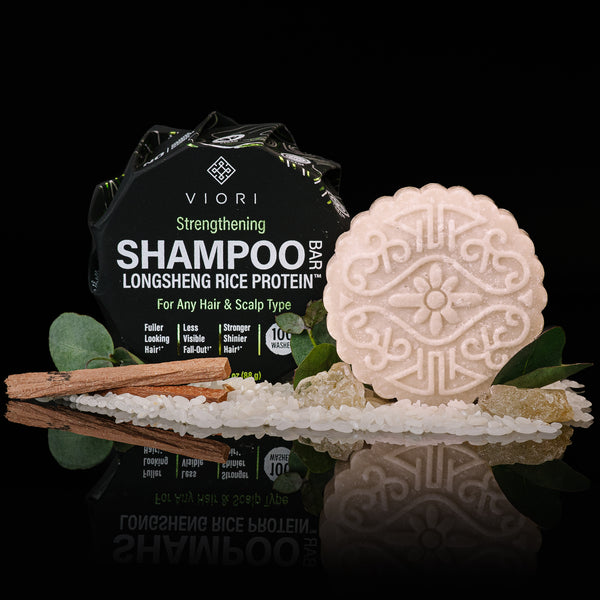
Hydrolyzed proteins at the right molecular weight-rice protein, for example, consists of 18-40 amino acid chains that can actually penetrate the hair cortex. These pre-broken-down proteins remain stable across pH ranges and are sized correctly to enter the hair fiber rather than just coating the surface.
Panthenol (Pro-Vitamin B5)-this increases hair diameter by about 10%, improves elasticity, remains stable in bar format, and works even in alkaline environments. It's a small molecule that penetrates easily without relying on surface deposition.
Natural ceramides from sources like rice bran oil-these actually match your hair's native lipid profile and integrate into the cuticle structure. They're stable in bar format and don't require specific pH levels to function.
The difference between these ingredients and goat milk isn't just academic-it's the difference between ingredients that can actually change your hair's structure versus ingredients that create a temporary cosmetic effect (at best).
The Traditional Wisdom We Lost in Translation
Here's something that fascinates me: goat milk has been used in Mediterranean, Middle Eastern, and South Asian beauty traditions for thousands of years. But here's what's rarely mentioned in modern marketing: it was almost never used in a soap or shampoo format.
Traditional uses included:
- Fresh milk rinses applied after cleansing-not during, which kept the milk proteins separate from alkaline cleansers
- Fermented milk treatments-fermentation breaks proteins down into smaller, more stable peptides
- Leave-in conditioning treatments-allowing protein deposition without competing surfactants
Our ancestors understood intuitively what we now know chemically: alkaline cleansers and delicate milk proteins don't play well together.
The modern shampoo bar takes a conditioning ingredient and forces it into a cleansing context where its benefits are largely neutralized. It's innovation for marketability, not efficacy. We took traditional wisdom and "improved" it in a way that actually makes it less effective.
Why Fermentation Changes Everything
This brings me to what truly separates science-based formulation from marketing-based formulation: fermentation.
When you ferment ingredients-as Viori does with rice water following the Red Yao tradition-you transform raw materials in ways that solve the exact problems inherent in goat milk bars.
pH compatibility: Fermentation naturally produces acidic environments (pH 4-5) that stabilize proteins and create compounds that remain stable even when incorporated into higher pH bar formulations later.
Protein transformation: Fermentation enzymes break down large proteins into smaller peptides and amino acids that can actually penetrate hair fiber. Goat milk proteins, by contrast, are too large to penetrate even if they survived the formulation process-they can only coat the surface, and as we discussed, they likely don't even do that effectively.
Bioactive multiplication: Fermentation produces beneficial compounds that don't exist in the raw ingredient. Rice fermentation creates inositol (vitamin B8) and increased levels of panthenol (vitamin B5)-both have clinical studies supporting their role in hair growth and strength. Goat milk, unfermented, offers no such transformation.
Natural stability: Fermented ingredients are inherently more stable because the fermentation process has already consumed the most vulnerable sugars and proteins. This is why fermented products have been used for preservation throughout human history.
The Clinical Evidence Gap You Need to Know About
As someone who values evidence-based beauty, this is what concerns me most: there are virtually no peer-reviewed clinical studies demonstrating the efficacy of goat milk specifically in shampoo bar format for hair improvement.
Plenty of studies exist for goat milk in skincare, goat milk in nutrition, and individual components of goat milk in isolated contexts. But goat milk proteins + alkaline surfactants + solid bar format + application to hair? The research doesn't exist.
The entire category is built on:
- Extrapolation from skin care research
- Historical use of raw goat milk in traditional beauty (in formats nothing like modern bars)
- Consumer perception that "natural" and "milk" equals "gentle and nourishing"
Meanwhile, ingredients like rice protein and fermented rice water have published studies specifically on hair showing reduced breakage, improved elasticity, increased shine, and hair growth promotion.
I'm not saying goat milk shampoo bars cause harm. I'm saying the evidence for their specific benefits in this format simply doesn't exist, while alternatives have documented efficacy.
WHAT CUSTOMERS ARE SAYING
Real reviews for Rice Water Shampoo Bar – All Hair Types | VIORI
The Sustainability Question No One's Asking
The environmental angle of goat milk in cosmetics deserves more attention than it gets.
Water intensity: Goat farming requires 8-10 liters of water per liter of milk produced. In drought-prone regions where goats are often raised, this represents a significant water footprint for a cosmetic ingredient.
Methane production: While lower than cattle, goats still produce methane-a greenhouse gas 25 times more potent than CO2. Using goat milk for cosmetics increases demand for animal agriculture without the nutritional justification of food production.
Cold chain requirements: Fresh goat milk requires refrigerated transport. Even powdered goat milk needs temperature-controlled storage. This adds transportation emissions that the bar format theoretically eliminates.
Ethical considerations: Continuous milk production requires goats to be pregnant or nursing. Male kids are often unwanted by-products of dairy operations. Few goat milk shampoo companies address animal welfare in their sourcing.
Compare this to rice cultivation: while water-intensive, rice is a food crop. Beauty use represents a value-added byproduct, not the primary driver of production. Using what's already being grown for food-especially when following traditional fermentation practices of indigenous communities like the Red Yao-represents genuine sustainability rather than creating new agricultural demand.
Why They Feel Like They Work (The Sensory Illusion)
Despite everything I've just explained, many people swear by their goat milk shampoo bars. So what's happening?
The residue effect: Those denatured milk proteins that don't rinse cleanly create a coating on hair. Users interpret this as "moisturizing," "smoothing," or "strengthening." It's similar to how silicones work, but without silicone's engineering for hair benefit. After several washes, this buildup often leads to dullness, reduced volume, and the need for clarifying treatments.
The lather luxury: High-quality goat milk bars often use expensive surfactant blends that create beautiful, creamy lather. Consumers attribute the pleasant experience to the goat milk, when it's actually the surfactant system doing the heavy lifting.
The scent masking: The slight dairy note of goat milk is typically masked with natural fragrances-lavender, vanilla, honey. These scents trigger nostalgia and perceptions of purity, creating psychological satisfaction separate from actual hair improvement.
The ritual factor: Solid bars require more deliberate application than liquid shampoo. This ritual creates mindfulness and self-care feelings that become associated with product efficacy. The format itself creates satisfaction independent of the ingredients.
None of this is actually improving your hair's structure. It's creating temporary cosmetic effects and psychological satisfaction-which aren't worthless, but they're not the deep nourishment and repair being promised.
What I Recommend Instead
After two decades in this industry, I've learned that the most effective hair care products work with your hair's biology, not against it.
Look for shampoo bars that contain:
- Properly hydrolyzed proteins at the right molecular weight to penetrate hair (rice protein, wheat protein, silk protein)
- Panthenol for measurable increases in hair strength and diameter
- Natural oils rich in ceramides that match your hair's lipid profile (rice bran oil is excellent for this)
- Fermented ingredients that have undergone transformation to create bioactive compounds
- Formulations designed around hair science rather than marketing trends
The Viori bars I use in my salon and recommend to clients check all these boxes. They're formulated with fermented rice water following a 2,000-year-old tradition that's been scientifically validated. The rice protein is sized correctly for hair penetration. The pH is hair-appropriate. The conditioning comes from ingredients that actually integrate with hair structure.


