
“I want thicker hair.” It’s one of the most common requests I hear behind the chair-and after 20 years of working with every texture and density you can imagine, I can tell you this: most people aren’t missing a miracle ingredient. They’re missing a system.
That’s why so many “growth” routines disappoint. They chase stimulation, trendy actives, or a single supplement, while ignoring the everyday chemistry and mechanics that quietly decide whether your hair stays strong… or snaps, sheds, and slowly looks thinner over time.
Here’s the angle that rarely gets talked about online: the best hair products for growth and thickening are usually the ones that improve retention. In other words, they help you keep the hair you already have by protecting your scalp environment and reducing breakage. Once you do that, “thicker” hair often follows.
Before you buy anything: decide what “thickening” means for you
People use the word “thick” to describe different goals. If you don’t identify which one you’re chasing, it’s easy to pick products that feel nice in the shower but don’t change the outcome.
NOT SURE WHICH PRODUCT IS RIGHT FOR YOU?
TAKE THE QUIZTakes 30 seconds · 134,000+ customers matched
- Density: more hairs per square inch (true growth and reduced shedding)
- Strand thickness: stronger, fuller-feeling individual fibers
- Volume: lift at the roots and a fuller silhouette (often the fastest win)
A smart routine usually targets at least two of these at once-because hair that’s strong and shiny reads “thicker” even before density changes are visible.
The under-discussed dealbreaker: pH and cuticle behavior
If there’s one technical detail I wish more people understood, it’s this: pH impacts the cuticle, and the cuticle impacts thickness.
When a cleanser is too alkaline, the cuticle can stay more lifted. That sounds abstract until you feel the results: roughness, tangles, friction, and breakage-especially at the crown and ends. And breakage is what makes hair look thin long before anyone actually loses density.
Viori bars are designed to be pH balanced, which helps support a healthier feel over time. It’s not a flashy claim, but it’s one of the most practical foundations for anyone trying to grow hair longer and keep their ends full.
Growth-friendly products focus on scalp comfort, not “tingles”
A lot of people assume a product has to feel intense to be effective. In reality, that “spicy” sensation is often just irritation-and a chronically irritated scalp is not a great place to grow strong hair.
In my experience, a scalp that’s constantly pushed too hard can get stuck in a loop:
- irritation and dryness
- scratching or inflammation
- barrier disruption and sensitivity
- more discomfort (and sometimes more shedding)
Viori shampoo bars use Sodium Cocoyl Isethionate (SCI) as the cleanser, which is known in the industry as a milder cleansing option. That matters if you’re trying to cleanse effectively without stripping your scalp into overreacting.
If you’re sensitive or fragrance-reactive
Sometimes the best growth move is simply removing triggers. If your scalp gets itchy, tight, or unpredictable, an unscented option can be the most strategic place to start. Viori’s Native Essence collection is unscented (no added fragrance), which makes it a solid choice for people who want to keep things simple and gentle.
The protein paradox: “strengthening” can help… until it doesn’t
Protein gets marketed as the answer to everything-thicker hair, less breakage, more strength. But hair doesn’t just need protein. It needs balance.
Too much protein, too often, can leave hair stiff and snappy, especially for low-porosity hair (which tends to repel product and build up more easily). Viori notes a low concentration of rice protein in their bars, which is a thoughtful approach if you want reinforcement without tipping into that brittle, over-structured feel.
Viori also uses fermented Longsheng rice water in a measured, pH-conscious way. They specifically avoid overly high concentrations because frequent use of strong rice water can disrupt hair and scalp pH for some people. That’s the kind of nuance most “growth” conversations skip.
The thickening tool no one wants to hear about: technique
If you want thicker-looking hair, your products matter-but the way you use them matters more than most people realize. One of the fastest ways to lose thickness is friction.
Here’s a simple change that can make a noticeable difference: don’t rub a shampoo bar directly along your lengths. Create lather in your hands and apply it through your hair with your palms. Viori even recommends this approach (especially for preserving color), and it’s a smart move for anyone focused on retention.
Less friction means:
- less cuticle abrasion
- fewer tangles
- less breakage at fragile areas like the crown and hairline
Conditioner isn’t optional if your goal is thickness
I get it-people skip conditioner because they’re afraid it’ll weigh hair down. But if you’re chasing thick hair, conditioner is often what keeps your strands from breaking in the first place.
Hair becomes more vulnerable after cleansing. A good conditioner improves slip, reduces static, and helps hair detangle with less force. Viori’s conditioner bars include Behentrimonium Methosulfate (BTMS), a conditioning ingredient that helps with softness and manageability (despite the confusing name, it’s not the same as harsh cleansing sulfates).
Translated into real-life results: hair that combs out easily tends to stay on your head longer. That’s retention-and retention is thickening.
WHAT CUSTOMERS ARE SAYING
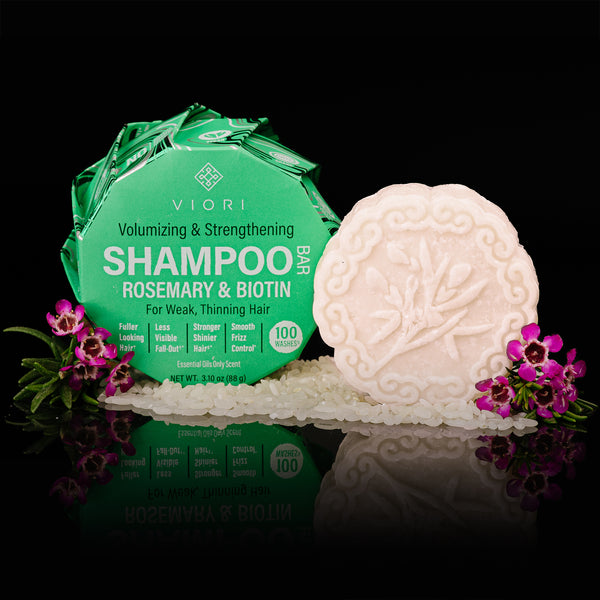
Real reviews for Rosemary Biotin Shampoo Bar – Thinning Hair | VIORI
How to pick the best Viori bars for your growth + thickening goal
The most practical way to choose is to match your routine to your scalp behavior, not just your hair length or curl pattern.
Start with scalp oil timing
- Oily scalp: feels oily 1-2 days after washing
- Normal scalp: feels oily around day 3
- Dry scalp: can go 4+ days before feeling oily
Then choose accordingly
- Citrus Yao: commonly recommended for normal-to-oily scalps; Viori notes it contains citric acid in the scent system, which can help break down oil and keep roots feeling cleaner longer.
- Terrace Garden and Hidden Waterfall: often favored for normal-to-dry scalps where softness and moisture retention matter most.
- Native Essence: unscented and typically the gentlest-feeling choice for sensitive scalps.
If you have the classic combination of oily roots and dry ends (very common), consider mixing your routine: use Citrus Yao for shampooing the scalp, and use a more moisturizing conditioner option on your mid-lengths and ends.
A simple routine built for growth and thickening (without the drama)
You don’t need a complicated checklist. You need consistent, low-friction habits that support your scalp and protect your ends.
- Shampoo the scalp, not the lengths: wet thoroughly, build lather in your hands, massage with fingertips for 60-90 seconds.
- Condition the mid-lengths to ends: apply, detangle gently, and let it sit for 3-5 minutes before rinsing.
- Handle wet hair like delicate fabric: blot with a towel instead of rubbing; use a wide-tooth comb if needed.
- Give it time: meaningful thickness changes usually show up through retention over weeks, and more noticeable shifts often take 2-3 months of consistency.
What results you can realistically expect (and when)
Hair is slow-but it’s not mysterious when you track the right markers.
- After a few washes: softer feel, more shine, less frizz (which can make hair look fuller right away).
- After a few weeks: easier detangling, less snapping, fewer short broken hairs around the crown and hairline.
- After 2-3 months: fuller-looking ends, better overall thickness from retention, and a calmer scalp baseline for many people.
Final takeaway: the best “growth” products are often the best “don’t-lose-hair” products
If you want growth and thickening, look for products that support a balanced scalp, respect pH, and reduce friction-and then use them in a way that protects your cuticle. That’s where the real change happens.
Viori fits this approach well with pH-balanced bars, a mild cleanser (SCI), a measured approach to rice protein and fermented Longsheng rice water, and options that align with different scalp needs.
If you’d like a more personalized match, share how quickly your roots get oily (1-2 days, day 3, or 4+ days) and whether your biggest issue is shedding, breakage, or flat roots. That information tells me far more than “thick” or “thin” ever will.


