
After two decades behind the salon chair, I've watched countless hair care trends sweep through-keratin treatments, co-washing, oil training, you name it. But there's one shift happening right now that's different from all the fads I've seen come and go. We're finally understanding what "healthy" shampoo and conditioner actually means.
Here's the thing: we've spent years talking about what to avoid-sulfates, parabens, silicones. But that's only half the story. The real conversation is about what we need to protect: the living ecosystem on your scalp that's been there all along.
The healthiest shampoo and conditioner isn't necessarily organic, or the one with three ingredients you can pronounce. It's the one that works with your scalp's biology instead of fighting against it. Let me walk you through what I've learned, both from my clients' transformations and from the science that's finally catching up to what we've observed for years.
Your Scalp Is Alive (Really Alive)
This might gross you out a little, but stick with me: your scalp hosts roughly one million microorganisms per square centimeter. Bacteria, fungi, archaea-all living in careful balance, working around the clock to keep your hair healthy.
This invisible ecosystem controls more than you'd think:
- Sebum regulation - whether your roots get oily or stay balanced
- pH stability - which determines if your cuticles stay smooth and closed
- Inflammatory response - the difference between a calm scalp and constant irritation
- Follicle health - affecting how strong your hair grows from the root
Here's what shocked me when I first learned this: regular shampoo disrupts your microbiome for 24 to 72 hours after every single wash. During that recovery window, your scalp is vulnerable to pH swings, bacterial overgrowth, and inflammation that shows up as everything from excess oil to thinning hair.
I've had clients struggle for years with seemingly unrelated issues-dandruff here, oiliness there, some thinning at the crown-only to watch it all improve when they switched to products that actually supported their scalp's natural systems. Sometimes the fix isn't adding more products. It's stopping the damage you didn't know you were causing.
NOT SURE WHICH PRODUCT IS RIGHT FOR YOU?
TAKE THE QUIZTakes 30 seconds · 134,000+ customers matched
The pH Number That Changes Everything
Let's get a little technical, because this matters. Your scalp's natural pH sits between 4.5 and 5.5-slightly acidic. That acidity isn't random; it's protective.
At this pH range:
- Your hair cuticle lays flat, which maximizes shine and minimizes breakage
- Good bacteria thrive while bad bacteria struggle
- Sebum production stays balanced
- If you color your hair, those color molecules stay locked in
Most shampoos-even some marketed as "natural"-have pH levels between 7.0 and 9.0. Every time you wash at that alkaline level, your hair cuticle swells and lifts. That "squeaky clean" feeling? That's actually microscopic damage. Your scalp then scrambles to restore its protective acid mantle, often overdoing it and creating that frustrating oily-roots-dry-ends cycle.
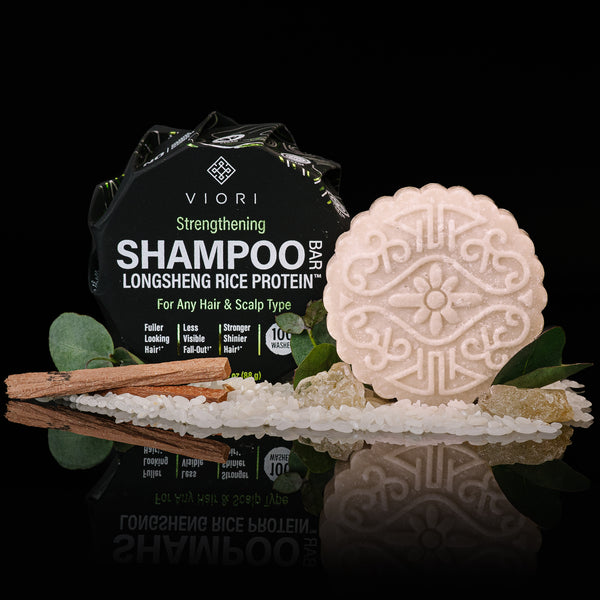
The healthiest shampoos respect your natural pH range instead of fighting it. When Viori formulates their rice water-based bars, pH isn't an afterthought-it's foundational. That's why they work with your biology rather than constantly forcing your scalp to recover from chemical assault.
Why Fermented Ingredients Hit Different
Traditional beauty practices have always fascinated me because they often reveal sophisticated knowledge that science is only now confirming. Take fermented rice water, used by the Red Yao women for centuries. Turns out there's actual chemistry behind why it works so well.
The Postbiotic Advantage
Fermented ingredients contain something called postbiotics-metabolic byproducts of fermentation like inositol and various peptides that communicate directly with your skin cells and microbiome. Unlike probiotics (live bacteria) or prebiotics (bacteria food), postbiotics work immediately to calm inflammation, strengthen your skin barrier, and help nutrients absorb better.
pH That Happens Naturally
Fermentation produces lactic acid and other organic acids that naturally lower pH to that protective 4.5-5.5 range without synthetic acidifiers. It's pH optimization the way nature figured it out long before cosmetic chemists existed.
Pre-Digested Nutrition
Fermentation breaks down complex molecules, making vitamins, minerals, and proteins way more accessible to your hair follicles and scalp. Think of it like pre-chewing nutrition for your hair-the beneficial compounds are already broken down and ready to absorb.
This is why fermented rice water isn't just trendy-it's functionally superior. The fermentation creates compounds that don't even exist in the raw ingredient.
Protein vs. Moisture: Getting This Balance Right
Your hair is about 90% keratin protein. But here's what surprises people: not all hair needs more protein. Too much protein actually makes hair brittle and prone to snapping. Let me break down what different hair types actually need.
High Porosity Hair
This is damaged, chemically treated, or naturally porous hair that absorbs everything quickly but holds onto nothing. If this is you, you need:
- Hydrolyzed proteins (like the hydrolyzed rice protein in Viori formulations) that are small enough to get inside the hair shaft and patch damage
- Humectants and emollients applied afterward to seal everything in
- Conditioning focused on mid-shaft to ends, not your scalp, to avoid weighing down roots
Low Porosity Hair
This resistant hair often looks healthy longer because it repels both moisture and protein. It needs:
- Lighter formulations that won't build up on the surface
- Heat or steam to open the cuticle for treatment absorption
- pH-optimized products that won't seal an already-resistant cuticle even tighter
Normal Porosity Hair
This is the sweet spot where hair maintains balance easily. If you're here, your main goal is simple: don't mess up what's already working. Gentle, pH-appropriate products are your friend.
The healthiest shampoo and conditioner either addresses one hair type specifically or maintains gentle enough formulation that it won't disrupt any porosity level.
Not All Cleansers Are Created Equal
Surfactants are the active cleaning agents in shampoo. Their molecular structure-a water-loving head and oil-loving tail-lets them grab sebum, dirt, and product buildup. But the type of surfactant determines whether you're getting a gentle cleanse or scorched earth.
The Problem with Common Sulfates
Sodium Lauryl Sulfate (SLS) and Sodium Laureth Sulfate (SLES) are powerful anionic surfactants with strong negative charges. They clean aggressively by stripping lipids from your scalp barrier, messing with surface proteins, spiking pH to 8.0 or higher, and disrupting your microbiome for two days or more.
In my salon days, I could spot clients using harsh sulfate shampoos from across the room. Their hair would be squeaky clean but perpetually problematic.
The Gentler Alternative
Sodium Cocoyl Isethionate (SCI) is the gentle cleanser you'll find in Viori bars and other premium formulations. It's also anionic but has a larger molecular structure that's less penetrating, milder cleaning action that preserves beneficial lipids, and better pH compatibility.
Don't Be Fooled by Names
Behentrimonium Methosulfate deserves a quick mention because despite having "sulfate" in its name, this is actually a conditioning agent, not a cleansing surfactant. The positive charge attracts to damaged areas of hair, conditioning exactly where you need it most.
The healthiest shampoos use gentle surfactants that clean effectively without declaring war on your scalp's protective systems.
Breaking Free from Conditioner Dependency
Here's something I observed over twenty years that might surprise you: many clients literally can't stop using their conventional conditioner without experiencing terrible hair texture. They've created dependency without realizing it.
How Traditional Conditioners Create This Trap
Conventional conditioners work through cationic polymers that coat hair, silicones that create immediate slip and shine, and heavy oils and butters that weigh down the cuticle. This creates instant gratification-soft, manageable hair-but three problems develop:
Buildup: These coating agents layer with each application, eventually creating dull, heavy, limp hair that needs clarifying shampoo, which strips everything and restarts the whole cycle.
Scalp transfer: Conditioner migrates to your scalp during rinsing, potentially clogging follicles and messing with sebum production.
Masked damage: The coating disguises structural problems, letting damage worsen underneath while the surface feels fine. You're putting a band-aid over a wound that's getting worse.
The Healthier Approach
The best conditioners work by smoothing the cuticle through pH optimization-closing it naturally rather than gluing it down with silicones. They use appropriately sized proteins that actually enter the hair structure, balance moisture with ingredients like rice bran oil and plant butters that penetrate rather than coat, and provide slip without buildup.
This is why properly formulated bar conditioners, like Viori's, can actually outperform liquid ones. Without all that water requiring heavy preservatives and stabilizers, the active conditioning ingredients are more concentrated and effective.
The Water Quality Factor Everyone Ignores
Even the healthiest shampoo and conditioner struggle against fundamentally bad water. Hard water-high in calcium and magnesium minerals-is one of the most common reasons people think their products aren't working.
Hard water creates several problems:
- Soap scum on hair - minerals bind with cleansing agents, creating a film that dulls hair
- Rough cuticles - mineral deposits create texture that leads to tangles and breakage
- Product failure - active ingredients can't penetrate through mineral buildup
The Fix
Chelating ingredients (like citric acid) in shampoo bind to hard water minerals and prevent this interaction. Rice water naturally contains phytic acid, which provides gentle chelating action-another reason traditional fermented preparations work across different water conditions.
WHAT CUSTOMERS ARE SAYING
Real reviews for Rice Water Shampoo Bar – All Hair Types | VIORI
If you have hard water, your healthiest approach includes products with natural chelating agents, a final cool water rinse (minerals deposit more in hot water), and occasional use of a diluted vinegar rinse to dissolve mineral buildup.
Beyond Natural vs. Synthetic: What Actually Matters
Let me be direct about something that frustrates me: "natural" doesn't automatically mean healthy, and "synthetic" doesn't automatically mean harmful. We need to move past this oversimplified marketing battle.
Natural Ingredients That Can Be Problematic
- Essential oils: Many are scalp irritants at the concentrations needed for fragrance (cinnamon, peppermint, excessive tea tree)
- Coconut oil: Comedogenic for many scalp types, can worsen follicular issues despite its reputation
- Lemon juice: Far too acidic (pH 2-3), causes severe cuticle damage despite being "natural"
Synthetic Ingredients That Are Beneficial
- Panthenol (Pro-Vitamin B5): Penetrates the hair shaft, improves elasticity-synthetic but highly effective
- Behentrimonium methosulfate: Synthetic conditioning agent that's gentler than many natural alternatives
The Real Evaluation Criteria
Judge ingredients based on function (does it serve a necessary purpose?), biocompatibility (does it work with your biology?), sustainability (what's the environmental impact?), and efficacy (does evidence support its use?).
Viori's approach exemplifies this balance-combining traditional ingredients like fermented Longsheng rice water with complementary modern ingredients that enhance effectiveness without compromising the microbiome-friendly foundation.
How Often You Wash Matters More Than What You Use
Uncomfortable truth from two decades of experience: much of the "damage" blamed on shampoo formulations is actually caused by washing frequency.
Each cleansing cycle temporarily disrupts your microbiome, strips some natural sebum (even with gentle formulas), requires mechanical manipulation that causes friction damage, and exposes hair to wet manipulation when it's most vulnerable.
Finding Your Sweet Spot
Oily scalp (greasy 1-2 days post-wash): May need daily or every-other-day washing, but use the gentlest possible formula. Viori's Citrus Yao blend offers oil control without harsh stripping.
Normal scalp (balanced for 3 days post-wash): Every 2-3 days is optimal, allowing sebum to distribute down the hair shaft for natural conditioning.
Dry scalp (takes 4+ days to feel oily): Can extend to 3-5 days between washes, focusing cleansing on the scalp only and letting natural oils condition your lengths.
The goal is finding your individual equilibrium-the longest interval you can comfortably manage while maintaining scalp health. The healthiest shampoo enables this by cleaning effectively without over-stripping.
Water Temperature: The Detail That Makes a Difference
Water temperature during washing impacts results as much as product selection. I've coached thousands of clients on this, and it makes an immediate, visible difference.
Hot Water (110°F+)
- Opens the cuticle aggressively (good for deep treatment, bad for daily washing)
- Strips more natural oils
- Triggers increased sebum production as your scalp overcompensates
- Fades color-treated hair faster
Cool to Lukewarm Water (85-95°F)
- Cleanses effectively while minimizing cuticle disruption
- Preserves natural lipid barrier
- Maintains pH stability faster
Cold Water Final Rinse (70-80°F)
- Closes the cuticle for maximum shine
- Seals in conditioning treatments
- Reduces frizz by ensuring smooth cuticle layering
The healthiest washing routine uses warm (not hot) water for cleansing and a cool rinse to seal. This simple temperature adjustment transforms results with any product-it's the professional secret


