
After twenty years behind the salon chair, I need to be honest with you about something: most "natural hair growth" shampoos are missing the single most important element-and it's not another trendy botanical extract.
I've watched countless clients cycle through expensive products marketed for hair growth, only to end up frustrated and disappointed. The problem isn't that natural ingredients can't support hair growth. The problem is that most formulations fundamentally misunderstand how natural ingredients actually work at the follicle level.
The real breakthrough in natural hair care isn't about cramming more plant extracts into a bottle. It's about fermentation-a traditional technique that transforms ordinary plant compounds into bioactive molecules your hair follicles can actually absorb and use.
Let me explain the science most brands conveniently leave out of their marketing.
The Molecular Weight Problem Nobody Mentions
Here's a technical reality that should be at the center of every hair growth conversation, but rarely gets discussed: your hair shaft and follicle have a molecular weight threshold of approximately 500 Daltons.
What does that mean in practical terms? Any ingredient with molecules larger than this threshold simply cannot penetrate your hair cuticle or reach the follicle where actual growth happens.
Think of it like trying to push a basketball through a chain-link fence. Doesn't matter how beneficial that basketball might be for you-it's physically too large to get through.
Most natural shampoos contain large, complex plant proteins and polysaccharides that just sit on your hair's surface. They might make your hair look shinier temporarily, but they're doing absolutely nothing for the dermal papilla cells that actually control whether your follicles grow or rest.
You're essentially paying premium prices for expensive window dressing while the real growth mechanisms remain completely untouched.
How Traditional Fermentation Solves This Problem
This is where fermentation becomes genuinely revolutionary.
NOT SURE WHICH PRODUCT IS RIGHT FOR YOU?
TAKE THE QUIZTakes 30 seconds · 134,000+ customers matched
When rice undergoes controlled fermentation-as it has for centuries in Asian hair care traditions-the process breaks down large plant molecules into smaller, bioavailable compounds through enzymatic action. This isn't just ancient wisdom; it's sophisticated biochemistry that modern science is only now beginning to fully understand.
Here's what happens during proper fermentation:
- Inositol (Vitamin B8) concentration increases by 300-400%. Inositol directly improves follicle cell proliferation and extends the anagen phase-the active growth period of your hair cycle. More time in anagen means longer hair and better overall coverage.
- Bacterial enzymatic activity produces panthenol (Vitamin B5). Unlike synthetic panthenol simply added to a formula, panthenol created through fermentation has the molecular structure to actually penetrate the hair shaft and increase diameter from within. This is the difference between hair that looks thicker and hair that actually is thicker.
- Rice protein breaks down into peptides and amino acids small enough to enter the hair cortex and strengthen the keratin matrix. We're talking molecules in the 75-300 Dalton range-well below that 500 Dalton threshold.
- Natural pH-balancing acids are generated that help close the cuticle and reduce mechanical breakage. And pH balance is absolutely critical-which brings me to my next point.
This is fundamentally different from simply adding rice extract or rice water to a shampoo formula. The fermentation process itself creates entirely new compounds that didn't exist in the original plant material.
The pH Problem That's Sabotaging Your Growth Goals
Let me share something that might upset you: many natural shampoos marketed for growth actually inhibit follicle health because they completely ignore pH balance.
Your scalp's natural pH sits between 4.5-5.5-slightly acidic. This isn't random. This acidic environment serves several critical purposes:
- Inhibits pathogenic bacteria and fungi that cause inflammation
- Keeps the hair cuticle sealed and protected
- Maintains sebum production at optimal levels
- Supports the beneficial microorganisms that regulate scalp health
Now here's the problem: many soap-based "natural" shampoos have a pH of 8-10 (highly alkaline).
When you wash with an alkaline shampoo, several damaging things happen immediately:
The cuticle is forced open, creating a rough, raised surface that catches on neighboring hairs and breaks. This is called hygral fatigue-repeated swelling and contracting that weakens the hair structure over time.
Natural sebum is completely stripped away, which triggers your scalp to go into panic mode and produce even more oil. This is why people who wash daily often have the oiliest hair-they're caught in a vicious cycle of stripping and overcompensation.
An inflammatory environment is created that's hostile to hair growth. Follicles under constant inflammation shift into telogen (the resting phase) as a protective mechanism.
I've worked with clients struggling with thinning hair who were unknowingly using natural shampoos with pH levels of 9 or 10. Their ingredient lists looked perfect on paper-all botanical, nothing synthetic-but the pH alone was sabotaging their growth goals.
Critical insight from the salon floor: A properly formulated natural shampoo for growth must have a pH between 4.5-6.5. Many brands completely ignore this requirement because they prioritize "clean" ingredient marketing over actual biological efficacy.
When I switched these clients to properly pH-balanced formulations, they often saw dramatic improvement in hair retention within 6-8 weeks-without changing anything else in their routine.
The Protein-Moisture Balance Your Follicles Actually Need
Professional trichology recognizes that follicle health requires a precise balance between protein (for structural strength) and moisture (for flexibility and elasticity).
Hair that's too protein-heavy becomes brittle and snaps. Hair that's too moisture-heavy becomes weak and limp, stretching excessively before breaking.
Most consumers don't understand this balance. Honestly? Most brands don't either.
Why Rice-Based Systems Deliver Both Simultaneously
Properly fermented rice water provides this protein-moisture balance naturally-something extraordinarily rare in natural formulations.
On the protein side, fermentation creates:
- Hydrolyzed rice protein at 150-300 Daltons (small enough to penetrate the cortex)
- Individual amino acids at 75-150 Daltons (small enough to reach the follicle itself)
- Specific peptides that trigger keratinocyte proliferation-the process by which new hair cells are created
On the moisture side, you get:
- Polysaccharides that form a breathable moisture-retention film
- Natural humectants that draw water into the hair shaft
- Fatty acids that condition without creating occlusion (blocked follicles)
This dual action is incredibly difficult to achieve with conventional natural formulations. Most natural shampoos lean heavily in one direction-either protein-heavy (making hair stiff and prone to breakage) or moisture-heavy (creating limp, weak strands that can't hold any style).
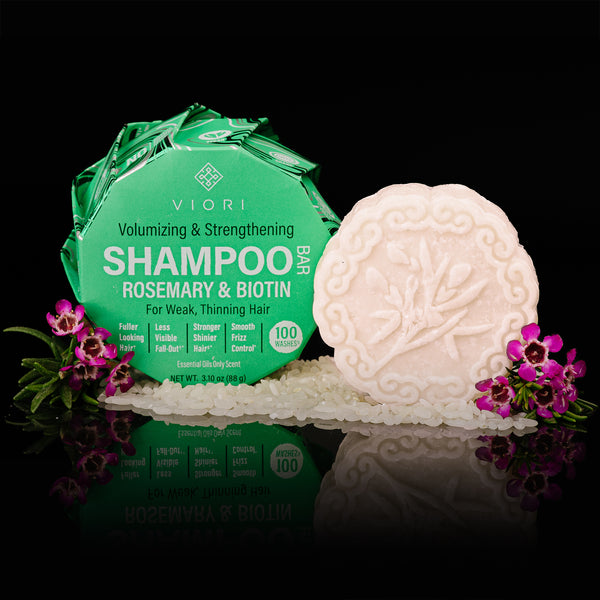
Viori's formulations use traditional Longsheng rice fermentation to deliver both structural reinforcement and moisture balance at the same time. This is the same approach the Red Yao women have used for centuries to maintain hair that commonly reaches six feet in length.
Your Scalp Microbiome: The Growth Factor You're Probably Ignoring
Here's a frontier of hair science that's only recently entered mainstream research: your follicle health depends significantly on your scalp microbiome-the community of bacteria, fungi, and other microorganisms living on your scalp right now.
Just like your gut microbiome affects digestion and immunity, your scalp microbiome regulates sebum production, inflammation responses, and even the follicle growth cycle itself.
How Harsh Surfactants Destroy Your Scalp Ecosystem
Conventional sulfate-based surfactants (like SLS and SLES) and even some "natural" alternatives take a scorched-earth approach to cleansing.
They don't just remove dirt and excess oil. They also:
- Eliminate beneficial bacteria that regulate scalp health
- Disrupt the skin barrier (increasing water loss and dryness)
- Trigger inflammatory cascades that push follicles into the resting phase
It's the equivalent of using antibiotics when you just need to wash your hands.
The professional approach: Use mild, sulfate-free surfactants derived from coconut (like sodium cocoyl isethionate) that cleanse effectively without decimating the microbiome. Your scalp should be clean, not sterile.
Think about it this way-you have beneficial bacteria on your scalp right now that are working to keep your follicles healthy. Why would you want to kill them every single time you wash your hair?
Prebiotic Ingredients: Supporting Your Scalp's Natural Ecosystem
The next frontier in natural hair growth involves prebiotic ingredients-compounds that feed the beneficial bacteria you want on your scalp.
Ingredients like inulin (from chicory root), bamboo extract, and aloe vera promote specific beneficial bacterial strains while making the environment less hospitable for problematic fungi and bacteria.
Viori's formulations incorporate bamboo extract not just for its direct follicle benefits, but for its prebiotic properties that support a balanced scalp microbiome.
This is systems-level thinking about hair growth-not just what we put on the hair, but how we support the entire ecosystem that produces healthy hair in the first place.
The Conditioner Mistake That Undermines Everything
In my salon experience, I've observed that most people focus intensely on finding the perfect shampoo while grabbing whatever random conditioner happens to be on sale.
This is often where carefully planned growth protocols completely fall apart.
Why Conditioner Matters More Than You Think
After cleansing, your hair cuticle is open and vulnerable. The conditioner's job isn't just to provide surface slip-it has three critical growth-related functions:
- Immediately closing the cuticle to prevent excessive swelling and cuticle damage during the vulnerable post-wash period
- Delivering growth-supporting nutrients while the hair shaft is most receptive to penetration
- Protecting hair from mechanical damage during detangling, which is when most breakage actually occurs
What Effective Natural Conditioners Actually Need
Here's the technical formulation profile that most brands get wrong:
Cationic conditioning agents (positively charged molecules) that bind specifically to negatively charged damaged sites on the hair shaft. This isn't random coating-it's targeted repair.
Emollients that nourish without blocking follicles. Ingredients like shea butter and cocoa butter (high in oleic acid) work beautifully, versus silicones or mineral oils that can accumulate and block follicle openings.
Penetrating oils with molecules small enough to actually enter the hair shaft, not just coat the surface. Broccoli seed oil (50-100 Daltons) and rice bran oil fit this category perfectly.
A pH of 3.5-4.5 to aggressively seal the cuticle after the slightly higher pH of shampooing.
Viori's conditioner bars use behentrimonium methosulfate (BTMS)-and I need to address this ingredient directly because the name causes understandable confusion.
WHAT CUSTOMERS ARE SAYING
Real reviews for Rosemary Biotin Shampoo Bar – Thinning Hair | VIORI
The "Methosulfate" Ingredient Confusion
BTMS is technically a quaternary ammonium compound, and it contains "sulfate" in the name, which understandably concerns people trying to avoid sulfates.
Here's the technical clarification: BTMS is not a sulfate-based surfactant like SLS or SLES. The "methosulfate" refers to the counterion (sulfate salt), not sulfuric acid esterification. It's sulfate-free in function-non-irritating and one of the most effective natural conditioning agents available.
It provides the positive charge necessary for cuticle sealing and targeted repair without silicone buildup or follicle blockage. Viori correctly includes this in their conditioner bars because, quite simply, it works better than any truly natural alternative while maintaining the clean, scalp-friendly profile that supports growth.
The Bar Format Advantage: Beyond Just Sustainability
Shampoo and conditioner bars are often marketed primarily as eco-friendly alternatives to liquid products. And yes, eliminating plastic bottles and reducing shipping water weight matters.
But the bar format itself offers specific technical advantages for hair growth protocols that have nothing to do with environmental benefits.
Concentration and Stability
No water content means you're getting 100% active ingredients with every use. Liquid shampoos are typically 70-90% water-you're essentially paying to ship water in plastic bottles.
Higher concentration of bioactive compounds in each application. The fermented rice compounds and growth-supporting nutrients aren't diluted.
No need for harsh preservatives like parabens or phenoxyethanol. Liquid products need aggressive preservation systems to prevent bacterial growth in all that water. Bars don't have this problem.
Better ingredient stability. Fermented rice compounds and vitamins remain potent longer without the oxidation and degradation that occurs in water-based systems.
The Friction Benefit (When Used Correctly)
The gentle friction from proper bar application provides mild scalp massage, which increases blood flow to follicles-something liquid shampoos simply can't deliver.
It also mechanically exfoliates dead skin cells that can accumulate and block follicle openings, and distributes product more evenly across all scalp zones.
Critical technique note: Never rub the bar directly on your hair length. Create lather in your palms first, then apply to your scalp and hair. This prevents cuticle roughening while maintaining all the scalp benefits.
Let's Talk Realistic Timelines: Managing Your Expectations
The hair growth conversation is plagued by unrealistic expectations driven by aggressive marketing claims. Professional honesty requires acknowledging biological timelines.
The Hair Growth Cycle Reality
Your hair follicles cycle through three distinct phases:
- Anagen (growth phase): 2-7 years, depending on genetics
- Catagen (transition): 2-3 weeks where growth stops
- Telogen (resting): 3-4 months before the hair sheds and the follicle resets
Any product claiming visible growth results in less than 8-12 weeks is either providing cosmetic thickening (not actual growth), reducing breakage (making existing hair appear longer), or straight-up misleading consumers.
I know that's not what you want to hear. Marketing has conditioned us to expect dramatic transformation in 30


