
If you’ve ever typed “shampoo bar organic” into a search bar, you’re in good company. Shampoo bars are having a moment-and for good reason. They’re tidy, travel-friendly, often lower-waste, and they can be genuinely great for your hair. But as a stylist, I’ll tell you the part that rarely gets said out loud: “organic” is not the same thing as “hair-friendly.”
The word sounds reassuring, but hair doesn’t respond to buzzwords-it responds to chemistry, technique, and consistency. A shampoo bar is not just bottled shampoo in solid form. It’s a different delivery system with its own rules. When people switch to a bar and say, “Why does my hair feel dry?” the answer is usually more nuanced than “the ingredients are too harsh.”
Two products can look like “organic shampoo bars” and behave completely differently
Here’s the first important distinction: when someone says “organic shampoo bar,” they could mean one of two things-products that are built on totally different chemistry.
- Soap-style bars (made from saponified oils, similar to traditional soap)
- True shampoo bars (made with modern, mild cleansers designed specifically for hair)
They may sit on the same shelf and even smell similar, but on the hair they can act worlds apart-especially if you have long hair, frizz-prone hair, porous ends, curls, or color.
NOT SURE WHICH PRODUCT IS RIGHT FOR YOU?
TAKE THE QUIZTakes 30 seconds · 134,000+ customers matched
The rarely discussed “bar problem”: friction
This is the angle most people miss, and it’s a big one. Bars change how you wash. With liquid shampoo, product spreads easily and quickly. With a bar, many people rub it directly on the scalp and drag it down the lengths. That extra rubbing creates friction, and friction can make hair feel rough even when the formula is relatively gentle.
Friction can:
- slightly lift the cuticle while you’re washing
- encourage tangles at the crown and nape
- make dry ends feel even drier
- increase breakage risk if you detangle too aggressively afterward
Viori’s guidance here is spot-on and very salon-practical: build lather in your palms and apply with your hands rather than rubbing the bar directly on your head. It seems like a small detail, but it can completely change the way your hair feels on rinse-out-especially if you’re trying to protect color.
pH is the real “organic”: it controls shine, softness, and slip
When clients ask me what makes one cleanser feel luxurious and another feel like it’s “stripping,” I usually end up talking about pH. Viori notes that hair products should generally sit between pH 3.5-6.5. That range matters because hair’s outer layer (the cuticle) behaves differently depending on pH.
In simple terms:
- Too alkaline and the cuticle tends to lift, which can feel rough, tangle-prone, and dull.
- More hair-friendly pH helps the cuticle lie flatter, which reads as smoother, shinier hair.
This is also why pH gets even more important when you have color-treated hair. A lifted cuticle can allow color to slip out faster over time. So while “organic” can describe sourcing, pH balance describes performance.
Why “organic” doesn’t automatically mean gentler cleansing
Another common misconception: that “organic” equals “mild,” and “mild” equals “good for everyone.” Scalp needs vary, and your scalp type should be steering the bus-not the label on the box.
Viori keeps it refreshingly straightforward with recommendations based on scalp type:
- Oily/greasy scalp: Citrus Yao is typically the best match.
- Dry scalp or dry hair: Terrace Garden, Hidden Waterfall, or Native Essence are common go-tos.
- Sensitive scalp or fragrance sensitivity: Native Essence is the unscented option.
And here’s a nuanced detail that’s genuinely interesting: Viori notes that while their bars share a core formula, Citrus Yao includes citric acid, which can help break down oil more efficiently. That can translate to hair feeling cleaner longer between washes for some oily scalps. In other words, “scent” isn’t always just a preference-it can subtly shift function.
Conditioner isn’t optional if you want your hair to behave
When people love the idea of an “organic shampoo bar” but hate the results, I often find the missing piece is simple: they’re skipping conditioner, or they’re not using enough of it in the right places.
Viori explains conditioner in a way I wish more brands did: shampooing removes some natural sebum, leaving strands more exposed to everyday stressors (sun, heat, water, brushing). Conditioner helps replace that protective feel temporarily because it contains ingredients that cling to the hair’s surface.
Viori’s conditioner bars include behentrimonium methosulfate, a conditioning ingredient that improves slip and helps hair feel smoother and easier to comb. If you’re used to foamy, bubbly conditioner, know this: Viori also points out that conditioner bars won’t lather like shampoo, because they don’t contain the same cleansing agent. Expect more of a creamy, “paste-like” glide-and remember that a little goes a long way.
Fermented rice water: the “quiet” technology hiding inside the natural story
A lot of organic hair conversations fixate on oils and botanicals. But hair can also respond beautifully to smaller, more functional ingredients-especially when they’re used at the right concentration.
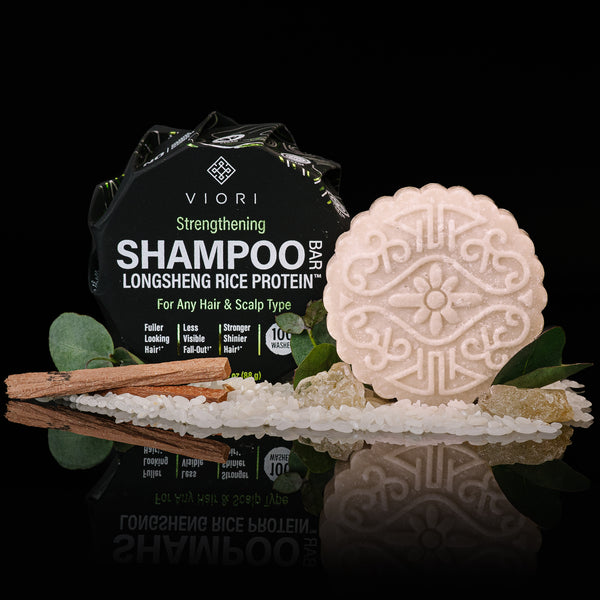
Viori uses fermented Longsheng rice water and notes an important point: high concentrations of rice water used too often can disrupt hair and scalp pH. Their approach is formulated to be pH balanced and appropriate for regular use, with supportive ingredients like hydrolyzed rice protein and vitamins such as vitamin B8 (inositol) and vitamin B5 (panthenol).
Translation: it’s not about going stronger and stronger. It’s about using the right amount, consistently, in a formula that plays nicely with your hair.
Bars are naturally more “self-preserving”-but storage is part of the routine
One practical advantage of bar formats is that they dry out between uses, which makes them inherently more stable than water-heavy products when cared for properly. Viori also uses recyclable paper packaging, which fits neatly into the low-waste appeal of switching to bars.
WHAT CUSTOMERS ARE SAYING
Real reviews for Rice Water Shampoo Bar – All Hair Types | VIORI
That said, how you store your bar affects how it performs (and how long it lasts). Keep it out of direct water spray, don’t let it sit in a puddle, and give it airflow between washes. If you want to keep things streamlined, a dedicated holder helps your bar dry evenly.
A stylist’s checklist: how to judge an “organic shampoo bar” without getting fooled by the label
If you want a quick way to predict whether a shampoo bar will be a win for your hair, use this checklist instead of relying on the word “organic.”
- Is it pH balanced for hair (generally within 3.5-6.5)?
- Is it a true shampoo bar (not a soap-style bar)?
- Does it account for friction with technique guidance like palm-lathering?
- Is there a real conditioning strategy for slip and manageability?
- Is it matched to your scalp type (oily, dry, sensitive) rather than a one-size-fits-all promise?
Viori checks these boxes clearly: their bars are pH balanced, built around a mild cleanser (Sodium Cocoyl Isethionate), and paired with a conditioner bar designed to restore smoothness and slip.
How long should you give it before deciding?
Hair changes don’t always show up overnight-especially if you’re switching formats. Viori notes that some people notice what they want after one wash, while others may need 2-3 months, and they recommend giving it that window before giving up.
That aligns with real-life hair behavior. Your scalp oil production, your lengths, your styling habits, and even your water quality can all affect the “adjustment period.” Consistent technique and proper conditioning usually make the difference.
The takeaway
“Organic” is a label. Great hair is engineering. If you want a shampoo bar routine that leaves hair soft, shiny, and manageable, focus on pH balance, low-friction application, and matching the bar to your scalp type. Do that-and an “organic shampoo bar” stops being a gamble and becomes a genuinely solid upgrade.


