
I'll never forget the client who walked into my salon five years ago, equal parts frustrated and confused. She'd dropped hundreds of dollars switching to "all-natural" plant-based soaps, convinced they'd finally solve her chronic dry skin issues. Instead, her skin felt tighter, looked duller, and seemed more sensitive than ever before.
"I'm doing everything right," she told me, close to tears. "I've gone completely natural. Why is my skin getting worse?"
In my 20 years as a beauty professional, I've had this exact conversation more times than I can count. And it always circles back to the same uncomfortable truth: when it comes to plant-based soap, "natural" doesn't automatically mean "better for your skin."
Today, I want to pull back the curtain on something the natural beauty industry rarely discusses-the real biochemistry of plant-based soap and why it might be working against your skin, not with it.
When Plants Stop Being Plants: The Chemistry They Don't Tell You
Here's what most people don't realize about that gorgeous handcrafted soap bar made with olive oil, coconut oil, and shea butter: the moment those plant oils went through the soap-making process, they fundamentally transformed into something entirely different.
I'm not being picky about terminology here. This is basic chemistry.
The Saponification Process: A Complete Molecular Makeover
To make traditional soap, you need to combine plant oils with lye (sodium hydroxide)-one of the most alkaline substances you can buy, clocking in at a pH of 13-14. This chemical reaction, called saponification, completely breaks down those gentle plant oils and reforms them into sodium salts of fatty acids.
In other words, the olive oil stops being olive oil. The coconut oil stops being coconut oil. You're left with something that never existed in nature-and something that has a very different relationship with your skin than the original plant oils did.
Even after the soap-making process is complete and "all the lye is neutralized" (as soap makers love to say), the finished bar maintains an alkaline pH somewhere between 9 and 11.
Your skin's natural pH? A slightly acidic 4.5 to 5.5.
NOT SURE WHICH PRODUCT IS RIGHT FOR YOU?
TAKE THE QUIZTakes 30 seconds · 134,000+ customers matched
See the problem?
The pH Problem: Why Your Skin Is Constantly Playing Catch-Up
Let me break down why this pH gap matters so much-and why it affects you every single time you wash.
Your skin maintains a slightly acidic environment (what we call the "acid mantle") for very specific biological reasons:
- It's your first line of defense against harmful bacteria and environmental damage
- It keeps beneficial bacteria thriving since they prefer acidic conditions
- It signals your skin cells to behave properly-everything from natural exfoliation to oil production depends on the right pH
- It maintains your skin barrier integrity, keeping moisture locked in and irritants locked out
When you cleanse with high-pH plant soap, you're essentially throwing your skin into immediate crisis mode.
What Actually Happens When Alkaline Soap Hits Your Skin
The cascade effect looks like this:
- Immediate alkaline shock disrupts your protective acid mantle
- Certain enzymes activate in response to the pH shift, potentially breaking down the proteins that keep your skin firm and structured
- Your lipid barrier organization becomes disrupted, allowing moisture to escape more easily
- Your skin must actively work to pump hydrogen ions back and restore proper pH-this requires cellular energy and isn't instantaneous
- Your beneficial skin microbiome gets stressed because the good bacteria that protect you thrive in acidic conditions
Here's what really shocked me when I started researching this years ago: pH recovery after alkaline soap exposure can take anywhere from 2 to 6 hours.
If you're washing your face or showering twice daily with traditional plant-based soap, your skin literally never returns to its optimal baseline. You're running a pH marathon every single day, and your skin is exhausted from the constant effort.
The Hard Water Factor Nobody Talks About
This next issue is one of my biggest frustrations with the natural soap community, because it affects so many people and gets virtually zero acknowledgment: plant-based soap performance is essentially a geographical lottery.
The Soap Scum You Can't See (But Your Skin Definitely Feels)
If you live in an area with hard water-which includes most of the Southwest, Midwest, Florida, and many other regions-you've probably noticed soap scum building up in your shower. That white, filmy residue that's nearly impossible to scrub away?
That's also depositing on your skin and in your hair.
Here's what happens at the molecular level: When plant-based soap (especially bars high in olive oil or other soft plant oils) meets hard water, the calcium and magnesium minerals in your water bind with the fatty acid chains from those plant oils. This creates an insoluble, waxy substance that:
- Deposits directly onto your skin, creating an invisible film you can't rinse off
- Gets trapped in your hair cuticles, creating buildup that no amount of rinsing can fully remove
- Impairs your skin's natural exfoliation process, making it harder for dead cells to shed normally
- Makes your hair look dull and feel heavy or waxy over time
This explains why the same soap that works beautifully for your friend in Seattle becomes an absolute disaster for you in Phoenix. The soap didn't change-your water chemistry did.
Yet I rarely see natural soap advocates acknowledge this reality. Instead, people blame themselves, thinking they're "using it wrong" or that their skin is somehow "too sensitive for natural products."
The Oxidation Problem: When Natural Becomes Harmful
Here's something I learned early in my career that completely changed how I evaluate products: plant oils don't stay stable forever, and oxidized oils are actively bad for your skin.
Every plant-based soap contains oils-often beautiful, nutrient-rich oils like hemp, evening primrose, or flaxseed. These oils get marketed for their beneficial fatty acid profiles.
But here's the catch: the moment those oils are exposed to air, light, and temperature changes, they begin oxidizing. This process creates:
- Lipid peroxides-free radicals that can damage your skin cell membranes
- Aldehydes-compounds that can irritate skin and potentially trigger allergic reactions
- Rancidity-often masked by added fragrances, so you don't even realize it's happening
That handmade soap bar sitting in a dish in your steamy bathroom? If it's more than six months old and contains high amounts of unsaturated plant oils, there's a decent chance it's oxidizing.
The uncomfortable reality: In your quest for "natural" skincare, you might actually be applying aging-accelerating compounds to your face.
Most small-batch soap makers don't include industrial-grade antioxidants (which would technically make their soaps less "natural"), so there's nothing preventing this oxidation throughout the product's entire shelf life.
The "Botanical Equals Better" Assumption
This is perhaps my most controversial opinion, but it's one I've developed after two decades of studying skin science: the plant kingdom did not evolve its compounds for compatibility with human skin.
We've been culturally conditioned to believe that plant-based automatically means gentle, safe, and beneficial. But biochemistry tells a different story.
Why Plants Make the Compounds They Make
Plants produce oils and secondary metabolites for their own survival purposes:
- To deter predators-many plant compounds are actually mild toxins
- For antimicrobial defense-which sounds beneficial until you realize these compounds can't distinguish between harmful bacteria and the beneficial bacteria your skin needs
- UV protection for plant cells-but some plant compounds may become photosensitizing when applied to human skin
- Water retention for plant tissues-but plant cell membranes and human skin barriers operate on completely different principles
Just because something comes from a plant doesn't mean it's molecularly optimized for your skin barrier function. This seems obvious when I say it outright, but the marketing around "botanical" and "plant-based" products completely obscures this reality.
What I Recommend Instead: Intelligent Botanical Cleansing
So if traditional plant-based soap has all these issues, what should you use instead?
I'm not suggesting you abandon plant-derived ingredients entirely. Plants offer incredible benefits-when they're formulated intelligently.
Look for These Key Features
1. pH-balanced formulations (4.5-5.5)
This is absolutely non-negotiable. If a product doesn't match your skin's natural pH, it's creating unnecessary stress every single time you use it, regardless of how "natural" the ingredients list looks.
2. Plant-derived surfactants that aren't traditional soap
Modern cosmetic chemistry has given us cleansing agents derived from plants (like coconut and corn) that can be formulated at skin-friendly pH levels:
- Sodium Cocoyl Isethionate (derived from coconut)
- Decyl Glucoside (derived from corn and coconut)
- Coco Betaine (derived from coconut)
These maintain the "plant-derived" benefit without the problematic alkaline pH.
3. Hard water compatibility
Look for formulations that include chelating agents if you live in a hard water area. These ingredients bind with minerals before those minerals can bind with cleansing agents and create buildup on your skin and hair.
4. Plant benefits added after the chemical process
This is where you can genuinely harness botanical power:
- Plant extracts added after saponification
- Botanical oils in their raw, unaltered form
- Plant waters that preserve beneficial compounds
The Fermentation Difference: Ancient Wisdom Meets Modern Science
This brings me to an approach that genuinely excites me from a biochemical perspective: fermented plant waters.
For over 2,000 years, the Red Yao tribe has used fermented rice water for hair care-and their results speak volumes, with many women maintaining dark, healthy hair well into their 80s.
What makes fermentation fundamentally different from saponification?
Why Fermented Rice Water Works Differently
It preserves pH compatibility. Fermented rice water naturally falls within the 4-5 pH range-perfectly aligned with your skin and scalp's needs, no chemical manipulation required.
It increases bioavailability. The fermentation process breaks down compounds into forms your hair and skin can actually absorb and use-like inositol, vitamin B5, and vitamin B8.
It creates new beneficial compounds. Through microbial transformation, fermentation produces compounds that don't exist in raw rice, including amino acids and proteins in forms that can penetrate the hair shaft.
It delivers results without chemical alteration. Unlike saponification, which destroys the original plant compounds, fermentation preserves and enhances them.
This is what I call "intelligent botanical" formulation-honoring traditional plant wisdom while respecting human biochemistry.
Why Viori Gets It Right
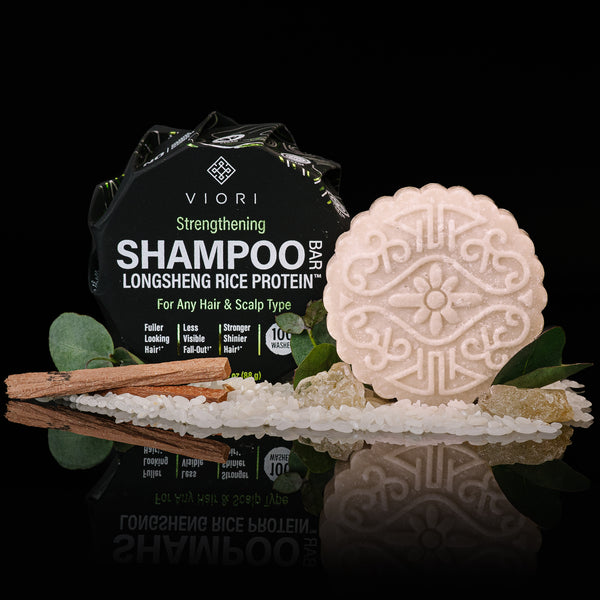
After years of evaluating hair and skincare products professionally, Viori's approach stands out because they've combined this ancient fermented rice water tradition with modern, pH-balanced surfactants.
Their shampoo and conditioner bars:
WHAT CUSTOMERS ARE SAYING
Real reviews for Rice Water Shampoo Bar – All Hair Types | VIORI
- Maintain pH balance (essential for hair cuticle health and scalp comfort)
- Avoid the hard water soap scum problem entirely by using naturally-derived surfactants rather than traditional soap
- Deliver actual plant benefits through carefully preserved rice water extracts, not chemically transformed oils
- Include the proteins your hair actually needs in forms that can penetrate the hair shaft
This represents what plant-based hair care should be: botanically powered but biochemically sound.
The Questions You Should Ask About Any "Natural" Cleanser
Whether you're shopping for soap, shampoo, or body wash, here's what I always recommend asking:
1. What is the actual pH of this product?
If it's above 7, you're compromising your acid mantle with every use. If the company can't or won't tell you the pH, consider that a red flag.
2. How does this perform in my specific water hardness?
You can test your water hardness with inexpensive strips (anything above 120 mg/L is considered hard). If you have hard water and the product is true soap, expect problems.
3. What is the oxidative stability?
Products high in polyunsaturated oils have a short stability window. How old is this product? How has it been stored? Are there antioxidants in the formula?
4. Are the claimed "benefits" marketing or biochemistry?
Is there actual research showing these specific compounds, in this specific form, at this pH level, benefit skin or hair? Or is it just appealing-sounding ingredient names?
5. Am I experiencing subtle damage I'm attributing to other causes?
Dryness, dullness, increased sensitivity, scalp flaking, or hair that feels coated-these could all be signs your "natural" cleanser isn't as compatible with your biology as you thought.
My Professional Take After 20 Years
I'm not anti-plant. I'm anti-assumption.
The beauty industry has trained us to believe "derived from plants" automatically equals "good for skin." But my two decades working with thousands of clients has taught me that the most effective approach is far more nuanced.
The most scientifically sound path forward involves:
- Embracing plant compounds that genuinely benefit skin and hair
- Delivering them in formats that respect human biochemistry
- Maintaining pH levels that support rather than stress your barrier
- Using cleansing systems that work with your water chemistry
- Choosing formulations that remain stable throughout their use life
Traditional plant-based soap can be beautiful, artisanal, and satisfying to use. There's something wonderful about supporting small makers and using handcrafted products.
But let's be clear-eyed about what we're actually putting on our bodies and whether the biochemical reality matches the botanical marketing.
The


