
Let's be honest, we've all been tempted. The promise of the water-only hair washing method is incredibly alluring: ditch the shampoo, save money, simplify your routine, and unlock your hair's "natural" state. Scroll through any wellness forum, and you'll find passionate testimonials from people who swear their hair has never been better. But for every success story, there are dozens of silent dropouts-people who endured months of greasy, waxy, limp hair only to finally surrender and lather up in defeat.
As a stylist who has seen this cycle repeat for over twenty years, I believe it's time for a real talk. The water-only conversation isn't about right or wrong; it's about understanding the fascinating, complex biology of your scalp. When we look past the hype, we find that an ancient secret from women with famously flawless hair offers a more beautiful, balanced path forward.
NOT SURE WHICH PRODUCT IS RIGHT FOR YOU?
TAKE THE QUIZTakes 30 seconds · 134,000+ customers matched
The Beautiful Theory vs. The Messy Reality
The philosophy makes perfect sense on paper. Your scalp produces sebum, a natural oil, as a built-in conditioner and protector. Harsh shampoos strip it all away, so your glands panic and overproduce. The solution? Stop the stripping. Use only water to gently rinse, and manually distribute the oil (through techniques called "scritching" and "preening"). In theory, your scalp calms down and finds a perfect, self-regulating equilibrium.
So why does it feel so awful for so many? The answer lies in basic chemistry and a few hidden culprits.
- Oil and Water Don't Mix: This isn't just a saying; it's a law. Water cannot dissolve sebum, pollution, or dead skin cells. It can only rinse away sweat and dust. What you often feel during the "transition phase" isn't just oil-it's a buildup that water is physically incapable of removing.
- Your Scalp's Silent Protest (The pH Problem): Your scalp's surface is a delicate, slightly acidic ecosystem with a pH of around 4.5 to 5.5. Tap water, especially hard water, is neutral or alkaline. Regularly dousing your scalp in it can disrupt this acid mantle, leading to dryness, irritation, and ironically, more oil production as your scalp fights to protect itself.
- The Hard Water Trap: If you have mineral-rich hard water, the challenge is even greater. Minerals like calcium coat each hair strand, creating a rough, dull surface that prevents your natural oils from spreading. You're left with hair that feels both coated and straw-like-a truly frustrating combination.
The Forgotten Factor: Your Scalp's Living Ecosystem
Rarely discussed is the impact on your scalp's microbiome-the community of tiny organisms that live there. A sudden, dramatic change in their environment can throw this community off balance. That persistent itch or unexpected flaking isn't always "detox"; it can be a sign of an ecosystem in distress, struggling to adapt without the right support.
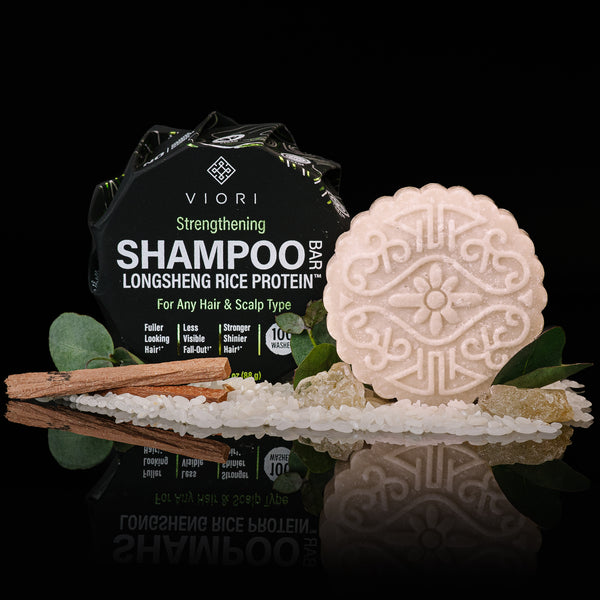
This reveals the core flaw in the extreme water-only approach: true balance is active, not passive. Health isn't just about stopping what's bad; it's about consistently providing what's good. It's about nourishing the ecosystem, not just leaving it to fend for itself in a modern world full of pollutants and stressors.
A Lesson from Women with Centuries of Perfect Hair
For a real-world example of this active balance, we look to the Red Yao women of China's Longsheng region. For nearly two thousand years, they have been famous for hair that remains luxuriously long, strong, and jet-black well into old age. Their secret wasn't a complicated regimen or a water-only fast.
It was fermented rice water.
This isn't folk magic; it's brilliant, intuitive bio-hacking. Their ritual works because it addresses the very problems the water-only method creates:
- Fermentation creates lactic acid, giving the rice water a gentle, low pH that cleanses without disrupting the scalp's delicate acid mantle.
- Fermentation unlocks key nutrients like inositol and panthenol, which are proven to strengthen hair at the follicle and soothe the scalp itself.
- It provides nourishing rice protein that helps smooth and fortify the hair shaft, enhancing its natural shine and resilience.
Their tradition embodies the principle the water-only movement seeks but often misses: work in harmony with your biology by feeding it what it needs to thrive.
WHAT CUSTOMERS ARE SAYING
Real reviews for Rice Water Shampoo Bar – All Hair Types | VIORI
Your Practical Path to Truly Healthy Hair
You don't need to ferment rice in your kitchen (though you can!). The lesson is to seek out modern hair care built on this ancient, nutrient-first philosophy. Move from the extreme of "water-only" to the intelligent middle ground of "gentle-cleanse, actively-nourish."
Look for principles that honor both nature and science: pH-balanced formulas, ultra-mild cleansers that remove buildup without causing panic, and ingredients that deliver proven nutrients to support your scalp's health from the inside out.
Your journey to amazing hair isn't about choosing sides in a debate. It's about becoming the wise caretaker of your own scalp's ecosystem. Listen to its needs, learn from traditions that have stood the test of time, and find a sustainable routine that doesn't just avoid damage, but actively cultivates health and radiance.


