
If you’re a guy with thick hair, you know the routine: you wash, it feels great for a few hours, and then something goes sideways. Your roots get oily fast, your lengths feel weirdly dry, or your hair dries into a big, frizzy shape that won’t cooperate. A lot of men assume the fix is simple-just find a “stronger” shampoo.
In my experience, that’s usually the wrong target. Thick hair rarely needs more cleaning power. It needs more even cleansing with less friction. When you understand what’s happening mechanically (how water, lather, and pH behave in dense hair), your results improve dramatically-often without changing much beyond technique and the right bar choice.
“Thick Hair” Isn’t One Thing (So One-Size Advice Falls Flat)
When someone says “I have thick hair,” they might mean a few different things-and each one behaves differently in the shower.
NOT SURE WHICH PRODUCT IS RIGHT FOR YOU?
TAKE THE QUIZTakes 30 seconds · 134,000+ customers matched
- High density: You have a lot of hairs per square inch. Hair feels bulky and can trap product easily.
- Coarse strands: Each individual hair is thicker in diameter. Hair can feel stiffer, drier, and more resistant to styling.
- High porosity: The cuticle is more open (often from sun, heat, chlorine, rough towel drying, or chemical services). Hair absorbs quickly but loses moisture just as fast.
Most men with “thick hair” are dealing with a mix of these. That’s why you can have a scalp that looks oily while your ends feel parched-it’s not a contradiction, it’s a mismatch in how your hair and scalp are being cleansed.
The Overlooked Issue: Thick Hair Creates a “Rinse Barrier”
Here’s the detail that doesn’t get talked about enough: dense hair can act like a filter. Water and lather hit the outside first, while the interior (and the scalp underneath) can get less contact and less flow-through. The result is a classic thick-hair problem.
- The outer layer can get over-cleansed and roughed up, leading to frizz, tangling, and that “puffy” finish.
- The inner layer and scalp can be under-cleansed or under-rinsed, leading to heaviness, faster oil rebound, and sometimes itch.
This is why some men step out of the shower feeling both dry and greasy. It’s not always the formula-it’s often distribution and rinse time.
Why pH Balance Matters More Than Most Men Realize
If your hair tends to puff up after washing, pH is part of the story. When a cleanser is too alkaline, the cuticle can lift and stay more “open,” which increases friction between strands. Thick hair exaggerates that friction because there’s more hair rubbing against more hair.
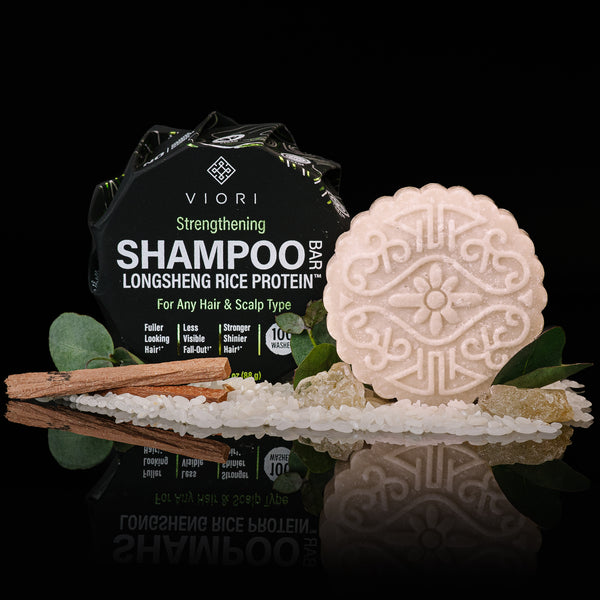
Viori bars are designed to be pH balanced, and that matters for thick hair because it helps reduce that rough, expanded cuticle feel that can translate into frizz and bulk you didn’t ask for.
“Stronger Shampoo” Usually Backfires on Thick Hair
A lot of men respond to thick-hair challenges by working harder: scrubbing more aggressively, washing with hotter water, shampooing twice out of habit, or dragging cleanser through the lengths every time. Unfortunately, that approach often creates the exact problems you’re trying to solve.
- More friction can raise the cuticle and increase frizz.
- Over-cleansing can make the scalp feel tight or irritated.
- A stressed scalp can trigger faster oil rebound, which makes you feel like you “need” to wash again sooner.
The goal isn’t “maximum clean.” The goal is uniform clean.
The Technique That Changes Everything (Especially for Dense Hair)
If I could watch one part of your routine, it would be how you wet, lather, and rinse. Thick hair responds incredibly well to small adjustments that improve coverage without beating up the cuticle.
Step 1: Pre-wet longer than you think
Give it a real soak-60 to 90 seconds. Thick hair can resist wetting at first, and if you rush this step, you’ll end up using more product on the outside while the inside stays under-cleansed.
Step 2: Build lather in your hands
With bars, this is a game-changer. Instead of rubbing the bar directly onto your head repeatedly, build lather in your palms and apply with your hands. This reduces friction and helps push cleanser through density more evenly. (It’s also a helpful approach for men who want to be gentler on color-treated hair.)
Step 3: Clean your scalp in zones, not randomly
Think like a barber: quick, purposeful sections. Massage with your fingertips (not nails) and focus on the scalp-your lengths don’t need to be “detergent washed” every time.
- Front hairline and temples
- Crown/top
- Nape/back
Step 4: Rinse like you mean it
Most “residue” complaints I hear from thick-haired clients are actually not enough rinsing. Rinse for 45 to 60 seconds, and use your fingers to lift and separate the hair so water can flow through the interior.
Step 5: Conditioner isn’t optional for thick hair (but placement matters)
Conditioner helps because it’s attracted to the hair fiber and improves slip-meaning less friction, less tangling, and a smoother finish. Apply it mid-length to ends first, let it sit for 2 to 5 minutes, then rinse thoroughly. If you need a touch near the top, use whatever is left on your hands rather than applying heavily at the roots.
Choosing a Viori Bar for Thick Hair: Go by Scalp Timing
Forget “men’s shampoo” marketing for a second. The smarter way to pick a bar is to watch when your scalp turns oily after washing.
WHAT CUSTOMERS ARE SAYING
Real reviews for Rice Water Shampoo Bar – All Hair Types | VIORI
- Oily scalp (oily 1-2 days after washing): Viori Citrus Yao is typically the best match. The scent profile includes citric acid, which helps break down oil and can help you go longer between washes.
- Normal scalp (oily around day 3): Viori Hidden Waterfall is a great “middle ground” for many men-balanced and easy to live with.
- Dry or tight scalp (oily day 4+): Viori Terrace Garden or Native Essence tends to feel more comfortable. Native Essence is unscented, which many fragrance-sensitive people prefer.
If You Use Styling Products, Watch for “Film Stack”
Thick hair hides buildup until it doesn’t. Daily stylers can layer up, especially if you’re not rinsing long enough through dense sections.
Common signs include:
- Hair feels waxy or coated even after washing
- Hair looks dull instead of shiny
- Roots collapse while the rest puffs out
- Scalp itch or little bumps around the hairline
Before you reach for aggressive stripping habits, tighten the basics: longer saturation, better scalp zoning, and a longer rinse. Thick hair often improves fast when you fix flow-through.
What You’re Really After: Controlled Volume
Thick hair isn’t the enemy-it just needs the right rules. When you minimize friction, keep cleansing even, and choose a pH-balanced routine, thick hair becomes what it should be: clean, flexible, healthy, and controlled.
If you want a more personalized match, start by answering three questions for yourself: how soon your scalp gets oily (day 1-2, day 3, or day 4+), whether your ends feel dry, and how long your hair is on top. That combination tells you almost everything you need to know to pick the best Viori direction and dial in your routine.


