
If you’ve ever stood in the shower after a workout, looked at an antibacterial soap bar, and thought, “Honestly, this might be the cleanest my scalp has ever been,” you’re not alone. It seems logical: antibacterial equals fewer germs, less odor, less oil. And the first wash can feel amazing-that crisp, squeaky-clean sensation that makes you think you’ve finally outsmarted greasy roots.
But here’s what I’ve seen over and over in the chair: a couple of weeks later, that same person is dealing with a scalp that feels tight or itchy, flakes that weren’t there before, hair that tangles like crazy, and ends that suddenly look frizzy no matter what they do. The “clean” feeling wasn’t the win it seemed to be-it was the warning sign.
The real issue isn’t simply that antibacterial soap is “drying.” The deeper problem is that it pushes and pulls on two systems at once: your scalp’s biology (barrier + microbiome) and your hair fiber’s physics (cuticle behavior + friction + surface charge). When those get out of sync, you can end up with the worst of both worlds: oilier roots and rougher ends.
NOT SURE WHICH PRODUCT IS RIGHT FOR YOU?
TAKE THE QUIZTakes 30 seconds · 134,000+ customers matched
Why “antibacterial” and “scalp-friendly” are not the same thing
Your scalp is skin, and skin is designed to be protected-not sterilized. A healthy scalp supports a natural ecosystem of microorganisms (often called the scalp microbiome) that helps keep the skin barrier stable and calm. When you repeatedly wash with antibacterial soap, you’re not just targeting “bad stuff.” You may be knocking down the overall balance and leaving your scalp more reactive.
In real life, that can show up as:
- Itching or a prickly, irritated feeling after washing
- Tightness, especially once the scalp dries
- Flaking that can mimic dandruff (even when the root cause is irritation)
- Rebound oiliness-getting greasy faster than you used to
That rebound oiliness is the part people rarely connect to their cleansing choice. When the scalp barrier feels stripped, it may compensate by producing more oil. So you wash harder, more often, and the cycle gets louder.
The squeaky-clean feeling is usually friction, not health
Let’s talk about that “squeak.” Hair that feels squeaky after cleansing usually has higher surface friction-meaning the hair strands are literally grabbing each other more. That’s often tied to cuticle behavior. When the cuticle isn’t lying as smoothly as it should, hair becomes:
- more prone to tangles
- more vulnerable to breakage during detangling
- more likely to look frizzy and feel rough
- less reflective, so it appears duller
What makes this tricky is that your scalp might feel “cleaner than ever” while your mid-lengths and ends quietly start to unravel.
The overlooked culprit: soap scum on hair
Here’s the angle that doesn’t get enough attention: many soaps can react with minerals in water (especially hard water) and leave behind an invisible film on the hair. People describe it as waxy, coated, stiff, or heavy. It can also make the scalp feel strange-dry in one moment, flaky in the next.
And then comes the common mistake: the film makes the hair look dull and feel “not clean,” so people scrub harder or wash more frequently with the same antibacterial soap. That usually makes the coating and irritation worse, not better.
Why antibacterial soap can make scalp odor harder to manage long-term
Scalp odor is usually a combination of sweat, sebum (oil), and what happens when microorganisms break those substances down. Antibacterial cleansing can reduce odor temporarily, but if it also triggers irritation and rebound oiliness, you’ve created more fuel for odor to return quickly.
In other words: the strong approach can deliver a short-lived win, then set you up for a faster relapse.
Who gets hit the hardest: color-treated hair and textured hair
Color-treated hair
If your hair is colored, anything that increases friction and roughness can make hair feel more stressed and look less glossy. Also, with any bar product, how you use it matters. Rubbing a bar directly onto the hair adds mechanical abrasion-especially risky when you’re trying to protect a smooth, compact cuticle for shine and longevity.
Curly, coily, and textured hair (Type 3-4)
Textured hair already experiences more friction because of its bends and curves. When friction goes up, you often see:
- curl clumps separating (less definition)
- more tangling and knotting
- more breakage during detangling
This is one of the reasons I’m cautious about any cleansing shortcut that wasn’t designed specifically with hair fiber behavior in mind.
What to do instead (if your goal is a truly clean scalp without the fallout)
If you want that fresh, light, clean feeling-but you also want your hair to stay soft, shiny, and manageable-the safer plan is simple: use a cleanser made for hair and pair it with a conditioner that restores slip and reduces friction. This is where a pH-conscious, hair-specific formula matters.
WHAT CUSTOMERS ARE SAYING
Real reviews for Rice Water Shampoo Bar – All Hair Types | VIORI
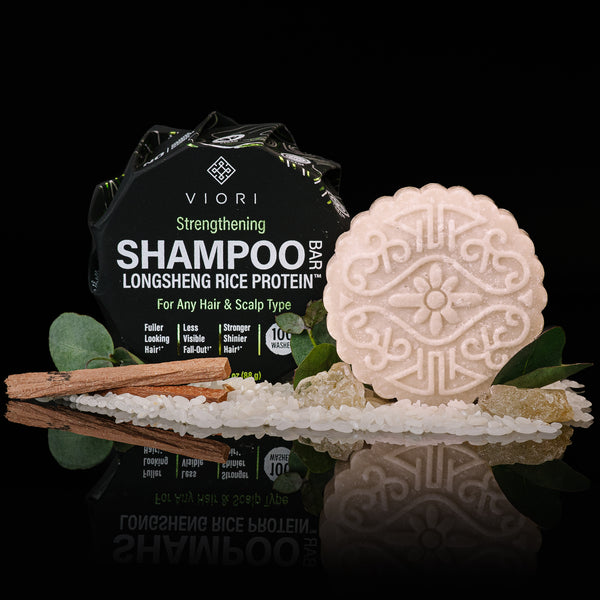
Viori shampoo and conditioner bars are built around that hair-and-scalp balance. They’re pH balanced (a big deal for smooth cuticles and scalp comfort), and they’re designed to cleanse without relying on harsh sulfate cleansers. The formulas include Longsheng rice water along with supportive ingredients like hydrolyzed rice protein and fermentation-derived nutrients such as vitamin B8 (inositol) and vitamin B5 (panthenol), chosen to support strength, manageability, and overall hair feel.
Conditioning is where many people finally feel the difference. Conditioner ingredients are typically positively charged, which helps them cling to the more vulnerable, negatively charged areas of the hair-exactly where you need slip and protection most.
If you already tried antibacterial soap on your hair: a practical reset routine
If your hair now feels squeaky, tangled, coated, or your scalp feels tight or itchy, don’t panic. Most of the time, you can calm things down by getting consistent and gentle for a couple of weeks.
- Stop using antibacterial soap on your hair and scalp.
- Wash with a pH-balanced hair cleanser for several washes in a row to re-stabilize the feel of your hair and scalp.
- Condition every time, focusing on mid-lengths and ends. This is friction control-not an optional “extra.”
- Reduce friction during application by lathering in your hands and applying with your fingers instead of rubbing a bar directly on your head (especially if your hair is color-treated).
- If you’re sensitive or easily irritated, consider an unscented option like Viori Native Essence.
- If your scalp is oily but your ends are dry, use a split approach: cleanse the scalp thoroughly, then use a more moisturizing conditioner on the ends.
The bottom line
Antibacterial soap can feel like a power move-until it isn’t. The irony is that over time it can push your hair and scalp in opposite directions: rougher lengths from increased friction and cuticle disruption, and a more reactive scalp that may get oily faster.
If you want hair that stays clean longer, feels softer, and behaves better between washes, your best bet is a routine that respects both the scalp barrier and the hair cuticle. Clean doesn’t have to mean stripped-and once you feel the difference, it’s hard to go back.


