
After twenty years as a stylist, I've had the same conversation at least three hundred times. A client sits in my chair and asks, "Why does my hair look incredible when you style it, but when I try at home, I can't even get close?" Most people assume it's all about blow-drying technique or the right round brush. And sure, technique matters. But here's what I've learned after thousands of heads of hair: the real difference usually starts long before you pick up a styling tool. It starts in the shower, with chemistry that most people never even think about.
Today, I'm pulling back the curtain on what actually separates professional-grade shampoos from what you'll grab off a drugstore shelf. This isn't me being snobby about products or trying to justify price tags. I'm talking about fundamental differences in formulation-real chemistry that affects how cleansing agents interact with your hair's protein structure at a molecular level. The kind of stuff they don't put on the label because it doesn't sound sexy, but it changes everything about how your hair behaves.
The Surfactant Story Nobody Bothers to Tell You
Every single shampoo on the planet relies on surfactants. These are surface-active agents that lift dirt and oil so water can actually rinse them away. But here's the thing: not all surfactants work the same way, and this is where the real magic-or disaster-happens.
It's Way More Complicated Than Just "Sulfate-Free"
The sulfate conversation has absolutely dominated hair care discussions for the past decade. Go on any beauty forum, and someone's talking about sulfates. But honestly? The whole discussion oversimplifies some pretty complex chemistry. The real innovation isn't just about removing harsh sulfates-it's about what replaces them and how those replacement ingredients actually function.
Traditional shampoos lean heavily on Sodium Lauryl Sulfate (SLS) or Sodium Laureth Sulfate (SLES) as their primary workhorses. These are anionic surfactants with a linear molecular structure, and they strip everything indiscriminately. I mean everything. Natural sebum that protects your hair? Gone. Beneficial lipids? Gone. Even some of the cementing material between your hair's cuticle layers gets compromised. It's scorched-earth cleansing.
Professional formulations typically use gentler alternatives like Sodium Cocoyl Isethionate (derived from coconut) or Sodium Lauroyl Methyl Isethionate. What makes these different isn't just that they're "gentler"-though they are. It's their molecular geometry. These ingredients have branched molecular structures that create a more selective cleansing action.
NOT SURE WHICH PRODUCT IS RIGHT FOR YOU?
TAKE THE QUIZTakes 30 seconds · 134,000+ customers matched
Think of it this way: harsh sulfates are like taking a pressure washer to your hair. Sure, it gets clean, but you're also stripping away protective layers and causing damage. Professional-grade surfactants are more like a targeted cleaning system that picks up debris without damaging the underlying structure. They're large enough to surround and remove dirt and excess oil, but their spatial configuration prevents them from penetrating as deeply into the cuticle layer.
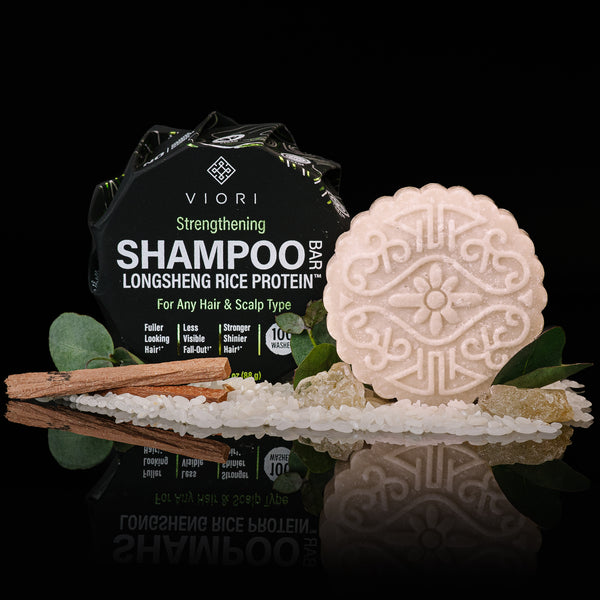
This is exactly why I've been recommending Viori's shampoo bars to clients for the past year. They use gentle, naturally-derived surfactants that clean effectively without that aggressive stripping action that leads to the "squeaky clean" feeling. And contrary to what most people think, squeaky clean is not actually a good thing. It means your hair has been stripped of its protective lipid layer. Your hair shouldn't squeak. It should feel smooth and clean, but not stripped.
The pH Precision That Changes Absolutely Everything
Here's something that rarely gets discussed in beauty blogs but matters tremendously in my daily work: professional shampoos maintain tighter pH tolerances throughout the product's entire shelf life. This is huge.
Human hair has a natural pH between 4.5 and 5.5. The cuticle layer-those overlapping scales that determine whether your hair looks shiny and smooth or dull and frizzy-lies flat and sealed within this pH range. When you use a shampoo with a pH above 6.5, you're essentially forcing those cuticle scales to swell and lift up. Every single time you wash.
Most commercial shampoos range from pH 6 to pH 9, and some go even higher. Why would manufacturers do this? Because alkaline formulations are cheaper to stabilize and they create more foam. Consumers psychologically associate big lather with cleaning power, even though foam has absolutely nothing to do with actual cleansing efficacy. It's pure psychology, not chemistry.
Professional formulations typically maintain pH levels between 4.5 and 6.0. But here's the sophisticated part that gets me excited: they use buffering systems-combinations of weak acids and their conjugate bases-that resist pH drift over time. This means the pH stays consistent from the first use to the last drop in the bottle, and it remains stable across temperature variations during shipping and storage. Your shampoo doesn't change character halfway through the bottle.
Why This pH Thing Matters So Much for Color-Treated Hair
This pH precision becomes critical if you color your hair. Here's how hair dye actually works: it uses alkaline chemicals (like ammonia) to swell the cuticle open, deposits color molecules into the cortex layer underneath, then seals everything back up with an acidic conditioner. Every single time you use a high-pH shampoo afterward, you're partially reopening that cuticle and allowing color molecules to escape.
This is why hair that gets colored at a salon but then gets washed at home with a high-pH drugstore shampoo often fades dramatically within just a few weeks. You're literally washing your investment-and I mean hundreds of dollars of color services-down the drain, one shower at a time. I've watched it happen over and over again, and it breaks my heart every time.
The Molecular Weight Mystery Nobody Talks About
Here's where we venture into truly technical territory that almost no one discusses outside of formulation labs: the molecular weight and distribution pattern of conditioning ingredients matters enormously to how your hair actually behaves.
Many shampoos include conditioning agents-silicones, quaternary compounds, or natural oils-to counteract the stripping effects of surfactants. Makes sense, right? But the molecular weight of these ingredients determines exactly where and how they deposit on your hair shaft. This is precision engineering, not just throwing in some conditioner and calling it good.
Low Molecular Weight Polymers (1,000-5,000 Daltons): These are small enough to penetrate into the cuticle gaps and even reach the cortex layer. They provide internal conditioning and actual repair, but they wash out relatively easily. You're not getting long-term buildup, but you're also not getting lasting protection.
Medium Molecular Weight Polymers (10,000-50,000 Daltons): These settle into the cuticle layer itself, smoothing down those scales and providing medium-term conditioning. This is the sweet spot for most conditioning effects. This is where you get smoothness that lasts.
High Molecular Weight Polymers (100,000+ Daltons): These sit on the hair surface, providing immediate slip and shine, but they can build up over time. This is often what causes that "my products stopped working" feeling after a few weeks.
Professional formulations are engineered with specific molecular weight distributions optimized for different hair types and needs. A salon shampoo designed for fine hair emphasizes low-to-medium molecular weight ingredients that condition without weighing hair down. A professional moisturizing shampoo for coarse, dry hair includes a higher proportion of medium-to-high molecular weight emollients that provide substantial slip and hydration.
Mass-market formulations rarely have this level of precision. They often use whatever conditioning agents provide the best immediate sensory experience-typically high molecular weight silicones-because consumers judge effectiveness within the first few uses. This leads to that common complaint of buildup over time, where your hair starts feeling coated and lifeless and products just stop working.
Why Those "Protein-Enriched" Claims Often Mean Absolutely Nothing
Walk down any hair care aisle and you'll see bottles screaming about proteins. Keratin! Wheat protein! Silk protein! It all sounds great, right? But here's what the marketing departments don't explain: the degree of hydrolysis and resulting particle size determines whether these proteins actually do anything at all, or if they're just expensive label decoration.
Intact protein molecules are far too large to penetrate hair. They must be broken down-hydrolyzed-into smaller peptide chains. The challenge is finding the right size, and it's a surprisingly narrow target:
- Too large (over 1,000 Daltons): Sits on the surface, washes away immediately, provides exactly zero benefit beyond making the label look good
- Too small (under 150 Daltons): Individual amino acids that penetrate easily but don't provide structural reinforcement-they're just too small to do anything useful
- Just right (200-1,000 Daltons): Small enough to penetrate into cuticle gaps and even reach the cortex, but large enough to provide actual strengthening by temporarily filling in damaged areas of your hair's keratin structure
Professional lines typically specify the molecular weight range of their hydrolyzed proteins and choose sizes appropriate for what the product is actually supposed to do. When I see hydrolyzed proteins listed in a salon formulation, I know they've been selected for functional benefit, not just to have something impressive on the ingredient list.
This is one reason I'm particularly fond of Viori's approach to this whole thing. Their rice water-based formula contains proteins, vitamins B5 and B8 (inositol), and other compounds that are naturally small enough to penetrate-created through fermentation, these peptides are typically in that ideal 200-500 Dalton range. It's not about adding hydrolyzed protein as an afterthought ingredient. The entire formula is built around naturally bioavailable nutrients that can actually reach where they need to go.
The Chelating Agent Sophistication Nobody Ever Talks About
This is perhaps the most overlooked technical difference between professional and consumer products, and it's something I deal with every single day in the salon: how the shampoo handles mineral buildup from water.
Unless you're washing your hair with distilled water (and please don't), your tap water contains dissolved minerals-primarily calcium and magnesium, which create water hardness, but also iron, copper, and other metals. These minerals bind to your hair over time, creating a coating that causes a whole cascade of problems:
- Makes hair feel rough and look dull, no matter what you do to it
- Interferes with chemical services-color won't take evenly, perms won't process correctly
- Prevents beneficial ingredients from penetrating because there's literally a mineral barrier
- Causes color fading because copper and iron accelerate oxidation reactions
Chelating agents (also called sequestering agents) bind to these metal ions and allow them to be rinsed away. Common examples include EDTA, citric acid, and phytic acid. But here's where professional formulations get sophisticated: they use graduated chelating systems-combinations of chelating agents with different binding strengths and selectivity.
A well-designed professional formula might combine:
- A strong chelator like EDTA to remove heavy mineral buildup that's already there
- A gentler chelator like citric acid to prevent new mineral deposition without stripping beneficial ingredients
- A metal-specific chelator to target iron and copper specifically, which are particularly problematic for color-treated hair
This layered approach allows effective mineral removal without the chelating agents binding to and removing the beneficial ingredients-like those carefully sized proteins and conditioning agents-that the shampoo is trying to deposit. It's a delicate balance.
Budget shampoos typically either skip chelating agents entirely or use only citric acid, which is inexpensive but relatively weak. This is why so many people notice their hair feels completely different after swimming in chlorinated pools or when they stay in hotels with different water. They don't have adequate chelation protection, and their hair is suddenly dealing with a completely different mineral profile.
The Preservation System You Never Think About (But Should)
Let's talk about something that nobody finds exciting but that matters tremendously to both product safety and your scalp health: how shampoo is preserved against microbial contamination.
Shampoos are water-based products that get used in wet, warm bathrooms-literally perfect conditions for bacterial and fungal growth. They require preservation systems to remain safe. But some preservatives have side effects that range from annoying to genuinely problematic:
- Formaldehyde donors (DMDM Hydantoin, Diazolidinyl Urea): Effective and cheap, but they release small amounts of formaldehyde, which is a known allergen and irritant
- Parabens: Effective and well-studied, but many consumers avoid them due to concerns about endocrine disruption
- Isothiazolinones (Methylisothiazolinone): Effective at really low concentrations but increasingly recognized as a contact allergen, especially for people with sensitive skin
Professional lines have moved toward more sophisticated preservation strategies that reduce reliance on any single harsh preservative:
WHAT CUSTOMERS ARE SAYING
Real reviews for Rice Water Shampoo Bar – All Hair Types | VIORI
Hurdle Technology: Using multiple mild preservatives at low concentrations rather than one harsh preservative at high concentration. Each preservative creates a "hurdle" for microbial growth; combined, they're effective without needing high concentrations of any single potentially irritating ingredient.
pH Optimization: Maintaining pH below 5.5 inherently inhibits many bacteria and fungi, reducing the amount of preservative load required in the first place.
Water Activity Reduction: Using humectants like glycerin that bind water molecules, making less "free water" available for microorganisms to use.
Natural Preservation Systems: Combinations of ingredients like sodium lactate (derived from fermented corn and beets), sodium benzoate, and potassium sorbate that work synergistically together.
Viori uses sodium lactate as part of their preservation system, which I really appreciate. It's effective, it's gentle, and it has the added benefit of being a humectant that actually helps hair retain moisture. The result is a product that remains safe throughout its entire shelf life without the irritation potential or allergen exposure of cheaper preservation systems.
The Conditioning Polymer Architecture That Makes Hair Actually Behave
Advanced salon shampoos often include sophisticated conditioning polymers that most people don't even know exist. These aren't your basic silicones-we're talking about engineered macromolecules designed to provide very specific benefits.
Cationic Polymers: Targeting Damage Where It Actually Lives
Hair, especially damaged hair, carries a negative electrical charge. It's just physics. Cationic (positively charged) polymers are attracted to these negative sites like magnets, depositing preferentially on the most damaged areas. It's self-targeting repair, which is pretty cool when you think about it.
Sophisticated examples include:
- Polyquaternium compounds-there are over 40 different types, each with unique properties and benefits
- Guar hydroxypropyltrimonium chloride-derived from guar beans, provides excellent conditioning with less buildup than traditional silicones
The molecular weight and charge density of these polymers can be precisely tuned during manufacturing. Professional formulations select polymers with charge densities matched to the expected damage level of their target user. It's not one-size-fits-all; it's engineered for specific hair conditions.
Moisture-Responsive Polymers: Adapting to Your Environment
Some advanced salon shampoos include hygroscopic polymers-molecules that actually change their configuration based on ambient humidity levels. In humid conditions, they help seal the cuticle to prevent frizz. In dry conditions, they retain moisture and prevent excessive water loss from the hair shaft. They adapt to your environment automatically.
These responsive polymers are substantially more expensive


