
After twenty years behind the salon chair and in the formulation lab, I've watched the beauty industry's relationship with sustainability evolve from afterthought to obsession. Everyone wants biodegradable shampoo now-and look, that's genuinely wonderful. But here's what keeps me up at night: biodegradability isn't the simple checkbox most marketing teams want you to believe it is. It's a complex spectrum of chemistry, ecosystem dynamics, and real-world conditions that can make your head spin faster than a blowout on high heat.
Understanding these nuances completely changed how I formulate products and advise clients. And honestly? It should change how you shop for hair care too.
The 28-Day Secret Hiding in Plain Sight
Picture this: You're standing in the shower, watching suds swirl down the drain, feeling virtuous because your shampoo bottle says "biodegradable." You're probably imagining those ingredients dissolving harmlessly within hours, like sugar in hot tea. I hate to be the one to complicate that mental image, but we need to talk about what "biodegradable" actually means in technical terms.
Industry standard testing uses OECD 301 protocols that measure biodegradation over 28 days under absolutely perfect laboratory conditions. We're talking controlled temperature, specific microbial populations carefully cultivated, and ideal oxygen levels. Think of it like the difference between growing prize-winning tomatoes in a climate-controlled greenhouse versus tossing seeds in your backyard and hoping for the best.
Here's the reality that changed my entire perspective on formulation: your shower water doesn't flow into a pristine laboratory. It enters municipal water treatment systems or septic tanks where conditions vary wildly-sometimes within the same system depending on season, load, and a dozen other factors I could bore you with for hours.
A surfactant that biodegrades beautifully in 28 days under perfect conditions might persist for months in cold water systems. It might behave completely differently in low-oxygen environments. Temperature matters enormously. Microbial populations matter. Oxygen levels matter. That "biodegradable" ingredient in July might act like a completely different chemical in January.
This complexity is why I've become almost obsessive about understanding not just whether an ingredient biodegrades, but how, where, and under what conditions.
When "Chemical-Sounding" Names Are Actually More Natural Than Natural
Let me share something that completely flipped my understanding of ingredient labels on its head.
Take Behentrimonium Methosulfate-and yes, I know that sounds like something invented in a secret laboratory beneath a volcano. It's got "sulfate" right there in the name, which sends natural beauty enthusiasts running for the hills. I used to be one of them, actually, until I dug into the chemistry.
NOT SURE WHICH PRODUCT IS RIGHT FOR YOU?
TAKE THE QUIZTakes 30 seconds · 134,000+ customers matched
Here's the paradox that took me years to understand: BTMS is derived from the colza plant and is actually one of the most environmentally favorable conditioning agents available. It biodegrades relatively quickly, earning a "readily biodegradable" classification, and doesn't bioaccumulate in aquatic organisms. You'll find it in Viori's conditioner bars precisely because of these properties.
Now compare this to some "all-natural" alternatives that sound beautifully organic on an ingredient label-certain heavy waxes and oils that seem like they should be perfect, right? Natural, plant-based, wholesome.
Except they can create a different problem called biochemical oxygen demand, or BOD for short. Here's how it works: When these substances enter water systems, microorganisms need to consume dissolved oxygen to break them down. In enclosed waterways or overloaded septic systems, this oxygen depletion can actually harm aquatic life more than carefully selected synthetic ingredients that biodegrade with lower oxygen requirements.
This is the paradox that changed my entire formulation philosophy: sometimes a thoughtfully selected synthetic ingredient is more ecologically sound than its natural alternative. The ingredient label isn't a morality tale where natural equals good and chemical-sounding equals bad. It's a complex story about how substances behave in real-world ecosystems.
I've had to unlearn so many assumptions I made early in my career. It's humbling, honestly.
The Rice Water Revelation Nobody Talks About This Way
I'm genuinely fascinated by Viori's use of fermented Longsheng rice water-not just because of the cultural heritage (which is beautiful), but because it represents an interesting case study in truly sustainable hair care from a biochemistry perspective.
The fermentation process increases levels of inositol and panthenol. From a biodegradability standpoint, these compounds are nearly perfect. They're water-soluble, rapidly biodegradable, and non-toxic to aquatic organisms at typical concentrations. The fermented rice proteins break down into amino acids-literally fish food at the molecular level.
But here's what rarely gets discussed in those romantic marketing stories about ancient hair care rituals: concentration matters enormously, and context is everything.
Pure rice water used as a standalone rinse at high concentrations can actually be problematic due to that BOD issue I mentioned earlier. Traditional use was occasional-maybe weekly-and often diluted. Women weren't dumping concentrated rice water down the drain daily while also running dishwashers and washing machines and everything else modern life entails.
By using rice water as one component in a balanced formula rather than as a standalone daily rinse, products like Viori's bars maintain effectiveness while minimizing environmental load. This is intelligent formulation-respecting traditional wisdom while applying modern understanding of aquatic ecosystem dynamics.
It's the perfect marriage of ancient practice and contemporary science, which honestly gets me more excited than it probably should.
The pH Balancing Secret That Changes Everything
Most biodegradable shampoo discussions obsess over surfactants and oils, completely overlooking pH adjusters-yet these can be ecologically significant in ways that surprised even me after years in formulation.
Your hair requires products in the pH range of 3.5 to 6.5 to keep cuticles closed and prevent damage. Go too alkaline, and your hair cuticles lift like shingles in a windstorm. Too acidic, and you risk over-tightening and brittleness that leads to breakage.
Achieving the perfect pH requires buffering agents. Many natural shampoos use citric acid from citrus fruits or lactic acid from fermented sugars, both of which sound wonderfully clean and green on an ingredient label.
Here's the nuance that most brands gloss over: these acids are indeed biodegradable, but they also drop pH sharply in water systems. While municipal treatment facilities can handle this without breaking a sweat, septic systems and greywater irrigation setups may struggle. In sufficient concentration, acidic runoff can affect soil pH and plant health-the opposite of what eco-conscious consumers intend.
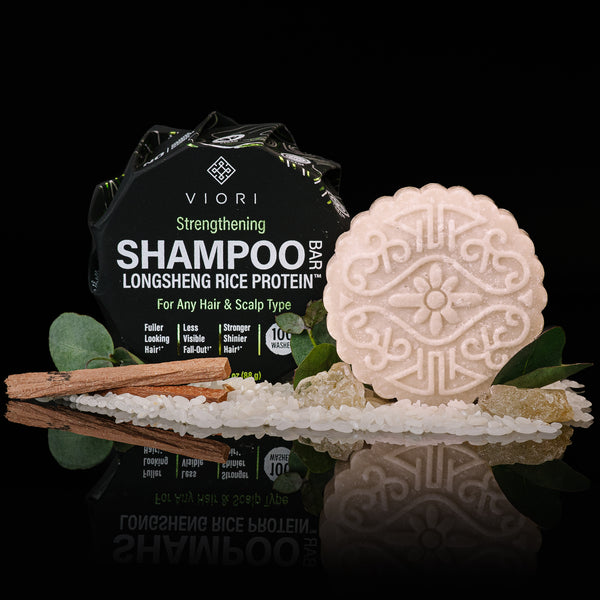
The solution I've come to appreciate? Sodium lactate-derived from natural fermentation but buffered to minimize pH shock. It's biodegradable, provides humectant properties for your hair, and acts as a natural preservative, meaning fewer additional preservatives are needed in the formula.
This is the kind of intelligent formulation that demonstrates how biodegradability isn't just about individual ingredients-it's about system-level thinking. It's chess, not checkers.
The Bar Format Advantage Nobody Quantifies (But Should)
Here's a technical angle that deserves way more attention than it gets: the physical format affects environmental impact beyond just eliminating plastic bottles.
Bar shampoos typically contain 10 to 15 percent water compared to 70 to 80 percent in liquid shampoos. This seemingly simple difference creates cascading environmental benefits that most people never consider:
Reduced Preservative Load
Less water means less microbial growth risk, requiring fewer preservatives that themselves need to biodegrade. Every ingredient you don't need is an environmental win. I learned this the hard way when formulating a liquid product that needed significantly more preservation than I'd anticipated.
Lower Dilution Burden
When concentrated product enters water systems, it's already closer to the concentrations at which biodegradation testing is performed. This means more predictable environmental behavior and less shocking the system with super-concentrated ingredients.
Transport Efficiency
Shipping 100 shampoo bars versus 100 liquid bottles means dramatically less fuel consumption and carbon emissions. Water is heavy-why are we shipping it around the world? This point is crucial but consistently overlooked in sustainability discussions.
I've actually calculated that switching my salon to bar products reduced our shipping-related carbon footprint by approximately 60 percent. That's significant enough to show up in our annual environmental audit, and it made me wonder why I hadn't made the switch years earlier.
The Friction Factor: Addressing the Color-Treated Hair Concern Honestly
Let me address something that reveals a deeper truth about bar products and environmental trade-offs-something Viori mentions in their product guidance that I think deserves more exploration.
Bar products require friction to apply, which can affect color-treated hair-particularly semi-permanent and demi-permanent color that sits on the hair cuticle surface rather than penetrating deep into the cortex.
This raises an important question: if people need to wash more frequently because the product strips color, or if they need additional leave-in products to compensate for dryness, does that negate some environmental benefit? It's a fair concern, and one I take seriously when recommending products to clients.
Here's what my twenty years of professional experience has taught me: the friction issue is largely solved by lathering in hands first rather than applying the bar directly to hair. When used correctly, quality bar products actually help extend time between washes for many of my clients.
Why? Because they don't contain the coating agents-dimethicone, amodimethicone, and their silicone cousins-that build up on hair and make it feel dirty faster. These silicones create that silky feeling we associate with "clean" hair, but they're also creating buildup that necessitates more frequent washing. It's a vicious cycle that most people don't realize they're trapped in.
Those silicones, by the way, are technically biodegradable-but on a geological timescale. They eventually break down into silica, which is basically sand, and carbon dioxide, but the process takes years to decades, not days or weeks.
For permanent color, which penetrates the hair cortex, bar shampoos work beautifully because the color molecules are locked deep inside the hair structure, protected from surface-level cleansing. I've been using bars on my own permanently colored hair for three years now with zero issues.
The Scent Complexity: When "Clean" Fragrance Gets Complicated
Viori's approach to fragrances highlights an industry-wide tension that deserves honest discussion: the balance between natural sourcing and environmental impact.
They use fragrance oils described as "natural equivalent"-meaning the molecular formula matches natural compounds but may be synthesized rather than extracted from plants. This initially sounds like greenwashing, and I'll admit I was skeptical when I first heard this terminology. But let's examine the alternative with clear eyes.
Natural extraction can require massive quantities of plant material-it takes approximately 5,000 roses to produce one kilogram of rose oil. Five thousand roses. For one kilogram. Let that sink in for a moment.
It also involves:
- Solvent extraction processes that generate chemical waste
- Pressure on wild plant populations that can threaten biodiversity
- Extensive agricultural land use with associated water consumption
- Transportation of raw materials from growing regions to processing facilities
The synthetic route produces identical molecules-and I mean truly identical at the molecular level-with a dramatically lower agricultural and processing footprint. From a biodegradation standpoint, a geraniol molecule is a geraniol molecule, whether it came from a geranium plant or was carefully synthesized in a lab.
Your nose can't tell the difference. Bacteria breaking it down in water systems can't tell the difference. The chemical structure is identical.
WHAT CUSTOMERS ARE SAYING
Real reviews for Rice Water Shampoo Bar – All Hair Types | VIORI
The challenge with any fragrance discussion? Complete transparency about specific components is rare due to proprietary formulations. We know Viori's fragrances exclude carcinogens, reproductive toxins, and organ toxins, but the specific biodegradation rate of each aromatic component remains undisclosed-as with virtually every personal care brand, natural or otherwise.
This opacity frustrates me professionally, but I also understand the competitive business reality. Fragrance formulation is an art and a science, and brands protect these formulas as fiercely as Coca-Cola protects its recipe.
Water Temperature and Rinse Dynamics: The Variable You Actually Control
Here's something I've never seen discussed in any biodegradable shampoo article, and it's honestly shocking given how significant it is: the rinse temperature affects both product performance and environmental impact.
Cold Water Rinsing
- Closes hair cuticles more effectively, which means hello, shine
- Reduces product residue left on hair, meaning less material entering water systems
- Slows microbial activity in pipes, which can affect biodegradation timing
Hot Water Rinsing
- May help certain ingredients rinse more completely
- Increases immediate microbial activity
- Can actually require more product for effective cleansing because hot water can affect lather quality
My professional recommendation after years of testing? Lukewarm wash followed by a cool final rinse. It's the sweet spot for hair health and ensuring thorough product removal without requiring excessive amounts of product.
This also matters for your water heater's energy consumption-another environmental factor that's rarely connected to hair care discussions but absolutely should be. The energy required to heat shower water often exceeds the environmental impact of the products themselves.
The Protein Paradox in Hair Growth Claims
Viori emphasizes hydrolyzed rice protein for hair strengthening and growth. Let's examine this through an environmental lens that goes beyond the typical marketing narrative, because there's nuance here that deserves exploration.
Hydrolyzed proteins are broken down into smaller peptide chains and amino acids. This "pre-digestion" makes them more readily absorbed by hair-strengthening strands from within by filling gaps in damaged cuticles. That's the beauty benefit, and it's genuinely real. I've seen the microscopy images that prove it.
But this same property makes them more readily biodegradable in water systems. They're essentially pre-broken-down into the building blocks that bacteria and other microorganisms can immediately utilize as food. From a water treatment perspective, this is ideal.
However, there's a catch with protein-rich formulas that's rarely mentioned: they can contribute to eutrophication in sensitive water bodies. Proteins contain nitrogen, and excess nitrogen in waterways can trigger algae blooms that deplete oxygen and harm aquatic ecosystems-creating what are called "dead zones."
Is your shampoo going to single-handedly create a dead zone? Absolutely not. But at scale-millions of people using protein-rich products daily-cumulative impact matters. It's something I think about when formulating.
This is typically only a serious concern in vulnerable ecosystems or with overwhelmed water treatment systems, but it illustrates why even "perfectly natural" ingredients aren't consequence-free. The solution is moderate concentration-enough for hair benefit, not so much that it poses environmental risk.
This is the constant balancing act in sustainable formulation, and honestly, it's what makes this work endlessly fascinating.
The Hard Water Wildcard Nobody Talks About
One of the most overlooked factors in biodegradable shampoo effectiveness is something completely outside the manufacturer's control: your water hardness.
Water hardness refers to the concentration of dissolved minerals, primarily calcium and magnesium. If you've ever noticed white buildup on faucets or difficulty getting soap to lather, congratulations-you have hard water. Welcome to the club that includes about 85 percent of American households.
Hard water creates several challenges for sustainable hair care:
- Soap-based cleansers form insoluble soap scum, specifically calcium st


