
After two decades behind the chair and formulating hair care solutions, I've witnessed something that most beauty articles completely miss: shampoo bars don't just clean differently than liquid shampoos-they fundamentally transform your scalp's entire ecosystem in ways that science is only beginning to understand.
If you've recently made the switch to a bar shampoo, or you're considering it, you've probably heard about the infamous "transition period." But what's actually happening beneath the surface goes far deeper than your scalp simply "adjusting." Let me pull back the curtain on the fascinating science of why bars work so differently-and why understanding these mechanisms might be the key to unlocking your best hair ever.
The pH Secret: It's Not What You Think
We've all heard about pH-balanced shampoo, but here's the truth that changes everything: how pH is delivered matters just as much as the pH number itself.
When you use a liquid shampoo, it dilutes instantly the moment it touches water and your scalp. You're getting a uniform, diffused pH environment spread across your entire head simultaneously. It's predictable, consistent, and... well, kind of one-dimensional.
Shampoo bars work completely differently. As you glide the bar across your scalp or work up a lather, you're creating concentrated pH "contact points" that move in a pattern across your head. Think of it like the difference between misting your garden with a spray bottle versus watering specific areas with a watering can-same water, completely different delivery, totally different results.
These temporary pH microenvironments aren't a flaw in the design-they're actually a feature. This varying pH landscape may be exactly why some people experience dramatic improvements in scalp conditions that never responded to liquid formulas. Your scalp isn't a uniform surface; it has areas with different oil production, different bacterial populations, and different needs. A bar allows for more dynamic interaction with these varied zones.
The Mechanical Magic: The Benefit Everyone Overlooks
Here's where things get really interesting, and it's something almost no one in the beauty industry discusses: shampoo bars provide mechanical stimulation that liquid formulas simply cannot deliver.
Think about the physical difference in application. With liquid shampoo, you pour and massage. With a bar, you're creating direct contact, pressure, and friction against your scalp. This isn't just a different sensation-it's a completely different therapeutic mechanism.
NOT SURE WHICH PRODUCT IS RIGHT FOR YOU?
TAKE THE QUIZTakes 30 seconds · 134,000+ customers matched
This direct contact creates several powerful effects:
- Micro-massage stimulation that increases blood flow to your hair follicles. More blood flow means more nutrients and oxygen reaching the cells responsible for growing your hair. It's the same principle behind those expensive scalp massage tools and derma-rolling treatments-except you're getting it every time you wash.
- Physical disruption of sebum plugs that may be suffocating your follicles. Many scalp issues stem from these tiny blockages that prevent healthy follicle function. The gentle mechanical action of a bar can help clear these obstructions in ways that liquid shampoo simply can't.
- Enhanced product penetration through the pressing motion. When you apply pressure with a bar, you're not just depositing product on the surface-you're gently pressing beneficial ingredients into closer contact with your scalp.
- Scalp cell turnover stimulation, similar to what gentle exfoliation provides for your face. This helps remove dead skin cells and buildup that can interfere with healthy hair growth.
Here's my professional observation after working with hundreds of clients: sometimes the physical act of using a bar matters just as much as the ingredients in it. I've seen clients attribute their results to specific botanical extracts when I suspect the mechanical stimulation deserves at least half the credit.
The Concentration Gradient: A Cosmetic Chemistry Revelation
This is where my inner science nerd gets excited. Bars deliver ingredients in what we call a concentration gradient-and this changes everything about how your hair receives beneficial compounds.
When you use liquid shampoo, you're applying a pre-diluted, pre-mixed solution. The ingredient concentrations are fixed from the moment you pour it out. With a bar, you're starting with concentrated ingredients that progressively dilute as you work them through your hair.
Picture it this way:
- The first point of contact receives maximum ingredient concentration
- As you work the product through, ingredients gradually dilute
- Different ingredients dilute at different rates based on their properties
- You get extended contact time for key actives before full emulsification
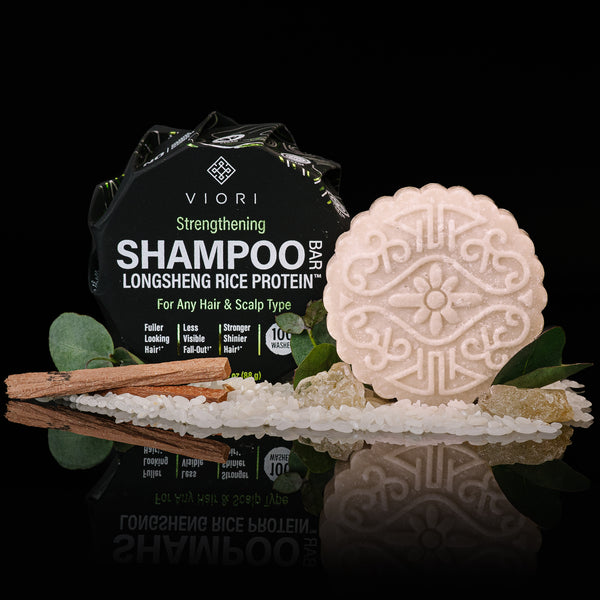
For bars like those from Viori, which contain powerful ingredients like fermented rice water, this gradient delivery is actually a significant advantage. Your scalp gets maximum exposure to these beneficial compounds before they dilute down through the lengths of your hair.
The traditional liquid formula approach is like adding fertilizer to water and then watering your entire garden with the same diluted mixture. The bar approach is more like applying concentrated treatment exactly where you want it, then working it through. Both work, but they're fundamentally different strategies.
The Water Hardness Factor: The Variable That Explains Everything
If I could tattoo one piece of knowledge on every client's brain, it would be this: your water quality might matter more than any ingredient on the label.
Here's why this is especially true for bars: liquid shampoos are formulated with chelating agents and stabilizers specifically designed to perform consistently whether you're in soft-water Seattle or hard-water Phoenix. These additives "buffer" the formula against water chemistry variations.
Bars have far less room for these additives. This means your local water chemistry becomes a crucial co-ingredient in your hair care routine.
In soft water areas, bars often perform like absolute magic. In hard water regions, the same bar might create buildup, feel less effective, or require technique adjustments. The mineral content of your water is literally creating a unique chemical reaction with your bar's ingredients.
This explains something I see constantly: two people using the identical bar formula reporting completely opposite experiences. It's not that one person is "doing it wrong"-they're actually using fundamentally different formulations once their local water chemistry enters the equation.
Pro tip: If you're in a hard water area and struggling with bar shampoo, try doing a final rinse with filtered water or even diluted apple cider vinegar. You might be amazed at the difference.
The Sebum Reset: What's Really Happening During "Transition"
Let's talk about the elephant in the room: the dreaded transition period. Most articles describe this as your scalp "detoxing" or "adjusting," but that explanation is frustratingly vague. What's actually happening is far more specific-and understanding it helps you work with the process rather than suffering through it.
Your sebaceous glands are incredibly smart. They've spent years-maybe decades-calibrating their oil production based on signals from your liquid shampoo use. Specifically, they've learned exactly how fast surfactants strip oils and how quickly those oils need replenishing to maintain homeostasis.
When you switch to a bar with a different surfactant system (especially naturally-derived cleansers like those in quality bars), you're fundamentally changing the signals these glands receive.
The "adjustment period" is actually your sebaceous glands recalibrating their entire feedback system. This biological process involves:
- Changes in lipid composition of the sebum your scalp produces-not just the amount, but the actual chemical makeup
- Microbiome population shifts as different bacterial species thrive or decline in the new pH environment
- Follicle clearance as years of product buildup gradually works its way out
- Cellular signaling changes at the follicle level, affecting everything from growth cycles to strand thickness
This isn't a simple "detox" that's over in a few days. It's a complex biological recalibration that typically takes 4-12 weeks, depending on your individual physiology, how long you used liquid shampoos, and how different the new formula is from your old routine.
Understanding this helped me counsel dozens of clients through the transition. When you know your scalp is rebuilding its entire regulatory system, temporary greasiness or dryness feels less like failure and more like progress.
The Preservation Advantage: Fresher Ingredients, Simpler Formulas
Here's a technical aspect that rarely gets attention but has significant practical implications: bars and liquids require completely different preservation strategies, and this affects everything from ingredient stability to how your scalp responds.
Liquid shampoos are high-water formulations. Water is life-unfortunately, that includes microbial life. This means liquid formulas need robust preservative systems to prevent bacterial and fungal growth. These preservatives are safe and regulated, but they can:
- Interact with other active ingredients, reducing their effectiveness
- Affect pH stability as the product ages
- Create sensitivity reactions in some users
- Gradually degrade certain beneficial compounds over time
Bars, being low-moisture formulations, are essentially self-preserving once dry. This seemingly simple difference has profound implications:
- Active ingredients remain stable much longer
- Less need for synthetic preservatives
- Extended shelf life without active ingredient degradation
- More "live" ingredient activity when you actually use the product
For formulations containing delicate compounds-like the fermented Longsheng rice water that makes Viori bars so special-this preservation difference is huge. Fermented ingredients contain beneficial acids, enzymes, and compounds that can be destabilized or destroyed by certain preservatives common in liquid formulas.
It's similar to the difference between fresh vegetables and canned ones. Both are "vegetables," both are safe to eat, but the nutrient profiles and biological activities are measurably different.
The Ritual Factor: Why Mindfulness Might Matter More Than You Think
Here's my most unconventional observation after 20 years in this industry, and it might be the most important insight in this entire article: the very act of using a bar creates a different psychological relationship with hair washing that may contribute to results through behavioral changes.
Using a bar requires:
- More intentional, deliberate application
- Increased direct scalp contact
- Greater sensory awareness of the washing process
- Often slightly longer washing times
- More attention to technique and distribution
This isn't inefficiency-it's engagement. And this engagement creates a feedback loop that may independently contribute to better results.
When you're more present during hair washing, you're more likely to:
- Actually massage your scalp thoroughly instead of rushing through
- Distribute product more evenly
- Notice problem areas that need attention
- Rinse more completely
- Pay attention to how your hair responds to adjustments
The Red Yao women of China-whose centuries-old fermented rice water tradition inspired Viori's formulations-didn't just have good hair because of what they used. They had good hair because hair care was a mindful ritual, a moment of self-care and attention.
Modern research on stress and hair health supports this intuition. Elevated cortisol levels (from chronic stress) negatively impact hair follicle function, growth cycles, and even hair loss patterns. The meditative quality of a more ritualized hair care routine may activate stress-reduction pathways that independently support hair health.
I'm not suggesting that positive thinking grows hair. I'm suggesting that the forced mindfulness of bar application might trigger biological responses that complement the chemical benefits of the formula itself.
Practical Application: Technique Tips That Actually Matter
Understanding these mechanisms isn't just academic-it should change how you actually use your bar. Unlike liquid shampoos where technique barely matters, bar shampoos reward thoughtful application.
Water Temperature Strategy
Use warm water for washing to open the cuticle and promote lathering, but finish with a cooler final rinse. This helps solidify any residual ingredients (preventing buildup) while sealing the cuticle for shine and smoothness.
Application Pressure Matters
The amount of pressure you use affects both mechanical stimulation and ingredient deposit. Fine hair benefits from lighter pressure; coarse or thick hair responds better to firmer application. Experiment to find your sweet spot.
WHAT CUSTOMERS ARE SAYING
Real reviews for Rice Water Shampoo Bar – All Hair Types | VIORI
Directional Application
Moving the bar in the direction of hair growth (root to tip) versus against it creates different exfoliation effects. For most people, root-to-tip provides benefits without excess stimulation. If you have significant buildup or scalp concerns, occasional against-the-grain application can help.
Lather Location Strategy
Where you create the initial lather significantly affects concentration delivery. Creating lather directly on the scalp provides maximum ingredient contact there but requires more work to distribute through hair lengths. Creating lather in your hands first gives more control over distribution but may reduce scalp concentration. Many people benefit from a hybrid approach: initial application on scalp, then working lather through lengths.
The Two-Wash Consideration
For those with very long hair, significant buildup, or heavy styling product use, consider the traditional approach of two washes-a first cleansing wash focused on the scalp, then a second that works through the lengths. This ensures your scalp gets clean product rather than product contaminated with dissolved oils and buildup.
The Bigger Picture: A Different Cleansing Technology
Here's what I want you to understand: switching to a quality bar isn't just a simple product swap. You're not replacing Shampoo A with Shampoo B. You're fundamentally changing the physical, chemical, and even behavioral aspects of how you cleanse your hair.
The bars from Viori, with their fermented rice water heritage and pH-balanced formulations, are designed to work with these unique properties of bar delivery rather than trying to mimic liquid shampoos in a different form.
This is why some people experience almost immediate, transformative results, while others need patience during a transition period. The bar isn't "better" or "worse" than liquid in some universal sense-it's a completely different cleansing technology that works through distinct pathways.
If you're struggling with the transition, reframe your perspective: you're not just changing products. You're asking your scalp's entire ecosystem to reorganize itself. You're switching from one delivery mechanism to another. You're potentially working against your local water chemistry. You're learning new techniques.
Give it the 8-12 weeks needed for true biological adaptation. Pay attention to your water quality. Adjust your technique based on how your hair responds. Stay curious rather than frustrated.
The traditional wisdom of the Red Yao women, who have used bar-based, fermented rice water cleansing for centuries, combined with modern understanding of scalp biology, suggests something profound: bar-based cleansing may actually be more aligned with how our scalp ecosystem evolved to function, before modern surfactant chemistry took us in a different direction about 80 years ago.
Your hair's response to this return to more traditional methods may reveal more about the limitations of conventional liquid formulations than about the bars themselves.
The Bottom Line
After 20 years of working with every hair type, texture, and concern imaginable, I've come to believe that the difference between bar and liquid shampoos runs far deeper than packaging or "natural" versus "conventional."
We're talking about different mechanisms of action, different delivery systems, different ecological impacts on your scalp microbiome, and even different psychological relationships with the act of hair cleansing itself.
Understanding these differences-really understanding them at a technical level-transforms the experience from "this bar better work" to "


