
I need to tell you something that took me nearly two decades to fully understand: the stories brands tell about their products often work better than the actual ingredients inside the bottle.
I know that sounds cynical coming from someone who's spent twenty years formulating products and educating clients about hair chemistry. But after watching countless clients achieve better results from products they believed in versus technically superior formulations they didn't connect with, I've had to accept an uncomfortable truth.
The narrative wrapped around a shampoo can be more transformative than what's actually in the formula.
Let me explain what's really happening when you fall in love with a "story shampoo"-and why understanding this doesn't mean you should stop using products you love. In fact, understanding how these products work might make you better at choosing ones that truly serve you.
The Brain Science Behind Why Stories Sell Shampoo
When you read an ingredient list versus hearing a product's origin story, your brain processes these two types of information through completely different neural pathways.
Ingredient lists activate your analytical brain:
- The information moves slowly through your prefrontal cortex
- It requires chemistry knowledge you probably don't have
- It creates decision fatigue (there are too many options to compare)
- It triggers skepticism (you start questioning every claim)
- It creates zero emotional connection
Stories activate your emotional brain:
- The narrative bypasses your critical thinking centers
- It requires no specialized knowledge
- It creates what neuroscientists call "narrative transportation" (you get lost in the story)
- It actually suppresses your skepticism through emotional engagement
- It creates strong memory anchors tied to feeling
Here's the fascinating part: research published in Brain and Language showed that when you're absorbed in a compelling narrative, your brain literally reduces activity in the regions responsible for distinguishing fact from fiction.
In other words, a good product story temporarily makes you worse at detecting marketing manipulation.
I'm not sharing this to make you feel manipulated. I'm sharing it because understanding how your brain works helps you make better decisions about what you're actually purchasing.
The Four Elements Every Powerful Product Story Contains
Over the years, I've noticed that products generating cult-like devotion all share what I call the "Four Pillars of Perceived Authenticity." Let me show you what they look like using a brand I actually respect: Viori.
1. Geographic Specificity
Notice how Viori doesn't just say "rice water"-they say their bars contain ingredients from the Longsheng mountains, used by the Red Yao tribe. Those specific details create what psychologists call "vividness heuristics." The more specific a story is, the more truthful it feels to our brains, whether we've verified the facts or not.
NOT SURE WHICH PRODUCT IS RIGHT FOR YOU?
TAKE THE QUIZTakes 30 seconds · 134,000+ customers matched
The geographic specificity gives you a mental picture. You can see those mountains. That makes the story feel real.
2. Temporal Depth
"2,000 years of tradition" isn't just romantic language-it's triggering a deep cognitive shortcut in your brain. We instinctively believe that if something has survived for millennia, it must work.
This is the same mental mechanism that makes us trust "ancient remedies" even without clinical trials. If it didn't work, surely it would have disappeared, right?
3. Cultural Otherness
The Red Yao women aren't just any community-they're exotic, isolated, and their floor-length black hair provides immediate visual proof that's impossible to ignore.
This activates what I call the "wisdom-at-the-margins" bias. Many of us hold an unconscious belief that isolated indigenous communities possess secret knowledge that our modern world has lost. Whether that's true or not, it's a powerful psychological trigger.
4. Moral Integration
When you learn that 5% of Viori's profits go back to the Red Yao community, something shifts. Suddenly, buying shampoo isn't just about clean hair-it's a small act of global justice.
Your brain actually releases oxytocin (the bonding hormone) when you engage in perceived altruistic behavior. That means you get a literal chemical reward for purchasing.
Here's what I need you to understand: Even if every single claim a brand makes is 100% factually accurate, the psychological impact of the story is often disproportionate to the actual chemical difference in the product.
What's Actually In "Story Shampoo"-A Formulator's Perspective
Let me put on my technical hat for a moment and talk about what's rarely discussed: what these special ingredients actually do.
Take fermented rice water, for example-Viori's signature ingredient. Fermentation does create beneficial compounds: inositol (Vitamin B8) and increased panthenol (Vitamin B5) content. These are legitimate hair health ingredients that I use and recommend.
However:
You can purchase pharmaceutical-grade inositol and panthenol and add them to virtually any shampoo base. The specific source (ancient rice from specific mountains) matters far less than the concentration and how it's formulated.
Additionally, shampoo is a rinse-off product. You're getting minimal scalp contact time compared to a leave-in treatment, which means the concentration needs to be quite high to deliver results-and most story shampoos use relatively low concentrations to maintain pH balance and texture.
Does this mean the ingredients don't work? No. It means the story creates an expectation and experience that often produces results beyond what the ingredients alone would deliver.
A 2019 study in Scientific Reports demonstrated exactly this phenomenon. Researchers gave subjects identical skincare products, but told one group theirs contained "rare glacial water." That group reported 35% better results than the control group-despite using the exact same formulation.
Belief changes your perception of a product's effectiveness.
As a professional, this used to frustrate me. Now I understand it's just part of how humans work.
Why Bars, Rituals, and Pretty Patterns Actually Matter
There's something technically brilliant about brands like Viori choosing bar format, and it has nothing to do with the chemistry.
Bar shampoo requires you to change your behavior. You need to:
- Learn a new application technique
- Find different storage solutions
- Adjust to how it lathers differently
- Keep it dry between uses
There's a cognitive principle called the "IKEA effect"-people value things more highly when they've invested effort into them. By requiring you to adapt your routine, bar shampoo actually increases your psychological investment in the product.
That "friction" doesn't hurt sales-it increases brand attachment.
And those beautiful patterns pressed into Viori's bars? The mooncake designs serve zero functional purpose for cleaning your hair. But they create tactile novelty and physically remind you of the cultural story every time you pick up the bar.
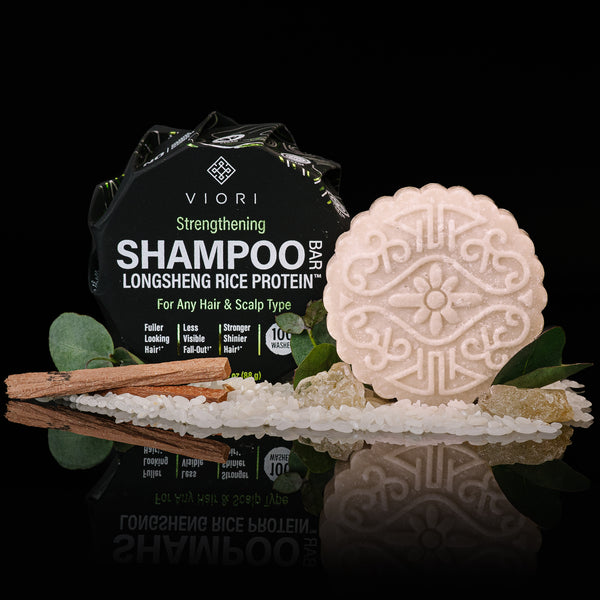
It's a mnemonic device you hold in your hand every shower. Brilliant marketing-and I mean that as a compliment.
The Question That Makes Me Uncomfortable
Here's where my professional ethics demand honesty: narrative can compensate for formulation mediocrity.
I've analyzed Viori's ingredient list professionally. It's solid-pH balanced, using gentle cleansing agents instead of harsh sulfates, including beneficial ingredients like rice protein, bamboo extract, and jojoba oil.
But nothing in the formulation is revolutionary or impossible to find elsewhere.
What makes Viori successful isn't groundbreaking chemistry-it's that the story makes you experience the formulation differently. You pay more attention to your hair routine. You use gentler techniques. You feel connected to something meaningful.
Those behavioral changes improve your hair health regardless of whether the rice water from Longsheng mountains is objectively superior to rice protein from a cosmetic supplier in New Jersey.
This creates an industry problem: brands get better return on investment from developing compelling origin stories than from conducting clinical trials or developing innovative ingredients.
The Cultural Question We're Not Asking
I want to discuss something you rarely see addressed: story shampoo represents a sophisticated form of cultural extraction.
Before you think I'm being harsh on Viori specifically-I'm not. Their partnership model is more ethical than most brands. But the structural relationship between indigenous narratives and Western commerce deserves examination.
Consider the mechanics:
Resource extraction: Traditional knowledge and local ingredients become trademarked intellectual property.
Narrative extraction: The Red Yao story generates far more commercial value than the 5% profit donation represents.
Image extraction: Red Yao women's hair becomes visual proof and marketing material.
Authenticity dependency: The story's value depends on the community remaining "authentic"-isolated and traditional. This creates complex incentives around modernization and cultural change.
The sophisticated element is that this extraction is framed as partnership, support, and preservation. The profit-sharing creates what psychologists call "moral licensing"-it makes us feel good about the transaction and prevents critical examination of the underlying power dynamics.
I'm not saying brands like Viori are acting maliciously. I genuinely believe most story-driven brands have good intentions. But we should ask: What happens when a community's economic survival becomes tied to maintaining tourist-friendly "authenticity"? When traditional practices become performances in a commercial narrative?
These are complex questions without simple answers. But they're worth asking.
Should You Buy Story Shampoo? My Honest Professional Opinion
After 20 years behind the chair and in product development, here's where I land:
Story shampoo works-just not always for the reasons advertised.
The placebo effect is real and powerful. If believing in the Red Yao tradition makes you:
- Massage your scalp longer and more gently
- Use consistent, mindful hair care practices
- Feel better about your routine
- Reduce stress around your appearance
Your hair will likely improve regardless of the specific ingredient source.
From a pure formulation standpoint, Viori's bars are competent but not uniquely effective. You could achieve similar results with various products at different price points with similar ingredient profiles.
But from a holistic standpoint-considering psychology, ritual, environmental impact (bars eliminate plastic waste), and ethical sourcing-story shampoo can absolutely be a worthwhile choice.
Just be aware of what you're actually purchasing: You're buying a narrative experience that happens to include functional hair benefits, not a chemically superior miracle formulation unavailable anywhere else.
And honestly? That might be exactly what you need.
How to Evaluate Story-Driven Products (Without Losing the Magic)
If you're considering a story shampoo, here are the questions I ask:
Technical questions:
- Does the formulation contain proven beneficial ingredients at effective concentrations?
- Is the pH balanced for hair (between 3.5-6.5)?
- Are there independent studies, or just testimonials?
Ethical questions:
- Does the cultural partnership appear reciprocal or extractive?
- Are community members involved in decision-making beyond tokenism?
- Does the brand's success require the community to remain "frozen in time"?
Psychological questions:
- Am I buying this because of ingredient efficacy or narrative appeal?
- Would I repurchase if the story disappeared but the formula stayed the same?
- Is my loyalty to the product's performance or to the identity it represents?
The honest answer to that last question tells you whether you're buying shampoo or buying belonging.
WHAT CUSTOMERS ARE SAYING
Real reviews for Rice Water Shampoo Bar – All Hair Types | VIORI
Neither answer is wrong. Just know which one you're doing.
What I Tell My Clients
When clients ask me whether Viori or other story-driven products are "worth it," here's what I say:
If the story makes you feel connected to something larger than yourself, if it transforms your shower from a rushed obligation into a meaningful ritual, if it makes you more consistent with healthy hair practices-then yes, it's serving a valuable function.
The narrative isn't manipulation if you're aware of its role and it genuinely improves your relationship with your hair care routine.
But don't confuse narrative power with chemical uniqueness.
The rice water from the Longsheng mountains isn't molecularly different from rice-derived ingredients sourced elsewhere. The fermentation process creates beneficial compounds, but fermentation is a controlled process that can be replicated anywhere.
What can't be replicated is the feeling of connection to 2,000 years of tradition and a community of women whose hair tells a story.
If that feeling is worth the price to you, it's a fair trade.
Just go into the transaction with your eyes open about what you're really purchasing.
The Bottom Line After 20 Years
I've seen this industry from every angle-behind the chair, in product development, and watching marketing trends shape consumer behavior. Here's what I know for certain:
The most powerful ingredient in any story shampoo isn't rice water, isn't fermented botanicals, isn't ancient traditional knowledge.
The most powerful ingredient is the narrative that makes you believe your hair can carry wisdom, tradition, and connection to something greater than yourself.
In our disconnected, commodified world, that might actually be worth more than another synthetic panthenol derivative with clinical backing.
Story shampoo works because we're humans, not just consumers. We need meaning, not just molecules. We crave connection, not just clean hair.
The brands that understand this-like Viori-aren't necessarily manipulating you. They're filling a legitimate human need that technical specifications and ingredient percentages can't satisfy.
My advice? Use products that make you feel good, work effectively, and align with your values. If that's a story shampoo from Viori with beautiful packaging and an inspiring origin narrative, great. If that's a no-frills formulation focused purely on chemistry, also great.
Just be conscious of what you're buying and why it works for you.
Because at the end of the day, the best hair product is the one you'll actually use consistently-and if a compelling story is what makes you do that, the story has earned its place in your shower.
The goal isn't to be immune to marketing. The goal is to be conscious enough to choose marketing that genuinely serves your wellbeing.
And sometimes, that means buying a bar of shampoo pressed with mooncake patterns and infused with rice water from mountains you'll never visit, used by women whose traditions you'll never fully understand.
If that purchase makes you stand in your shower a little longer, massage your scalp


