
After two decades of working with every hair type imaginable, I've noticed something interesting: some of the most important conversations in hair care are the ones nobody's having. Today, I want to talk about one that keeps coming up in my consultations-shampoo bars for locs.
Here's what bothers me. Most advice focuses on "residue-free" claims or convenience. Almost no one discusses the fundamental chemistry problem: traditional shampoo bar formulations and loc maintenance requirements often work against each other.
Let me explain what I mean, because understanding this could completely change how you care for your locs.
Locs Aren't Just "Tangled Hair"-The Structure Changes Everything
First, we need to talk about what locs actually are at a structural level, because this is where most product recommendations fall apart.
Locs are a deliberately cultivated protein matrix. Through controlled friction and time, you've encouraged your hair's cuticle layers to grip and interlock with each other. I think of this as "intentional porosity architecture"-your hair shaft's cuticle scales have interlocked in ways that fundamentally change how products interact with each strand.
Here's the critical point: traditional conditioners work by smoothing the cuticle layer. This is exactly what loc'd hair cannot tolerate.
Think about it. Those cuticle scales gripping each other? That's what creates and maintains your locs. When products contain excessive smoothing agents, they break down the very friction that holds your loc structure together. Yet most shampoo bars-even those marketed for natural hair-contain conditioning surfactants specifically designed to smooth and close the cuticle.
NOT SURE WHICH PRODUCT IS RIGHT FOR YOU?
TAKE THE QUIZTakes 30 seconds · 134,000+ customers matched
See the problem?
The pH Balance Myth: When "Balanced" Isn't Right for Locs
Let's get technical for a moment, because this is where understanding chemistry becomes your superpower.
The hair care industry universally promotes pH 4.5-5.5 as "ideal" because this matches the natural pH of your hair shaft and scalp. Quality shampoo bars, like those from Viori, are carefully formulated within this range-and it's absolutely a marker of good formulation for most hair types.
But for mature locs, this conventional wisdom needs rethinking.
Locs that are two or more years old develop what I call "structural pH tolerance." The interlocked matrix becomes less vulnerable to pH-induced swelling than loose hair. In fact, slightly more alkaline cleansing (pH 6-7 range) can actually benefit mature locs because it:
- Creates sufficient cuticle lift for deep cleaning without the aggressive mechanical scrubbing that would damage loose hair
- Prevents the over-smoothing effect that can cause loc slippage, especially dangerous at your roots where new growth meets established locs
- Facilitates complete residue removal from the interior loc structure where buildup hides
This contradicts everything you'll read in standard hair care advice, which is why it's so rarely discussed. A beautifully pH-balanced bar that's perfect for loose natural hair might actually be too conditioning for maintaining tight, mature locs-particularly if you have fine-textured hair.
The "Residue-Free" Claims: Marketing vs. Molecular Reality
Let me pull back the curtain on what "residue-free" actually means at the molecular level, because this is where marketing and chemistry often tell different stories.
When shampoo bars contain ingredients like cocoa butter, shea butter, cetyl alcohol, stearic acid, or nourishing oils like rice bran or coconut oil, these create what I call "microfilm deposition."
On loose hair that you comb and manipulate daily, this microfilm is continuously removed and redistributed. It creates shine, manageability, and protection. These are genuinely beneficial ingredients doing exactly what they're designed to do.
But inside the loc structure, the same beneficial ingredients tell a different story.
These molecules accumulate in the compressed interior spaces between interlocked hair strands-areas that never experience mechanical cleaning or combing. Over 6-12 months, this accumulation creates:
- Core density changes where locs feel "mushy" or lose their firm structure
- Unraveling at weak points where excessive slip has been introduced
- Mildew vulnerability as oil-loving residues trap moisture deep inside your locs
- Dullness and gray cast as buildup oxidizes within the locked structure
The irony? These butters and oils are the very ingredients that make bar shampoos superior to liquid shampoos for most hair types. They're why you don't need a separate conditioner. They're features, not bugs-unless you have locs.
The Surfactant Selection Secret Most People Don't Know
Here's something they don't teach in most hair care tutorials: the primary surfactant determines everything for loc compatibility.
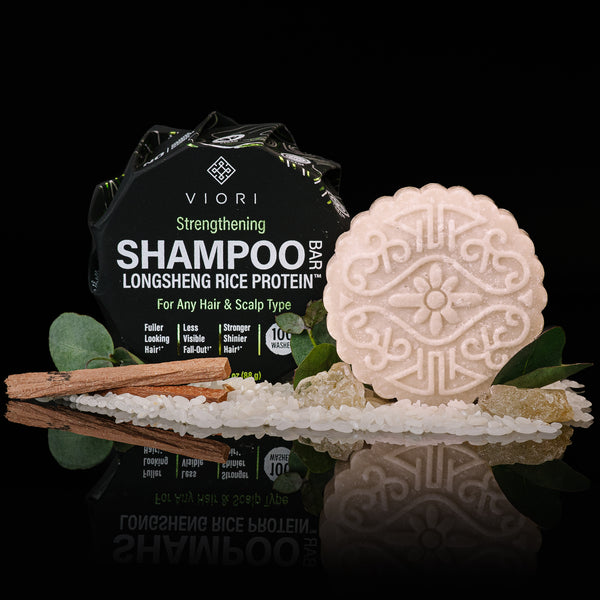
Viori uses Sodium Cocoyl Isethionate (SCI) as their primary cleanser-an excellent choice that's gentle, coconut-derived, and produces that luxurious lather everyone loves. For most applications, it's genuinely superior to sulfates.
However, SCI has a molecular structure that makes it:
- Substantive to hair proteins (it temporarily bonds to your hair shaft)
- Difficult to rinse completely from complex structures like the interior channels of locs
- Mildly conditioning in nature (which sounds positive but works against loc maintenance)
For true loc-specific formulation, you'd want a different approach entirely. Higher concentrations of true soap (saponified oils) for superior rinsability and slight alkalinity. Minimal to zero conditioning agents that deposit on the hair shaft. Active chelating agents that prevent mineral buildup, especially in hard water areas.
I've seen custom formulations using African black soap as the base surfactant outperform premium SCI bars for loc maintenance-not because they're "better" products overall, but because their chemistry aligns with what locs structurally require.
The Protein Paradox: When Strengthening Becomes Problematic
Let's talk about protein, because this is fascinating territory that affects users of rice water-based products specifically.
Hydrolyzed rice protein-like the kind derived from Longsheng rice water in Viori's formulation-represents genuinely sophisticated hair care technology. These small-molecule proteins can penetrate the hair cortex, temporarily strengthening loose hair by filling porous gaps. For someone with loose natural hair, this is beneficial science in action.
But in locs, protein accumulation presents a different scenario.
The compressed nature of loc'd hair means protein-binding sites that would naturally shed and renew on loose hair remain occupied indefinitely within locs. Over time, this can cause:
- Excessive rigidity where locs lose their natural movement and flexibility
- Brittle texture from protein overload without moisture balance
- Difficulty absorbing water during washing as protein coating creates water-resistant zones
Here's the complexity: for people with high-porosity hair in their locs, moderate protein is genuinely beneficial and strengthening. For low-porosity hair that's loc'd, protein-rich products can accelerate moisture-protein imbalance.
The problem? Most people with locs don't know their hair's porosity, and product guidance rarely addresses the "loc'd versus loose" variable when discussing protein treatments.
The Fragrance Factor No One Talks About
Here's an angle that almost never gets discussed: how fragrance behaves inside locs.
Viori is transparent that their scented bars use fragrance oils-a mixture of essential oils and natural equivalent fragrances that are molecularly identical to natural compounds but more sustainably produced. This is actually responsible formulation from an environmental standpoint, and I appreciate that transparency.
However, fragrance molecules are typically oil-soluble (not water-soluble), designed to be persistent, and small enough to lodge deep in porous structures.
In loose hair, fragrance rinses away with normal washing and manipulation. In locs-particularly mature, thick locs-fragrance molecules accumulate in the interior oil-rich zones created by sebum and product buildup.
This is why some people with locs report that their hair "smells like product" even after thorough washing, or why scents seem to intensify over time rather than fade. It's not poor hygiene-it's the architectural reality of how these molecules behave in compressed hair structures.
For loc-specific care, unscented products aren't just about sensitivity-they're a structural maintenance decision. If you're using Viori bars, their Native Essence (unscented) option is the smarter choice for locs.
Hard Water: The Hidden Amplifier of Every Other Problem
The mineral content of your water supply dramatically changes how any shampoo bar performs with locs, and this is something most people don't calculate into their hair care routine.
In hard water (high calcium and magnesium content), soap-based and SCI-based bars both create insoluble precipitates. But these precipitates behave differently depending on hair structure:
WHAT CUSTOMERS ARE SAYING
Real reviews for Rice Water Shampoo Bar – All Hair Types | VIORI
- On loose hair: Minerals coat the exterior, causing temporary dullness that you can remove with clarifying treatments
- In locs: Minerals precipitate inside the loc structure, bonding with any oil-based residues already present, creating increasingly dense interior deposits
I've examined locs that, when cut open, showed distinct layering of mineral deposits at their cores-almost like tree rings or geological strata. These deposits occurred despite the client using "natural" and "residue-free" products exclusively.
The issue wasn't the products themselves. It was the interaction between bar formulation designed for loose hair, hard water chemistry, and loc architectural structure.
This is why experienced loc consultants often recommend distilled water final rinses for anyone using bar shampoos. It seems excessive for loose hair, but it becomes essential for locs.
The Conditioning Trap: Why Conditioner Bars and Locs Don't Mix
This needs to be said clearly: For locs, using a conditioner bar represents a fundamental misunderstanding of loc maintenance principles.
Viori's conditioner bars showcase sophisticated formulation: behentrimonium methosulfate (BTMS) for slip, rich butters for moisture, and rice water complex for strengthening. For someone with loose hair-even type 4 coils-this formula is thoughtfully designed and effective.
But locs should not be conditioned in the traditional sense. The goal isn't smoothness or slip-it's maintaining appropriate texture and friction. When people with locs complain of "thinning" or "weak spots," they often don't realize that over-conditioning has gradually reduced the cuticle friction that maintains loc integrity.
The only exception? End-only conditioning for very long locs (waist-length or longer) where the oldest hair can benefit from targeted moisture replacement. But this requires precise application that bar format makes difficult to control.
What True Loc-Specific Bar Formulation Would Look Like
If I were formulating a shampoo bar specifically for loc maintenance, the approach would contradict almost every current market offering. Here's what it would include:
Primary Surfactant System
- 40-50% saponified oils (like sunflower or rice bran oil soaps)
- 10-15% SCI for enhanced lather and mildness
- Natural saponification boosters like soap bark extract
pH Target
- 6.5-7.0 (slightly more alkaline than standard "pH balanced" products)
Conditioning Agents
- None. Zero fatty alcohols, zero butters, zero smoothing agents
- Slip would come only from natural glycerin produced during saponification
Functional Additives
- Citric acid (2-3%) as a chelating agent to grab minerals, not just adjust pH
- Bentonite or rhassoul clay (10-15%) for absorption of scalp oils and interior loc cleansing
- Activated bamboo charcoal (5%) for odor management and deep detoxification
Protein
- Very low molecular weight amino acids only, not larger protein fragments
- Formulated for quarterly use, not every wash
Fragrance
- None, or only steam-distilled essential oils that fully rinse away (like eucalyptus or tea tree at less than 1%)
This formulation would feel "stripping" to someone with loose hair-it would absolutely require follow-up conditioning. But for locs, it would provide the deep cleansing and non-depositing properties that maintain structural integrity.
This type of product essentially doesn't exist in the mainstream market because it contradicts the "gentle, moisturizing, conditioning" narrative that sells hair products.
Can Viori Bars Work for Locs? Here's My Professional Assessment
Based on the formulation details and my two decades of experience, here's my honest evaluation:
Viori Bars Can Work for Locs IF:
- You have mature locs (2+ years) with thick, coarse texture that naturally resists over-softening
- You practice dilution application-lather the bar in your hands, apply only the lather, never rub the bar directly on locs
- You use distilled water for your final rinse if you're in a hard water area
- You implement quarterly clarifying treatments with bentonite clay or apple cider vinegar rinses
- You avoid the conditioner bar entirely or use it exclusively on loose hair at your nape/edges if you maintain them
- You choose Native Essence (unscented) to minimize fragrance molecule accumulation
- You have low-porosity hair that naturally resists excessive product absorption
Viori Bars Are Problematic for Locs IF:
- You have starter locs (less than 1 year) that need maximum friction to establish
- Your hair is fine-textured even within the locs
- You have high-porosity hair that readily absorbs products
- You're experiencing any loosening at roots or mid-shaft weak points
- You use the conditioner bar as recommended for loose hair
- You live in very hard water areas without implementing distilled rinses
The Real Issue: "Natural" Doesn't Mean "Appropriate for Every Hair Structure"
This analysis reveals something bigger


