
I'll never forget the day a client walked into my salon holding her phone, scrolling through page after page of search results. "I've been looking for pitta shampoo for three hours," she said, exhausted. "Everything contradicts everything else. What am I supposed to buy?"
After two decades of working with hair, I've seen this exact scenario play out hundreds of times. We've been taught to think about our bodies through wellness frameworks-doshas, constitutional types, balance-but then we're dropped into a marketplace that operates on completely different logic. The result? Confusion, wasted money, and scalp problems that somehow get worse despite our best efforts.
Today, I want to pull back the curtain on what's really happening when you search for products this way, what your scalp is genuinely trying to tell you, and why the answers you're finding probably won't solve your problem.
The Search Problem Nobody Talks About
Here's something that changed how I think about product recommendations forever: traditional wellness concepts and scalp physiology don't speak the same language.
When we talk about "excess pitta," we're typically describing:
- An oily scalp that feels greasy by afternoon
- Sensitivity and inflammation that makes your head feel hot
- Redness or irritation along the hairline
- Sometimes, premature graying
But from a scientific hair care perspective-what we call trichology-these same symptoms indicate completely different mechanisms:
- Overactive sebaceous glands (usually triggered by hormones or stress)
- Inflammatory scalp conditions like seborrheic dermatitis
- pH imbalance that disrupts your scalp's protective barrier
- Oxidative stress affecting the cells that produce hair pigment
These aren't just different ways of describing the same thing. They're fundamentally different assessment systems, and they require different solutions. A product labeled "cooling" or "balancing" might sound right, but it tells you absolutely nothing about whether it addresses the actual chemistry your scalp needs.
What Search Algorithms Are Really Showing You
Let me show you what's happening behind the scenes when you type "pitta shampoo" into a search bar.
The algorithm pulls results based on keyword matching. It's looking for:
NOT SURE WHICH PRODUCT IS RIGHT FOR YOU?
TAKE THE QUIZTakes 30 seconds · 134,000+ customers matched
- Products with "pitta," "cooling," or "balancing" in the title or description
- Mentions of traditional ingredients like neem or amla
- Reviews that happen to use these same terms
What the algorithm can't evaluate:
- The actual pH level of the product (critical for scalp health)
- What type of cleansing system it uses
- Whether active ingredients are present in therapeutic concentrations or just trace amounts for marketing
- If the formulation chemistry actually addresses your specific scalp issues
You end up with pages of products that match your search terms but might be completely wrong for what your scalp actually needs. It's like asking for directions in English and getting answers in three different languages-the words might look familiar, but you're not getting useful information.
The Two Categories Most Products Fall Into (And Why Both Miss the Mark)
Over the years, I've noticed that most products claiming to address these concerns fall into two distinct camps. Understanding the difference has saved my clients thousands of dollars in disappointing purchases.
Traditional Formulas with Alkaline pH
These typically use soap nut or other saponins as the primary cleanser. They're authentically formulated according to traditional methods, which sounds great-until you understand the chemistry.
The reality from a professional standpoint: these formulas usually sit at a pH of 8.0 to 9.5, which is highly alkaline. Your scalp's natural protective barrier should be between 4.5 and 5.5 pH-acidic, not alkaline.
What happens when you use an alkaline shampoo regularly:
- It strips away your scalp's acid mantle, the protective layer that keeps moisture in and irritants out
- It causes the cuticle layer of each hair strand to lift, leading to frizz and moisture loss
- It triggers rebound oil production within 24 to 48 hours
That squeaky-clean feeling after washing? You're actually damaging your scalp's natural defenses. Your skin responds by producing even more oil to compensate, which is the opposite of what you want.
Western Products with "Ayurvedic-Inspired" Marketing
These use conventional cleansing bases-the same ones in most drugstore shampoos-with botanical extracts added for label appeal.
The disconnect here is subtle but important: you're essentially getting a standard shampoo with wellness terminology slapped on the packaging. Those herbal extracts that sound so promising? In most mass-market products, they're present in concentrations under 1%-too low to provide any meaningful therapeutic benefit.
The base chemistry often contradicts traditional approaches entirely, but because the marketing language sounds right, we assume it delivers.
What Your Scalp Is Actually Asking For
If you're experiencing oily scalp, inflammation, or sensitivity, here's what actually works from a professional chemistry standpoint.
For Excess Oil Production
What you need chemically:
- A gentle surfactant system that cleanses without over-stripping (like combinations of mild coconut-derived cleansers)
- pH between 4.5 and 5.5 to maintain your scalp's acid mantle
- Active sebum-regulating ingredients at therapeutic concentrations-zinc, niacinamide, inositol, or panthenol in amounts that actually make a difference
Why this matters: when your scalp's pH is balanced and you're not stripping away every drop of natural oil, your sebaceous glands stop going into overdrive. You're working with your scalp's natural chemistry instead of fighting against it.
I've watched this transformation happen countless times. Clients who've been washing daily because they feel greasy start washing every three days instead. Their scalp stops producing excess oil because it's no longer in panic mode trying to compensate for harsh cleansing.
For Scalp Inflammation and Sensitivity
What actually addresses inflammation:
- Anti-inflammatory actives like bisabolol, allantoin, or panthenol at 3-5% concentrations, not the trace amounts you'll find in most products
- Microbiome support through fermented ingredients that feed the beneficial bacteria on your scalp
- Barrier repair components like ceramides and fatty acids
Here's something rarely discussed outside professional circles: fermented ingredients create postbiotics that support your scalp's microbiome balance. This is scientifically measurable, unlike vague "cooling" or "balancing" claims that mean nothing specific.
Where Ancient Wisdom Actually Meets Modern Science
This is where things get genuinely interesting-and where I've seen the most dramatic improvements in my clients' hair health.
Fermented rice water has been used for centuries by women with remarkably healthy hair. For a long time, we knew it worked but couldn't explain exactly why. Now we can.
The fermentation process creates specific compounds:
Inositol (Vitamin B8): Clinical research shows this reduces follicle sensitivity to DHT and supports the cells that produce hair pigment. This isn't folklore-it's documented in dermatological studies.
Amino acids: These provide actual protein building blocks for hair structure, not just a superficial coating that washes away.
Ferulic acid: A powerful antioxidant that neutralizes oxidative stress-which is the actual mechanism behind what traditional systems describe as "heat" damage to hair cells.
Natural ceramides: These restore your scalp's barrier function at a cellular level, which is exactly what inflamed, sensitive scalps need.
The pH advantage: Properly fermented rice water naturally achieves the 4.5 to 5.5 pH range your scalp needs, without harsh acids or alkaline ingredients.
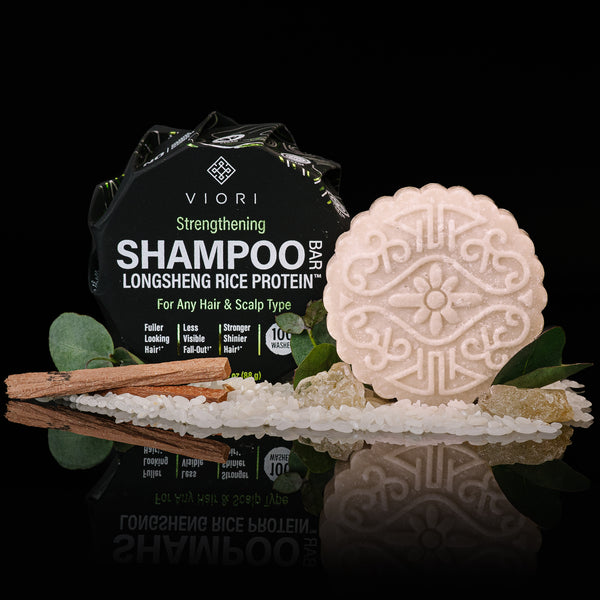
This is the kind of formulation that Viori built their entire approach around: honoring the time-tested rice fermentation tradition of the Red Yao women while ensuring the chemistry genuinely supports scalp health at a biochemical level.
The Bar Format Advantage Nobody Mentions
Here's a technical benefit that almost never gets discussed: the bar format itself provides therapeutic advantages for oily scalps.
The mechanism is surprisingly simple. Bars require direct scalp contact and gentle friction during application. This provides:
- Mechanical exfoliation of sebum buildup
- Prevention of oxidized sebum accumulation (which causes odor and inflammation)
- Correct product placement-on the scalp where it's needed, not diluted and running down the hair shaft
With liquid formulations, people with oily scalps often apply incorrectly without realizing it. They pour product into their hands, add water, and the diluted mixture immediately runs down their hair length instead of addressing the scalp where the actual problem originates.
I demonstrate proper bar application to clients all the time, and the difference in results is dramatic. When you're treating the source of the issue rather than just the symptom, everything improves.
Decoding Reviews: The Professional Translation
After analyzing hundreds of reviews on products marketed for oily or sensitive scalps, I've learned to read between the lines. Here's what common review language actually means:
"It made my hair feel clean but dried out my ends"
Translation: An alkaline formula stripped natural oils effectively at the scalp but damaged the cuticle along the hair shaft. What you need instead is pH-balanced cleansing with targeted conditioning on ends only.
"Works great for the first week, then my hair gets greasy again"
Translation: Rebound sebum production from over-stripping. Harsh surfactants or alkaline pH triggered your scalp's protective oil response. This is your scalp defending itself, not a product that "stopped working."
"My scalp feels cool and refreshed"
Translation: Usually menthol or mint additions creating a sensory effect. A cooling sensation is pleasant, but it doesn't equal addressing inflammation at the cellular level. It's a feeling, not a solution.
What to Actually Look For Instead
Rather than searching for products by constitutional type or wellness framework, here's how to evaluate formulations like a professional.
WHAT CUSTOMERS ARE SAYING
Real reviews for Rice Water Shampoo Bar – All Hair Types | VIORI
Non-Negotiable Requirements
pH disclosure: Should be between 4.5 and 5.5. If it's not listed anywhere on the packaging or website, that's a red flag. Any company serious about scalp health will measure and disclose pH.
Transparent surfactant system: Should NOT list Sodium Lauryl Sulfate or Sodium Laureth Sulfate as primary cleansers. These are too harsh for regular use on most scalp types.
Active ingredient concentrations: Vague claims like "contains botanical extracts" mean absolutely nothing without percentages or concentration information.
Preservation system: Should be disclosed. Products without proper preservation risk bacterial or fungal contamination, especially in humid environments.
Beneficial Active Ingredients at Therapeutic Levels
Look for these ingredients at meaningful concentrations:
- Rice protein or hydrolyzed rice protein: 2-5%
- Panthenol (Vitamin B5): 1-3%
- Inositol (Vitamin B8): 0.5-1%
- Bamboo extract (natural silica): 1-2%
- Aloe vera: 5-10%
Notice something? This describes Viori's formulation approach precisely-because it's engineered around hair science rather than marketing buzzwords or trending wellness terms.
The Sustainability Consideration You're Missing
Here's an aspect that gets overlooked in most product searches: many products claiming traditional credentials fail modern sustainability verification.
Common issues I see repeatedly:
- Questionable ingredient sourcing with no third-party certification
- Excessive plastic packaging despite "natural" or "traditional" marketing
- Certification gaps-"Ayurvedic" isn't a regulated certification like Leaping Bunny or B-Corp
When evaluating products seriously, look for:
- Third-party cruelty-free certification (Leaping Bunny, not just brand claims)
- B-Corp certification (legally binding social and environmental standards)
- Transparent sourcing with direct trade relationships
- Genuinely sustainable packaging, not just "recyclable" plastic that statistically won't get recycled
Viori stands out here with verifiable credentials: B-Corp certified, Leaping Bunny approved, direct trade relationships with the Red Yao tribe that include profit-sharing, and plastic-free packaging that's actually biodegradable. These aren't marketing claims-they're third-party verified standards.
The Gray Hair Question: What Science Actually Says
Traditional texts claim certain formulas prevent premature graying. The scientific reality is more nuanced, but also more interesting.
What actually causes premature graying:
- Oxidative stress damaging melanocyte stem cells
- Hydrogen peroxide accumulation in hair follicles
- Depletion of the catalase enzyme
- Genetic factors (primarily)
Can any shampoo reverse graying? No, and anyone claiming otherwise is misleading you. But antioxidant-rich formulations can:
- Slow oxidative damage through ingredients like ferulic acid and vitamin E
- Support melanocyte function via copper peptides and inositol
- Help reduce peroxide buildup through catalase-supporting nutrients
The Red Yao women's observation about maintaining hair color into their 80s is compelling. While genetics certainly play a role, the consistent use of antioxidant-rich fermented rice water over decades may provide cumulative protective effects. It's correlational rather than causational-but the biochemical mechanisms are scientifically plausible.
A Professional Protocol That Actually Works
Rather than seeking a single miracle product, effective scalp management requires a thoughtful, consistent approach.
For Active Oily Scalp Conditions
- Cleansing phase: Use a pH-balanced shampoo with gentle surfactants. Viori's Citrus Yao variant includes citric acid that helps regulate sebum production naturally.
- Application technique: Lather the bar in your hands first, then apply directly to your scalp with gentle massage. Don't just scrub the bar randomly across your head.


