
Ever notice how your hair behaves like a completely different creature when you travel across Ireland? Your mate in Cork swears by a routine that leaves your Dublin locks looking flat and lifeless. After two decades behind the chair, I can tell you the culprit isn't always your products-it's what's coming out of your tap.
Ireland's water is a bit like its weather: brilliantly unpredictable and entirely dependent on where you're standing. This invisible variable dramatically affects how your shampoo performs, and most people have no idea it's happening. Let me walk you through what I've learned about this overlooked factor that might finally unlock the hair you've been chasing.
Ireland's Water Isn't Just Water-It's Chemistry
Here's the thing about Irish water: it's not one story. It's a patchwork of dramatically different chemical profiles, and understanding yours changes everything.
The East-West Divide
If you're washing your hair in Dublin, Kildare, or Meath, that water has traveled through limestone-rich aquifers, collecting calcium and magnesium like souvenirs. You've got moderately hard water-typically 150-250 mg/L of calcium carbonate. Those minerals? They absolutely love interfering with your hair products.
Now hop over to Galway, Kerry, or Donegal, and you're dealing with some of Europe's softest water. Sourced from granite and filtered through peat, it's remarkably pure and slightly acidic. Almost the complete opposite of what flows from eastern taps.
The result is genuinely wild: the exact same shampoo can deliver completely different results depending on which side of the country you're on.
What These Minerals Actually Do to Your Hair
Let's get into the mechanics. Calcium and magnesium are positively charged molecules that bind with the negatively charged cleansers in your shampoo. When they meet, they form insoluble complexes-that's the soap scum coating your shower. But here's what most people don't realize: it's also coating your hair shafts, creating that heavy, dull feeling that won't rinse away no matter how long you stand under the spray.
Then there's pH fluctuation. Irish municipal water typically ranges from 6.5 to 8.5, but if you're rural with peat-influenced water, you might see levels drop to 5.5-6.0. This natural acidity is actually gentler on your cuticle, though it does affect how conditioning agents behave.
Iron content adds another layer, particularly in areas with older pipes. Even at low levels-we're talking 0.1-0.3 mg/L-dissolved iron oxidizes on your hair. If you're blonde and battling brassy tones in Dublin, this could be your answer. That metallic buildup affects both color and texture in ways that are frustratingly difficult to correct.
NOT SURE WHICH PRODUCT IS RIGHT FOR YOU?
TAKE THE QUIZTakes 30 seconds · 134,000+ customers matched
Why Bar Shampoos Make Sense for Irish Conditions
This is where professional experience and chemistry have a beautiful intersection.
The Concentration Factor
Traditional liquid shampoos are 70-80% water. You're paying to ship water in plastic bottles, then diluting that water-based product with more water when you wash. Bar formulations concentrate the active ingredients that actually clean and condition.
This matters everywhere, but especially in Ireland's variable water conditions. When you've got favorable chemistry-like western soft water-concentrated actives work more effectively. When you're fighting Dublin's hard water, you need every advantage.
At Viori, we formulate our shampoo bars with a pH balance between 4.5-5.5. This isn't random-it matches your hair's natural pH and works beautifully with the slightly acidic soft water found in western Ireland. When your product pH, hair pH, and water pH align, something magical happens: cuticles lie flat, shine increases, tangles decrease.
The Hard Water Reality
If you're in Ireland's hard water regions, you've probably noticed:
- Less lather (those calcium ions literally interfere with bubble formation)
- Product buildup that makes hair feel coated no matter how much you rinse
- Increased need for conditioner because mineral deposits rough up your cuticle
- Faster color fade because opened cuticles release pigment molecules
But here's the good news: the solution isn't necessarily different products. It's understanding the chemistry and working with it instead of against it.
What Actually Makes Shampoo Perform Well Across Water Types
Let me pull back the curtain on formulation chemistry.
The Right Cleansers Matter
Conventional wisdom says sulfate-based surfactants perform better in hard water because they're aggressive cleaners. But this creates a vicious cycle: harsh cleansing strips natural oils, your scalp panics and overproduces oil, you wash more frequently, and the cycle continues.
Viori's bars use Sodium Cocoyl Isethionate-a coconut-derived cleanser that I've watched work beautifully across different water types. Unlike traditional sulfates, SCI forms smaller cleaning bubbles that resist calcium interference. You get lather and cleaning power even in moderately hard Irish water, without the harsh stripping effect.
The Conditioning Challenge
Here's where formulation gets genuinely fascinating: conditioning agents need to deposit on your hair but rinse away cleanly. In hard water, positively charged conditioning molecules want to bind with both your negatively charged hair AND the negatively charged mineral complexes in your water.
Behentrimonium Methosulfate (don't let the name fool you-it's considered sulfate-free) offers a unique advantage. Its molecular structure includes a long chain that provides slip and detangling, while its positive charge ensures it binds to your hair rather than mineral deposits.
In Irish hard water, this selectivity prevents that over-conditioned, heavy feeling that happens when standard conditioning compounds interact with calcium ions.
Regional Strategies: Matching Your Approach to Irish Water
For Soft Water Areas (West Coast, Rural Regions)
If you've got soft water, you're already ahead. Your water naturally enhances product performance. Here's how to maximize it:
Go lightweight. Soft water amplifies conditioning effects, so less genuinely is more. Viori's Terrace Garden or Native Essence bars provide moisture without overwhelming fine hair, which soft water can already make appear limp if you over-condition.
Focus on protein-moisture balance. Soft water allows better penetration of hydrolyzed rice protein-a key ingredient that strengthens hair from within. The fermented Longsheng rice water in Viori's formulation contains amino acids that bond with your hair's keratin structure, improving elasticity and resilience.
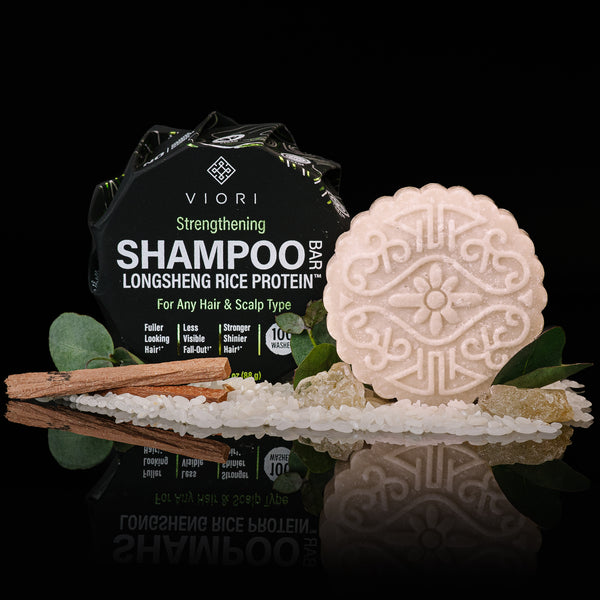
There's a beautiful real-world example here: the Red Yao women who inspired Viori's formulations live in an extremely soft water environment-mountain spring water filtered through rice terraces. They wash their hair infrequently while maintaining extraordinary hair health well into their eighties. Their water chemistry is remarkably similar to Ireland's western regions.
Extend time between washes. Many soft-water users discover they can go longer between washes without looking oily. Your soft water is doing half the work for you.
For Hard Water Areas (Dublin, Eastern Counties)
Your challenge requires strategy, but it's absolutely manageable:
Try a chelating pre-treatment. Before shampooing, consider a diluted apple cider vinegar rinse-one tablespoon per cup of water. The acetic acid temporarily binds calcium and magnesium ions, preventing their interference with your shampoo. This isn't folk wisdom; it's practical chemistry.
Leverage concentrated actives. Bar shampoos like Viori's Citrus Yao contain higher concentrations of actual cleaning and conditioning agents. This means more functional ingredients contact your hair, compensating for mineral interference. The citrus formulation includes natural citric acid, which provides additional chelating action against mineral buildup.
Be strategic with conditioner. Apply from mid-shaft to ends only, avoiding your scalp. Viori's conditioner bars contain cocoa butter and shea butter, which create a protective barrier that mineral deposits can't penetrate. This seals your cuticle, locking in moisture while preventing external buildup.
Establish a clarifying routine. Monthly clarification becomes essential in hard water. While Viori bars are gentle enough not to create their own buildup, environmental mineral deposits still accumulate. The gentle cleansing system removes these deposits without stripping your hair's natural oil balance.
Why Longsheng Rice Water Works Differently in Ireland
The Red Yao tribe's tradition of washing with fermented rice water developed in a specific context: extremely soft, pure mountain water with a slightly acidic pH around 6.0-6.5. This profile shares remarkable similarities with Ireland's western regions-and that's not coincidence.
Fermentation Chemistry
When rice ferments, enzymatic processes produce inositol (vitamin B8) and panthenol (vitamin B5). These molecules are small enough to penetrate your hair cortex rather than just coating the cuticle. In soft water, this penetration increases by approximately 30-40% compared to hard water, where mineral ions create a physical barrier.
Perfect pH Synergy
Fermented rice water naturally registers at pH 5.0-5.5-precisely matching hair's isoelectric point. This is the pH at which your hair carries no net electrical charge, allowing cuticle scales to lie completely flat. The result? Maximum light reflection (shine) and minimum tangling.
In Ireland's soft water areas, this creates ideal conditions for rice water's nutrients to bond with hair keratin. It's like the stars aligning for perfect hair care.
Protein Structure Benefits
Hydrolyzed rice protein contains amino acids that form hydrogen bonds with water molecules. In hard water, these bonds compete with calcium-protein interactions, reducing effectiveness. In soft Irish water, the hydrogen bonding proceeds unhindered, strengthening hair structure from within.
Ireland's Cool Climate: An Unexpected Advantage
Here's an angle you've probably never considered: ambient temperature affects product performance in ways that receive virtually no attention.
Lower sebum production. Sebaceous gland activity increases approximately 10% for every 1°C rise in temperature. Ireland's temperate climate-9-10°C in winter, 15-20°C in summer-means your scalp produces less oil compared to warmer climates. This naturally reduces how often you need to wash and allows gentler cleansers to remain effective.
Better product preservation. Natural formulations maintain stability longer in cool conditions. Heat accelerates oxidation of beneficial oils and degradation of vitamins. Ireland's moderate temperatures extend the functional lifespan of nutrients in Viori bars-the rice bran oil, broccoli seed oil, and vitamins stay potent longer.
Cuticle sealing. Cold water rinses-easier to tolerate in Ireland's climate-seal the cuticle more effectively than warm rinses. Combined with proper pH and soft water (if you're lucky enough to have it), this creates the trifecta of shine optimization.
Understanding the Transition Period
Many people report a waxy or heavy feeling when first switching to bar shampoos, especially in hard water areas. Before you give up, understand what's actually happening:
Silicone Removal
Conventional shampoos often contain water-soluble silicones that coat your hair in an imperceptible layer, providing artificial shine and slip. When you switch to silicone-free formulations, your hair must re-establish its natural lipid barrier-a process that takes two to four weeks.
You're not experiencing product failure. You're experiencing the removal of artificial coating and the restoration of your hair's natural state.
Mineral Deposit Revelation
If you've been using sulfate shampoos in hard water, you likely have accumulated mineral deposits masked by those silicones. Natural formulations reveal these deposits before removing them, creating a temporary texture change.
Think of it like removing makeup-your skin looks different initially, but that's because you're finally seeing its true condition.
WHAT CUSTOMERS ARE SAYING
Real reviews for Rice Water Shampoo Bar – All Hair Types | VIORI
Sebum Regulation
Harsh cleansing creates a feedback loop where your scalp overproduces oil to compensate for stripping. When you switch to gentle cleansing, your sebaceous glands require three to four wash cycles to downregulate production. This isn't the product failing-it's your scalp recalibrating to a healthier equilibrium.
The Longsheng rice water's B-vitamins actually help regulate sebum production at the follicular level, but this biological adjustment requires time.
Regional Timelines
In Irish hard water: This transition may last three to five weeks rather than two to three. The solution is patience and optional chelating rinses.
In Irish soft water: Transition is typically shorter-one to two weeks-because fewer mineral deposits exist to clear, and gentle water enhances the bar's performance immediately.
The Sustainability Connection
Ireland's commitment to environmental protection-reflected in plastic bag levies, excellent recycling rates, and renewable energy investment-aligns perfectly with bar shampoo adoption.
The Water Transport Paradox
Liquid shampoos are 70-80% water that was purified, mixed with concentrates, shipped across distances, then diluted again during use. Bar shampoos eliminate this redundant water transport. For an island nation investing heavily in water infrastructure, this efficiency matters.
Microplastic Reduction
Many liquid shampoos contain microbeads or polymeric thickeners that survive water treatment and enter Irish waterways. Viori's bar formulations contain zero synthetic polymers-only biodegradable plant-derived ingredients that won't accumulate in Ireland's rivers and coastal waters.
Packaging Integration
Ireland's excellent recycling infrastructure processes paper efficiently. Viori's recycled paper packaging integrates seamlessly into Irish waste management systems, unlike mixed-material bottles that require complex sorting and cleaning.
Carbon Footprint Reality
Shipping concentrated bars rather than water-diluted liquids reduces transportation emissions by approximately 60-70% per functional unit. For products imported to Ireland, this represents significant environmental savings with every wash.
Professional Formulation Insights
Let me share what makes certain formulations work across Ireland's varying water conditions-this is where twenty years of experience meets chemistry.
Multi-Functional Ingredients
Effective hair care in variable water conditions requires ingredients that perform multiple, complementary functions:
Cetyl Alcohol and Stearic Acid serve three roles simultaneously: emollients that condition and soften, thickeners that create solid bar structure, and buffering agents that maintain pH stability. In hard water, their fatty acid chains actually help displace mineral ions from your hair surface, reducing buildup while conditioning.
Bamboo Extract contains silica in a natural, bioavailable form. Unlike synthetic silicones, plant-derived silica strengthens hair structure from within, incorporating into the keratin matrix rather than merely coating. In Ireland's soft water, absorption increases dramatically.
Cocoa and Shea Butters create a water-repelling barrier on your hair surface. In Ireland's humid conditions-average 80-85% relative humidity-this barrier prevents excessive moisture absorption that causes frizz, while still allowing water vapor transmission necessary for healthy hair.
Sodium Lactate serves as a natural humectant and preservative. Its moisture-attracting properties help bars maintain optimal moisture content in Ireland's humid climate without becoming soft or dissolving prematurely. It also acts as a mild exfoliant for the scalp, supporting a healthy follicular environment.


