
You know that moment when you pull off your winter hat and catch your reflection in a store window-hair standing on end like you've touched a live wire? We've all been there. But here's what shocked me after 20 years behind the chair: that static electricity you're fighting today actually started damaging your hair last summer.
Let me explain the science your stylist probably never mentioned, and why the solution might be simpler (and more solid) than you think.
The Physics of Flyaway Hair: It's Not Just About Dry Air
When clients come to me complaining about static, they usually blame the weather. And they're half right. But there's something happening at the molecular level that changes everything about how we should approach this problem.
It's called triboelectric charging-basically, your hair and your winter accessories are having an electron exchange every single time they touch. When your hair rubs against your wool scarf, synthetic hat, or even your polyester pillowcase, it gives up electrons and becomes positively charged. Since like charges repel each other, each strand literally pushes away from its neighbors.
But here's the game-changer: healthy hair with intact cuticles resists this electron exchange far better than damaged hair.
That flyaway effect you're experiencing? It's not just a winter problem. It's your hair waving a red flag, telling you its protective outer layer was compromised months ago.
The Porosity Secret: Your Hair's Hidden Vulnerability
Think of your hair like a roof. When the shingles (your cuticle layers) lie flat and smooth, water rolls right off. But when they're lifted, cracked, or damaged, moisture seeps in-and just as easily seeps back out.
This is what we call high porosity hair, and it's a static magnet for three critical reasons:
First, damaged cuticles can't hold onto moisture. Your hair becomes chronically dehydrated, making it way more susceptible to static charge.
NOT SURE WHICH PRODUCT IS RIGHT FOR YOU?
TAKE THE QUIZTakes 30 seconds · 134,000+ customers matched
Second, rough, raised cuticles create more friction points for that electron exchange I mentioned. More contact points equals more static.
Third, compromised hair can't effectively distribute your scalp's natural oils down the hair shaft. Those oils normally act as a protective coating that reduces friction and helps dissipate static charges before they become a problem.
The Humidity Connection Everyone Gets Wrong
Here's a technical detail that explains why your hair behaves so differently in summer versus winter: water molecules on your hair's surface act as tiny conductors, allowing static charges to harmlessly dissipate into the air.
When indoor heating drops humidity below 30% (pretty typical in winter), this natural grounding system disappears. Your hair loses its ability to discharge the static building up from every hat, scarf, and sweater.
But-and this is the insight that matters-hair that retains moisture well maintains better hydration even when the air is desert-dry.
This is where your shampoo and conditioner choice becomes absolutely critical.
Why I'm Obsessed with Bar-Based Hair Care for Static Control
After two decades of working with every hair product imaginable, I've become a passionate advocate for bar-based shampoos and conditioners. Not just for environmental reasons (though that's a beautiful bonus), but because the format itself offers technical advantages that liquid products simply can't match.
The Concentration Factor
Here's what most people don't realize: traditional liquid shampoos and conditioners are 60-80% water. You're essentially buying diluted product in a plastic bottle.
Bar products flip this ratio completely. Without all that water weight, they can pack in significantly higher concentrations of the active ingredients that actually help your hair. This means:
- More moisturizing agents per application: Ingredients like shea butter, cocoa butter, and nourishing plant oils can be present at dramatically higher percentages
- Better cuticle sealing: The concentrated formula can more effectively smooth and seal those lifted cuticle layers I talked about
- Longer-lasting hydration: Your hair holds onto moisture between washes, maintaining that natural conductivity that prevents static
The pH Balance Nobody Talks About
One of the most overlooked aspects of static control is pH. When your hair's pH rises above 5.5, the cuticle scales lift like opening a door-increasing surface roughness and making electron exchange even easier.
Quality bar products are specifically formulated to maintain a pH between 4.5-5.5, keeping cuticles flat and smooth. This is crucial for static control because:
- Flat cuticles create less friction (less triboelectric charging)
- Proper pH prevents the cuticle damage that leads to high porosity
- Sealed cuticles retain moisture better, maintaining natural conductivity even in dry environments
The Viori Difference: Ancient Wisdom Meets Hair Science
I need to tell you about something remarkable. There's a village in China called Huangluo where women have maintained a hair care tradition for over 2,000 years. These Red Yao women are known for their extraordinarily long, healthy hair-many don't get their first gray hair until their 80s.
Their secret? Fermented Longsheng rice water.
Viori has built their entire bar-based product line around this traditional ingredient, and when you understand the molecular science behind it, you realize why it's so effective for static control.
Inositol: The Molecule That Changes Everything
Fermented rice water contains high levels of a compound called inositol (also known as Vitamin B8). This is a game-changer for fighting static, and here's why:
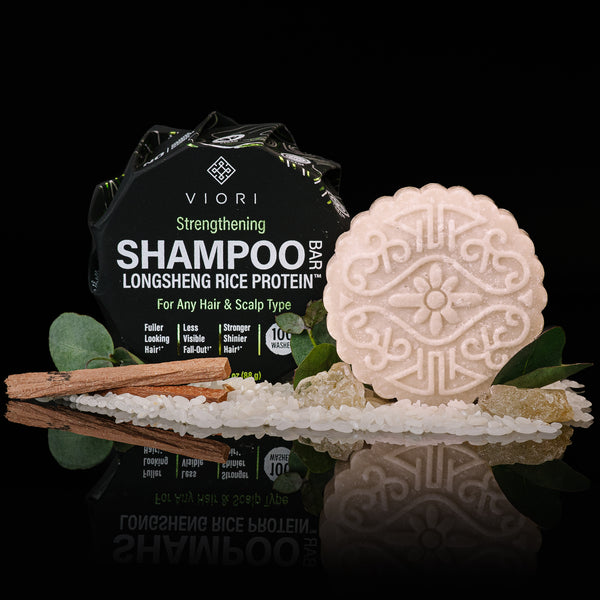
It's small enough to actually penetrate your hair shaft. Unlike larger molecules that just sit on the surface, inositol can enter the cortex through damaged cuticle areas and begin internal repair work.
It's hygroscopic, meaning it attracts and binds water molecules from the environment directly to your hair. Think of it as creating tiny moisture reservoirs inside each strand.
It strengthens hydrogen bonds within your hair's protein structure. This actually helps repair some of the damage that makes hair prone to static in the first place.
The most exciting part? Research shows that inositol remains in your hair even after rinsing. Every wash builds on the benefits of the last one. The longer you use rice water-based products, the more resistant to static your hair becomes.
The Panthenol Boost
Fermentation also increases the panthenol (Vitamin B5) content in rice water. This ingredient is critical for static control because it forms a thin, moisture-retaining film on each hair strand.
But unlike heavy silicones that coat and weigh hair down, panthenol's film is intelligent-it's hygroscopic, meaning it adjusts to ambient humidity. Your hair maintains optimal moisture levels (about 10-15% water content) regardless of whether you're in a heated office or stepping outside into winter wind.
The Scalp Type Strategy: One Size Doesn't Fit All
Here's where I see most DIY advice fall short: it assumes all static hair needs the same treatment. In my chair, I've learned that the relationship between your scalp type and static is far more nuanced than most articles acknowledge.
The Oily Scalp Paradox
This surprises people: clients with oily scalps often experience the worst static at their ends. Seems counterintuitive, right?
Here's what happens: When you have an oily scalp, you typically wash more frequently and use more aggressive cleansing products. You focus your shampooing on the roots to control that oil.
This creates a two-zone problem:
- Your scalp is actually over-producing sebum (often in response to being stripped by harsh products)
- Your ends are moisture-starved because those natural oils never make it past your ears
On hair longer than shoulder-length, this becomes even more pronounced. Frequent washing removes what little moisture the ends can retain, and pH disruption from harsh surfactants keeps cuticles raised and rough.
The solution isn't more moisturizing products at your scalp-it's targeted moisture retention from mid-length to ends.
For this hair type, I recommend Viori's Citrus Yao bar at the roots (the natural citric acid helps balance oil production without over-stripping), combined with generous conditioning from mid-shaft to ends. This creates the optimal environment for static control without making your roots greasy.
The Dry Scalp Connection
Dry scalp tells a different story:
- Low overall sebum production
- Possible systemic dehydration
- Compromised scalp barrier function
This hair type needs moisture from root to tip. Viori's Hidden Waterfall or Terrace Garden bars are particularly effective because they deliver concentrated moisture throughout the entire hair length with ingredients like:
- Rice bran oil (rich in fatty acids and vitamin E)
- Shea butter (incredible emollient properties)
- Bamboo extract (contains silica for strengthening)
The Professional Conditioning Technique That Changes Everything
Even with perfect products, how you apply conditioner makes a dramatic difference in static control. Let me share the technique I teach in my salon:
The "Seal and Steam" Method
Step 1: After shampooing, don't squeeze your hair completely dry. Leave it very damp-this opens the cuticle just enough to allow conditioning ingredients to penetrate.
Step 2: Apply conditioner in sections, not just a surface sweep. Work a small amount through each section with your fingers, ensuring coverage from mid-shaft to ends.
Step 3: Use the "squeeze" technique. Gently squeeze sections of hair from root to tip. This helps the conditioner penetrate the cuticle layer rather than just coating the surface.
Step 4: Wait 3-5 minutes minimum. This isn't optional. The conditioning bar contains cationic surfactants (positively charged molecules) that need time to bond with the negatively charged damaged areas of your hair.
Step 5: Rinse with cool water. This causes the cuticle to contract and seal, locking in all those conditioning benefits.
The Leave-In Secret
Some of my clients with severe static use their Viori conditioning bar as a light leave-in treatment. Here's the technique:
WHAT CUSTOMERS ARE SAYING
Real reviews for Rice Water Shampoo Bar – All Hair Types | VIORI
- After your final rinse, take the tiniest amount of conditioner bar (we're talking microscopic)
- Warm it between your palms with just a few drops of water
- Apply only to the most static-prone areas-usually the top layer and ends
- Do not rinse
This creates an ongoing moisture reservoir and provides continuous cuticle sealing throughout the day. The key is using an almost imperceptible amount. You want moisture retention, not product buildup.
Protein vs. Moisture: Using Static as a Diagnostic Tool
Here's an advanced concept that separates professional analysis from guesswork: the type of static you're experiencing can tell you whether your hair needs more protein, more moisture, or both.
When Static Means You Need Protein
Your static is protein-related if:
- Hair feels limp and stretches like a rubber band when wet
- You've lost definition in your natural wave or curl pattern
- Static occurs throughout your entire length, not just at the ends
- Hair feels almost gummy when wet
The science: Hair is approximately 90% keratin protein. When that protein structure is compromised (from chemical treatments, heat styling, or environmental damage), your hair shaft can't maintain its optimal moisture level or structural integrity.
This is where rice protein becomes invaluable. Hydrolyzed rice protein has the perfect molecular size to penetrate the cortex and temporarily fill gaps in the cuticle structure. Unlike some animal proteins that can make hair brittle, rice protein adds strength with flexibility.
When Static Means You Need Moisture
Your static is moisture-related if:
- Hair feels rough and straw-like to the touch
- Static is worst at the ends
- Hair breaks rather than stretches when wet
- You're also dealing with frizz
The solution requires both humectants (ingredients that draw moisture into the hair, like vegetable glycerin and panthenol) and emollients (ingredients that seal moisture in and smooth the cuticle, like cocoa butter and rice bran oil).
Most people with chronic static need both protein and moisture-which is exactly what Viori's formulations provide in each bar.
The Hard Water Problem Nobody Warns You About
This might be the most overlooked factor in static hair management. If you have hard water, you're fighting an uphill battle regardless of your products.
How Minerals Create Static
Hard water contains dissolved minerals-primarily calcium and magnesium. These minerals are insidious:
- They deposit on your hair shaft, creating a rough, porous surface that's ideal for static charging
- They prevent proper cleansing by reacting with surfactants
- They block conditioning agents from penetrating the cuticle
- They raise your hair's pH, making cuticles lift and increasing surface roughness
The Bar Advantage for Hard Water
This is where Viori bars show another advantage: they contain natural chelating ingredients (from plant extracts) that help prevent mineral buildup. The pH-balanced formulation helps counteract hard water's alkalinity, and the concentrated conditioning agents can better penetrate through existing mineral deposits.
If you have hard water, also consider:
- Installing a shower filter (game-changer)
- Using an apple cider vinegar rinse monthly (1 tablespoon per cup of water after conditioning)
- Being patient-it takes a few weeks of consistent use to remove existing buildup
Your Seasonal Strategy: Adapting for Maximum Results
Professional hair care means adjusting your approach based on environmental conditions. Here's how to strategize:
Winter Protocol (Low Humidity, Indoor Heating)
When humidity drops below 30%:
- Increase conditioning intensity (leave your Viori conditioner bar on longer, 5-7 minutes)
- Reduce wash frequency if possible (your natural sebum is actually helping during this season)
- Consider the light leave-in technique I described earlier
- Focus on humectant-rich products that can draw moisture even from dry air
Summer Strategy (High Humidity, UV Exposure)
This is damage prevention season:
- Focus on protein maintenance to keep hair structure strong
- Don't skip conditioner even if hair feels more moisturized from humidity
- Pay attention to chlorine and salt water-both severely compromise cuticles and set you up for winter static


