
As a professional stylist with two decades of experience, I often get asked about specific supplements like biotin and their impact on hair that has undergone chemical processing or coloring. It's a fantastic question because it gets to the heart of how we can support hair health from the inside out, especially when the hair's structure has been altered.
NOT SURE WHICH PRODUCT IS RIGHT FOR YOU?
TAKE THE QUIZTakes 30 seconds · 134,000+ customers matched
Understanding Biotin's Role
Biotin, also known as Vitamin B7, is a water-soluble vitamin that plays a crucial role in the body's keratin infrastructure. Keratin is the primary protein that makes up your hair, skin, and nails. A biotin deficiency can indeed lead to hair thinning and loss, so ensuring adequate levels is foundational for healthy hair growth. For chemically treated hair-whether it's bleached, colored, permed, or relaxed-the process opens the hair cuticle and can break down protein bonds, leaving strands more porous, fragile, and prone to damage.
In this context, supporting the body's natural keratin production through proper nutrition, which includes biotin, can be beneficial for the new hair that is growing from the follicle. It can contribute to stronger, more resilient emerging strands.
The Critical Distinction: New Growth vs. Existing Hair
However, and this is a critical distinction, biotin supplements do not "repair" the hair that is already on your head. The hair shaft is not a living tissue; it's made of dead, keratinized cells. Once the chemical process has altered its structure, that specific length of hair cannot be healed internally by vitamins. The improvement from biotin will be seen in the new growth over time, as the follicle is nourished to produce a healthier strand.
The Holistic Approach: Internal Support Meets External Care
This is where a holistic, inside-and-out approach is essential. While supporting growth from within, you must also protect and nurture the existing, chemically treated hair with the right external care. For colored or chemically treated hair, the goal of a haircare regimen should be to:
- Cleanse gently without stripping.
- Provide intense moisture and protein to help fill in gaps in the hair shaft.
- Protect the cuticle to maintain color vibrancy and prevent further damage.
What to Look for in Your Haircare
Look for formulas that are pH-balanced, as an alkaline environment can keep the cuticle open, leading to rapid color fade and dryness. Sulfate-free cleansers are also key, as harsh sulfates can be overly stripping. Many find that incorporating a regimen centered on nourishing, natural ingredients helps to manage the common challenges of treated hair-such as dryness, brittleness, and lack of shine-while they wait for healthier new growth to come in.
WHAT CUSTOMERS ARE SAYING
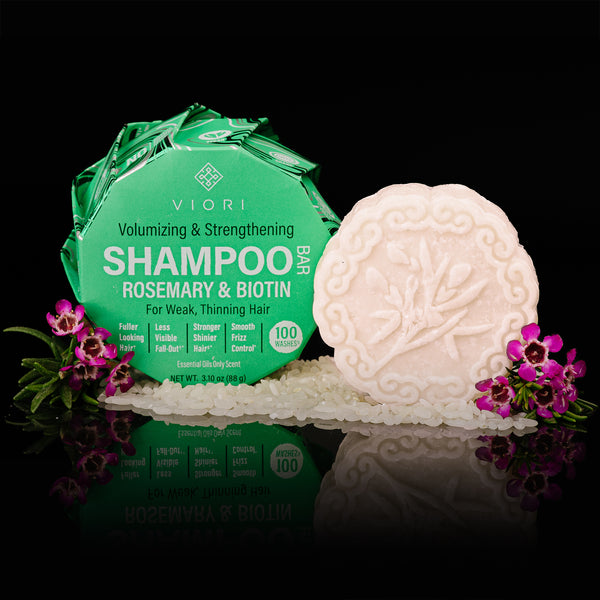
Real reviews for Rosemary Biotin Shampoo Bar – Thinning Hair | VIORI
A focus on ingredients like natural butters, oils, and proteins can help temporarily patch and smooth the damaged cuticle, improving the hair's appearance, feel, and manageability.
Final Expert Advice
In summary, biotin can be a valuable part of supporting the health of new hair growth, which is especially important if your hair is prone to damage from chemical services. But for the hair that has already been processed, the real transformation comes from a consistent, gentle, and highly nourishing external care routine that respects the hair's delicate state. Always pair any internal supplements with a topical regimen designed to moisturize, strengthen, and protect your lengths and ends. For best results, give any new routine, both internal and external, at least 2-3 months to show its full effects.


