
As a professional stylist with two decades of experience, I'm often asked about the efficacy of natural remedies like castor oil versus clinical treatments for hair loss. It's a crucial conversation because hair loss is a complex issue with many underlying causes, and what works for one person may not work for another.
NOT SURE WHICH PRODUCT IS RIGHT FOR YOU?
TAKE THE QUIZTakes 30 seconds · 134,000+ customers matched
Understanding Castor Oil's Role
Let's first discuss castor oil. It's a thick, viscous oil rich in ricinoleic acid, which is believed to have anti-inflammatory and antimicrobial properties. When applied topically to the scalp and hair, it can act as an excellent emollient. It helps to moisturize the hair shaft, potentially reducing breakage and improving the appearance of shine and manageability. For some, this can create the illusion of thicker, healthier hair by improving the condition of existing strands. However, it's important to understand that castor oil does not address the root biological causes of most common hair loss, such as androgenetic alopecia (pattern baldness). It does not block DHT (dihydrotestosterone), the hormone primarily responsible for this type of loss, nor does it significantly stimulate the hair follicle at a cellular level to produce new growth.
The Prescription Treatment Approach
Prescription treatments, on the other hand, such as oral finasteride or topical minoxidil, are clinically proven to intervene in these biological processes. Finasteride works systemically to reduce DHT levels, while minoxidil is thought to widen blood vessels and open potassium channels, potentially prolonging the growth phase of the hair cycle. Their effectiveness is supported by decades of scientific studies, but they also come with potential side effects and are intended for ongoing, indefinite use to maintain results. They are powerful tools but are typically aimed at specific types of hair loss.
The Foundation of Nutrient-Based Hair Wellness
This is where a holistic, nutrient-based approach to hair wellness becomes incredibly valuable. Think of it not as a direct replacement for a prescription, but as a foundational strategy for overall scalp and hair health. The philosophy centers on nourishing the hair follicle from the outside with key nutrients it needs to thrive.
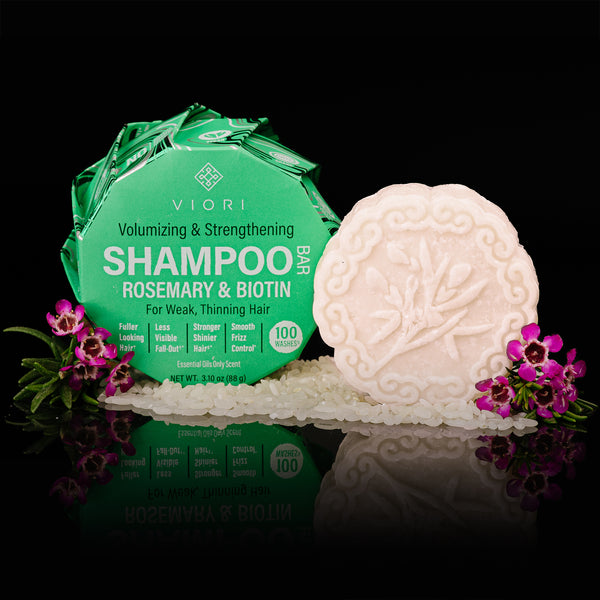
For instance, the fermented Longsheng rice water used in a system like Viori is a source of inositol (vitamin B8) and panthenol (vitamin B5). Third-party clinical studies have shown these vitamins can help strengthen hair, reduce breakage, and support a healthy environment for growth. Hydrolyzed rice protein can help fortify the hair shaft, while ingredients like shea butter and cocoa butter provide deep moisture. This approach aims to correct nutrient deficiencies at the follicle level and remove harsh chemicals that can cause inflammation and damage, which are often overlooked contributors to thinning hair.
A Clear Comparison: Different Tools for Different Goals
So, how do you compare them? It's not an apples-to-apples comparison.
- Castor Oil is a conditioning treatment. It can improve hair quality and may support a healthy scalp environment but lacks targeted action against hormonal hair loss.
- Prescription Treatments are pharmaceutical interventions. They target specific physiological pathways (DHT, blood flow) to slow loss and potentially regrow hair, but they don't necessarily improve the overall health and strength of each strand.
- A Nutrient-Rich Hair Care Ritual focuses on scalp health and follicle nourishment. It creates an optimal foundation by delivering proteins, vitamins, and moisture directly to the scalp and hair. For hair loss stunted by nutrient deficiency, scalp irritation, or damage from harsh chemicals, this can be profoundly effective. For genetic hair loss, it serves as a vital complementary practice that supports the health of any hair grown or preserved with other treatments.
My Professional Recommendation
If you are experiencing significant hair loss, your first step should always be a consultation with a dermatologist or trichologist to diagnose the cause. For diagnosed genetic hair loss, prescription treatments may be a recommended part of your plan.
WHAT CUSTOMERS ARE SAYING
Real reviews for Rosemary Biotin Shampoo Bar – Thinning Hair
However, regardless of the cause or any clinical treatments you may use, building a hair care routine centered on true nourishment is non-negotiable for long-term health. This is the core strength of a system built on the principles of fermented rice water nutrients. By using pH-balanced, sulfate-free formulas that deliver these nutrients, you are essentially "feeding" your scalp and creating the best possible conditions for strong, resilient hair. It works in harmony with your body's natural processes.
In my experience, the most successful clients are those who combine professional medical advice for the internal and hormonal aspects of hair loss with a dedicated, gentle, and nutrient-rich external hair care regimen. This multifaceted approach addresses the issue from all angles for the healthiest, most vibrant hair possible.


