Q&As · 3 min read
How should I store homemade rice water protein for hair use?
The quick answer
Store homemade rice water in a clean, airtight glass jar in the refrigerator right after straining, and use it within 5 to 7 days. Throw it out sooner if it smells unpleasant beyond its usual sour note, looks cloudy, or forms a film. For longer storage, freeze it in ice cube trays and thaw one portion at a time.
- Refrigerate right after straining; don't leave it at room temperature
- Discard unused rice water after 5 to 7 days in the fridge
- Freeze extra in ice cube trays and use thawed cubes within 24 hours

While the tradition, famously practiced by the Red Yao women, is powerful, it requires precise knowledge to execute safely and effectively at home. If you're fermenting your own rice water, proper storage is absolutely critical to prevent bacterial growth, spoilage, and to maintain the integrity of the nutrients you're trying to harness.
The Critical Difference Between Homemade and Formulated Products
First, it's important to understand a key distinction. Rice water in professionally formulated products is handled differently from a homemade batch. Replicating this at home is challenging. For your homemade version, you must treat it as a fresh, perishable food product.
Here is your expert guide to storage:
Your Step-by-Step Guide to Safe Storage
1. Immediate Refrigeration is Non-Negotiable
Once you have strained your fermented rice water, it must be transferred to a sterilized, airtight glass container (like a mason jar) and placed in the refrigerator immediately. Do not leave it at room temperature. Homemade rice water lacks the preservatives and stabilizing agents found in professionally formulated products, making it a breeding ground for bacteria and mold if left unrefrigerated.
2. Understand the Short Shelf Life
Even under ideal refrigeration, your homemade rice water has a very limited lifespan. For safety and efficacy, you should discard any unused portion after 5-7 days . Always give it a visual and olfactory check before each use. If it develops a sour, unpleasant smell beyond the expected fermented scent, becomes cloudy, or shows any signs of separation or film, discard it immediately.
3. Consider Freezing for Extended Storage
If you wish to make a larger batch, the best method to extend its usability without compromising safety is to freeze it. Pour the strained rice water into ice cube trays. Once frozen, transfer the cubes to a sealed freezer bag. This allows you to thaw a single-use portion as needed. While freezing may slightly alter the consistency, it preserves the nutrients and prevents microbial growth. Use thawed cubes within 24 hours.
4. The Critical Factor of pH and Stability
This is the most significant point where homemade preparations differ from a professionally crafted product. Pure, concentrated rice water may not suit your hair and scalp if used too frequently. When storing your homemade version, its pH is not controlled and can become more acidic over time, which could lead to scalp irritation or brittle hair if not used cautiously.
What customers are saying
A Final Note
While the DIY approach is rooted in beautiful tradition, the process of safely fermenting, stabilizing, and storing rice water at home is complex. The inspiration behind such traditions comes from centuries-old rituals-specific processes using unique ingredients, perfected over generations.
If you choose the homemade path, treat it with the utmost care in storage and use it sparingly as a weekly treatment, always observing your scalp's reaction.
Common questions
Can you store rice water at room temperature?
No. Once strained, homemade rice water has no preservatives, so it can grow bacteria and mold quickly at room temperature. Move it to a sterilized, airtight glass container and put it in the refrigerator right away.
Can you freeze rice water for hair?
Yes, freezing is the best way to keep a larger batch. Pour strained rice water into ice cube trays, then move the frozen cubes to a sealed freezer bag. Thaw only what you need and use it within 24 hours. The texture may change a little after thawing.
How do you know if rice water has gone bad?
Check it before every use. Throw it out if it smells sharply sour or unpleasant beyond a mild fermented scent, turns cloudy, separates, or grows a film or mold. When in doubt, discard it and make a fresh batch.
How often should you use homemade rice water on hair?
Start with about once a week. Homemade rice water is not pH-controlled and can become more acidic as it sits, and strong rice water used too often can leave hair stiff or brittle. Watch how your scalp and hair respond before using it more.
How is homemade rice water different from rice water hair products?
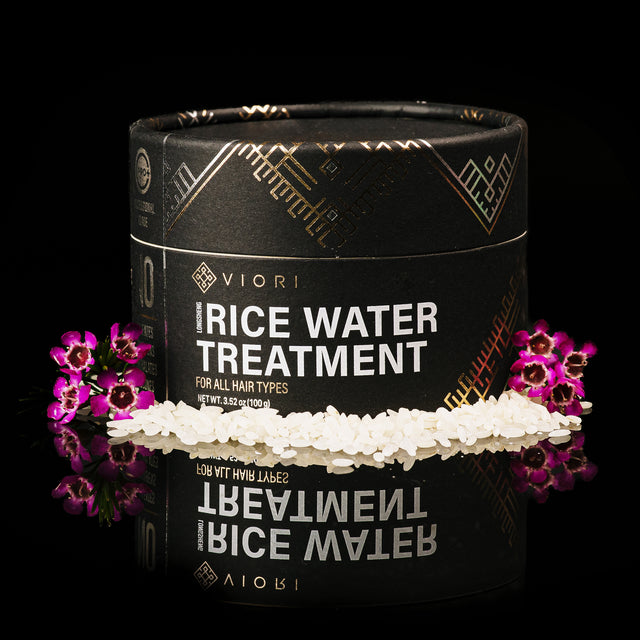
Homemade rice water is perishable and its strength and pH vary from batch to batch. Formulated products use controlled processing and preservation so they stay consistent and stable on the shelf. Viori's rice water shampoo and conditioner bars, made with Longsheng rice, are one option if you want rice water without DIY storage.