
If you’ve been searching for “AGA shampoo”, you’re probably looking for something simple and realistic: a wash routine that helps your hair look fuller, your scalp feel better, and shedding feel less alarming. And if you’ve spent more than five minutes reading online, you’ve also seen the two loudest opinions-either shampoo “fixes” AGA or it’s a complete waste of time.
Here’s the more helpful truth: androgenetic alopecia (AGA)-pattern hair loss-happens deep in the follicle. A shampoo won’t change your genetics. But the right shampoo can improve the scalp environment your follicles are trying to function in, and it can dramatically improve how fragile, miniaturizing hair behaves day to day.
That’s the angle I don’t see discussed enough: think of an “AGA shampoo” as microenvironment support. Not a miracle. Not meaningless. A tool that reduces the extra problems-irritation, oil imbalance, buildup, friction, and breakage-that make AGA feel worse than it has to.
What AGA really is (and why shampoo has limits)
AGA is driven primarily by genetics and androgen activity (especially DHT), which causes progressive follicle miniaturization. Over time, growth cycles shorten, hair shafts get finer, and density looks reduced because fewer thick terminal hairs are being produced.
NOT SURE WHICH PRODUCT IS RIGHT FOR YOU?
TAKE THE QUIZTakes 30 seconds · 134,000+ customers matched
That miniaturization is happening inside the follicle-so no rinse-off cleanser can “flip a switch” and undo it. What shampoo can do is manage the conditions on the scalp surface and on the hair fiber that influence comfort, appearance, and breakage.
The most overlooked lever in “AGA shampoo”: pH
If there’s one technical detail that deserves more attention, it’s pH. In the salon, I can often tell when someone’s routine is too harsh simply by how their hair tangles, how dull it looks after washing, and how reactive their scalp has become.
Viori emphasizes the importance of being pH balanced and notes that hair products generally perform best in a range of about 3.5-6.5. When products skew too alkaline, they can leave hair feeling dry and rough long-term. For AGA-prone hair-which is often finer and more delicate-this matters more than people realize.
Why? Because pH influences:
- Cuticle behavior (a smoother cuticle means less friction and fewer tangles)
- Shine and softness (flat cuticles reflect light better)
- Scalp comfort (a calmer barrier is less likely to feel tight, itchy, or irritated)
This is where shampoo can quietly help: not by “curing” AGA, but by keeping the hair and scalp in a steadier, less reactive state.
Don’t ignore the cleanser base: mild cleansing is a long-game strategy
Most “AGA shampoo” conversations obsess over trendy actives and completely skip the most important part: the cleansing system. If the cleanser is too aggressive, you can end up with irritation, rebound oiliness, and hair that feels stripped. If it’s too weak, buildup can collect and hair can look limp and separated-making the scalp appear more visible.
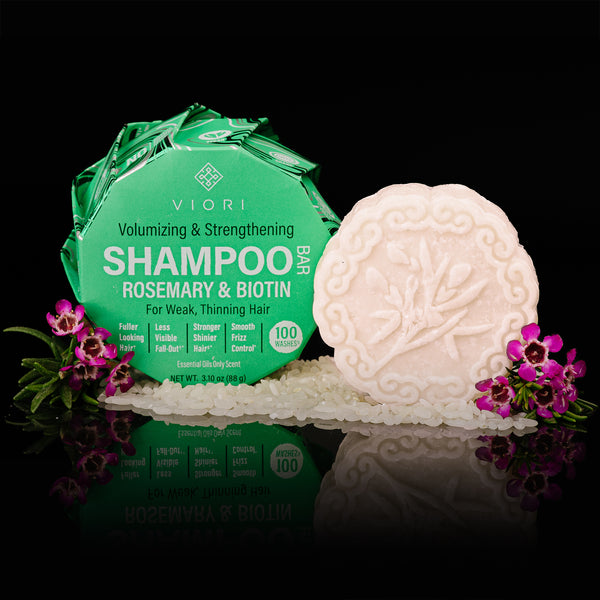
Viori uses Sodium Cocoyl Isethionate (SCI) as the cleanser in their shampoo bars, described as a mild cleanser derived from coconut and sometimes nicknamed “baby foam” because of its gentleness and lather. In practical terms, a mild-but-effective cleanser is often what an AGA routine needs, because it supports consistency-something your scalp benefits from more than surprise “detox” phases.
The “secret” many people mistake for less shedding: friction control
Here’s something I explain to clients all the time: what you’re seeing in the brush or shower isn’t always pure follicle shedding. With AGA, hair strands are often finer and more fragile. That makes them easier to:
- snap at the mid-lengths
- tangle and require forceful detangling
- break during aggressive washing
That’s why I pay close attention to conditioning and slip. Viori’s formulas include Behentrimonium Methosulfate (BTMS), a conditioning ingredient used to improve slip and manageability. Viori also clarifies that BTMS is commonly accepted as sulfate-free in the way people mean it in haircare (it’s not the same as harsh sulfate cleansing agents). The payoff, from a stylist’s perspective, is that better slip often means less mechanical damage.
One important nuance: very fine hair can lose volume if too much conditioning residue builds up. With AGA, you want a balance-enough conditioning to reduce friction, not so much that hair collapses at the root and looks flatter.
“DHT-blocking shampoo” is usually the wrong expectation
AGA is androgen-driven, so it’s understandable that people go looking for a shampoo that “blocks DHT.” But most of that androgen signaling happens inside the follicle. Shampoo is primarily a surface-level tool.
A more realistic goal for an AGA-friendly shampoo is to support the scalp in ways that matter day to day:
- keep oil levels in check without stripping
- reduce the itch-dryness cycle
- minimize buildup that can make hair separate and look thinner
- reduce friction so fragile strands survive longer
Fermented rice water: why concentration and pH matter
Rice water gets talked about constantly, but DIY approaches can be inconsistent-especially when fermentation is involved. Viori specifically notes they use a lower concentration of fermented Longsheng rice water because higher concentrations can disrupt hair and scalp pH when used too often.
The more practical takeaway is this: hair that’s miniaturizing doesn’t just need “growth claims.” It needs strength, flexibility, and reduced breakage-and those are areas where carefully formulated ingredients like hydrolyzed rice protein, inositol (Vitamin B8), and panthenol (Vitamin B5) can support the feel and resilience of the fiber over time.
How to choose a Viori routine for AGA: start with scalp type
The best “AGA shampoo” is the one that matches your scalp behavior. Viori keeps this refreshingly straightforward:
- Oily scalp: feels oily 1-2 days after washing
- Normal scalp: feels oily around day 3
- Dry scalp: feels oily 4+ days after washing
Based on those needs, Viori’s general recommendations are:
- Citrus Yao for normal-to-oily scalps (Viori notes it contains citric acid, which helps break down oil)
- Terrace Garden, Hidden Waterfall, or Native Essence for normal-to-dry scalps
- Native Essence (unscented) for fragrance sensitivities or very sensitive scalps
One of my favorite approaches for people who feel oily at the roots but dry through the lengths is the “split routine” Viori describes: use an oil-managing shampoo choice at the scalp, then use a more moisturizing conditioner choice on the mid-lengths and ends.
WHAT CUSTOMERS ARE SAYING
Real reviews for Rosemary Biotin Shampoo Bar – Thinning Hair | VIORI
Technique matters (especially with bars): reduce friction on purpose
When you’re using a bar, how you apply it can make or break your results-especially if your hair is fine, color-treated, or easily tangled. Viori recommends building a lather in your hands and applying with your fingers rather than rubbing the bar directly on your head. From a stylist’s standpoint, that’s smart because it reduces friction, which can reduce cuticle disruption and breakage.
Try this method:
- Wet hair thoroughly (bars perform best when the hair is fully saturated).
- Lather the shampoo in your palms, then apply mainly to the scalp.
- Massage with fingertips-don’t scrub with nails.
- Rinse well, then condition mid-lengths to ends.
- Let conditioner sit a few minutes before rinsing for better slip.
How long to give it before you judge results
Hair cycles move slowly, and scalp habits take time to normalize. Viori notes some people notice changes quickly, while others need longer, and they recommend giving the routine 2-3 months before deciding it’s not for you. That’s a sensible window to evaluate things like scalp comfort, oil balance, and whether your hair is snapping less during wash days.
The bottom line: an AGA shampoo should support, not promise
When someone asks me what the “best AGA shampoo” is, I’m really listening for what they’re battling besides AGA: oiliness, itch, dryness, buildup, tangling, breakage, flat roots, or all of the above. That’s where shampoo can truly make life easier.
With Viori, the strengths for an AGA-supportive routine are the focus on pH balance, a mild cleanser (SCI), conditioning support for slip and manageability, and options that align to scalp type-especially the oil-support approach of Citrus Yao and the gentleness of Native Essence.
If your goal is healthier-looking, more resilient hair while you manage AGA, start here: choose based on scalp type, use a low-friction technique, and give it enough time to see how your scalp and strands respond.


