writer · 4 min read
Best Conditioner Bar for Fine Hair: What to Look For
The quick answer
The best conditioner bar for fine hair is a lightweight, silicone-free bar that rinses clean and goes only on your mid-lengths and ends. Look for bars labeled for fine or flat hair, use two or three light swipes, and rinse well. How you apply it matters as much as which bar you choose, because too much product is the main cause of limp fine hair.
- Apply conditioner to mid-lengths and ends only, never the roots.
- Two or three light swipes of the bar is usually enough for fine hair.
- Rinse a little longer than you think to avoid a coated, flat feel.
The best conditioner bar for fine hair is a lightweight, silicone-free bar that rinses clean and goes only on your mid-lengths and ends. Bars labeled for fine or flat hair are a good starting point. But how you use the bar matters just as much as which one you buy. Too much conditioner, placed too close to the scalp, is the most common reason fine hair falls flat.
Why Fine Hair Needs a Different Approach
"Fine" describes the width of each strand, not how much hair you have. You can have a lot of fine hair or a little. Either way, each strand is thin and light, so it is easy to weigh down.
Fine hair still needs conditioning. Without it, the ends can tangle, snap and frizz. The goal is to smooth the lengths without leaving a film that makes roots look greasy or limp by the next morning.
Conditioner bars can work well for fine hair because you control the dose. A few swipes deliver a small amount. With a liquid, it is easy to squeeze out far more than you need.
What to Look For in a Conditioner Bar
Not every bar suits fine hair. When you compare options, check for these points:
- A label that matches your hair. Bars made for fine, flat or oily hair are usually designed to feel lighter than bars made for dry, coarse or curly hair.
- A clear conditioning base. Many bars use a plant-derived conditioning agent such as BTMS (behentrimonium methosulfate) with fatty alcohols like cetyl alcohol. These help hair feel smooth and detangled.
- No silicones, if buildup bothers you. Silicones are not harmful. Some, though, can collect on fine hair over time, especially if you also use a gentle cleanser. Many people with fine hair prefer silicone-free bars for that reason.
- Heavy oils and butters lower on the list. A little butter is common in conditioner bars. If rich oils sit near the top of the ingredient list, the bar may feel heavy on fine strands.
- A pH close to your hair's. Hair and scalp are mildly acidic, about 4.5 to 5.5. A pH-balanced bar helps the outer layer of each strand lie flat, which can mean smoother-feeling hair.
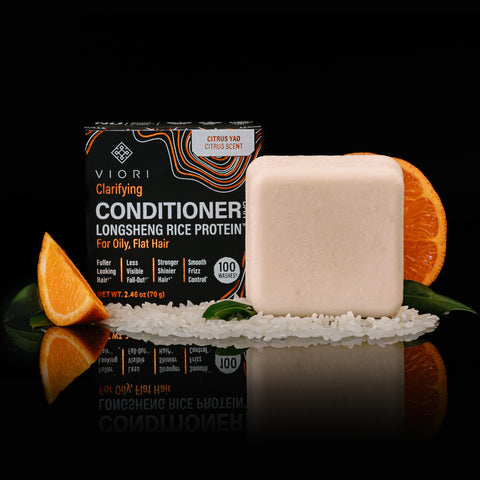
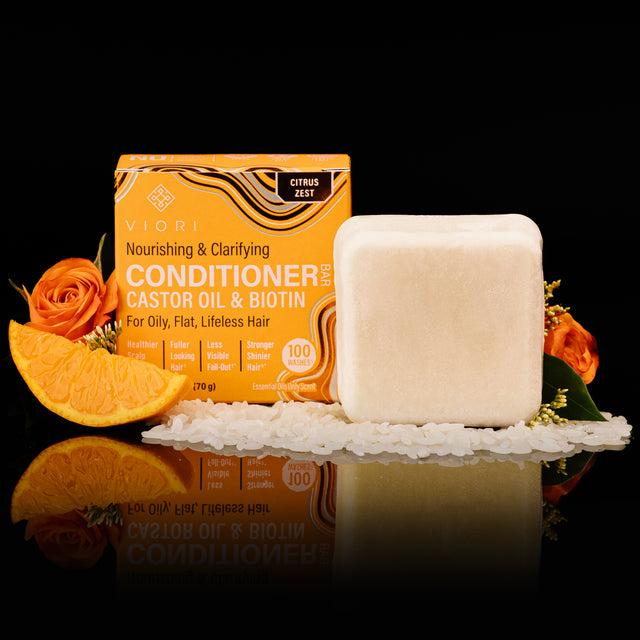
If you want a starting point, the Volumizing Conditioner Bar – Fine & Flat Hair is made for this hair type. Viori's conditioner bars are silicone-free and formulated to stay between 3.5 and 6.5 pH. If your scalp also gets oily fast, the Volumizing Rice Water Conditioner Bar – Oily Hair is another option.
How to Use a Conditioner Bar on Fine Hair
Technique is where most fine-hair problems start or end. Try this routine:
- Wash and squeeze. After shampooing, gently squeeze out extra water. Soaking-wet hair dilutes conditioner and makes it harder to spread evenly.
- Start below the ears. Glide the bar down your lengths and ends only. Two or three light swipes is usually enough. Skip the top of your head and the roots.
- Or warm it in your hands. You can rub the bar between wet palms instead, then smooth the paste over your ends. Conditioner bars make a creamy paste, not foam.
- Detangle gently. Use your fingers or a wide-tooth comb while the conditioner is in.
- Rinse well. Rinse a little longer than feels necessary. Leftover conditioner is a common cause of flat, coated-feeling hair.
Let the bar dry between uses. A draining dish or holder keeps it firm and helps it last.
Signs You Are Using Too Much (or Too Little)
Your hair will tell you if the balance is off.
Too much
- Roots look greasy a day earlier than usual
- Hair feels coated or waxy when dry
- Styles drop flat within a few hours
Cut back to one or two swipes, keep the bar lower on your hair and rinse longer.
Too little
- Ends tangle easily or feel rough
- More frizz or static than usual
- Ends look dull or snap when brushed
Add one more swipe to the ends, or leave the conditioner on for a minute or two before rinsing.
Pairing It With the Right Shampoo
Conditioner works best with a shampoo that cleans well without stripping. A harsh cleanser can leave ends dry, which tempts you to over-condition. A shampoo that is too rich can leave residue that adds to the weight.
What customers are saying
Look for a mild, sulfate-free shampoo bar made for fine or oily hair. Matching your shampoo and conditioner to the same hair type keeps things simple. For more on choosing the cleanser, see our guide to the best shampoo bar for fine hair .
Give any new routine 2 to 3 months before you judge it. Hair often needs a few weeks to adjust after a switch, especially if you are moving away from products with silicones.
The Bottom Line
For fine hair, pick a lightweight, silicone-free conditioner bar made for fine or flat hair. Use only a few swipes, keep it on your mid-lengths and ends, and rinse thoroughly. Small changes in amount and placement often matter more than the bar itself.
Common questions
Should people with fine hair skip conditioner?
Usually not. Fine hair tangles and breaks easily, and conditioner helps the lengths stay smooth and easier to detangle. The trick is to use a small amount on the mid-lengths and ends only, and to rinse well. Skipping it entirely often leads to rough, frizzy ends.
Can I use a conditioner bar as a leave-in on fine hair?
You can, but use very little. Wet your hands, rub the bar between your palms once, and smooth the tiny amount over just your ends. On fine hair, even a small extra amount can make strands feel heavy, so start light and add more only if your ends still feel dry.
Are silicone-free conditioners better for fine hair?
Not always, but many people with fine hair prefer them. Some silicones can build up over time and leave fine strands feeling coated or flat. Silicone-free bars tend to rinse cleaner. If you switch, give your hair a few weeks to adjust before deciding how it feels.
How often should I condition fine hair?
Most people condition each time they shampoo. If your hair gets flat quickly, try conditioning only the ends, or every other wash. If your ends feel dry or tangle, condition every wash. Adjust based on how your hair looks and feels the next day.
Why does my fine hair feel greasy after switching to a conditioner bar?
The most common reasons are using too much, applying it near the roots, or not rinsing long enough. Bars can deposit more than you expect if you rub them back and forth many times. Try two or three swipes on the ends and rinse longer. Pairing it with a shampoo made for fine or oily hair can also help.