
After twenty years behind the chair, I've lost count of how many times a client has shown me those stunning before-and-after photos of fermented rice water transformations-incredible length retention, mirror-like shine, hair that looks like it belongs in a shampoo commercial. Then comes the question that breaks my heart a little: "I tried this for six weeks and barely saw anything. What am I doing wrong?"
Here's the truth nobody wants to hear: you're probably not doing anything wrong. The issue is that fermented rice water isn't a one-size-fits-all miracle treatment. It's a complex biological process with variables that can make the difference between dramatic transformation and barely noticeable results.
Today, I'm going to pull back the curtain on what's really happening at the cellular level-and more importantly, show you how to figure out which approach will actually work for YOUR hair.
The Fermentation Timeline: Why Day Two and Day Seven Are Completely Different Products
Let's start with the biggest misconception floating around the internet: all fermented rice water is basically the same, just stronger the longer you leave it.
Wrong. Dead wrong.
The rice water you use after two days of fermentation is biochemically distinct from what you'd use after seven days. We're not talking about concentration here-we're talking about fundamentally different compounds that produce fundamentally different results.
Day 1-2: The Quick-Fix Shine Phase
In the early stages, your rice water is dominated by simple starches and basic amino acids. The pH sits around 5.5-6.0, which is close to your hair's natural state.
What you'll actually see:
- Gorgeous shine within the first few applications
- Smoother texture from starch coating the hair shaft
- Surface-level improvements that photograph beautifully
- Results that show up fast but may not go deep
Best for: Someone with healthy hair looking for that extra polish, or those with ultra-fine strands that can't handle intensive protein treatments. If you've got a wedding next month and want your hair to glow in photos, this is your stage.
NOT SURE WHICH PRODUCT IS RIGHT FOR YOU?
TAKE THE QUIZTakes 30 seconds · 134,000+ customers matched
Those before-and-afters showing dramatic shine after just two weeks? This is usually what they're using.
Day 3-5: The Strengthening Sweet Spot
Now things get interesting. By mid-fermentation, you've got significant amounts of inositol (sometimes called Vitamin B8) and organic acids developing. The pH drops to 4.5-5.0-perfect for sealing your hair cuticle tight.
What you'll actually see:
- Stronger strands that don't snap when you're styling
- Better elasticity (your hair can stretch without breaking)
- Noticeably less breakage in your brush
- Real results starting around week 4-6
Here's what's happening beneath the surface: inositol actually penetrates into your hair's cortex-the inner structure-and reinforces the disulfide bonds that give your hair its strength. This isn't cosmetic. This is architectural.
Best for: Anyone dealing with breakage, especially if you heat style regularly or you've had chemical treatments. This is also my go-to recommendation for clients growing out damaged ends.
Day 7-10: The Growth Phase (Where the Magic Happens)
This is the fermentation stage that creates those jaw-dropping transformations you see all over social media. Extended fermentation produces peak levels of panthenol (Vitamin B5), lactic acid, and peptides. The pH becomes quite acidic, typically between 3.5-4.5.
What you'll actually see:
- Visible new growth over several months (not weeks)
- Increased density as dormant follicles wake up
- Healthier scalp environment overall
- Timeline: 8-12 weeks minimum for visible changes, with dramatic results at 4-6 months
The mechanism here is fascinating. These fermentation byproducts increase blood circulation to your scalp and literally wake up sluggish hair follicles. You're not making your hair grow faster than its biological maximum-you're activating follicles that were essentially asleep.
Best for: Someone who's playing the long game. If you're willing to wait for structural transformation rather than quick cosmetic fixes, this is your stage.
Why This Explains the Confusion
Someone using 2-day fermented rice water might post stunning shine results after one week. Someone using 10-day fermented rice water won't see much of anything for three months-but when they do, the transformation is structural and lasting.
Neither approach is wrong. They're just solving completely different problems on completely different timelines.
The Protein Overload Problem: When "After" Looks Worse Than "Before"
I need to talk about something the natural hair community doesn't always acknowledge: fermented rice water is exceptionally protein-rich, and protein isn't universally beneficial.
I've had clients come back to the salon with hair that's stiff, brittle, and breaking off-after starting a rice water routine that was supposed to strengthen their hair. They're frustrated and confused, and honestly? I don't blame them.
Understanding Your Hair's Protein Threshold
Think of your hair as existing on a spectrum between moisture and protein. Healthy hair needs both, but not in equal amounts for everyone. The ratio depends almost entirely on your hair's porosity.
High porosity hair (chemically treated, color-damaged, naturally porous):
- Has gaps and holes in the cuticle layer
- Desperately needs protein to fill those gaps
- Can typically handle rice water 2-3 times weekly
- Shows the most dramatic before-and-after transformations
Low porosity hair (virgin hair, healthy, tightly sealed cuticles):
- Already has intact protein structure
- Resists absorption of both moisture AND protein
- Can become stiff and straw-like from too much protein
- Often sees minimal results or even negative results from frequent rice water use
Medium porosity hair (the goldilocks zone):
- Balanced cuticle structure
- Benefits from moderate protein treatments
- Typically thrives on rice water 1-2 times weekly
The Protocol That Actually Creates Transformations
In my salon, the most impressive before-and-afters happen when clients follow these porosity-specific approaches:
For high porosity hair:
- Rice water treatments 2x weekly
- Deep moisture conditioning on alternate days
- The focus is on protein-moisture balance, not just protein
For low porosity hair:
- Rice water applied to scalp only every 10-14 days
- Hair lengths get moisture-rich treatments instead
- This stimulates growth without overloading strands with protein
For medium porosity hair:
- Rice water 1-2x weekly
- Weekly deep conditioning
- Adjust frequency based on how your hair responds
Those dramatic before-and-afters you see online? Almost always from someone with moderate-to-high porosity hair that was protein deficient. The rice water filled a genuine structural gap. If your hair is already protein-balanced, you'll need a different approach to see similar results.
The Scalp Factor: The Hidden Variable Nobody Talks About
Here's something that barely gets discussed in all those rice water tutorials: fermented rice water dramatically changes your scalp's microbiome, and this can make or break your results.
During fermentation, beneficial bacteria-primarily Lactobacillus species-multiply exponentially. When you apply this to your scalp, you're not just coating your hair. You're introducing an entire ecosystem of microorganisms.
The positive effects:
- Lactic acid creates an ideal pH environment (4.5-5.5)
- This pH naturally inhibits fungus and harmful bacteria
- Peptides reduce inflammation around follicles
- Disrupts sebum plugs that can block follicle openings
The potential complications:
- May disrupt already-balanced scalp flora
- Can over-acidify scalps that are naturally acidic
- Might trigger issues if your scalp barrier is already compromised
Why Some People See Explosive Growth Results
After two decades of observation, I've noticed something consistent: clients with underlying scalp issues show the most dramatic hair growth improvements with fermented rice water.
If you have seborrheic dermatitis, fungal folliculitis, or chronic scalp inflammation, fermented rice water might address the root cause that's been preventing growth all along. Your follicles weren't incapable of growing hair-they were being suppressed by an unhealthy environment.
For these clients, the transformation isn't about making hair grow faster. It's about removing the barrier that was preventing normal growth in the first place.
Conversely, if your scalp is already healthy and balanced, you might see minimal growth acceleration. You'll still get strengthening and shine benefits, but not that dramatic density increase that makes for viral before-and-after photos.
My Professional Approach to Scalp Assessment
Before recommending fermented rice water to any client, I examine their scalp. Here's my protocol:
For scalps showing redness, flaking, or irritation:
- 7-10 day fermentation (more acidic, more beneficial bacteria)
- Applied directly to scalp 3x weekly
- Often see growth results within 8-12 weeks
For healthy, balanced scalps:
- 3-5 day fermentation (gentler approach)
- Diluted 1:1 with water
- Applied 1x weekly
- Focus on hair strength and shine rather than growth
The Real Timeline for Transformation: Why 12 Weeks Actually Matters
Let's address something that frustrates me every time I see viral before-and-after posts: the photos are almost always taken after 4-6 weeks. From a biological standpoint, this is nowhere near enough time for genuine structural transformation.
Here's what's actually happening at the cellular level during rice water treatment:
Weeks 1-4: Surface Changes Only
During the first month, you're seeing:
- Starch particles coating hair strands
- Cuticle scales lying flat from the acidic pH
- Increased light reflection (that gorgeous shine)
- Smoother texture from filled-in cuticle gaps
This is cosmetic improvement, not structural change. Nothing has fundamentally transformed about your hair's internal architecture yet. This is what most online "after" photos are capturing-and while these results are real and valuable, they're not the full story.
WHAT CUSTOMERS ARE SAYING
Real reviews for Rosemary Biotin Shampoo Bar – Thinning Hair | VIORI
Weeks 5-8: The Cortical Shift
Now we're getting somewhere. With repeated applications:
- Inositol molecules begin accumulating in your hair's cortex
- Keratin cross-links gradually strengthen
- Strand diameter measurably increases (visible under microscopy)
- Breakage noticeably reduces
This is when you stop just looking like you have healthier hair and actually start having structurally improved hair.
Weeks 9-16: True Transformation
This is the timeline that creates those jaw-dropping transformations:
- B vitamins have accumulated in follicle cells
- Cell division rates actually change
- New growth emerges with better structural integrity from day one
- More follicles enter the active growth phase (anagen)
- Visible density increase becomes apparent
This is when genuine before-and-after magic happens.
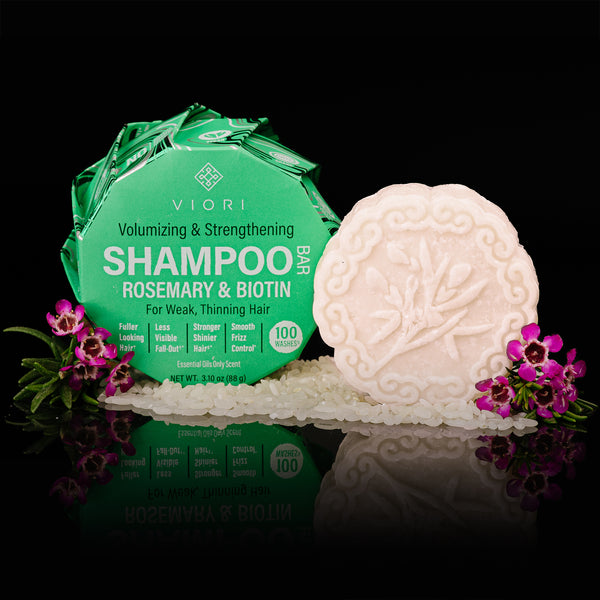
Viori, which uses rice prepared through the traditional Red Yao fermentation method (that 7-10 day sweet spot I mentioned earlier), formulates specifically for this extended timeline. Their recommendation to use products for 2-3 months before evaluating results isn't marketing speak-it's aligned with the biological reality of how fermented rice compounds work at the cellular level.
When you commit to this timeline, you're not just improving the hair you have. You're changing the quality of hair your follicles produce going forward.
Temperature: The Variable Nobody Mentions
Through years of experimentation-both professionally and on my own head-I've discovered something fascinating: fermentation temperature dramatically affects your results, yet this is almost never mentioned in DIY discussions.
Room Temperature Fermentation (68-72°F)
- Slower bacterial growth
- Lower concentration of acids
- Higher residual starch content
Result profile: Gentler treatment, more moisturizing, excellent for fine or delicate hair
Timeline to results: 6-8 weeks for visible improvement
Warm Fermentation (75-82°F)
- Accelerated bacterial metabolism
- Increased B-vitamin synthesis
- Higher concentration of strengthening peptides
Result profile: More intensive strengthening, ideal for coarse or damaged hair
Timeline to results: 4-6 weeks for visible improvement
Why This Actually Matters
When you see wildly different before-and-after results from people claiming identical protocols, temperature is often the hidden variable. Someone fermenting rice water in a warm Florida kitchen in July might achieve in four weeks what takes eight weeks in a cool Seattle apartment in February.
Professional tip: For consistent results, ferment in a temperature-controlled environment. I keep my rice water in a cabinet near (not on) my water heater for reliable warmth.
Water Quality: The Geographic Wild Card
This might be the most overlooked technical detail: the mineral content of your water affects how well rice water nutrients can actually penetrate your hair.
Hard Water (High in Calcium/Magnesium)
- Creates binding complexes with proteins in rice water
- Reduces penetration of beneficial compounds
- Can cause protein-mineral buildup over time
Result: Slower, less dramatic transformations; potential buildup issues after extended use


