
“Hair loss herbs” is one of those internet phrases that sounds simple-like there’s a magic plant you haven’t discovered yet. In the salon, it rarely looks that neat. What I see most often is a mix of shedding, breakage, and scalp stress all happening at the same time, which is why herb-heavy routines can feel amazing for one person and totally backfire for another.
Here’s the perspective I wish more articles led with: herbs don’t work in a vacuum. When they help, it’s usually because they improve the follicle environment-calming irritation, balancing oil, supporting the scalp barrier, and reducing the friction that makes fragile hair snap. The “rarely discussed” part is that results often come down to delivery (how an herb is used) and scalp chemistry (especially pH and irritation threshold), not just which herb is trending.
Start Here: Hair Loss Isn’t One Problem
Before you even think about botanicals, get clear on what you’re actually dealing with. “Hair loss” is a catch-all phrase people use for several different issues, and each one responds differently to herbs (or doesn’t).
NOT SURE WHICH PRODUCT IS RIGHT FOR YOU?
TAKE THE QUIZTakes 30 seconds · 134,000+ customers matched
1) Inflammatory shedding
This is the pattern I hear described as “my hair feels thinner everywhere,” often paired with itching, sensitivity, flakes, or a scalp that’s reactive to new products. In this scenario, the most helpful herb categories are the ones that support a calmer, less reactive scalp-because inflammation and scratching are a real shedding amplifier.
2) Sebum-driven microinflammation (oily scalp patterns)
Excess oil isn’t just a “greasy roots” problem. Sebum can oxidize, become irritating, and throw off the scalp’s microbial balance. Botanicals are sometimes used here to help normalize that environment-but the goal isn’t to scorch the scalp clean. It’s to reduce oil in a way that doesn’t trigger rebound irritation.
3) Breakage that looks like hair loss
This one is wildly common: you’re seeing hair in the brush and assuming it’s shedding, but much of it is actually snapping mid-strand. In those cases, herbs that improve softness and slip can help indirectly by reducing tangles and friction. That’s not “growth,” but it absolutely improves what most people care about: retaining length and fullness.
4) Patterned thinning
When thinning is strongly genetic or hormone-driven, herbs may support the scalp and hair quality, but it’s important to keep expectations realistic. The smartest role for botanicals here is often supportive: calming the scalp and helping fragile hair behave more gently day to day.
The Part Nobody Explains Well: Your Scalp Is a Barrier
Most herbal advice online skips the uncomfortable truth: even if a plant contains beneficial compounds, your scalp is designed to keep foreign substances out. So the question isn’t only “Which herb?” It’s also “Can that herb realistically get to where it matters?”
For a botanical to have a meaningful effect, it needs to be stable, compatible with the formula, and able to reach the follicle opening rather than just sitting on the surface. That’s why the same herb can show completely different results depending on how it’s prepared and applied.
Why delivery method changes everything
- Teas/infusions: Gentle, but often low potency and poor penetration; can be unstable.
- Oil infusions: Better for oil-soluble compounds, but can feel heavy or congesting on oil-prone scalps.
- Tinctures: May penetrate better, but can be irritating-especially on sensitive scalps.
- DIY powders/pastes: Concentration is unpredictable; some mixes can be abrasive or disruptive to the scalp barrier.
- Rinse-off products: Short contact time, so the biggest benefit is often reduced irritation and improved scalp conditions over time.
How Herbs Actually Help: 5 Scalp Systems That Matter
If you want a more “scientific” way to think about hair loss herbs, stop collecting plant names and start evaluating what a botanical is trying to do inside the scalp ecosystem. In my experience, the most relevant categories fall into five buckets.
1) Inflammation and itch signaling
A scalp that’s chronically itchy or reactive is not a peaceful place for hair to thrive. Botanicals used for “calming” are usually targeting the irritation loop-because even mild, repeated inflammation can nudge follicles toward earlier shedding and encourage scratching.
One caution: plant-based ingredients can be allergenic. “Natural” doesn’t automatically mean gentle, especially if your scalp is already compromised.
2) Oxidative stress
Oxidation affects scalp comfort and sebum quality, and it can amplify inflammatory cascades. Many herbs contain antioxidants, but here’s a detail most people miss: herbal compounds can oxidize, too. If a product isn’t formulated and stored well, what started as “antioxidant-rich” can become irritating as the ingredients degrade.
3) Sebum chemistry and microbial balance
The scalp has its own microbiome. Some botanicals are antimicrobial, but more isn’t always better. Overcorrecting can disrupt balance and create more sensitivity. In practice, the “win” is usually a scalp that feels steady: less reactive, less oily-messy, less itchy.
4) Microcirculation (and the tingling misconception)
A lot of “growth” products try to feel stimulating. The problem is that tingling isn’t proof of effectiveness-it can simply be irritation. A red, reactive scalp is not a goal. If an herb-based routine makes your scalp burn, that’s a sign to reassess.
5) Fiber integrity (breakage prevention)
When someone feels like they’re losing “so much hair,” improving the hair fiber’s ability to detangle and bend without snapping can make a dramatic difference. If your routine increases friction-rough cleansing, harsh pH, aggressive rubbing-you can lose density through breakage even if your follicles are fine.
pH: The Silent Dealbreaker in Herbal Hair Routines
This is one of the most under-discussed reasons DIY herb routines go sideways. Hair and scalp generally do best when products are pH balanced. If pH swings too alkaline, the cuticle can lift, leading to more tangles, more frizz, and more snapping.
Viori specifically notes that using rice water at too high a concentration too often can disrupt the hair and scalp’s pH. That concept applies to herbs, too: even a “good” ingredient can cause problems if the overall routine pushes the scalp out of its comfort zone.
Hair Is Charged: Why Conditioning Matters in a Hair Loss Conversation
Here’s a technical point that has a very practical impact: damaged hair tends to carry a stronger negative charge. Conditioner formulas are often designed with positively charged (cationic) conditioning agents so they can deposit on the hair and improve slip. The less friction you have, the less mechanical loss you create.
WHAT CUSTOMERS ARE SAYING
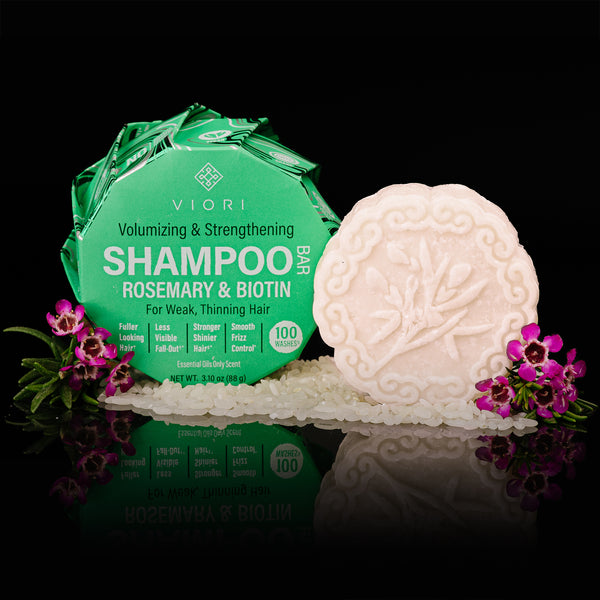
Real reviews for Rosemary Biotin Shampoo Bar – Thinning Hair | VIORI
That’s why I’m a big believer in pairing any scalp-focused plan with a consistent conditioning habit. Viori’s conditioner bar uses a cationic conditioning ingredient (behentrimonium methosulfate) designed to support slip and manageability, and the brand emphasizes a pH-balanced approach-both of which matter when you’re trying to protect fragile hair and keep the scalp calm.
The Herbal Paradox: “Stronger” Can Mean “More Shedding”
The internet tends to reward intensity: stronger tinctures, more oils, more “stimulating” blends, longer leave-ons. But if your scalp is sensitive, irritation can become a shedding trigger. Often the most effective plan is actually the most boring one: fewer variables, gentler formulas, consistent technique, and enough time to judge results fairly.
Viori recommends giving a routine 2-3 months before deciding it’s not working. That’s realistic-hair cycles are slow, and improvements in scalp health don’t always show up immediately in density.
A Practical, Low-Risk Way to Use Herbs (Without Wrecking Your Scalp)
If you want to explore hair loss herbs in a smart way, build the foundation first, then add variables slowly. Here’s the structure I recommend most often.
- Identify your scalp type (oily, normal, or dry) based on how quickly it feels oily after washing.
- Decide what you’re seeing: shedding from the root, or breakage along the lengths.
- Choose gentle delivery: avoid stacking multiple intense botanicals at once; patch test if you’re sensitive.
- Prioritize a pH-balanced, low-irritation wash routine so you’re not constantly provoking the scalp.
- Reduce friction: with bar products, build lather in your hands and apply with your fingers rather than rubbing the bar directly on the scalp (this is especially important for fragile hair and color-treated hair).
Red Flags That Your “Herbal” Routine Is Doing the Opposite
- Burning, persistent redness, or escalating itch
- Sudden increase in flakes after starting a new botanical
- More tangling, roughness, or snap-prone ends
- Heavy oiling that makes the scalp feel congested
- Any “stimulating” routine that leaves the scalp sore or tender
Bottom Line: The Best Herbal Hair Strategy Is a Scalp Strategy
If you remember nothing else, remember this: herbs are not a shortcut around scalp biology. They work best when you treat them like supportive tools-not miracles-and when your daily routine isn’t quietly undermining you with irritation, poor pH balance, or excessive friction.
When you approach “hair loss herbs” through that lens-barrier, pH, inflammation, sebum balance, and breakage prevention-you get something far more valuable than a trendy ingredient list. You get a routine that’s actually compatible with the way hair grows.


