
If you're dealing with oily hair and considering a natural shampoo bar, you've probably spent hours researching ingredients. You know tea tree oil might help. You've read that coconut oil could be too heavy. But here's what almost nobody talks about: the solid bar format itself creates unique chemical interactions with oily scalps that have nothing to do with the ingredient list.
After twenty years behind the chair working with every hair type imaginable, I've learned something crucial: successfully managing oily hair with natural bars isn't about finding the "right" ingredients. It's about understanding some genuinely fascinating chemistry that most people never learn about-and that makes all the difference between success and frustration.
Today, I'm pulling back the curtain on what's really happening when you use a shampoo bar on oily hair. We'll explore questions that sound simple but have complex answers: Why does the solid format change how your scalp behaves? What's actually happening during that dreaded "transition period"? And why might your water quality matter more than what's printed on the label?
Let's get into it.
The Solid State Reality: Why Bars Aren't Just Concentrated Liquid Shampoo
Here's your first lesson in bar chemistry: when you remove water from a formula to create a solid bar, you're not making a concentrated version of the same product. You're fundamentally changing how the cleanser interacts with the oil on your scalp.
Concentration Changes Everything
Look at the numbers:
- Liquid shampoos contain 10-15% surfactant (the cleaning agent) in a water base
- Shampoo bars contain 50-80% surfactant concentration by weight
That's not just "more of the same"-it's a completely different chemical interaction. For oily hair, this concentration difference is everything.
Here's what I've watched happen with my clients over the years: this high surfactant load can create what I call "the rebound effect." When cleansing strips away all your natural oils, your scalp notices. It compensates by producing even more sebum. You think you need to wash more frequently. The cycle intensifies. Your hair gets oilier faster than before.
This is exactly why the type of surfactant in a bar matters exponentially more than in liquid shampoos.
NOT SURE WHICH PRODUCT IS RIGHT FOR YOU?
TAKE THE QUIZTakes 30 seconds · 134,000+ customers matched
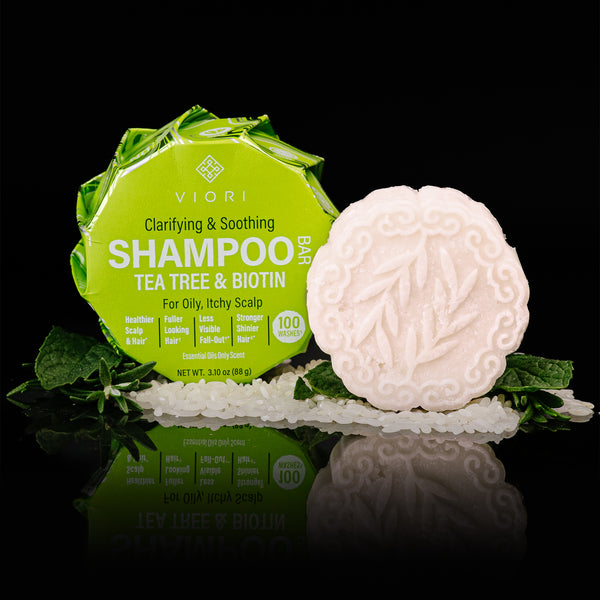
Viori uses Sodium Cocoyl Isethionate (SCI) as their primary cleanser. Unlike the harsh sulfates you'll find in conventional shampoos (SLS or SLES), SCI is a gentler anionic surfactant. It cleanses effectively without the aggressive stripping that triggers rebound oiliness.
But the real sophistication isn't just in the cleanser itself-it's in everything formulated around that cleanser that makes it work specifically for oily hair.
The pH Precision Challenge: What Most Brands Get Wrong
Let me share something that genuinely frustrates me as a professional: maintaining proper pH in a solid bar format is exponentially more difficult than in liquid formulations, and most natural brands either don't know this or choose to ignore it.
I've tested countless "natural" bars over my career with pH levels of 8, 9, even 10. For oily scalps, this is absolutely disastrous. Let me explain why.
The Science of Scalp pH and Sebum Production
Your healthy scalp sits at a pH of 4.5-5.5-slightly acidic. This isn't random; it's essential for:
- Maintaining your scalp's protective acid mantle
- Keeping hair cuticles properly sealed
- Supporting a healthy scalp microbiome
Here's what happens when you use a high-pH product (above 6.5):
- The hair cuticle swells and opens - This creates rough texture and tangling, but more importantly for oily hair...
- Your scalp responds by increasing oil production - The elevated pH disrupts your scalp's natural protective barrier, and your sebaceous glands kick into overdrive to compensate
- The scalp microbiome becomes unbalanced - Certain bacteria and yeasts that contribute to oiliness and odor actually thrive in higher pH environments
The technical challenge is that many natural ingredients-particularly botanical extracts and certain natural cleansers-are inherently alkaline. Creating a bar that's solid, long-lasting, effective, and maintains proper pH requires sophisticated formulation expertise.
Viori's bars are specifically pH-balanced between 3.5-6.5. This isn't marketing speak-this is genuinely difficult to achieve in solid bar format. The inclusion of naturally acidic ingredients like fermented rice water and careful pH adjustment during manufacturing allows these bars to maintain proper acidity even in their concentrated solid form.
For oily hair, this pH precision is absolutely non-negotiable. It's the difference between a product that helps regulate your oil production and one that makes it worse.
The Fermentation Factor: A Completely Different Approach to Oil Control
Now we're getting into territory that genuinely excites me because it's so rarely discussed in the haircare space: fermented ingredients work on a completely different mechanism for managing oily hair than conventional approaches.
Beyond Cleansing: Scalp Microbiome Modulation
Most oily hair products operate on one simple principle: remove more oil. But as we've discussed, this creates a vicious cycle. The sophisticated approach is regulating sebum production at the source-and that involves your scalp microbiome.
Viori's Longsheng Rice Water™ undergoes a 7-10 day fermentation process. During fermentation, several transformations occur that are specifically relevant to oily scalp management:
1. Inositol Concentration Increases
Inositol is a B-vitamin (B8) with documented effects on cellular signaling pathways that influence sebaceous gland activity. Fermentation increases bioavailable inositol far beyond what's present in raw rice. This means the ingredient can actually influence how much oil your scalp produces, not just clean away the oil that's already there.
2. pH Naturally Lowers
Fermentation produces organic acids (lactic acid, acetic acid) that naturally acidify the product. This helps maintain that crucial 4.5-5.5 pH range we discussed earlier.
3. Protein Structure Changes
Fermentation breaks down rice proteins into smaller peptides with improved scalp penetration. These can work within the follicle environment rather than just sitting on the surface, providing longer-lasting benefits.
4. Probiotic Metabolites
While solid bars can't contain live probiotics (they require a water environment), the fermentation byproducts include postbiotic compounds-the beneficial substances that probiotics produce. These support healthy scalp flora, which is essential for balanced oil production.
This is a fundamentally different approach than just "cleansing better." It's about creating an environment where your scalp doesn't need to overproduce oil in the first place.
The Citrus Strategy: Chemistry Disguised as Scent
Viori's Citrus Yao bar is specifically recommended for oily hair, and I'll be honest-when I first saw this recommendation, I assumed it was primarily about scent marketing. Citrus smells fresh and clean, so it makes sense for oily hair, right?
I was completely wrong. The chemistry is far more sophisticated.
The citrus essential oils in this formula (grapefruit, lemon, mandarin, orange) contain citric acid and limonene-both of which have specific functions for oily scalps:
Citric Acid's Role
- Acts as a natural chelating agent, binding to mineral deposits from hard water that create buildup (and buildup attracts and holds oil-more on this in a moment)
- Helps maintain proper acidic pH even more aggressively than other formulas
- Provides additional exfoliating benefits to prevent dead skin cell accumulation that can trap oils
Limonene's Properties
- Has documented sebum-regulating properties at the cellular level
- Provides mild astringent effects that can temporarily tighten pores and reduce immediate oil secretion
- Offers antimicrobial benefits that support scalp microbiome balance
This is sophisticated formulation disguised as "a nice citrus scent." The aromatherapy benefits are real, but they're actually secondary to the chemical functions these oils perform.
The Protein Paradox: Why Rice Protein Helps Oily Hair Look Less Oily
Here's an angle that surprised many of my clients when I first explained it: the role of hydrolyzed proteins in managing oily hair appearance and behavior.
Volume as Oil Management
One overlooked issue with oily hair is purely mechanical: sebum weighs hair down, making it lie flat against the scalp. When hair lies flat against your scalp, it's in constant contact with the source of oil production, which means more oil transfers from scalp to hair shaft. It's a vicious cycle.
Hydrolyzed rice protein (present in Viori bars) addresses this through a mechanism most people don't understand:
- Rice protein molecules are small enough to penetrate the hair cuticle
- Inside the cortex, they bind to existing keratin structures
- This internal binding creates what I call "structural volume"-the hair shaft literally becomes more rigid and better able to stand away from the scalp
- Hair that stands away from the scalp picks up less oil through direct transfer
This is why protein-treated oily hair often looks less oily even if sebum production hasn't technically changed-you're getting a mechanical advantage, not just a cleansing advantage. Your hair behaves differently in relation to your scalp.
The Conditioning Question: Why You Still Need It
Many people with oily scalps make a critical error in their haircare routine: they avoid all conditioning because they fear adding more "oil" to already oily hair.
This is a fundamental misunderstanding of hair science, and I want to clear it up right now.
Here's what you need to understand:
- Sebum (scalp oil) is produced by sebaceous glands at your scalp
- Moisture/hydration refers to water content within the hair shaft itself
- Conditioning agents work primarily on the hair shaft, not the scalp
When you use a properly formulated conditioner (like Viori's conditioner bars), here's what actually happens:
- The conditioner contains cationic surfactants (positively charged molecules)
- Your hair, especially after shampooing, is negatively charged
- Electrostatic attraction causes conditioner to bind primarily to damaged areas of the hair shaft
- This targeted binding closes the cuticle and smooths the surface
- Smooth, closed-cuticle hair repels sebum better than rough, open-cuticle hair
So paradoxically, proper conditioning can actually help your hair stay less oily for longer by creating a surface that doesn't readily absorb scalp sebum.
The key is application technique: condition from mid-length to ends, avoiding the scalp entirely. Your scalp doesn't need conditioning-it produces its own natural conditioner (sebum). But your hair shaft, particularly the ends, absolutely benefits from conditioning even if your scalp is oily.
The Transition Period Truth: Why Bars Initially Make Oily Hair Worse
Let's have an honest conversation that most brands won't have with you: switching to natural bars often causes a temporary increase in oiliness, especially if you're coming from conventional products.
WHAT CUSTOMERS ARE SAYING
Real reviews for Tea Tree Shampoo Bar – Oily & Itchy Scalp | VIORI
I need you to know this upfront because it's the number one reason people give up on natural bars during the crucial adjustment period.
The Silicone Withdrawal Effect
Most commercial shampoos and conditioners contain silicones-ingredients like dimethicone, cyclomethicone, or anything ending in "-cone" or "-siloxane." These create a waterproof coating on your hair that:
- Masks underlying damage
- Prevents sebum from visibly coating the hair
- Creates a false sense of "clean" that lasts longer
This coating doesn't actually improve your hair's health-it just masks problems. And it doesn't actually reduce oil production-it just hides the oil.
When you switch to a silicone-free natural bar, here's the typical timeline:
Weeks 1-2: The silicone coating gradually washes away. You might not notice much change yet.
Weeks 2-4: Your hair's true condition becomes apparent. Natural sebum is now visible on uncoated hair. This is when most people quit, thinking the natural bar "doesn't work" for oily hair.
Weeks 4-8: Your scalp begins to recalibrate its sebum production to the new, gentler cleansing routine.
Weeks 8+: Natural balance is typically achieved. Most people find they can go longer between washes than they could with conventional products.
The Sulfate Adjustment Period
The same phenomenon occurs when moving from harsh sulfate cleansers to gentler options like the SCI in Viori bars:
- Harsh sulfates (SLS, SLES) strip all oil very aggressively
- Your scalp overproduces oil to compensate for this aggressive stripping
- When you switch to gentler cleansing, your scalp initially maintains that high oil production level
- It takes 4-8 weeks for your sebaceous glands to downregulate and produce less oil
This isn't a failure of the natural bar-it's your scalp healing from years of overproduction triggered by harsh cleansing.
Viori acknowledges this in their guidance: they recommend using their products for 2-3 months before evaluating effectiveness. This isn't marketing-it's biological reality. Your scalp needs time to recalibrate.
Professional tip: If the transition period is particularly difficult, try alternating between your natural bar and your conventional shampoo every other wash for the first 2-3 weeks. This can ease the adjustment while still moving toward natural products.
The Hard Water Complication: Why Location Affects Bar Performance
This topic is genuinely under-discussed in the natural haircare space: the mineral content in your water dramatically affects how shampoo bars work, especially for oily hair.
The Chemistry of Soap Scum (On Your Scalp)
If you live in an area with hard water-water with high calcium and magnesium content-here's what happens:
- Hard


