
If you’re shopping for an organic shampoo for dandruff, you’ve probably noticed the advice online tends to sound the same: “avoid harsh ingredients,” “add moisture,” “use something natural.” That’s not wrong-but it’s incomplete. In practice, dandruff is rarely a single-issue problem. It’s usually a scalp ecosystem problem, meaning oil, microbes, irritation, residue, and pH are all interacting at the same time.
Here’s the part that doesn’t get talked about enough: you can use the “cleanest” routine on paper and still see flakes if your shampoo isn’t managing what I call scalp film behavior-the thin layer of sebum, sweat, shed skin, and product deposits that sits on the scalp and quietly influences everything from itch to flake size to how quickly your roots get oily again.
First, let’s clarify what “dandruff” really means
In the chair, I don’t treat dandruff as one condition, because it isn’t. The strategy changes depending on what the flakes are telling you.
NOT SURE WHICH PRODUCT IS RIGHT FOR YOU?
TAKE THE QUIZTakes 30 seconds · 134,000+ customers matched
Type 1: Oily scalp dandruff (often seborrheic-leaning)
This is the version that tends to stick around when the scalp is producing oil quickly and the scalp environment becomes imbalanced.
- Roots feel oily within 1-2 days after washing
- Flakes may look yellowish, waxy, or clumped
- Itch and redness are more common
- Heavy residue at the root often makes it worse
Type 2: Dry scalp flaking (dehydration + irritation)
This is the kind that frequently improves with gentler cleansing and barrier support-unless the routine is accidentally over-stripping.
- Flakes look white, light, and powdery
- Scalp feels tight, reactive, or “stingy” after washing
- Heat, aggressive scrubbing, and frequent washing can trigger it
The rarely discussed piece: residue and “scalp film physics”
Most dandruff content focuses on ingredients. That’s useful, but it misses a huge variable: what’s left behind. Your scalp naturally carries a thin film made of sebum (oil), sweat components, microscopic skin shedding, and product deposits. When that film becomes too heavy or uneven, the scalp can get irritated and shed more visibly.
This is why someone can switch to a more “natural” routine and still struggle. Many organic-leaning formulas pair mild cleansing with rich oils and butters. On a truly dry scalp, that can feel amazing. On an oily dandruff-prone scalp, it can backfire-because oil plus oil plus shed skin can create a sticky situation where flakes cling instead of lifting away cleanly.
The goal isn’t to strip the scalp raw. The goal is controlled cleansing: remove excess oil and debris effectively, while keeping the scalp barrier calm enough to stop the itch-and-flake cycle.
pH: the invisible switch that affects flakes, itch, and shine
pH is one of those topics that sounds technical until you feel the difference on your own head. Hair and scalp products generally need to live in a mildly acidic range (commonly referenced around 3.5-6.5). When products skew too alkaline, they can increase friction, lift the cuticle, and leave hair feeling rough-while the scalp feels reactive.
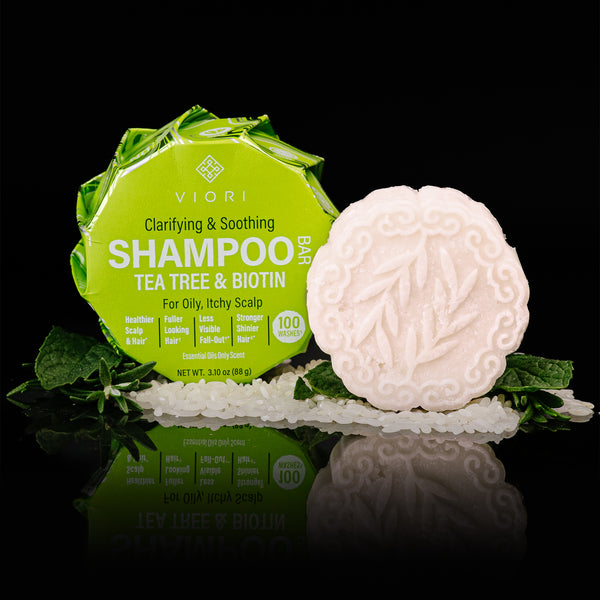
That’s why I pay attention to pH balanced formulas for dandruff-prone clients. A calmer scalp tends to shed more normally. Less irritation usually means fewer flakes, and the flakes that do shed are often finer and less noticeable.
What to look for in an “organic shampoo for dandruff” (without getting lost in buzzwords)
Instead of chasing labels, think in functions. A dandruff-friendly shampoo should do four jobs consistently.
- Cleanse predictably at the root, where buildup and oil collect
- Minimize irritation (gentle cleansing matters more than people realize)
- Rinse clean so you’re not layering residue over residue
- Support the scalp barrier so the scalp stops overreacting
How Viori fits into a dandruff-focused routine
Viori shampoo bars use a gentle cleanser called Sodium Cocoyl Isethionate (SCI), which is known for effective cleansing with a softer feel than harsher detergent systems. That matters for dandruff because many people aren’t just fighting flakes-they’re fighting the irritation that keeps the scalp in a constant state of overreaction.
Viori products also use fermented Longsheng rice water in a way that’s designed to be scalp-friendly. A helpful detail is that the rice water concentration is intentionally kept lower, since using rice water too strong or too often can disrupt hair and scalp pH for some people.
Picking the right Viori bar for your dandruff type
Choosing a bar is less about your hair length and more about how your scalp behaves between washes.
- Oily scalp dandruff: Viori Citrus Yao is commonly recommended for normal-to-oily scalps. It’s a strong option if you need better oil control and a cleaner root feel.
- Dry scalp flaking or sensitivity: Viori Terrace Garden, Hidden Waterfall, or Native Essence (unscented) are often a better match when the scalp needs moisture support and a gentler experience.
The conditioner mistake that makes dandruff look worse
A lot of people stop conditioning because they assume conditioner equals buildup. Then detangling gets rougher, friction goes up, and the scalp line gets irritated. That irritation can increase visible flaking.
Conditioner is also part of a dandruff routine because it helps reduce mechanical stress. The key is where you apply it.
- If your roots are oily, keep conditioner mostly on mid-lengths to ends.
- If your scalp is genuinely dry, you can bring conditioner closer to the scalp lightly, but avoid heavy layering at the roots.
And yes-Viori conditioner bars won’t foam like shampoo. They’re not meant to. Conditioner tends to feel creamier and more “slip-like” than sudsy, and a little goes a long way.
WHAT CUSTOMERS ARE SAYING
Real reviews for Tea Tree Shampoo Bar – Oily & Itchy Scalp | VIORI
Your technique matters more than you think (especially with bars)
One of the fastest ways to keep a dandruff cycle going is aggressive scrubbing. High friction can irritate the scalp and dislodge flakes in bigger, more noticeable pieces.
If you’re dandruff-prone, use a low-friction method:
- Wet hair thoroughly.
- Rub the shampoo bar in your hands to build lather.
- Apply the lather to the scalp and massage gently with fingertips (not nails).
- Rinse well, then repeat if your scalp tends to run oily.
- Use conditioner on mid-lengths and ends; rinse thoroughly.
How long it takes to see results (and when to get help)
Some people see improvement quickly. Others need time for scalp turnover and irritation to calm down. A fair trial for a new routine is often 2-3 months, especially if your scalp has been in a wash-strip-rebound cycle.
If you have thick patches, bleeding, intense burning, sudden heavy shedding, or you suspect a medical scalp condition, it’s smart to consult a medical professional. Haircare can support comfort and scalp health, but it shouldn’t replace diagnosis when something deeper is going on.
A simple Viori routine you can actually stick with
If your dandruff is oily-scalp driven
- Shampoo: Viori Citrus Yao (focus on scalp)
- Conditioner: keep it off the scalp; use mid-lengths to ends
- Schedule: start with your usual wash frequency, then adjust based on oil return
If your flakes are more dry-scalp or sensitivity driven
- Shampoo: Viori Native Essence (unscented) or Terrace Garden/Hidden Waterfall
- Conditioner: don’t skip-use it to reduce friction and protect hair
- Rinse tip: cooler water can help reduce irritation and frizz
When organic shampoo works for dandruff, it’s usually not because it’s trendy or “clean.” It’s because it helps reset the scalp environment: less irritation, less residue, better pH behavior, and a routine that supports your barrier instead of constantly picking a fight with it.


