
After twenty years behind the salon chair, I've heard every complaint about clarifying shampoo you can imagine. "It makes my hair feel like straw." "My color fades instantly." "I need three days of deep conditioning to recover." And my personal favorite: "Shampoo bars can't possibly deep clean like real clarifying shampoo."
Here's what I tell those clients: you're half right. Shampoo bars don't clarify like traditional liquid clarifiers. They actually do it better-and I can prove it with chemistry, not marketing.
The problem isn't that people don't understand clarifying. It's that we've been taught to accept a terrible trade-off: squeaky-clean hair that's been stripped, damaged, and left vulnerable. We've normalized clarifying routines that solve one problem while creating five others.
Quality shampoo bars flip that equation entirely. But understanding why requires looking past the Instagram aesthetics and into what's actually happening at the molecular level on your hair.
The Concentration Advantage Nobody Talks About
Pick up any bottle of liquid clarifying shampoo and read the ingredient list. Water is almost always first, which tells you something critical: you're buying a product that's 60-80% water. The actual cleaning agents-usually aggressive sulfates like sodium lauryl sulfate-make up maybe 10-15% of the formula. The rest? Fillers, preservatives, and thickeners that make the product feel substantial.
You're essentially paying for pretty packaging and the convenience of a pump bottle.
Bars eliminate this waste entirely. When you're working with a concentrated bar formulation, active ingredients compose 50-65% of what you're applying to your hair. That's not just different-it's a completely different category of product.
But here's where it gets interesting: concentration doesn't mean aggression when the chemistry is built right.
Well-formulated bars use surfactants like Sodium Cocoyl Isethionate (SCI)-a coconut-derived cleanser that works through what chemists call "selective solubilization." Instead of carpet-bombing your hair and stripping everything (including the oils you actually need), SCI targets specific types of buildup: silicones, hard water minerals, styling product residue, environmental pollutants.
NOT SURE WHICH PRODUCT IS RIGHT FOR YOU?
TAKE THE QUIZTakes 30 seconds · 134,000+ customers matched
This is precision clarifying, not demolition clarifying. You're removing what doesn't belong without destroying what does.
I've watched clients make the switch in real-time. The first thing they notice isn't how clean their hair feels-it's how much healthier it looks after clarifying. No more of that brittle, squeaky texture. No emergency deep conditioning sessions. Just genuinely clean hair that actually behaves better.
The pH Factor That Changes Everything
This is where most clarifying shampoos completely fail your hair, and most people have no idea it's happening.
Your hair's natural pH sits around 4.5-5.5-slightly acidic. This acidic environment keeps your cuticles lying flat and smooth, which is exactly what you want. When cuticles are closed, your hair retains moisture, reflects light (that's shine), and resists damage.
Most liquid clarifying shampoos operate at a pH of 7-9. That's alkaline-sometimes significantly so. When you apply an alkaline product to acidic hair, your cuticles are forced wide open. And yes, this allows the shampoo to "deep clean," but it also causes:
- Mechanical damage as raised cuticles snag and tear
- Moisture and protein loss directly from the hair cortex
- Rapid color fading in treated hair
- That squeaky, stripped feeling that signals damage, not cleanliness
- Increased porosity that makes future damage easier
Properly formulated bars maintain a pH between 3.5-6.5-much closer to your hair's natural state. When you use a pH-balanced bar like Viori's formulations, something protective happens: cuticles open minimally. Just enough for cleansing to occur, but not enough to cause structural damage.
The result is clarification from the surface rather than forced extraction from deep within the hair shaft. Buildup is lifted away. Your hair's protective architecture remains intact. You get clean hair without the collateral damage.
I can always tell when a client has been over-clarifying with high-pH products. Their hair has this particular kind of dryness-brittle, rough to the touch, prone to tangling. It's not just "needs moisture" dry. It's structurally compromised dry. And it takes months of careful treatment to repair.
Why go through that when the right pH prevents the damage in the first place?
Fermented Rice Water: The Clarifier Nature Perfected
Let's talk about something most hair care articles completely miss: natural chelation.
Traditional clarifying shampoos rely on synthetic chelating agents like EDTA to bind to mineral deposits and product buildup. These work, sure, but they're indiscriminate. They'll grab onto anything they encounter-including the proteins and moisture your hair actually needs.
Fermented rice water, which forms the foundation of Viori's formulations, takes a completely different approach.
When rice undergoes fermentation, several chemical transformations occur that directly impact clarifying performance:
- Inositol concentration increases dramatically - this vitamin B8 compound strengthens hair from within while clarifying occurs
- Panthenol levels rise substantially - vitamin B5 becomes more bioavailable, providing moisture during the cleaning process
- Phytic acid develops - this is the game-changer for clarification
That last one deserves its own paragraph because it fundamentally changes what clarifying means.
Phytic acid from fermented rice is a natural chelator, but unlike synthetic chelators, it's selective. It specifically binds to:
- Mineral deposits from hard water (calcium, magnesium, iron)
- Silicone buildup through hydrogen bonding disruption
- Product residue while preserving protein structure
This is why clients with color-treated hair consistently report better results with fermented rice water bars compared to conventional clarifiers. You're removing buildup without the protein loss that causes color fading and structural weakness. The clarifying is happening, but it's targeted rather than destructive.
I've worked with enough processed, highlighted, and chemically-treated hair to know that standard clarifying is basically Russian roulette. Sometimes it works fine. Sometimes it absolutely destroys months of careful color work. With properly formulated bars, that unpredictability vanishes.
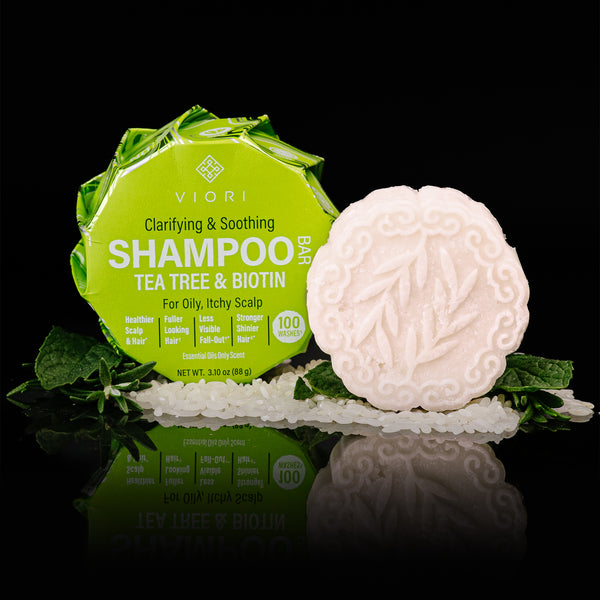
The Mechanical Edge: Application Method as Clarifying Tool
Here's something that separates bars from liquids in a way most people don't consider: the physical application itself contributes to clarification.
With liquid shampoo, clarifying happens purely through chemical dissolution. You pour, you lather, you rinse. It's entirely passive-you're just distributing product and waiting for chemistry to do its work.
Bars introduce a mechanical component:
- Micro-exfoliation of the scalp removes dead skin cells, sebum plugs, and product residue that liquid shampoo just slides over
- Direct contact creates concentrated zones of surfactant that break down stubborn, waxy buildup from styling products
- Physical motion disrupts deposits that have bonded to the hair shaft over time
Now, this comes with an important caveat that I drill into every client: technique matters enormously.
If you have color-treated, chemically processed, or damaged hair, applying the bar directly to your strands can cause unnecessary friction damage. Those raised cuticles I mentioned earlier? They're vulnerable. Rubbing a solid bar over them is asking for trouble.
The professional technique: lather the bar thoroughly in your hands first, then apply the foam to your hair. This gives you all the clarifying benefits of concentrated surfactants plus the mechanical assistance of working the lather through your hair-without the friction damage of direct application.
You control the intensity. That's something liquid clarifiers can never offer.
The Conditioning Paradox: Clarifying That Repairs
This is where bar formulation does something that sounds impossible if you've been trained in traditional hair care logic.
Conventional wisdom says clarifying shampoos should contain only cleansing ingredients. No conditioning agents. No moisturizers. Nothing that might "interfere" with the deep clean. You're supposed to clarify in isolation, then spend your next shower repairing the damage with intensive conditioning treatments.
It's a two-step process where step one damages your hair and step two tries to undo that damage.
Quality shampoo bars reject this approach entirely by combining cleansing and conditioning in a single, synergistic formula.
Here's the chemistry: bars formulated with both anionic surfactants (like SCI) and cationic conditioning agents (like Behentrimonium Methosulfate, or BTMS) create something genuinely innovative: simultaneous clarification and repair.
BTMS is positively charged. Damaged or freshly-clarified hair is negatively charged-those exposed protein sites on compromised cuticles create negative charge concentration. When you combine an anionic cleanser with a cationic conditioner in the same formula:
- SCI lifts away buildup and debris through its surfactant action
- BTMS immediately deposits at damage sites where negative charges are strongest
- Hair is clarified without being stripped of protective elements
- The conditioning happens during cleaning, not as damage control afterward
This is why people using well-formulated bars consistently report that their hair feels clean but not squeaky, clarified but not damaged. You're experiencing restorative clarification-something the conventional clarifying category simply cannot deliver because of formulation constraints.
In my chair, I used to warn clients that clarifying day was going to be rough on their hair. "We need to do it, but plan for extra conditioning afterward." I don't say that anymore to clients using quality bars. The clarifying is the treatment, not something you recover from.
Hard Water: Where Bars Actually Excel
Let's address the most persistent myth about shampoo bars head-on: the supposed hard water problem.
You've definitely heard this one. "Shampoo bars create soap scum in hard water, leaving your hair waxy and gross." It's repeated so often that people in areas with hard water won't even consider bars.
Here's the truth: that myth is based on confusing traditional soap bars (made from saponified oils) with modern syndet bars (synthetic detergent bars). They're completely different products with completely different chemical behaviors.
Traditional soap bars absolutely do create soap scum with hard water minerals. The fatty acids in soap react with calcium and magnesium to form insoluble deposits. That's real chemistry, and it's a legitimate problem.
Quality shampoo bars like Viori's are syndet formulations. They don't contain soap. They don't create soap scum.
In fact, bars have a hard water advantage that most people don't know about:
Sodium Cocoyl Isethionate is significantly less sensitive to water hardness than the sulfates used in liquid shampoos. In practical terms:
WHAT CUSTOMERS ARE SAYING
Real reviews for Tea Tree Shampoo Bar – Oily & Itchy Scalp | VIORI
- Liquid shampoos become less effective in hard water - the minerals interfere with lathering and reduce cleansing power
- Syndet bars maintain consistent performance regardless of mineral content
- The concentrated formula compensates for any hard water interference
- Natural chelators like phytic acid actively remove the mineral deposits hard water leaves behind
I've tested this extensively with clients who have extremely mineral-heavy water supplies-we're talking water so hard you can taste it. Conventional liquid clarifiers struggle in those conditions. They don't lather well, don't rinse clean, and leave hair feeling coated rather than clarified.
Quality bars not only work in hard water-they actually solve hard water problems by actively removing the mineral buildup that accumulates over time.
If you live in an area with hard water (and about 85% of the US has at least moderately hard water), a well-formulated bar may be the most effective clarifying option available to you. That's not marketing. That's just chemistry working in your favor.
The Protein Advantage: Strengthening During Clarification
Most clarifying shampoos explicitly avoid protein ingredients. The logic seems sound: you're trying to remove buildup, and proteins can deposit on the hair shaft. Why would you add something when you're trying to take things away?
But hydrolyzed rice protein in bar formulations behaves differently, and understanding why reveals something powerful about intelligent clarifying.
Molecular size is everything in hair care. Hydrolyzed rice protein has a molecular weight of 1,000-3,000 Daltons-small enough to penetrate through the cuticle layer, but large enough to provide actual structural benefits once inside.
During the clarifying process with a protein-enriched bar, several things happen simultaneously:
- Buildup is lifted from the cuticle surface by surfactant action
- Protein molecules fill gaps and cracks in the cuticle structure exposed by cleaning
- Hair emerges clarified AND structurally reinforced, not weakened
This is why Viori users frequently report that their hair feels stronger after washing, even though the bar is actively clarifying. It seems contradictory until you understand the chemistry. You're not just removing the bad-you're simultaneously repairing existing damage.
From a technical standpoint, this fundamentally challenges the traditional concept of clarifying as a "reset" that damages your hair and requires intensive repair afterward. Bars enable clarification and strengthening as concurrent processes, not opposing ones.
I've worked with clients who have extremely damaged hair-years of bleaching, heat styling, chemical treatments. Their hair couldn't tolerate traditional clarifying at all. The stripping action would literally cause breakage. But protein-enriched bars? They could clarify without fear because the repair was built into the process.
That's not a small thing. That's access to clarification for people who were previously locked out of it entirely.
Selective Clarification: Preserving What You Need
Here's where we get into genuinely sophisticated hair care chemistry: not all oils and residues should be removed from your hair.
Your scalp produces sebum for important reasons. It protects. It moisturizes. It maintains the health of both your scalp and hair. Aggressive clarifying strips away all sebum indiscriminately, which triggers your scalp to panic and overproduce oil in response.
This creates a vicious cycle: you clarify because your hair is too oily, which makes your scalp produce more oil, which makes you need to clarify more often, which makes your scalp produce even more oil. I've seen clients trapped in this cycle for years, washing daily with harsh clarifiers and wondering why their oil production keeps getting worse.
Quality bars break this cycle through selective clarification.
The fatty alcohols in well-formulated bars-ingredients like Cetyl Alcohol and Stearic Acid from vegetable sources-are often misunderstood. People see "alcohol" and


