
After two decades behind the chair, I've witnessed the same heartbreaking scene play out countless times. A client slides into my chair, frustration etched across their face, clutching a bar of beautifully crafted homemade soap. They've been following all the right recipes-rosemary oil for circulation, biotin for strength, nourishing oils, carefully sourced ingredients. They're doing everything the DIY blogs recommend. Yet their hair tells a different story: increased breakage, persistent dryness, and growth that's stalled completely.
Here's the difficult truth I have to share with them: their dedication isn't the problem. Neither is the quality of their ingredients. The issue runs much deeper, rooted in the fundamental chemistry of soap itself. And it centers around three letters that most people gloss over when they're excited about natural hair care: pH.
What I'm about to share might completely reshape how you think about homemade hair care. The very process that transforms oils into soap creates a product that's chemically incompatible with healthy hair growth. Not because you're doing anything wrong, but because of basic chemistry that no amount of essential oils or botanical extracts can overcome.
The Alkaline Reality That DIY Recipes Don't Address
Understanding What Soap Actually Is-And Why That Matters for Your Scalp
When you create traditional soap through saponification-that chemical dance between oils and lye-you're producing a compound with an alkaline pH between 8.0 and 10.0. This isn't a mistake or a sign of poor technique. It's simply what happens when you make soap. Even when makers add extra oils (the "superfatting" technique designed to increase gentleness), that fundamental alkalinity remains.
Now here's where things get problematic for anyone focused on hair growth: your scalp functions optimally at a pH of 4.5 to 5.5-distinctly acidic. Your hair shaft itself? Even lower, around 3.67.
Think about that disconnect for a moment. Every time you wash your hair with traditional soap, you're applying something nearly twice as alkaline as what your scalp needs to thrive. The gap isn't small-it's a biological chasm.
What Happens Inside Each Strand
When high-pH soap contacts your hair, a cascade of damaging reactions begins at the microscopic level:
NOT SURE WHICH PRODUCT IS RIGHT FOR YOU?
TAKE THE QUIZTakes 30 seconds · 134,000+ customers matched
- Your cuticle layer lifts and separates. Those protective scales that should lie sleek and flat against your hair shaft instead stand up like roof shingles in a storm, exposing the vulnerable interior.
- Critical moisture escapes. With cuticles elevated and gaps created, the water and nutrients stored inside your hair cortex simply leak out, leaving strands parched and fragile.
- Protein structures destabilize. The keratin bonds that give your hair its strength and elasticity become vulnerable to damage and breakage.
- Your scalp's protective barrier collapses. That slightly acidic "acid mantle" that shields your scalp from bacteria, fungi, and environmental aggressors? Stripped away with each wash.
But here's what matters most if you're trying to grow longer, healthier hair: your follicles are extraordinarily pH-sensitive. Research consistently shows that follicular cells function best in slightly acidic conditions. When you repeatedly expose your scalp to alkaline environments, you're creating a hostile landscape where:
- Follicular inflammation increases steadily
- Natural oil production swings wildly between extremes
- Beneficial bacteria die off while problematic microbes flourish
- The hair growth cycle itself becomes disrupted and irregular
In essence, you might be actively undermining the very growth you're working so hard to achieve. It's not a matter of willpower or ingredient quality-it's biochemistry.
The Heartbreaking Paradox: Premium Ingredients in a Damaging Environment
This is the part that keeps me up at night, honestly. DIY enthusiasts are often using genuinely beneficial ingredients-rosemary essential oil with its circulation-boosting properties, nettle extract rich in minerals, rice protein for strength, biotin for follicle support. These aren't gimmicks. They're backed by research and traditional use.
But they're being delivered in a pH environment that simultaneously tears down the very structures they're meant to build up.
Imagine planting heirloom seeds in contaminated soil. It doesn't matter how premium those seeds are if the environment actively prevents them from flourishing. That's what's happening when you incorporate powerful hair-growth ingredients into high-pH soap.
Take rice protein, for example. Clinical studies have demonstrated its ability to strengthen hair shafts and support healthy growth cycles. It's one of the reasons Viori's formulations produce such dramatic results-their bars harness the power of fermented Longsheng rice water and hydrolyzed rice protein. But when you add rice protein to traditional soap, you're asking it to work while the high pH simultaneously damages the hair structures it's meant to protect.
You're essentially hiring a contractor to repair your roof while someone else actively tears it apart. The contractor's skill doesn't matter if the environment won't allow the work to succeed.
The Professional Secret: Compatibility Matters More Than "Natural" Status
This is where I need to introduce a term that sometimes makes natural beauty enthusiasts uncomfortable: syndets, short for synthetic detergent bars.
Before you dismiss this as "chemical fear-mongering in reverse," hear me out. This isn't about harsh versus gentle or synthetic versus natural. It's about understanding that "soap" refers to a specific chemical compound created through saponification, and there are other cleansing methods that are actually more compatible with hair biology-even when formulated with predominantly natural ingredients.
The crucial difference lies in the surfactant base-the ingredient that performs the actual cleansing action.
Why pH-Balanced Formulations Change Everything
Products formulated as syndets can maintain a pH of 5.0-6.5, which creates dramatically different results:
- Hair cuticles remain relatively smooth during the cleansing process, locking in moisture and protein instead of hemorrhaging them into your shower drain
- Your scalp's protective acid mantle stays intact, continuing to support the beneficial bacteria that maintain scalp health
- Growth-promoting ingredients can actually work because they're delivered in an environment where follicles can properly utilize them
- Anti-inflammatory benefits multiply as ingredients work in harmony with your scalp's natural chemistry rather than fighting against it
This represents the difference between battling your hair's biology and working in partnership with it.
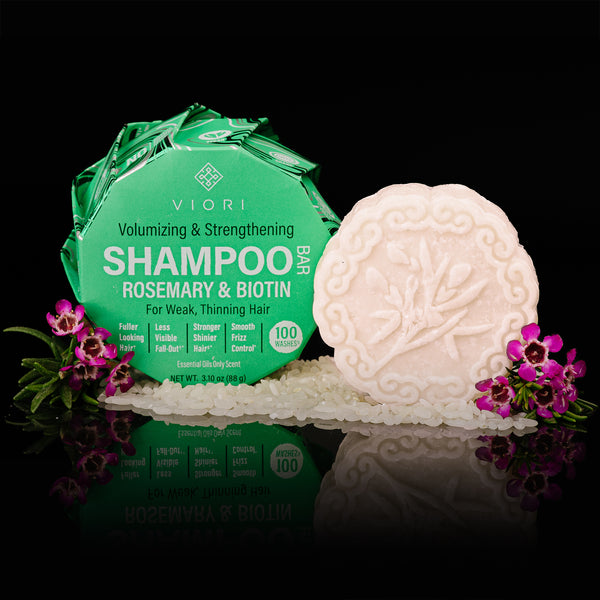
Viori's shampoo bars use Sodium Cocoyl Isethionate (SCI)-a coconut-derived surfactant so gentle that professional formulators call it "baby foam." This isn't technically soap in the chemical sense, and that's precisely the advantage. It cleanses effectively while maintaining a pH that supports rather than sabotages hair health.
The bars deliver fermented Longsheng rice water, bamboo extract, and hydrolyzed rice protein at a pH where your hair follicles can actually benefit from them. The difference in results isn't marketing spin-it's fundamental biochemistry creating visible outcomes.
The Fermentation Factor: Ancient Wisdom Meets Modern Science
Let's discuss something that most DIY recipes completely overlook: the biochemical transformation that occurs during fermentation.
The Red Yao tribe's centuries-old practice of fermenting rice for hair care wasn't merely tradition or superstition-it was sophisticated chemistry developed through generations of observation. When rice undergoes controlled fermentation, remarkable changes occur at the molecular level:
- Inositol levels increase dramatically. This form of vitamin B8 has been clinically proven to anchor hair firmly in follicles and significantly reduce shedding-exactly what you need for length retention and growth.
- Panthenol (vitamin B5) becomes far more bioavailable. Instead of merely coating your hair's surface, it actually penetrates the shaft to improve elasticity, moisture retention, and damage resistance.
- Amino acid profiles transform completely. The fermentation process breaks large proteins into smaller molecules capable of penetrating the hair cortex rather than just creating surface shine.
- Natural pH-buffering compounds develop. These help create a scalp-friendly end product that works in harmony with your hair's chemistry.
This is sophisticated biochemistry that required centuries of traditional knowledge to develop and refine. When you're mixing homemade soap from a recipe found online last Tuesday, you're missing this entire dimension of effectiveness-unless you're also fermenting your ingredients under controlled conditions and carefully managing pH throughout the process (which, let's be honest, most home soap makers aren't).
The Protein Problem That Rarely Gets Discussed
Here's another technical issue I encounter constantly with DIY formulations: protein overload.
The reasoning appears sound on the surface: hair is primarily composed of protein (keratin), so adding protein to your soap should strengthen it, right?
Not exactly. This logic reveals a fundamental misunderstanding of how hair actually absorbs and utilizes protein.
Understanding Porosity Changes the Entire Equation
Your hair has varying levels of porosity-its ability to absorb and retain both moisture and protein:
- Low porosity hair has tightly sealed cuticles that naturally repel both moisture and protein, making penetration difficult
- Normal porosity hair has a balanced ability to absorb and retain what it needs without going to extremes
- High porosity hair has damaged, lifted cuticles that absorb everything rapidly but struggles to hold onto anything
Here's where things get problematic with high-pH soap: when you use it, you're temporarily forcing your hair into a high-porosity state by lifting those cuticles. Then, when you've loaded that soap with proteins (as many DIY recipes recommend), you create a situation where:
- Your hair absorbs far too much protein during the washing process
- These protein molecules create rigid, inflexible bonds throughout the hair shaft
- Your hair becomes stiff, brittle, and prone to snapping rather than bending
- Your scalp can become congested with protein buildup, potentially blocking follicles
Professional formulations carefully calibrate protein levels based on extensive research and testing. The hydrolyzed rice protein in Viori's bars is precisely measured to provide strengthening benefits without overwhelming your hair structure. The protein molecules are specifically sized to penetrate effectively at the product's pH level, and the concentration is balanced with moisturizing ingredients to prevent the brittleness that comes from protein overload.
When you're making homemade soap, you're typically adding protein by volume or "to preference" without considering:
- The molecular weight of the protein you're using and how it affects penetration
- How protein behaves in alkaline pH versus neutral pH
- Whether the amount matches your individual hair's porosity needs
- The critical protein-moisture balance that healthy hair requires
The Consistency Problem: When Every Batch Becomes an Experiment
Even experienced soap makers will readily admit that every batch varies at least slightly. Temperature fluctuations during the mixing process, ambient humidity levels, natural variations in oil quality, precision of lye measurements, curing conditions over several weeks-all of these factors create subtle (and sometimes not-so-subtle) differences from batch to batch.
For body soap, this variability is essentially harmless. For hair growth? It's potentially a serious obstacle.
Here's why: hair growth operates in specific cycles that last for years. The anagen (active growth) phase continues for 2-7 years, followed by a brief transition phase and a 2-4 month resting phase before the hair naturally sheds and the cycle begins again.
Supporting optimal growth means creating consistent conditions that allow follicles to:
- Remain in the active growth phase for the longest possible duration
- Transition smoothly between phases without excessive stress or premature shedding
- Produce progressively thicker, healthier hair shafts with each cycle
When your homemade soap varies in pH, cleansing strength, and ingredient concentration from batch to batch, you're essentially running an uncontrolled experiment on your scalp every 4-6 weeks. Your follicles never receive the consistent environment they require to complete healthy growth cycles. Just as they're adapting to one set of conditions, you introduce a new batch with slightly different properties, and the adaptation process starts over.
WHAT CUSTOMERS ARE SAYING
Real reviews for Rosemary Biotin Shampoo Bar – Thinning Hair | VIORI
It's like trying to grow a garden while constantly changing the soil composition, watering schedule, and light exposure. The plants never settle in enough to truly thrive.
The Sulfate Confusion: Missing the Actual Point
I frequently work with clients who initially switched to homemade soap specifically to avoid "harsh sulfates," which is an understandable goal given how much conflicting information circulates online. But there's widespread confusion about what actually determines whether a cleanser is harsh or gentle.
Harshness isn't determined by whether an ingredient's name sounds scary-it's primarily about pH and molecular structure.
Traditional soap, despite being "all-natural" and "sulfate-free," can be significantly harsher on hair than some professionally formulated products that do contain certain sulfates, purely because of soap's inherently high pH.
That said, concerns about specific sulfates are absolutely valid:
- Sodium Lauryl Sulfate (SLS) can be quite stripping, especially at high concentrations
- Sodium Laureth Sulfate (SLES) is somewhat gentler but still potentially harsh depending on formulation
- Ammonium Lauryl Sulfate tends to be the harshest option commonly used
The problem is jumping directly from "sulfates can be harsh" to "traditional soap must be better" without understanding that you've simply exchanged one set of problems for another-often worse-set.
The Methosulfate Exception That Creates Unnecessary Fear
Here's where chemistry nomenclature creates confusion that scares people away from effective products. Viori's conditioner bars contain Behentrimonium Methosulfate (BTMS), which-despite having "sulfate" in the name-is completely, fundamentally different from cleansing sulfates.
BTMS is actually a conditioning agent with a positively charged molecular structure that binds to damaged, negatively charged sites on your hair. It has a pH-neutral to slightly acidic profile and exceptional ability to smooth cuticles, reduce friction, and prevent breakage.
The "methosulfate" portion refers to its molecular structure-it's simply chemistry nomenclature, not an indication that it functions as a harsh cleanser. This is a conditioning compound, entirely different in both function and gentleness from the cleansing sulfates people worry about.
You cannot replace BTMS with traditional soap-based conditioning and achieve the same cuticle-smoothing, growth-supporting results. The chemistry simply doesn't work that way, no matter how natural your intentions are.
The Sebum Spiral: How Alkaline Soap Triggers Overproduction
Here's a mechanism with profound implications for hair growth that rarely gets adequate attention: how your cleanser directly affects sebum production.
Your scalp produces sebum through glands attached to each individual hair follicle. This sebum isn't just "grease" to be eliminated-it serves critical functions:
- Protects and maintains


